1992 Edition
CIA World Factbook 1992 (Project Gutenberg)
Geography
Climate
midlatitude semiarid to polar in Pamir Mountains
Coastline
none - landlocked
Comparative area
slightly smaller than Wisconsin
Disputes
boundary with China under dispute
Environment
NA
Land area
142,700 km2
Land boundaries
3,651 km total; Afghanistan 1,206 km, China 414 km, Kyrgyzstan 870 km, Uzbekistan 1,161 km
Land use
6% arable land; NA% permanent crops; NA% meadows and pastures; NA% forest and woodland; NA% other; includes NA% irrigated
Maritime claims
none - landlocked
Natural resources
significant hydropower potential, petroleum, uranium, mercury, small production of petroleum, brown coal, lead, zinc, antimony, tungsten
Note
landlocked
Terrain
Pamir and Alay Mountains dominate landscape; western Fergana Valley in north, Kafirnigan and Vakhsh Valleys in southeast
Total area
143,100 km2
People and Society
Birth rate
40 births/1,000 population (1992)
Death rate
8 deaths/1,000 population (1992)
Ethnic divisions
Tajik 62%, Uzbek 24%, Russian 8%, Tatar 2%, other 4%
Infant mortality rate
74 deaths/1,000 live births (1992)
Labor force
1,938,000; agriculture and forestry 43%, industry and construction 22%, other 35% (1990)
Languages
Tajik (official) NA%
Life expectancy at birth
64 years male, 70 years female (1992)
Literacy
NA% (male NA%, female NA%) age 15 and over can read and write
Nationality
noun - Tajik(s); adjective - Tajik
Net migration rate
-1 migrant/1,000 population (1992)
Organized labor
NA
Population
5,680,242 (July 1992), growth rate 3.0% (1992)
Religions
Sunni Muslim approximately 80%, Shi`a Muslim 5%
Total fertility rate
5.3 children born/woman (1992)
Government
Administrative divisions
3 oblasts (oblastey, singular - oblast') and one autonomous oblast*; Gorno-Badakhshan*; Kurgan-Tyube, Kulyab, Leninabad (Khudzhand); note - the rayons around Dushanbe are under direct republic jurisdiction; an oblast usually has the same name as its administrative center (exceptions have the administrative center name following in parentheses)
Capital
Dushanbe
Chief of State
President Rakhman NABIYEV (since NA September 1991); note - a government of National Reconciliation was formed in May 1992; NABIYEV is titular head
Communists
NA
Constitution
adopted NA April 1978
Diplomatic representation
NA US: Ambassador-designate Stan ESCUDERO; Embassy at Interim Chancery, #39 Ainii
Executive branch
president, prime minister
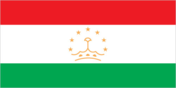
Flag
NA; still in the process of designing one
Head of Government
Prime Minister Akbar MIRZOYEV (since 10 January 1992); First Deputy Prime Minister Davlat USMON
Independence
9 September 1991 (from Soviet Union); formerly Tajikistan Soviet Socialist Republic
Judicial branch
NA
Legal system
based on civil law system; no judicial review of legislative acts
Legislative branch
unicameral Supreme Soviet
Long-form name
Republic of Tajikistan
Member of
CSCE, IMF, UN
National holiday
NA
Other political or pressure groups
Kazi Kolon, Akbar TURAJON-SODA, Muslim leader
Political parties and leaders
Tajik Democratic Party, Shodmon YUSUF, chairman; Rastokhez (Rebirth), Tohir ABDULJABAR, chairman; Islamic Revival Party, Sharif HIMMOT-ZODA, chairman
President
last held 27 October 1991 (next to be held NA); results - Rakhman NABIYEV, Communist Party 60%; Daolat KHUDONAZAROV, Democratic Party, Islamic Rebirth Party and Rastokhoz Party 30%
Street; Residences
Oktyabrskaya Hotel, Dushanbe (mailing address is APO AE 09862); telephone [8] (011) 7-3772-24-32-23
Suffrage
universal at age 18
Supreme Soviet
last held 25 February 1990 (next to be held NA); results - Communist Party 99%, other 1%; seats - (230 total) Communist Party 227, other 3
Type
republic
Economy
Agriculture
cotton, grain, fruits, grapes, vegetables; cattle, pigs, sheep and goats, yaks
Budget
$NA
Currency
as of May 1992, retaining ruble as currency
Economic aid
NA
Electricity
4,575,000 kW capacity; 17,500 million kWh produced, 3,384 kWh per capita (1991)
Exchange rates
NA
Exports
$706 million (1990) commodities: aluminum, cotton, fruits, vegetable oil, textiles partners: Russia, Kazakhstan, Ukraine, Uzbekistan
External debt
$650 million (end of 1991 est.)
Fiscal year
calendar year
GDP
$NA, per capita $NA; real growth rate -9% (1991 est.)
Illicit drugs
illicit producers of cannabis and opium; mostly for domestic consumption; status of government eradication programs unknown; used as transshipment points for illicit drugs to Western Europe
Imports
$1.3 billion (1990) commodities: chemicals, machinery and transport equipment, textiles, foodstuffs partners: NA
Industrial production
growth rate -2.0% (1991)
Industries
aluminum, zinc, lead, chemicals and fertilizers, cement, vegetable oil, metal-cutting machine tools, refrigerators and freezers
Inflation rate (consumer prices)
84% (1991)
Overview
Tajikistan has had the lowest standard of living and now faces the bleakest economic prospects of the 15 former Soviet republics. Agriculture is the main economic sector, normally accounting for 38% of employment and featuring cotton and fruits. Industry is sparse, bright spots including electric power and aluminum production based on the country's sizable hydropower resources and a surprising specialty in the production of metal-cutting machine tools. In 1991 and early 1992, disruptions in food supplies from the outside have severely strained the availability of food throughout the republic. The combination of the poor food supply, the general disruption of industrial links to suppliers and markets, and political instability have meant that the republic's leadership could make little progress in economic reform in 1991 and early 1992.
Unemployment rate
25% (1991 est.)
Communications
Airports
NA
Civil air
NA
Highways
29,900 km total (1990); 24,400 km hard surfaced, 8,500 km earth
Inland waterways
NA km perennially navigable
Pipelines
NA
Railroads
480 km all 1.520-meter (broad) gauge (includes NA km electrified); does not include industrial lines (1990); 258 km between Dushanbe (Tajikistan) and Termez (Uzbekistan), connects with the railroad system of the other republics of the former Soviet Union at Tashkent in Uzbekistan
Telecommunications
poorly developed; telephone density NA; linked by landline or microwave with other CIS member states and by leased connections via the Moscow international gateway switch to other countries; satellite earth stations - Orbita and INTELSAT (TV receive only)
Military and Security
Branches
Republic Security Forces (internal and border troops), National Guard; CIS Forces (Ground, Air, and Air Defense)
Defense expenditures
$NA, NA% of GDP
Manpower availability
males 15-49, NA; NA fit for military service; NA reach military age (18) annually