1986 Edition
CIA World Factbook 1986 (Internet Archive)
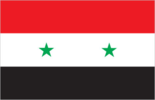
Geography
Agriculture
main crops — cotton, wheat, barley, tobacco; sheep and goat raising; selfsufficient in most foods in years of good weather
Area
150km See regional mip VI Land 185,180 km2 (including 1,295 km2 of Israelioccupied territory); the size of North Dakota; 48% arable, 29% grazing, 21% desert, 2% forest
Branches
executive powers vested in President and Council of Ministers; power rests in unicameral legislative (People's Council); seat of power is the Ba'th Party Regional (Syrian) Command
Capital
Damascus
Coastline
193km People
Communists
mostly sympathizers, numbering about 5,000
Elections
People's Council election held November 1983; presidential election held February 1985 Political parties and leaders: ruling party is the Arab Socialist Resurrectionist (Ba'th) Party; the Progressive National Front is dominated by Ba'thists but includes independents and members of the Syrian Arab Socialist Party (ASP), Arab Socialist Union (ASU), Socialist Unionist Movement, and Syrian Communist Party (SCP)
Electric power
2,256,700 kW capacity (1985); 6.919 billion kWh produced (1985), 656 kWh per capita
Ethnic divisions
90.3% Arab; 9.7% Kurds, Armenians, and other
Exports
$1.9 billion (f.o.b., 1984); petroleum, textiles and textile products, tobacco, fruits and vegetables, cotton
GDP
$20.7 billion (1984), $2,000 per capita; real GDP growth rate 2% (1984)
Government leader
Lt. Gen. Hafiz al-ASSAD, President (since February 1971)
Imports
$4.1 billion (f.o.b., 1984); petroleum, machinery and metal products, textiles, fuels, foodstuffs
Infant mortality rate
57/1,000(1984)
Labor force
2.4 million; 36% miscellaneous services, 32% agriculture, 32% industry (including construction); majority unskilled; shortage of skilled labor
Land boundaries
2,196 km (1967); excludes 2,156 km occupied area Water
Language
Arabic (official), Kurdish, Armenian, Aramaic, Circassian; French and English widely understood
Legal system
based on Islamic law and civil law system; special religious courts; constitution promulgated in 1973; legal education at Damascus University and University of Aleppo; has not accepted compulsory ICJ jurisdiction
Life expectancy
men 64.9, women 67.6
Limits of territorial waters (claimed)
35 nm
Literacy
about 50%
Major industries
textiles, food processing, beverages, tobacco; petroleum — 170,000 b/d production (1984), 229,000 b/d refining capacity
Major trade partners
exports — Romania, Italy, France, USSR; imports— Iran, FRG, Italy, Libya Syria (continued)
Member of
Arab League, FAO, G-77, IAEA, IBRD, ICAO, IDA, IDE— Islamic Development Bank, IFAD, IFC, ILO, IMF, IMO, INTELSAT, INTERPOL, IOOC, IPU, ITU, IWC— International Wheat Council, NAM, OAPEC, QIC, UN, UNESCO, UPU, WFTU, WHO, WMO, WSG, WTO Economy
National holiday
Independence Day, 17 April
Nationality
noun — Syrian(s); adjective — Syrian
Natural resources
crude oil, phosphates, chrome and manganese ores, asphalt, iron ore, rock salt, marble, gypsum
Official name
Syrian Arab Republic
Organized labor
5% of labor force Government
Other political or pressure groups
nonBath parties have little effective political influence; Communist Party ineffective; greatest threat to Assad regime lies in factionalism in the military; conservative religious leaders; Muslim Brotherhood
Political subdivisions
13 provinces and city of Damascus administered as separate unit
Population
10,931,000 (July 1986), average annual growth rate 3.7%
Religion
74% Sunni Muslim; 16% Alawite, Druze, and other Muslim sects; 10% Christian (various sects)
Suffrage
universal at age 18
Type
republic; under leftwing military regime since March 1963