2013 Edition
CIA World Factbook 2013 Archive (HTML)
Introduction
Background
The Swiss Confederation was founded in 1291 as a defensive alliance among three cantons. In succeeding years, other localities joined the original three. The Swiss Confederation secured its independence from the Holy Roman Empire in 1499. A constitution of 1848, subsequently modified in 1874, replaced the confederation with a centralized federal government. Switzerland's sovereignty and neutrality have long been honored by the major European powers, and the country was not involved in either of the two world wars. The political and economic integration of Europe over the past half century, as well as Switzerland's role in many UN and international organizations, has strengthened Switzerland's ties with its neighbors. However, the country did not officially become a UN member until 2002. Switzerland remains active in many UN and international organizations but retains a strong commitment to neutrality.
Geography
Area
- 41,277 sq km 39,997 sq km 1,280 sq km
- total
- 41,277 sq km
- water
- 1,280 sq km
Area - comparative
slightly less than twice the size of New Jersey
Climate
temperate, but varies with altitude; cold, cloudy, rainy/snowy winters; cool to warm, cloudy, humid summers with occasional showers
Coastline
0 km (landlocked)
Elevation extremes
- Lake Maggiore 195 m Dufourspitze 4,634 m
- highest point
- Dufourspitze 4,634 m
- lowest point
- Lake Maggiore 195 m
Environment - current issues
air pollution from vehicle emissions and open-air burning; acid rain; water pollution from increased use of agricultural fertilizers; loss of biodiversity
Environment - international agreements
- Air Pollution, Air Pollution-Nitrogen Oxides, Air Pollution-Persistent Organic Pollutants, Air Pollution-Sulfur 85, Air Pollution-Sulfur 94, Air Pollution-Volatile Organic Compounds, Antarctic Treaty, Biodiversity, Climate Change, Climate Change-Kyoto Protocol, Desertification, Endangered Species, Environmental Modification, Hazardous Wastes, Marine Dumping, Marine Life Conservation, Ozone Layer Protection, Ship Pollution, Tropical Timber 83, Tropical Timber 94, Wetlands, Whaling Law of the Sea
- party to
- Air Pollution, Air Pollution-Nitrogen Oxides, Air Pollution-Persistent Organic Pollutants, Air Pollution-Sulfur 85, Air Pollution-Sulfur 94, Air Pollution-Volatile Organic Compounds, Antarctic Treaty, Biodiversity, Climate Change, Climate Change-Kyoto Protocol, Desertification, Endangered Species, Environmental Modification, Hazardous Wastes, Marine Dumping, Marine Life Conservation, Ozone Layer Protection, Ship Pollution, Tropical Timber 83, Tropical Timber 94, Wetlands, Whaling
- signed, but not ratified
- Law of the Sea
Freshwater withdrawal (domestic/industrial/agricultural)
- 2.61 cu km/yr (39%/58%/3%) 360.3 cu m/yr (2010)
- per capita
- 360.3 cu m/yr (2010)
- total
- 2.61 cu km/yr (39%/58%/3%)
Geographic coordinates
47 00 N, 8 00 E
Geography - note
landlocked; crossroads of northern and southern Europe; along with southeastern France, northern Italy, and southwestern Austria, has the highest elevations in the Alps
Irrigated land
550 sq km (2007)
Land boundaries
- 1,852 km Austria 164 km, France 573 km, Italy 740 km, Liechtenstein 41 km, Germany 334 km
- border countries
- Austria 164 km, France 573 km, Italy 740 km, Liechtenstein 41 km, Germany 334 km
- total
- 1,852 km
Land use
- 9.8% 0.57% 89.63% (2011)
- arable land
- 9.8%
- other
- 89.63% (2011)
- permanent crops
- 0.57%
Location
Central Europe, east of France, north of Italy
Map references
Europe
Maritime claims
none (landlocked)
Natural hazards
avalanches, landslides; flash floods
Natural resources
hydropower potential, timber, salt
Terrain
mostly mountains (Alps in south, Jura in northwest) with a central plateau of rolling hills, plains, and large lakes
Total renewable water resources
53.5 cu km (2011)
People and Society
Age structure
- 15.2% (male 624,601/female 588,725) 11.6% (male 471,401/female 453,568) 44% (male 1,766,228/female 1,749,672) 12% (male 476,495/female 479,642) 17.3% (male 600,754/female 784,940) (2013 est.)
- 0-14 years
- 15.2% (male 624,601/female 588,725)
- 15-24 years
- 11.6% (male 471,401/female 453,568)
- 25-54 years
- 44% (male 1,766,228/female 1,749,672)
- 55-64 years
- 12% (male 476,495/female 479,642)
- 65 years and over
- 17.3% (male 600,754/female 784,940) (2013 est.)
Birth rate
10.45 births/1,000 population (2013 est.)
Contraceptive prevalence rate
82% percent of women aged 20-49 (1994/95)
Death rate
8.08 deaths/1,000 population (2013 est.)
Dependency ratios
- 48.1 % 21.9 % 26.2 % 3.8 (2013)
- elderly dependency ratio
- 26.2 %
- potential support ratio
- 3.8 (2013)
- total dependency ratio
- 48.1 %
- youth dependency ratio
- 21.9 %
Drinking water source
- urban: 100% of population rural: 100% of population total: 100% of population (2010 est.)
- rural
- 100% of population
- total
- 100% of population (2010 est.)
- urban
- 100% of population
Education expenditures
5.4% of GDP (2009)
Ethnic groups
German 65%, French 18%, Italian 10%, Romansch 1%, other 6%
Health expenditures
10.9% of GDP (2011)
HIV/AIDS - adult prevalence rate
0.4% (2009 est.)
HIV/AIDS - deaths
fewer than 100 (2009 est.)
HIV/AIDS - people living with HIV/AIDS
18,000 (2009 est.)
Hospital bed density
5 beds/1,000 population (2010)
Infant mortality rate
- 3.8 deaths/1,000 live births 4.21 deaths/1,000 live births 3.36 deaths/1,000 live births (2013 est.)
- female
- 3.36 deaths/1,000 live births (2013 est.)
- total
- 3.8 deaths/1,000 live births
Languages
German (official) 63.7%, French (official) 20.4%, Italian (official) 6.5%, Serbo-Croatian 1.5%, Albanian 1.3%, Portuguese 1.2%, Spanish 1.1%, English 1%, Romansch (official) 0.5%, other 2.8% (2000 census) German, French, Italian, and Romansch are all national and official languages
Life expectancy at birth
- 82.28 years 79.99 years 84.71 years (2013 est.)
- female
- 84.71 years (2013 est.)
- total population
- 82.28 years
Literacy
- age 15 and over can read and write 99% 99% 99% (2003 est.)
- definition
- age 15 and over can read and write
- female
- 99% (2003 est.)
- male
- 99%
- total population
- 99%
Major urban areas - population
Zurich 1.143 million; BERN (capital) 346,000 (2009)
Maternal mortality rate
8 deaths/100,000 live births (2010)
Median age
- 41.8 years 40.8 years 42.7 years (2013 est.)
- female
- 42.7 years (2013 est.)
- male
- 40.8 years
- total
- 41.8 years
Mother's mean age at first birth
30.2 (2010 est.)
Nationality
- Swiss (singular and plural) Swiss
- adjective
- Swiss
- noun
- Swiss (singular and plural)
Net migration rate
6.14 migrant(s)/1,000 population (2013 est.)
Obesity - adult prevalence rate
17.5% (2008)
Physicians density
4.08 physicians/1,000 population (2010)
Population
7,996,026 (July 2013 est.)
Population growth rate
0.85% (2013 est.)
Religions
Roman Catholic 41.8%, Protestant 35.3%, Muslim 4.3%, Orthodox 1.8%, other Christian 0.4%, other 1%, unspecified 4.3%, none 11.1% (2000 census)
Sanitation facility access
- urban: 100% of population rural: 100% of population total: 100% of population (2010 est.)
- rural
- 100% of population
- total
- 100% of population (2010 est.)
- urban
- 100% of population
School life expectancy (primary to tertiary education)
- 16 years 16 years 16 years (2011)
- female
- 16 years (2011)
- male
- 16 years
- total
- 16 years
Sex ratio
- 1.06 male(s)/female 1.06 male(s)/female 1.04 male(s)/female 1.01 male(s)/female 0.99 male(s)/female 0.76 male(s)/female 0.97 male(s)/female (2013 est.)
- 0-14 years
- 1.06 male(s)/female
- 15-24 years
- 1.04 male(s)/female
- 25-54 years
- 1.01 male(s)/female
- 55-64 years
- 0.99 male(s)/female
- 65 years and over
- 0.76 male(s)/female
- at birth
- 1.06 male(s)/female
- total population
- 0.97 male(s)/female (2013 est.)
Total fertility rate
1.53 children born/woman (2013 est.)
Unemployment, youth ages 15-24
- 7.7% 7.6% 7.9% (2011)
- female
- 7.9% (2011)
- total
- 7.7%
Urbanization
- 74% of total population (2010) 0.5% annual rate of change (2010-15 est.)
- rate of urbanization
- 0.5% annual rate of change (2010-15 est.)
- urban population
- 74% of total population (2010)
Government
Administrative divisions
26 cantons (cantons, singular - canton in French; cantoni, singular - cantone in Italian; Kantone, singular - Kanton in German); Aargau, Appenzell Ausserrhoden, Appenzell Innerrhoden, Basel-Landschaft, Basel-Stadt, Bern, Fribourg, Geneve, Glarus, Graubuenden, Jura, Luzern, Neuchatel, Nidwalden, Obwalden, Sankt Gallen, Schaffhausen, Schwyz, Solothurn, Thurgau, Ticino, Uri, Valais, Vaud, Zug, Zuerich 6 of the cantons - Appenzell Ausserrhoden, Appenzell Innerrhoden, Basel-Landschaft, Basel-Stadt, Nidwalden, Obwalden - are referred to as half cantons because they elect only one member to the Council of States and, in popular referendums where a majority of popular votes and a majority of cantonal votes are required, these six cantons only have a half vote
Capital
- Bern 46 55 N, 7 28 E UTC+1 (6 hours ahead of Washington, DC during Standard Time) +1hr, begins last Sunday in March; ends last Sunday in October
- daylight saving time
- +1hr, begins last Sunday in March; ends last Sunday in October
- geographic coordinates
- 46 55 N, 7 28 E
- name
- Bern
- time difference
- UTC+1 (6 hours ahead of Washington, DC during Standard Time)
Constitution
previous 1848, 1874 (extensive revision of 1848 version); latest adopted by referendum 18 April 1999, effective 1 January 2000; amended several times, last in 2012 (2012)
Country name
- Swiss Confederation Switzerland Schweizerische Eidgenossenschaft (German); Confederation Suisse (French); Confederazione Svizzera (Italian); Confederaziun Svizra (Romansh) Schweiz (German); Suisse (French); Svizzera (Italian); Svizra (Romansh)
- conventional long form
- Swiss Confederation
- conventional short form
- Switzerland
- local long form
- Schweizerische Eidgenossenschaft (German); Confederation Suisse (French); Confederazione Svizzera (Italian); Confederaziun Svizra (Romansh)
- local short form
- Schweiz (German); Suisse (French); Svizzera (Italian); Svizra (Romansh)
Diplomatic representation from the US
- Ambassador (vacant); Charge d'Affaires Jeffrey R. CELLARS (since 22 July 2013); note - also accredited to Liechtenstein Sulgeneckstrasse 19, CH-3007 Bern use embassy street address [41] (031) 357-70-11 [41] (031) 357-73-44
- chief of mission
- Ambassador (vacant); Charge d'Affaires Jeffrey R. CELLARS (since 22 July 2013); note - also accredited to Liechtenstein
- embassy
- Sulgeneckstrasse 19, CH-3007 Bern
- FAX
- [41] (031) 357-73-44
- mailing address
- use embassy street address
- telephone
- [41] (031) 357-70-11
Diplomatic representation in the US
- Ambassador Manuel SAGER (since 1 November 2010) 2900 Cathedral Avenue NW, Washington, DC 20008 [1] (202) 745-7900 [1] (202) 387-2564 Atlanta, Chicago, Los Angeles, New York, San Francisco Boston
- chancery
- 2900 Cathedral Avenue NW, Washington, DC 20008
- chief of mission
- Ambassador Manuel SAGER (since 1 November 2010)
- consulate(s)
- Boston
- consulate(s) general
- Atlanta, Chicago, Los Angeles, New York, San Francisco
- FAX
- [1] (202) 387-2564
- telephone
- [1] (202) 745-7900
Executive branch
- President of the Swiss Confederation Ueli MAURER; Vice President Didier BURKHALTER; note - the Federal Council, which is comprised of seven federal councillors, constitutes the federal government of Switzerland; council members rotate in one-year terms as federal president (chief of state and head of government) President of the Swiss Confederation Ueli MAURER (since 1 January 2013); Vice President Didier BURKHALTER (since 1 January 2013) Federal Council or Bundesrat (in German), Conseil Federal (in French), Consiglio Federale (in Italian) is elected by the Federal Assembly usually from among its members for a four-year term president and vice president elected by the Federal Assembly from among the members of the Federal Council for a one-year term (they may not serve consecutive terms); election last held on 5 December 2012 (next to be held in early December 2013) Ueli MAURER elected president; number of Federal Assembly votes - 148 of 202; Didier BURKHALTER elected vice president
- cabinet
- Federal Council or Bundesrat (in German), Conseil Federal (in French), Consiglio Federale (in Italian) is elected by the Federal Assembly usually from among its members for a four-year term
- chief of state
- President of the Swiss Confederation Ueli MAURER; Vice President Didier BURKHALTER; note - the Federal Council, which is comprised of seven federal councillors, constitutes the federal government of Switzerland; council members rotate in one-year terms as federal president (chief of state and head of government)
- election results
- Ueli MAURER elected president; number of Federal Assembly votes - 148 of 202; Didier BURKHALTER elected vice president
- elections
- president and vice president elected by the Federal Assembly from among the members of the Federal Council for a one-year term (they may not serve consecutive terms); election last held on 5 December 2012 (next to be held in early December 2013)
- head of government
- President of the Swiss Confederation Ueli MAURER (since 1 January 2013); Vice President Didier BURKHALTER (since 1 January 2013)
Flag description
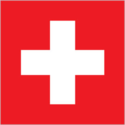
red square with a bold, equilateral white cross in the center that does not extend to the edges of the flag; various medieval legends purport to describe the origin of the flag; a white cross used as identification for troops of the Swiss Confederation is first attested at the Battle of Laupen (1339)
Government type
formally a confederation but similar in structure to a federal republic
Independence
1 August 1291 (founding of the Swiss Confederation)
International law organization participation
accepts compulsory ICJ jurisdiction with reservations; accepts ICCt jurisdiction
International organization participation
ADB (nonregional member), AfDB (nonregional member), Australia Group, BIS, CD, CE, CERN, EAPC, EBRD, EFTA, EITI (implementing country), ESA, FAO, FATF, G-10, IADB, IAEA, IBRD, ICAO, ICC (national committees), ICRM, IDA, IEA, IFAD, IFC, IFRCS, IGAD (partners), ILO, IMF, IMO, IMSO, Interpol, IOC, IOM, IPU, ISO, ITSO, ITU, ITUC (NGOs), LAIA (observer), MIGA, MONUSCO, NEA, NSG, OAS (observer), OECD, OIF, OPCW, OSCE, Paris Club, PCA, PFP, Schengen Convention, UN, UNCTAD, UNESCO, UNHCR, UNIDO, UNITAR, UNMISS, UNRWA, UNTSO, UNWTO, UPU, WCO, WHO, WIPO, WMO, WTO, ZC
Judicial branch
- Federal Supreme Court (consists of 38 judges and 31 substitutes and organized into 5 sections) judges elected by the Federal Assembly for 6-year terms; note - judges are affiliated with political parties and are elected according to linguistic and regional criteria in approximate proportion to the level of party representation in the Federal Assembly Federal Criminal Court (began in 2004); Federal Administrative Court (began in 2007); note - each of Switzerland's 26 cantons has its own courts
- highest court(s)
- Federal Supreme Court (consists of 38 judges and 31 substitutes and organized into 5 sections)
- judge selection and term of office
- judges elected by the Federal Assembly for 6-year terms; note - judges are affiliated with political parties and are elected according to linguistic and regional criteria in approximate proportion to the level of party representation in the Federal Assembly
- subordinate courts
- Federal Criminal Court (began in 2004); Federal Administrative Court (began in 2007); note - each of Switzerland's 26 cantons has its own courts
Legal system
civil law system; judicial review of legislative acts, except for federal decrees of a general obligatory character
Legislative branch
- bicameral Federal Assembly or Bundesversammlung (in German), Assemblee Federale (in French), Assemblea Federale (in Italian) consists of the Council of States or Staenderat (in German), Conseil des Etats (in French), Consiglio degli Stati (in Italian) (46 seats; membership consists of 2 representatives from each canton and 1 from each half canton; members serve four-year terms) and the National Council or Nationalrat (in German), Conseil National (in French), Consiglio Nazionale (in Italian) (200 seats; members elected by popular vote on the basis of proportional representation serve four-year terms) Council of States - last held in most cantons on 23 October 2011 (each canton determines when the next election will be held); National Council - last held on 23 October 2011 (next to be held in October 2015) Council of States - percent of vote by party - NA; seats by party - CVP 13, FDP 11, SVP 5, SPS 11, other 6; National Council - percent of vote by party - SVP 26.6%, SPS 18.7%, FDP 15.1%, CVP 12.3%, Green Party 8.4%, GLP 5.4%, BDP 5.4%, other 8.1%; seats by party - SVP 54, SPS 46, FDP 30, CVP 28, Green Party 15, GLP 12, BDP 9, other small parties 6
- election results
- Council of States - percent of vote by party - NA; seats by party - CVP 13, FDP 11, SVP 5, SPS 11, other 6; National Council - percent of vote by party - SVP 26.6%, SPS 18.7%, FDP 15.1%, CVP 12.3%, Green Party 8.4%, GLP 5.4%, BDP 5.4%, other 8.1%; seats by party - SVP 54, SPS 46, FDP 30, CVP 28, Green Party 15, GLP 12, BDP 9, other small parties 6
- elections
- Council of States - last held in most cantons on 23 October 2011 (each canton determines when the next election will be held); National Council - last held on 23 October 2011 (next to be held in October 2015)
National anthem
- "Schweizerpsalm" [German] "Cantique Suisse" [French] "Salmo svizzero," [Italian] "Psalm svizzer" [Romansch] (Swiss Psalm) Leonhard WIDMER [German], Charles CHATELANAT [French], Camillo VALSANGIACOMO [Italian], and Flurin CAMATHIAS [Romansch]/Alberik ZWYSSIG unofficially adopted 1961, official adoption 1981; the anthem has been popular in a number of Swiss cantons since its composition (in German) in 1841; translated into the other three official languages of the country (French, Italian, and Romansch), it is official in each of those languages
- lyrics/music
- Leonhard WIDMER [German], Charles CHATELANAT [French], Camillo VALSANGIACOMO [Italian], and Flurin CAMATHIAS [Romansch]/Alberik ZWYSSIG
- name
- "Schweizerpsalm" [German] "Cantique Suisse" [French] "Salmo svizzero," [Italian] "Psalm svizzer" [Romansch] (Swiss Psalm)
National holiday
Founding of the Swiss Confederation, 1 August (1291)
National symbol(s)
Swiss cross (white cross on red field; arms equal length)
Political parties and leaders
Christian Democratic People's Party (Christlichdemokratische Volkspartei der Schweiz or CVP, Parti Democrate-Chretien Suisse or PDC, Partito Popolare Democratico Svizzero or PPD, Partida Cristiandemocratica dalla Svizra or PCD) [Christophe DARBELLAY] Conservative Democratic Party (Buergerlich-Demokratische Partei Schweiz or BDP, Parti Bourgeois Democratique Suisse or PBD, Partito Borghese Democratico Svizzero or PBD, Partido burgais democratica Svizera or PBD) [Martin LANDOLT] Free Democratic Party or FDP.The Liberals (FDP.Die Liberalen, PLR.Les Liberaux-Radicaux, PLR.I Liberali, Ils Liberals) [Philipp MUELLER] Green Liberal Party (Grunliberale or GLP, Parti vert liberale or PVL, Partito Verde-Liberale or PVL, Partida Verde Liberale or PVL) [Martin BAEUMLE] Green Party (Gruene Partei der Schweiz or Gruene, Parti Ecologiste Suisse or Les Verts, Partito Ecologista Svizzero or I Verdi, Partida Ecologica Svizra or La Verda) [Adele THORENS] Social Democratic Party (Sozialdemokratische Partei der Schweiz or SPS, Parti Socialiste Suisse or PSS, Partito Socialista Svizzero or PSS, Partida Socialdemocratica de la Svizra or PSS) [Christian LEVRAT] Swiss People's Party (Schweizerische Volkspartei or SVP, Union Democratique du Centre or UDC, Unione Democratica di Centro or UDC, Uniun Democratica dal Center or UDC) [Toni BRUNNER] and other minor parties
Political pressure groups and leaders
NA
Suffrage
18 years of age; universal
Economy
Agriculture - products
grains, fruits, vegetables; meat, eggs
Budget
- $212.9 billion $212.1 billion includes federal, cantonal, and municipal accounts (2012 est.)
- expenditures
- $212.1 billion
- revenues
- $212.9 billion
Budget surplus (+) or deficit (-)
0.1% of GDP (2012 est.)
Central bank discount rate
0.5% (31 December 2010 est.) 0.75% (31 December 2009 est.)
Commercial bank prime lending rate
2.69% (31 December 2012 est.) 2.72% (31 December 2011 est.)
Current account balance
$63.82 billion (2012 est.) $39.6 billion (2011 est.)
Debt - external
$1.563 trillion (31 December 2012) $1.424 trillion (31 December 2011)
Distribution of family income - Gini index
29.6 (2010) 33.1 (1992)
Economy - overview
Switzerland is a peaceful, prosperous, and modern market economy with low unemployment, a highly skilled labor force, and a per capita GDP among the highest in the world. Switzerland's economy benefits from a highly developed service sector, led by financial services, and a manufacturing industry that specializes in high-technology, knowledge-based production. Its economic and political stability, transparent legal system, exceptional infrastructure, efficient capital markets, and low corporate tax rates also make Switzerland one of the world's most competitive economies. The Swiss have brought their economic practices largely into conformity with the EU's to enhance their international competitiveness, but some trade protectionism remains, particularly for its small agricultural sector. The fate of the Swiss economy is tightly linked to that of its neighbors in the euro zone, which purchases half of all Swiss exports. The global financial crisis of 2008 and resulting economic downturn in 2009 stalled export demand and put Switzerland in a recession. The Swiss National Bank (SNB) during this period effectively implemented a zero-interest rate policy to boost the economy as well as prevent appreciation of the franc, and Switzerland's economy recovered in 2010 with 3.0% growth. The sovereign debt crises currently unfolding in neighboring euro-zone countries pose a significant risk to Switzerland's financial stability and are driving up demand for the Swiss franc by investors seeking a safe-haven currency. The independent SNB has upheld its zero-interest rate policy and conducted major market interventions to prevent further appreciation of the Swiss franc, but parliamentarians have urged it to do more to weaken the currency. The franc's strength has made Swiss exports less competitive and weakened the country's growth outlook; GDP growth fell to 1.9% in 2011 and 0.8% in 2012. Switzerland has also come under increasing pressure from individual neighboring countries, the EU, the US, and international institutions to reform its banking secrecy laws. Consequently, the government agreed to conform to OECD regulations on administrative assistance in tax matters, including tax evasion. The government has renegotiated its double taxation agreements with numerous countries, including the US, to incorporate the OECD standard, and is considering the possibility of imposing taxes on bank deposits held by foreigners. These steps will have a lasting impact on Switzerland's long history of bank secrecy.
Exchange rates
Swiss francs (CHF) per US dollar - 0.94 (2012 est.) 0.89 (2011 est.) 1.04 (2010 est.) 1.09 (2009) 1.08 (2008)
Exports
$332.1 billion (2012 est.) $345.6 billion (2011 est.) trade data exclude trade with Switzerland
Exports - commodities
machinery, chemicals, metals, watches, agricultural products
Exports - partners
Germany 19.8%, US 11.1%, Italy 7.2%, France 7.1%, UK 5.4% (2012)
Fiscal year
calendar year
GDP - composition, by end use
- 57.4% 11.2% 20.1% 0.9% 52.3% -41.9% (2012 est.)
- exports of goods and services
- 52.3%
- government consumption
- 11.2%
- household consumption
- 57.4%
- imports of goods and services
- -41.9%
- investment in fixed capital
- 20.1%
- investment in inventories
- 0.9%
GDP - composition, by sector of origin
- 0.7% 26.8% 72.5% (2012 est.)
- agriculture
- 0.7%
- industry
- 26.8%
- services
- 72.5% (2012 est.)
GDP - per capita (PPP)
$44,900 (2012 est.) $44,700 (2011 est.) $44,300 (2010 est.) data are in 2012 US dollars
GDP - real growth rate
1% (2012 est.) 1.8% (2011 est.) 3% (2010 est.)
GDP (official exchange rate)
$622.6 billion (2012 est.)
GDP (purchasing power parity)
$359 billion (2012 est.) $355.3 billion (2011 est.) $349 billion (2010 est.) data are in 2012 US dollars
Gross national saving
31.5% of GDP (2012 est.) 27.3% of GDP (2011 est.) 34.2% of GDP (2010 est.)
Household income or consumption by percentage share
- 7.5% 19% (2007)
- highest 10%
- 19% (2007)
- lowest 10%
- 7.5%
Imports
$296.2 billion (2012 est.) $320.4 billion (2011 est.)
Imports - commodities
machinery, chemicals, vehicles, metals; agricultural products, textiles
Imports - partners
Germany 29.7%, Italy 10.2%, France 8.4%, US 5.6%, China 5.6%, Austria 4.2% (2012)
Industrial production growth rate
1% (2012 est.)
Industries
machinery, chemicals, watches, textiles, precision instruments, tourism, banking, and insurance
Inflation rate (consumer prices)
-0.7% (2012 est.) 0.2% (2011 est.)
Labor force
4.954 million (2012 est.)
Labor force - by occupation
- 3.4% 23.4% 73.2% (2010)
- agriculture
- 3.4%
- industry
- 23.4%
- services
- 73.2% (2010)
Market value of publicly traded shares
$932.2 billion (31 December 2011) $1.229 trillion (31 December 2010) $1.071 trillion (31 December 2009)
Population below poverty line
7.9% (2010)
Public debt
52.4% of GDP (2011 est.) 54.5% of GDP (2010) general government gross debt; gross debt consists of all liabilities that require payment or payments of interest and/or principal by the debtor to the creditor at a date or dates in the future; includes debt liabilities in the form of SDRs, currency and deposits, debt securities, loans, insurance, pensions and standardized guarantee schemes, and other accounts payable; all liabilities in the GFSM 2001 system are debt, except for equity and investment fund shares and financial derivatives and employee stock options
Reserves of foreign exchange and gold
$531.1 billion (31 December 2012 est.) $331.9 billion (31 December 2011 est.)
Stock of broad money
$1.166 trillion (31 December 2012 est.) $1.05 trillion (31 December 2011 est.)
Stock of direct foreign investment - abroad
$1.381 trillion (31 December 2012 est.) $1.307 trillion (31 December 2011 est.)
Stock of direct foreign investment - at home
$955.1 billion (31 December 2012 est.) $925 billion (31 December 2011 est.)
Stock of domestic credit
$1.247 trillion (31 December 2012 est.) $1.159 trillion (31 December 2011 est.)
Stock of narrow money
$534.4 billion (31 December 2012 est.) $464.8 billion (31 December 2011 est.)
Taxes and other revenues
34.2% of GDP (2012 est.)
Unemployment rate
2.9% (2012 est.) 2.8% (2011 est.)
Energy
Carbon dioxide emissions from consumption of energy
43.36 million Mt (2011 est.)
Crude oil - exports
0 bbl/day (2011 est.)
Crude oil - imports
258,200 bbl/day (2011 est.)
Crude oil - production
3,613 bbl/day (2012 est.)
Crude oil - proved reserves
0 bbl (1 January 2013 es)
Electricity - consumption
60.42 billion kWh (2011 est.)
Electricity - exports
34.57 billion kWh (2012 est.)
Electricity - from fossil fuels
3.1% of total installed capacity (2010 est.)
Electricity - from hydroelectric plants
65.9% of total installed capacity (2010 est.)
Electricity - from nuclear fuels
18% of total installed capacity (2010 est.)
Electricity - from other renewable sources
3% of total installed capacity (2010 est.)
Electricity - imports
32.25 billion kWh (2012 est.)
Electricity - installed generating capacity
18.07 million kW (2010 est.)
Electricity - production
60.18 billion kWh (2011 est.)
Natural gas - consumption
3.682 billion cu m (2010 est.)
Natural gas - exports
8.494 billion cu m (2012 est.)
Natural gas - imports
11.77 billion cu m (2012 est.)
Natural gas - production
0 cu m (2011 est.)
Natural gas - proved reserves
0 cu m (1 January 2011 es)
Refined petroleum products - consumption
258,200 bbl/day (2011 est.)
Refined petroleum products - exports
7,585 bbl/day (2010 est.)
Refined petroleum products - imports
157,600 bbl/day (2010 est.)
Refined petroleum products - production
96,710 bbl/day (2010 est.)
Communications
Broadcast media
the publicly owned radio and TV broadcaster, Swiss Broadcasting Corporation (SRG/SSR), operates 7 national TV networks, 3 broadcasting in German, 2 in Italian, and 2 in French; private commercial TV stations broadcast regionally and locally; TV broadcasts from stations in Germany, Italy, and France are widely available via multi-channel cable and satellite TV services; SRG/SSR operates 18 radio stations that, along with private broadcasters, provide national to local coverage (2009)
Internet country code
.ch
Internet hosts
5.301 million (2012)
Internet users
6.152 million (2009)
Telephone system
- highly developed telecommunications infrastructure with excellent domestic and international services ranked among leading countries for fixed-line teledensity and infrastructure; mobile-cellular subscribership roughly 125 per 100 persons; extensive cable and microwave radio relay networks country code - 41; satellite earth stations - 2 Intelsat (Atlantic Ocean and Indian Ocean) (2011)
- domestic
- ranked among leading countries for fixed-line teledensity and infrastructure; mobile-cellular subscribership roughly 125 per 100 persons; extensive cable and microwave radio relay networks
- general assessment
- highly developed telecommunications infrastructure with excellent domestic and international services
- international
- country code - 41; satellite earth stations - 2 Intelsat (Atlantic Ocean and Indian Ocean) (2011)
Telephones - main lines in use
4.382 million (2012)
Telephones - mobile cellular
10.46 million (2012)
Transportation
Airports
63 (2013)
Airports - with paved runways
- 17 (2013)
- 1,524 to 2,437 m
- 12
- 2,438 to 3,047 m
- 2
- 914 to 1,523 m
- 6
- over 3,047 m
- 3
- total
- 40
- under 914 m
- 17 (2013)
Airports - with unpaved runways
- 23 (2013)
- total
- 23
Heliports
2 (2013)
Merchant marine
- bulk carrier 19, cargo 9, chemical tanker 5, container 4, petroleum tanker 1 127 (Antigua and Barbuda 7, Bahamas 1, Belize 1, Cayman Islands 1, France 5, Germany 2, Hong Kong 5, Italy 13, Liberia 25, Luxembourg 1, Malta 20, Marshall Islands 12, NZ 2, Panama 15, Portugal 3, Russia 3, Saint Vincent and the Grenadines 7, Singapore 3, Spain 1) (2010)
- registered in other countries
- 127 (Antigua and Barbuda 7, Bahamas 1, Belize 1, Cayman Islands 1, France 5, Germany 2, Hong Kong 5, Italy 13, Liberia 25, Luxembourg 1, Malta 20, Marshall Islands 12, NZ 2, Panama 15, Portugal 3, Russia 3, Saint Vincent and the Grenadines 7, Singapore 3, Spain 1) (2010)
- total
- 38
Pipelines
gas 1,800 km; oil 94 km; refined products 7 km (2013)
Ports and terminals
Basel
Railways
- 4,876 km 3,846 km 1.435-m gauge (3,591 km electrified) 1,020 km 1.000-m gauge (1,013 km electrified); 10 km 0.800-m gauge (10 km electrified) (2008)
- narrow gauge
- 1,020 km 1.000-m gauge (1,013 km electrified); 10 km 0.800-m gauge (10 km electrified) (2008)
- total
- 4,876 km
Roadways
- 71,464 km 71,464 km (includes 1,415 of expressways) (2011)
- total
- 71,464 km
Waterways
1,292 km (there are 1,227 km of waterways on lakes and rivers for public transport and another 65 km on the Rhine River between Basel-Rheinfelden and Schaffhausen-Bodensee used for the transport of commercial goods) (2010)
Military and Security
Manpower available for military service
- 1,828,043 1,786,552 (2010 est.)
- females age 16-49
- 1,786,552 (2010 est.)
- males age 16-49
- 1,828,043
Manpower fit for military service
- 1,493,509 1,459,450 (2010 est.)
- females age 16-49
- 1,459,450 (2010 est.)
- males age 16-49
- 1,493,509
Manpower reaching militarily significant age annually
- 46,562 42,585 (2010 est.)
- female
- 42,585 (2010 est.)
- male
- 46,562
Military branches
- Swiss Armed Forces: Land Forces, Swiss Air Force (Schweizer Luftwaffe) (2013)
- Swiss Armed Forces
- Land Forces, Swiss Air Force (Schweizer Luftwaffe) (2013)
Military expenditures
1% of GDP (2005 est.)
Military service age and obligation
19-26 years of age for male compulsory military service; 18 years of age for voluntary male and female military service; every Swiss male has to serve at least 260 days in the armed forces; conscripts receive 18 weeks of mandatory training, followed by seven 3-week intermittent recalls for training during the next 10 years (2012)
Transnational Issues
Disputes - international
none
Illicit drugs
a major international financial center vulnerable to the layering and integration stages of money laundering; despite significant legislation and reporting requirements, secrecy rules persist and nonresidents are permitted to conduct business through offshore entities and various intermediaries; transit country for and consumer of South American cocaine, Southwest Asian heroin, and Western European synthetics; domestic cannabis cultivation and limited ecstasy production
Refugees and internally displaced persons
- 10,981 (Eritrea) (2012) 69 (2012)
- refugees (country of origin)
- 10,981 (Eritrea) (2012)
- stateless persons
- 69 (2012)