2007 Edition
CIA World Factbook 2007 (Project Gutenberg)
Introduction
Administrative divisions
26 cantons (cantons, singular - canton in French; cantoni, singular - cantone in Italian; kantone, singular - kanton in German); Aargau, Appenzell Ausser-Rhoden, Appenzell Inner-Rhoden, Basel-Landschaft, Basel-Stadt, Bern, Fribourg, Geneve, Glarus, Graubunden, Jura, Luzern, Neuchatel, Nidwalden, Obwalden, Sankt Gallen, Schaffhausen, Schwyz, Solothurn, Thurgau, Ticino, Uri, Valais, Vaud, Zug, Zurich
Age structure
0-14 years: 16.3% (male 637,585/female 591,297) 15-64 years: 68.1% (male 2,585,062/female 2,539,345) 65 years and over: 15.6% (male 480,198/female 690,447) (2006 est.)
Agriculture - products
grains, fruits, vegetables; meat, eggs
Airports
65 (2006)
Airports - with paved runways
- over 3,047 m
- 3 2,438 to 3,047 m: 4 1,524 to 2,437 m: 11 914 to 1,523 m: 8
- total
- 42
- under 914 m
- 16 (2006)
Airports - with unpaved runways
- total
- 23
- under 914 m
- 23 (2006)
Area
- land
- 39,770 sq km
- total
- 41,290 sq km
- water
- 1,520 sq km
Area - comparative
slightly less than twice the size of New Jersey
Background
The Swiss Confederation was founded in 1291 as a defensive alliance among three cantons. In succeeding years, other localities joined the original three. The Swiss Confederation secured its independence from the Holy Roman Empire in 1499. Switzerland's sovereignty and neutrality have long been honored by the major European powers, and the country was not involved in either of the two World Wars. The political and economic integration of Europe over the past half century, as well as Switzerland's role in many UN and international organizations, has strengthened Switzerland's ties with its neighbors. However, the country did not officially become a UN member until 2002. Switzerland remains active in many UN and international organizations, but retains a strong commitment to neutrality. Geography Switzerland
Birth rate
9.71 births/1,000 population (2006 est.)
Budget
- expenditures
- $139.1 billion; including capital expenditures of $NA (2006 est.)
- revenues
- $141 billion
Capital
- daylight saving time
- +1hr, begins last Sunday in March; ends last Sunday in October
- geographic coordinates
- 46 57 N, 7 26 E
- name
- Bern
- time difference
- UTC+1 (6 hours ahead of Washington, DC during Standard Time)
Climate
temperate, but varies with altitude; cold, cloudy, rainy/snowy winters; cool to warm, cloudy, humid summers with occasional showers
Coastline
0 km (landlocked)
Constitution
revision of Constitution of 1874 approved by the Federal Parliament 18 December 1998, adopted by referendum 18 April 1999, officially entered into force 1 January 2000
Country name
- conventional long form
- Swiss Confederation
- conventional short form
- Switzerland
- local long form
- Schweizerische Eidgenossenschaft (German); Confederation Suisse (French); Confederazione Svizzera (Italian)
- local short form
- Schweiz (German); Suisse (French); Svizzera (Italian)
Currency (code)
Swiss franc (CHF)
Currency code
CHF
Current account balance
$50.44 billion (2006 est.)
Death rate
8.49 deaths/1,000 population (2006 est.)
Debt - external
$1.077 trillion (30 June 2006)
Diplomatic representation from the US
- chief of mission
- Ambassador Peter R. CONEWAY
- embassy
- Jubilaumsstrasse 93, CH-3005 Bern
- mailing address
- use embassy street address
- telephone
- [41] (031) 357 70 11
Diplomatic representation in the US
- chancery
- 2900 Cathedral Avenue NW, Washington, DC 20008
- chief of mission
- Ambassador Urs ZISWILER
- telephone
- [1] (202) 745-7900
Disputes - international
none
Distribution of family income - Gini index
33.1 (1992)
Economic aid - donor
ODA, $1.1 billion (1995)
Economy - overview
Switzerland is a peaceful, prosperous, and stable modern market economy with low unemployment, a highly skilled labor force, and a per capita GDP larger than that of the big Western European economies. The Swiss in recent years have brought their economic practices largely into conformity with the EU's to enhance their international competitiveness. Switzerland remains a safehaven for investors, because it has maintained a degree of bank secrecy and has kept up the franc's long-term external value. Reflecting the anemic economic conditions of Europe, GDP growth stagnated during the 2001-03 period, improved during 2004-05 to 1.8% annually and to 2.9% in 2006. Even so, unemployment has remained at less than half the EU average.
Electricity - consumption
56.93 billion kWh (2004)
Electricity - exports
27.8 billion kWh (2004)
Electricity - imports
27.1 billion kWh (2004)
Electricity - production
61.97 billion kWh (2004)
Electricity - production by source
- fossil fuel
- 1.3%
- hydro
- 59.5%
- nuclear
- 37.1%
- other
- 2% (2001)
Elevation extremes
- highest point
- Dufourspitze 4,634 m
- lowest point
- Lake Maggiore 195 m
Environment - current issues
air pollution from vehicle emissions and open-air burning; acid rain; water pollution from increased use of agricultural fertilizers; loss of biodiversity
Environment - international agreements
- party to
- Air Pollution, Air Pollution-Nitrogen Oxides, Air Pollution-Persistent Organic Pollutants, Air Pollution-Sulfur 85, Air Pollution-Sulfur 94, Air Pollution-Volatile Organic Compounds, Antarctic Treaty, Biodiversity, Climate Change, Climate Change-Kyoto Protocol, Desertification, Endangered Species, Environmental Modification, Hazardous Wastes, Marine Dumping, Marine Life Conservation, Ozone Layer Protection, Ship Pollution, Tropical Timber 83, Tropical Timber 94, Wetlands, Whaling
- signed, but not ratified
- Law of the Sea
Ethnic groups
German 65%, French 18%, Italian 10%, Romansch 1%, other 6%
Exchange rates
Swiss francs per US dollar - 1.2508 (2006), 1.2452 (2005), 1.2435 (2004), 1.3467 (2003), 1.5586 (2002)
Executive branch
- cabinet
- Federal Council or Bundesrat (in German), Conseil Federal (in French), Consiglio Federale (in Italian) elected by the Federal Assembly usually from among its own members for a four-year term
- chief of state
- President Micheline CALMY-REY (since 1 January 2007); Vice President Pascal COUCHEPIN (since 1 January 2007); note - the president is both the chief of state and head of government
- election results
- Micheline CALMY-REY elected president; percent of Federal Assembly vote - 76.5%; Pascal COUCHEPIN elected vice president; percent of Federal Assembly vote - 86.5%
- elections
- president and vice president elected by the Federal Assembly from among the members of the Federal Council for a one-year term (they may not serve consecutive terms); election last held 13 December 2006 (next to be held December 2007)
- head of government
- President Micheline CALMY-REY (since 1 January 2007); Vice President Pascal COUCHEPIN (since 1 January 2007)
Exports
$166.3 billion f.o.b. (2006 est.)
Exports - commodities
machinery, chemicals, metals, watches, agricultural products
Exports - partners
Germany 19.4%, US 10.9%, Italy 9.1%, France 8.7%, UK 5.4%, Spain 4.1% (2005)
FAX
- [1] (202) 387-2564
- [41] (031) 357 73 44
- consulate(s)
- Boston
- consulate(s) general
- Atlanta, Chicago, Houston, Los Angeles, New York, San Francisco
Fiscal year
calendar year Communications Switzerland
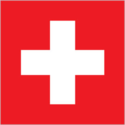
Flag description
red square with a bold, equilateral white cross in the center that does not extend to the edges of the flag Economy Switzerland
GDP - composition by sector
- agriculture
- 1.5%
- industry
- 34%
- services
- 64.5% (2003 est.)
GDP - per capita (PPP)
$33,600 (2006 est.)
GDP - real growth rate
2.9% (2006 est.)
GDP (official exchange rate)
$386.8 billion (2006 est.)
GDP (purchasing power parity)
$252.9 billion (2006 est.)
Geographic coordinates
47 00 N, 8 00 E
Geography - note
landlocked; crossroads of northern and southern Europe; along with southeastern France, northern Italy, and southwestern Austria, has the highest elevations in the Alps People Switzerland
Government type
formally a confederation, but similar in structure to a federal republic
Heliports
2 (2006)
HIV/AIDS - adult prevalence rate
0.4% (2001 est.)
HIV/AIDS - deaths
less than 100 (2003 est.)
HIV/AIDS - people living with HIV/AIDS
13,000 (2001 est.)
Household income or consumption by percentage share
- highest 10%
- 25.2% (1992)
- lowest 10%
- 2.6%
Illicit drugs
a major international financial center vulnerable to the layering and integration stages of money laundering; despite significant legislation and reporting requirements, secrecy rules persist and nonresidents are permitted to conduct business through offshore entities and various intermediaries; transit country for and consumer of South American cocaine and Southwest Asian heroin This page was last updated on 8 February, 2007
Imports
$162.3 billion f.o.b. (2006 est.)
Imports - commodities
machinery, chemicals, vehicles, metals; agricultural products, textiles
Imports - partners
Germany 31.6%, Italy 10.5%, France 10%, US 5.6%, Netherlands 4.8%, Austria 4.6%, UK 4.4% (2005)
Independence
1 August 1291 (founding of the Swiss Confederation)
Industrial production growth rate
6.5% (2006 est.)
Industries
machinery, chemicals, watches, textiles, precision instruments
Infant mortality rate
- female
- 3.81 deaths/1,000 live births (2006 est.)
- male
- 4.84 deaths/1,000 live births
- total
- 4.34 deaths/1,000 live births
Inflation rate (consumer prices)
1.2% (2006 est.)
International organization participation
ACCT, AfDB, AsDB, Australia Group, BIS, CE, CERN, EAPC, EBRD, EFTA, ESA, FAO, G-10, IADB, IAEA, IBRD, ICAO, ICC, ICCt, ICRM, IDA, IEA, IFAD, IFC, IFRCS, ILO, IMF, IMO, Interpol, IOC, IOM, IPU, ISO, ITU, ITUC, LAIA (observer), MIGA, MONUC, NAM (guest), NEA, NSG, OAS (observer), OECD, OIF, OPCW, OSCE, Paris Club, PCA, PFP, UN, UNCTAD, UNESCO, UNHCR, UNIDO, UNITAR, UNMEE, UNOMIG, UNRWA, UNTSO, UNWTO, UPU, WCL, WCO, WHO, WIPO, WMO, WTO, ZC
Internet country code
.ch
Internet hosts
2,442,659 (2006)
Internet Service Providers (ISPs)
44 (Switzerland and Liechtenstein) (2000)
Internet users
5,097,822 (2005) Transportation Switzerland
Investment (gross fixed)
21.8% of GDP (2006 est.)
Irrigated land
250 sq km (2003)
Judicial branch
Federal Supreme Court (judges elected for six-year terms by the Federal Assembly)
Labor force
3.81 million (2006 est.)
Labor force - by occupation
- agriculture
- 4.6%
- industry
- 26.3%
- services
- 69.1% (1998)
Land boundaries
- border countries
- Austria 164 km, France 573 km, Italy 740 km, Liechtenstein 41 km, Germany 334 km
- total
- 1,852 km
Land use
- arable land
- 9.91%
- other
- 89.51% (2005)
- permanent crops
- 0.58%
Languages
- German (official) 63.7%, French (official) 20.4%, Italian (official) 6.5%, Serbo-Croatian 1.5%, Albanian 1.3%, Portuguese 1.2%, Spanish 1.1%, English 1%, Romansch 0.5%, other 2.8% (2000 census)
- note
- German, French, Italian, and Romansch are all national languages, but only the first three are official languages
Legal system
civil law system influenced by customary law; judicial review of legislative acts, except with respect to federal decrees of general obligatory character; accepts compulsory ICJ jurisdiction, with reservations
Legislative branch
- bicameral Federal Assembly or Bundesversammlung (in German), Assemblee Federale (in French), Assemblea Federale (in Italian) consists of the Council of States or Standerat (in German), Conseil des Etats (in French), Consiglio degli Stati (in Italian) (46 seats - consists of two representatives from each canton and one from each half canton; members serve four-year terms) and the National Council or Nationalrat (in German), Conseil National (in French), Consiglio Nazionale (in Italian) (200 seats - members are elected by popular vote on the basis of proportional representation to serve four-year terms)
- election results
- Council of States - percent of vote by party - NA%; seats by party - CVP 15, FDP 14, SVP 8, SPS 6, other 3; National Council - percent of vote by party - SVP 26.6%, SPS 23.3%, FDP 17.3%, CVP 14.4%, Greens 7.4%, other small parties all under 5%; seats by party - SVP 55, SPS 54, FDP 36, CVP 28, Green Party 13, other small parties 14
- elections
- Council of States - last held in most cantons 19 October 2003 (each canton determines when the next election will be held); National Council - last held 19 October 2003 (next to be held October 2007)
Life expectancy at birth
- female
- 83.48 years (2006 est.)
- male
- 77.69 years
- total population
- 80.51 years
Literacy
- definition
- age 15 and over can read and write
- female
- 99% (2003 est.) Government Switzerland
- male
- 99%
- total population
- 99%
Location
Central Europe, east of France, north of Italy
Manpower available for military service
- females age 19-49
- 1,662,099 (2005 est.)
- males age 19-49
- 1,707,694
Manpower fit for military service
- females age 19-49
- 1,342,945 (2005 est.)
- males age 19-49
- 1,375,889
Manpower reaching military service age annually
- females age 19-49
- 43,829 (2005 est.)
- males age 18-49
- 46,319
Map references
Europe
Maritime claims
none (landlocked)
Median age
- female
- 41.1 years (2006 est.)
- male
- 39 years
- total
- 40.1 years
Merchant marine
- by type
- bulk carrier 9, cargo 10, chemical tanker 3, container 4, specialized tanker 1
- foreign-owned
- 2 (Monaco 2)
- registered in other countries
- 320 (Antigua and Barbuda 4, Bahamas 2, Belize 1, Bermuda 2, Cyprus 4, France 2, French Southern and Antarctic Lands 1, Germany 1, Indonesia 3, Liberia 7, Malta 21, Marshall Islands 13, Mauritius 2, Morocco 1, Panama 226, Portugal 3, Russia 7, Saint Vincent and the Grenadines 13, Tonga 1, Turkey 1, UK 3, Vanuatu 2) (2006)
- total
- 27 ships (1000 GRT or over) 492,434 GRT/810,559 DWT
Military expenditures - dollar figure
$2.548 billion (FY01)
Military expenditures - percent of GDP
1% (FY01) Transnational Issues Switzerland
Military service age and obligation
the Swiss Constitution states that "every Swiss male is obliged to do military service"; every Swiss male has to serve for at least 260 days in the armed forces; 19 years of age for compulsory military service; 17 years of age for voluntary military service; conscripts receive 15 weeks of compulsory training, followed by 10 intermittent recalls for training over the next 22 years; women are accepted on a voluntary basis but are not drafted (2005)
National holiday
Founding of the Swiss Confederation, 1 August (1291)
Nationality
- adjective
- Swiss
- noun
- Swiss (singular and plural)
Natural gas - consumption
3.311 billion cu m (2004 est.)
Natural gas - exports
0 cu m (2004 est.)
Natural gas - imports
3.311 billion cu m (2004 est.)
Natural gas - production
0 cu m (2004 est.)
Natural hazards
avalanches, landslides, flash floods
Natural resources
hydropower potential, timber, salt
Net migration rate
3.12 migrant(s)/1,000 population (2006 est.)
Oil - consumption
268,100 bbl/day (2004 est.)
Oil - exports
10,420 bbl/day (2001)
Oil - imports
289,500 bbl/day (2001)
Oil - production
2,241 bbl/day (2004 est.)
Pipelines
gas 1,831 km; oil 94 km; refined products 7 km (2006)
Political parties and leaders
Green Party (Gruene Partei der Schweiz or Grune, Parti Ecologiste Suisse or Les Verts, Partito Ecologista Svizzero or I Verdi, Partida Ecologica Svizra or La Verda) [Ruth GENNER]; Christian Democratic People's Party (Christichdemokratische Volkspartei der Schweiz or CVP, Parti Democrate-Chretien Suisse or PDC, Partito Democratico-Cristiano Popolare Svizzero or PDC, Partida Cristiandemocratica dalla Svizra or PCD) [Christophe DARBELLAY, president]; Radical Free Democratic Party (Freisinnig-Demokratische Partei der Schweiz or FDP, Parti Radical-Democratique Suisse or PRD, Partitio Liberal-Radicale Svizzero or PLR) [Fulvio PELLI, president]; Social Democratic Party (Sozialdemokratische Partei der Schweiz or SPS, Parti Socialist Suisse or PSS, Partito Socialista Svizzero or PSS, Partida Socialdemocratica de la Svizra or PSS) [Hans-Juerg FEHR, president]; Swiss People's Party (Schweizerische Volkspartei or SVP, Union Democratique du Centre or UDC, Unione Democratica de Centro or UDC, Uniun Democratica dal Center or UDC) [Ueli MAURER, president]; and other minor parties
Political pressure groups and leaders
NA
Population
7,523,934 (July 2006 est.)
Population below poverty line
NA%
Population growth rate
0.43% (2006 est.)
Ports and terminals
Basel Military Switzerland
Public debt
51% of GDP (2006 est.)
Radio broadcast stations
AM 4, FM 113 (plus many low power stations), shortwave 2 (1998)
Radios
7.1 million (1997)
Railways
- narrow gauge
- 1,339 km 1.000-m gauge (1,338 km electrified); 10 km 0.800-m gauge (10 km electrified) (2005)
- standard gauge
- 3,234 km 1.435-m gauge (3,223 km electrified)
- total
- 4,583 km
Religions
Roman Catholic 41.8%, Protestant 35.3%, Orthodox 1.8%, other Christian 0.4%, Muslim 4.3%, other 1%, unspecified 4.3%, none 11.1% (2000 census)
Reserves of foreign exchange and gold
$38.29 billion (August 2006 est.)
Roadways
- paved
- 71,297 km (including 1,728 of expressways) (2004)
- total
- 71,297 km
Sex ratio
- at birth
- 1.05 male(s)/female
- total population
- 0.97 male(s)/female (2006 est.)
- under 15 years
- 1.08 male(s)/female 15-64 years: 1.02 male(s)/female 65 years and over: 0.7 male(s)/female
Suffrage
18 years of age; universal
Swiss Armed Forces
Land Forces, Swiss Air Force (Schweizer Luftwaffe); Switzerland has no navy, but maintains a fleet of military patrol boats to patrol Swiss borders (2006)
Telephone system
- domestic
- extensive cable and microwave radio relay networks
- general assessment
- excellent domestic and international services
- international
- country code - 41; satellite earth stations - 2 Intelsat (Atlantic Ocean and Indian Ocean)
Telephones - main lines in use
5.123 million (2005)
Telephones - mobile cellular
6.847 million (2005)
Television broadcast stations
115 (plus 1,919 repeaters) (1995)
Televisions
3.31 million (1997)
Terrain
mostly mountains (Alps in south, Jura in northwest) with a central plateau of rolling hills, plains, and large lakes
Total fertility rate
1.43 children born/woman (2006 est.)
Unemployment rate
3.3% (2006 est.)
Waterways
65 km (Rhine River between Basel-Rheinfelden and Schaffhausen-Bodensee) (2003)