2008 Edition
CIA World Factbook 2008 (Project Gutenberg)
Introduction
Background
A military power during the 17th century, Sweden has not participated in any war in almost two centuries. An armed neutrality was preserved in both World Wars. Sweden's long-successful economic formula of a capitalist system interlarded with substantial welfare elements was challenged in the 1990s by high unemployment and in 2000-02 by the global economic downturn, but fiscal discipline over the past several years has allowed the country to weather economic vagaries. Sweden joined the EU in 1995, but the public rejected the introduction of the euro in a 2003 referendum.
Geography
Area
total: 449,964 sq km land: 410,934 sq km water: 39,030 sq km
Area - comparative
slightly larger than California
Climate
temperate in south with cold, cloudy winters and cool, partly cloudy summers; subarctic in north
Coastline
3,218 km
Elevation extremes
lowest point: reclaimed bay of Lake Hammarsjon, near Kristianstad -2.41 m highest point: Kebnekaise 2,111 m
Environment - current issues
acid rain damage to soils and lakes; pollution of the North Sea and the Baltic Sea
Environment - international agreements
party to: Air Pollution, Air Pollution-Nitrogen Oxides, Air Pollution-Persistent Organic Pollutants, Air Pollution-Sulfur 85, Air Pollution-Sulfur 94, Air Pollution-Volatile Organic Compounds, Antarctic-Environmental Protocol, Antarctic-Marine Living Resources, Antarctic Treaty, Biodiversity, Climate Change, Climate Change-Kyoto Protocol, Desertification, Endangered Species, Environmental Modification, Hazardous Wastes, Law of the Sea, Marine Dumping, Ozone Layer Protection, Ship Pollution, Tropical Timber 83, Tropical Timber 94, Wetlands, Whaling signed, but not ratified: none of the selected agreements
Freshwater withdrawal (domestic/industrial/agricultural)
total: 2.68 cu km/yr (37%/54%/9%) per capita: 296 cu m/yr (2002)
Geographic coordinates
62 00 N, 15 00 E
Geography - note
strategic location along Danish Straits linking Baltic and North Seas
Irrigated land
1,150 sq km (2003)
Land boundaries
total: 2,233 km border countries: Finland 614 km, Norway 1,619 km
Land use
arable land: 5.93% permanent crops: 0.01% other: 94.06% (2005)
Location
Northern Europe, bordering the Baltic Sea, Gulf of Bothnia, Kattegat, and Skagerrak, between Finland and Norway
Map references
Europe
Maritime claims
territorial sea: 12 nm (adjustments made to return a portion of straits to high seas) exclusive economic zone: agreed boundaries or midlines continental shelf: 200-m depth or to the depth of exploitation
Natural hazards
ice floes in the surrounding waters, especially in the Gulf of Bothnia, can interfere with maritime traffic
Natural resources
iron ore, copper, lead, zinc, gold, silver, tungsten, uranium, arsenic, feldspar, timber, hydropower
Terrain
mostly flat or gently rolling lowlands; mountains in west
Total renewable water resources
179 cu km (2005)
People and Society
Age structure
0-14 years: 16% (male 745,110/female 703,857) 15-64 years: 65.6% (male 3,008,148/female 2,928,930) 65 years and over: 18.3% (male 729,500/female 929,844) (2008 est.)
Birth rate
10.15 births/1,000 population (2008 est.)
Death rate
10.24 deaths/1,000 population (2008 est.)
Education expenditures
7.1% of GDP (2005)
Ethnic groups
indigenous population: Swedes with Finnish and Sami minorities; foreign-born or first-generation immigrants: Finns, Yugoslavs, Danes, Norwegians, Greeks, Turks
HIV/AIDS - adult prevalence rate
0.1% (2001 est.)
HIV/AIDS - deaths
fewer than 100 (2003 est.)
HIV/AIDS - people living with HIV/AIDS
3,600 (2001 est.)
Infant mortality rate
total: 2.75 deaths/1,000 live births male: 2.91 deaths/1,000 live births female: 2.58 deaths/1,000 live births (2008 est.)
Languages
Swedish, small Sami- and Finnish-speaking minorities
Life expectancy at birth
total population: 80.74 years male: 78.49 years female: 83.13 years (2008 est.)
Literacy
definition: age 15 and over can read and write total population: 99% male: 99% female: 99% (2003 est.)
Median age
total: 41.3 years male: 40.2 years female: 42.4 years (2008 est.)
Nationality
noun: Swede(s) adjective: Swedish
Net migration rate
1.66 migrant(s)/1,000 population (2008 est.)
Population
9,045,389 (July 2008 est.)
Population growth rate
0.157% (2008 est.)
Religions
Lutheran 87%, other (includes Roman Catholic, Orthodox, Baptist, Muslim, Jewish, and Buddhist) 13%
School life expectancy (primary to tertiary education)
total: 16 years male: 15 years female: 17 years (2006)
Sex ratio
at birth: 1.06 male(s)/female under 15 years: 1.06 male(s)/female 15-64 years: 1.03 male(s)/female 65 years and over: 0.78 male(s)/female total population: 0.98 male(s)/female (2008 est.)
Total fertility rate
1.67 children born/woman (2008 est.)
Government
Administrative divisions
21 counties (lan, singular and plural); Blekinge, Dalarnas, Gavleborgs, Gotlands, Hallands, Jamtlands, Jonkopings, Kalmar, Kronobergs, Norrbottens, Orebro, Ostergotlands, Skane, Sodermanlands, Stockholm, Uppsala, Varmlands, Vasterbottens, Vasternorrlands, Vastmanlands, Vastra Gotalands
Capital
name: Stockholm geographic coordinates: 59 20 N, 18 03 E time difference: UTC+1 (6 hours ahead of Washington, DC during Standard Time) daylight saving time: +1hr, begins last Sunday in March; ends last Sunday in October
Constitution
1 January 1975
Country name
conventional long form: Kingdom of Sweden conventional short form: Sweden local long form: Konungariket Sverige local short form: Sverige
Diplomatic representation from the US
chief of mission: Ambassador Michael M. WOOD embassy: Dag Hammarskjolds Vag 31, SE-11589 Stockholm mailing address: American Embassy Stockholm, US Department of State, 5750 Stockholm Place, Washington, DC 20521-5750 telephone: [46] (08) 783 53 00
Diplomatic representation in the US
chief of mission: Ambassador Jonas HAFSTROM chancery: 2900 K Street NW, Washington, DC 20007 telephone: [1] (202) 467-2600
Executive branch
chief of state: King CARL XVI GUSTAF (since 19 September 1973); Heir Apparent Princess VICTORIA Ingrid Alice Desiree, daughter of the monarch (born 14 July 1977) head of government: Prime Minister Fredrik REINFELDT (since 5 October 2006) cabinet: Cabinet appointed by the prime minister elections: the monarchy is hereditary; following legislative elections, the prime minister is elected by the parliament; election last held on 17 September 2006 (next to be held in September 2010) election results: Fredrik REINFELDT elected prime minister with 175 out of 349 votes
FAX
- [1] (202) 467-2699 consulate(s) general: Chicago, Los Angeles, New York
- [46] (08) 661 19 64
Flag description
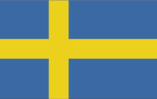
blue with a golden yellow cross extending to the edges of the flag; the vertical part of the cross is shifted to the hoist side in the style of the Dannebrog (Danish flag)
Government type
constitutional monarchy
Independence
6 June 1523 (Gustav VASA elected king)
International organization participation
ADB (nonregional members), AfDB (nonregional members), Arctic Council, Australia Group, BIS, CBSS, CE, CERN, EAPC, EBRD, EIB, ESA, EU, FAO, G-9, G-10, IADB, IAEA, IBRD, ICAO, ICC, ICCt, ICRM, IDA, IEA, IFAD, IFC, IFRCS, IHO, ILO, IMF, IMO, IMSO, Interpol, IOC, IOM, IPU, ISO, ITSO, ITU, ITUC, MIGA, MINURCAT, MONUC, NAM (guest), NC, NEA, NIB, NSG, OAS (observer), OECD, OPCW, OSCE, Paris Club, PCA, PFP, Schengen Convention, UN, UNCTAD, UNESCO, UNHCR, UNIDO, UNMIL, UNMIS, UNMOGIP, UNOMIG, UNRWA, UNTSO, UPU, WCO, WEU (observer), WFTU, WHO, WIPO, WMO, WTO, ZC
Judicial branch
Supreme Court or Hogsta Domstolen (judges are appointed by the prime minister and the cabinet)
Legal system
civil law system influenced by customary law; accepts compulsory ICJ jurisdiction with reservations
Legislative branch
unicameral Parliament or Riksdag (349 seats; members are elected by popular vote on a proportional representation basis to serve four-year terms) elections: last held on 17 September 2006 (next to be held in September 2010) election results: percent of vote by party - Social Democrats 37.2%, Moderates 27.8%, Center Party 8.3%, Liberal People's Party 8.0%, Christian Democrats 6.9%, Left Party 6.3%, Greens 5.4%; seats by party - Social Democrats 130, Moderates 97, Center Party 29, Liberal People's Party 28, Christian Democrats 24, Left Party 22, Greens 19
National holiday
Swedish Flag Day, 6 June (1916); National Day, 6 June (1983)
Political parties and leaders
Center Party [Maud OLOFSSON]; Christian Democratic Party [Goran HAGGLUND]; Environment Party the Greens [no formal leader but party spokespersons are Maria WETTERSTRAND and Peter ERIKSSON]; Left Party or V (formerly Communist) [Lars OHLY]; Liberal People's Party [Jan BJORKLUND]; Moderate Party (conservative) [Fredrik REINFELDT]; Social Democratic Party [Mona SAHLIN]
Political pressure groups and leaders
Children's Rights in Society; Central Association of Salarited Emplyees or TCO; Swedish Federation of Trade Unions or LO other: media
Suffrage
18 years of age; universal
Economy
Agriculture - products
barley, wheat, sugar beets; meat, milk
Budget
revenues: $249.1 billion expenditures: $233.5 billion (2007 est.)
Central bank discount rate
3.5% (31 December 2007)
Commercial bank prime lending rate
4% (31 December 2004)
Currency (code)
Swedish krona (SEK)
Currency code
SEK
Current account balance
$37.97 billion (2007 est.)
Debt - external
$598.2 billion (30 June 2006)
Distribution of family income - Gini index
23 (2005)
Economic aid - donor
ODA, $3.955 billion (2006)
Economy - overview
Aided by peace and neutrality for the whole of the 20th century, Sweden has achieved an enviable standard of living under a mixed system of high-tech capitalism and extensive welfare benefits. It has a modern distribution system, excellent internal and external communications, and a skilled labor force. Timber, hydropower, and iron ore constitute the resource base of an economy heavily oriented toward foreign trade. Privately owned firms account for about 90% of industrial output, of which the engineering sector accounts for 50% of output and exports. Agriculture accounts for only 1% of GDP and 2% of employment. Sweden is in the midst of a sustained economic upswing, boosted by increased domestic demand and strong exports. This and robust finances have offered the center-right government considerable scope to implement its reform program aimed at increasing employment, reducing welfare dependence, and streamlining the state's role in the economy. The government plans to sell $31 billion in state assets during the next three years to further stimulate growth and raise revenue to pay down the federal debt. In September 2003, Swedish voters turned down entry into the euro system concerned about the impact on the economy and sovereignty.
Electricity - consumption
133.6 billion kWh (2006 est.)
Electricity - exports
14.74 billion kWh (2007)
Electricity - imports
16.61 billion kWh (2007 est.)
Electricity - production
143.8 billion kWh (2007 est.)
Electricity - production by source
fossil fuel: 4% hydro: 50.8% nuclear: 43% other: 2.3% (2001)
Exchange rates
Swedish kronor (SEK) per US dollar - 6.7629 (2007), 7.3731 (2006), 7.4731 (2005), 7.3489 (2004), 8.0863 (2003)
Exports
$170.1 billion f.o.b. (2007 est.)
Exports - commodities
machinery 35%, motor vehicles, paper products, pulp and wood, iron and steel products, chemicals
Exports - partners
Germany 10.4%, Norway 9.4%, US 7.6%, Denmark 7.4%, UK 7.1%, Finland 6.4%, Netherlands 5.1%, France 5%, Belgium 4.6% (2007)
Fiscal year
calendar year
GDP - composition by sector
agriculture: 1.5% industry: 28.8% services: 69.7% (2007 est.)
GDP - per capita (PPP)
$37,500 (2007 est.)
GDP - real growth rate
2.7% (2007 est.)
GDP (official exchange rate)
$455.3 billion (2007 est.)
GDP (purchasing power parity)
$338.5 billion (2007 est.)
Household income or consumption by percentage share
lowest 10%: 3.6% highest 10%: 22.2% (2000)
Imports
$151.4 billion f.o.b. (2007 est.)
Imports - commodities
machinery, petroleum and petroleum products, chemicals, motor vehicles, iron and steel; foodstuffs, clothing
Imports - partners
Germany 18.4%, Denmark 9.2%, Norway 8.3%, UK 6.8%, Finland 6.1%, Netherlands 5.8%, France 5%, China 4.3%, Belgium 4.1% (2007)
Industrial production growth rate
3% (2007 est.)
Industries
iron and steel, precision equipment (bearings, radio and telephone parts, armaments), wood pulp and paper products, processed foods, motor vehicles
Inflation rate (consumer prices)
2.2% (2007 est.)
Investment (gross fixed)
19% of GDP (2007 est.)
Labor force
4.839 million (2007 est.)
Labor force - by occupation
agriculture: 2% industry: 24% services: 74% (2000 est.)
Market value of publicly traded shares
$403.9 billion (2005)
Natural gas - consumption
1.006 billion cu m (2007 est.)
Natural gas - exports
0 cu m (2007 est.)
Natural gas - imports
1.006 billion cu m (2007 est.)
Natural gas - production
0 cu m (2007 est.)
Natural gas - proved reserves
0 cu m (1 January 2006 est.)
Oil - consumption
353,700 bbl/day (2007 est.)
Oil - exports
219,200 bbl/day (2005)
Oil - imports
581,000 bbl/day (2005)
Oil - production
2,350 bbl/day (2007 est.)
Oil - proved reserves
0 bbl (1 January 2006 est.)
Population below poverty line
NA%
Public debt
41.7% of GDP (2007 est.)
Reserves of foreign exchange and gold
$31.04 billion (2006 est.)
Stock of direct foreign investment - abroad
$261.5 billion (2007 est.)
Stock of direct foreign investment - at home
$216.6 billion (2007 est.)
Stock of domestic credit
$630.8 billion (31 December 2007)
Stock of money
$217.1 billion (31 December 2007)
Stock of quasi money
$48.49 billion (31 December 2007)
Unemployment rate
6.1% (2007 est.)
Communications
Internet country code
.se
Internet hosts
3.579 million (2008)
Internet Service Providers (ISPs)
29 (2000)
Internet users
7 million (2007)
Radio broadcast stations
AM 1, FM 265, shortwave 1 (1998)
Radios
8.25 million (1997)
Telephone system
general assessment: highly developed telecommunications infrastructure; ranked among leading countries for fixed-line, mobile-cellular, Internet and broadband penetration domestic: coaxial and multiconductor cables carry most of the voice traffic; parallel microwave radio relay systems carry some additional telephone channels international: country code - 46; submarine cables provide links to other Nordic countries and Europe; satellite earth stations - 1 Intelsat (Atlantic Ocean), 1 Eutelsat, and 1 Inmarsat (Atlantic and Indian Ocean regions); note - Sweden shares the Inmarsat earth station with the other Nordic countries (Denmark, Finland, Iceland, and Norway)
Telephones - main lines in use
5.506 million (2007)
Telephones - mobile cellular
10.371 million (2007)
Television broadcast stations
169 (plus 1,299 repeaters) (1995)
Televisions
4.6 million (1997)
Transportation
Airports
250 (2007)
Airports - with paved runways
total: 152 over 3,047 m: 3 2,438 to 3,047 m: 12 1,524 to 2,437 m: 75 914 to 1,523 m: 24 under 914 m: 38 (2007)
Airports - with unpaved runways
total: 98 914 to 1,523 m: 6 under 914 m: 92 (2007)
Heliports
2 (2007)
Merchant marine
total: 195 by type: bulk carrier 6, cargo 23, carrier 1, chemical tanker 45, passenger 4, passenger/cargo 36, petroleum tanker 15, roll on/roll off 37, specialized tanker 3, vehicle carrier 25 foreign-owned: 41 (Denmark 4, Estonia 2, Finland 12, Germany 5, Italy 9, Norway 7, UK 2) registered in other countries: 207 (Antigua and Barbuda 1, Bahamas 4, Barbados 7, Bermuda 20, Cook Islands 8, Cyprus 2, Denmark 6, Finland 2, France 9, Germany 1, Gibraltar 13, Isle of Man 1, Italy 1, Liberia 10, Malaysia 3, Malta 2, Marshall Islands 1, Netherlands 28, Netherlands Antilles 1, Norway 31, Norway 3, Panama 6, Portugal 3, Saint Vincent and the Grenadines 2, Singapore 20, UK 17, US 5) (2008)
Pipelines
gas 798 km (2007)
Ports and terminals
Brofjorden, Goteborg, Helsingborg, Lulea, Malmo, Stenungsund, Stockholm, Trelleborg, Visby
Railways
total: 11,528 km standard gauge: 11,528 km 1.435-m gauge (7,527 km electrified) (2006)
Roadways
total: 425,300 km paved: 139,300 km (includes 1,740 km of expressways) unpaved: 286,000 km (2008)
Waterways
2,052 km (2005)
Military and Security
Manpower available for military service
males age 16-49: 2,052,890 females age 16-49: 1,980,550 (2008 est.)
Manpower fit for military service
males age 16-49: 1,699,115 females age 16-49: 1,637,868 (2008 est.)
Manpower reaching militarily significant age annually
male: 64,605 female: 61,110 (2008 est.)
Military expenditures
1.5% of GDP (2005 est.)
Military service age and obligation
19 years of age for compulsory military service; conscript service obligation: 7-15 months (Navy), 8-12 months (Air Force); after completing initial service, soldiers have a reserve commitment until age 47 (2006)
Swedish Armed Forces (Forsvarsmakten)
Army (Armen), Royal Swedish Navy (Marinen), Swedish Air Force (Svenska Flygvapnet) (2008)
Transnational Issues
Disputes - international
none This page was last updated on 18 December, 2008