1987 Edition
CIA World Factbook 1987 (Internet Archive)
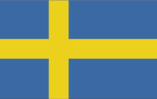
Geography
Boundary disputes
none; maritime dispute with USSR
Climate
temperate in south with cold, cloudy winters and cool partly cloudy summers; subarctic in north
Coastline
3,218 km
Comparative area
about the size of California
Continental shelf
200 meters or to depth of exploitation
Environment
water pollution; acid rain
Exclusive fishing zone
200 nm
Gotebor
ry Gotland Kattegat Hand Baltic Sea Malmo Kariskrona
Land boundaries
2,196 km total
Land use
7% arable land; 0% permanent crops; 2% meadows and pastures; 64% forest and woodland; 27% other; includes NEGL% irrigated
Special notes
strategic location along Danish Straits linking Baltic and North Seas
Terrain
mostly flat or gently rolling lowlands; mountains in west
Territorial sea
12 nm
Total area
- 400 km STOCKHOLM ’ Jonkoping
- 449,960 km?; land area: 411,620 km?
People and Society
Ethnic divisions
homogeneous white population; small Lappish minority; est. 12% foreign born or first generation immigrants (Finns, Yugoslavs, Danes, Norwegians, Greeks)
Infant mortality rate
7/1,000 (1983)
Labor force
4.41 million (1984); 32.8% private services; 30.0% government services; 22.0% mining and manufacturing; 5.9% construction; 5.0% agriculture, forestry, and fishing; 0.9% electricity, gas, and waterworks; 2.8% unemployed (1985 average)
Language
Swedish, small Lappand Finnish-speaking minorities; immigrants speak native languages
Life expectancy
men 75, women 8]
Literacy
99%
Nationality
noun—Swede(s); adjective— Swedish
Organized labor
90% of labor force (1985 est.)
Population
8,383,026 (July 1987), average annual growth rate 0.15%
Religion
93.5% Evangelical Lutheran, 1.0% Roman Catholic, 5.5% other
Government
Administrative divisions
24 counties, 284 municipalities (townships)
Branches
legislative authority rests with unicameral parliament (Riksdag); executive power vested in Cabinet, responsible to parliament; Supreme Court, 6 superior courts, 108 lower courts
Capital
Stockholm
Communists
VPK and SKP; VPK, the major Communist party, is reported to have roughly 17,800 members; in the 1985 election, the VPK attracted 293,543 votes; in addition, there are 4 other active Communist parties, including the SKP, for which membership figures are not available; in the 1985 elections, these parties obtained an additional 16,000 votes
Elections
every three years; next scheduled for September 1988 Political parties and leaders: Moderate (conservative), Carl Bildt; Center, Olaf Johansson; Liberal People’s Party, Bengt Westerberg; Social Democratic, Ingvar Carlsson; Left Party-Communist (VPK), Lars Werner; Swedish Communist Party (SKP), Roland Pettersson; Communist Workers’ Party, Rolf Hagel
Government leaders
CARL XVI Gustaf, King (since September 1973); Ingvar CARLSSON, Prime Minister (since March 1986)
Legal system
civil law system influenced by customary law; a new constitution was adopted in 1975; accepts compulsory IC] jurisdiction, with reservations
Member of
ADB, Council of Europe, DAC, EC (Free Trade Agreement), EFTA, ESRO, FAO, GATT, IAEA, IBRD, ICAC, ICAO, ICES, ICO, IDA, IDB—InterAmerican Development Bank, IEA, IFAD, IFC, JIHO, ILO, IMF, IMO, INTERPOL, INTELSAT, International Lead and Zinc Study Group, IPU, ISO, ITU, IWC— International Whaling Commission, IWC—International Wheat Council, Nordic Council, OECD, UN, UNESCO, UPU, WHO, WIPO, WMO, WSG
National holiday
no national holiday; King’s birthday, 30 April, celebrated as such by Swedish embassies
Official name
Kingdom of Sweden
Suffrage
universal but not compulsory over age 18; after three years of legal residence immigrants may vote in county and municipal but not national elections
Type
constitutional monarchy
Voting strength
(1985 election) 45.0% Social Democratic, 21.3% Moderate Coalition, 12.5% Center (includes votes for Christian Democratic Alliance), 14.3% Liberal, 5.4% Communist, 1.5% other
Economy
Agriculture
animal husbandry predominates, with milk and dairy products accounting for 37% of farm income; main crops—grains, sugar beets, potatoes; 100% self-sufficient in grains and potatoes, 85% self-sufficient in sugar beets
Aid
donor—ODA and OOF economic aid commitments (1970-84), $6 billion
Budget
(1985/86) revenues $35.87 billion, expenditures $42.3 billion, deficit $7.7 billion
Crude steel
4.8 million metric tons produced (1985), 575 ke per capita
Electric power
39,016,000 kW capacity; 150,500 million kWh produced, 18,010 kWh per capita (1986)
Exports
$30.5 billion (f.0.b., 1985); machinery, motor vehicles, paper products, pulp and wood, iron and steel products, chemicals, petroleam and petroleum products
Fiscal year
1 July-30 June
Fishing
catch 285,000 metric tons (1984); exports $74 million, imports $195.0 million (1985)
GDP
$99 billion, $11,850 per capita; 50.8% private consumption, 27.8% government consumption, 13.1% private investment; 5.9% public investment, —0.2% change in stock building; 0.2% net exports of goods and services; growth rate, 2.2%; average exchange rate 8.6] kronors=US$1 (1985)
Imports
$28.5 billion (c.i.f., 1985); machinery, petroleum and petroleum products, chemicals, motor vehicles, foodstuffs, iron and steel, clothing
Major industries
iron and steel, precision equipment (bearings, radio and telephone parts, armaments), wood pulp and paper products, processed foods, motor vehicles
Major trade partners
exports—EC 47.0% (FRG 11.4%, UK 9.9%, Denmark 8.3%), US 11.7%, Norway 10.5%; imports—EC 58.9% (FRG 17.9%, UK 14.1%, Denmark 6.8%), US 8.4%, less developed countries 7.6%
Monetary conversion rate
7.0 kronors=US$1 (November 1986)
Natural resources
zinc, iron, lead, copper, silver, gold, forests, hydroelectric power
Shortages
coal, petroleum, textile fibers, potash, salt, oils and fats, tropical products
Communications
Airfields
265 total, 261 usable; 137 with permanent-surface runways; 10 with runways 2,440-3,659 m, 89 with runways 1,220-2,489 m
Highways
97,400 km (51,899 km paved, 20,659 km gravel, 24,842 km unimproved earth)
Inland waterways
2,052 km navigable for small] steamers and barges
Pipelines
84 km natural gas
Ports
17 major and 30 minor _ Civil air: 65 major transports
Railroads
12,520 km total; Swedish State Railways (SJ)—11,180 km 1.435-meter standard gauge, 6,960 km electrified and 1,152 km double track; 182 km 0.891meter gauge; 117 km rail ferry service; privately owned railways—51] km 1.435meter standard gange, 332 km electrified; 371 km 0.891-meter gauge electrified
Telecommunications
excellent domestic and international facilities; 7.8 million telephones (89.0 per 100 popl.); 5 AM, 361 FM, 877 TV stations; 5 submarine coaxial cables, 2 Atlantic Ocean satellite antennas, 1 Eutelsat antenna
Military and Security
Branches
Royal Swedish Army, Royal Swedish Air Force, Royal Swedish Navy
Military budget
for fiscal year ending 30 June 1987, $3.45 billion; 7.9% of central government budget
Military manpower
males 15-49, 2,095,000; 1,840,000 fit for military service; 57,000 reach military age (19) annually