2023 Edition
CIA World Factbook 2023 (factbook.json @ 0d4fa4984ecb)
Introduction
Background
The archipelago may have been first discovered by Norse explorers in the 12th century; the islands served as an international whaling base during the 17th and 18th centuries. Norway's sovereignty was internationally recognized by treaty in 1920, and five years later it officially took over the territory. In the 20th century, coal mining started and today a Norwegian and a Russian company are still functioning. Travel between the settlements is accomplished with snowmobiles, aircraft, and boats.
Geography
Area
- land
- 62,045 sq km
- note
- note: includes Spitsbergen and Bjornoya (Bear Island)
- total
- 62,045 sq km
- water
- 0 sq km
Area - comparative
slightly smaller than West Virginia
Climate
arctic, tempered by warm North Atlantic Current; cool summers, cold winters; North Atlantic Current flows along west and north coasts of Spitsbergen, keeping water open and navigable most of the year
Coastline
3,587 km
Elevation
- highest point
- Newtontoppen 1,717 m
- lowest point
- Arctic Ocean 0 m
Geographic coordinates
78 00 N, 20 00 E
Geography - note
northernmost part of the Kingdom of Norway; consists of nine main islands; glaciers and snowfields cover 60% of the total area; Spitsbergen Island is the site of the Svalbard Global Seed Vault, a seed repository established by the Global Crop Diversity Trust and the Norwegian Government
Land boundaries
- total
- 0 km
Land use
- agricultural land
- 0% (2018 est.)
- other
- 100% (2018 est.)
Location
Northern Europe, islands between the Arctic Ocean, Barents Sea, Greenland Sea, and Norwegian Sea, north of Norway
Map references
Arctic Region
Maritime claims
- contiguous zone
- 24 nm
- continental shelf
- extends to depth of exploitation
- exclusive fishing zone
- 200 nm
- territorial sea
- 12 nm
Natural hazards
ice floes often block the entrance to Bellsund (a transit point for coal export) on the west coast and occasionally make parts of the northeastern coast inaccessible to maritime traffic
Natural resources
coal, iron ore, copper, zinc, phosphate, wildlife, fish
Population distribution
the small population is primarily concentrated on the island of Spitsbergen in a handful of settlements on the south side of the Isfjorden, with Longyearbyen being the largest
Terrain
rugged mountains; much of the upland areas are ice covered; west coast clear of ice about half the year; fjords along west and north coasts
People and Society
Age structure
- 0-14 years
- NA
- 15-64 years
- NA
- 65 years and over
- NA
Birth rate
NA
Children under the age of 5 years underweight
NA
Contraceptive prevalence rate
NA
Current health expenditure
NA
Death rate
NA
Dependency ratios
- elderly dependency ratio
- NA
- potential support ratio
- NA
- total dependency ratio
- NA
- youth dependency ratio
- NA
Drinking water source
- improved: rural
- rural: NA
- improved: total
- total: NA
- improved: urban
- urban: NA
- unimproved: rural
- rural: NA
- unimproved: total
- total: NA
- unimproved: urban
- urban: NA
Education expenditures
NA
Ethnic groups
- Norwegian 61.1%, foreign population 38.9% (consists primarily of Russians, Thais, Swedes, Filipinos, and Ukrainians) (2021 est.)
- note
- note: foreigners account for almost one third of the population of the Norwegian settlements, Longyearbyen and Ny-Alesund (where the majority of Svalbard's resident population lives), as of mid-2021
Infant mortality rate
- female
- NA
- male
- NA
- total
- NA
Languages
- Languages
- Norwegian, Russian
- major-language sample(s)
- Verdens Faktabok, den essensielle kilden for grunnleggende informasjon. (Norwegian)The World Factbook, the indispensable source for basic information.
Life expectancy at birth
- female
- NA
- male
- NA
- total population
- NA
Literacy
- female
- NA
- male
- NA
- total population
- NA
Net migration rate
-5.57 migrant(s)/1,000 population (2021 est.)
Physicians density
NA
Population
2,926 (January 2021 est.)
Population distribution
the small population is primarily concentrated on the island of Spitsbergen in a handful of settlements on the south side of the Isfjorden, with Longyearbyen being the largest
Population growth rate
-0.03% (2019 est.)
Sanitation facility access
- improved: rural
- rural: NA
- improved: total
- total: NA
- improved: urban
- urban: NA
- unimproved: rural
- rural: NA
- unimproved: total
- total: NA
- unimproved: urban
- urban: NA
Sex ratio
NA
Total fertility rate
NA
Government
Capital
- daylight saving time
- +1hr, begins last Sunday in March; ends last Sunday in October
- etymology
- the name in Norwegian means Longyear Town; the site was established by and named after John LONGYEAR, whose Arctic Coal Company began mining operations there in 1906
- geographic coordinates
- 78 13 N, 15 38 E
- name
- Longyearbyen
- time difference
- UTC+1 (6 hours ahead of Washington, DC, during Standard Time)
Citizenship
see Norway
Country name
- conventional long form
- none
- conventional short form
- Svalbard (sometimes referred to as Spitsbergen, the largest island in the archipelago)
- etymology
- 12th century Norse accounts speak of the discovery of a "Svalbard" - literally "cold shores" - but they may have referred to Jan Mayen Island or eastern Greenland; the archipelago was traditionally known as Spitsbergen, but Norway renamed it Svalbard in the 1920s when it assumed sovereignty of the islands
Dependency status
territory of Norway; administered by the Polar Department of the Ministry of Justice, through a governor (sysselmann) residing in Longyearbyen, Spitsbergen; by treaty (9 February 1920), sovereignty was awarded to Norway
Executive branch
- chief of state
- King HARALD V of Norway (since 17 January 1991); Heir Apparent Crown Prince Haakon MAGNUS (son of the king, born 20 July 1973)
- elections/appointments
- none; the monarchy is hereditary; governor and assistant governor responsible to the Polar Department of the Ministry of Justice
- head of government
- Governor Lars FAUSE (since 24 June 2021); Vice Governor Solvi ELVEDAHL (since 1 May 2020)
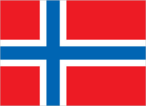
Flag description
the flag of Norway is used
Government type
non-self-governing territory of Norway
Independence
none (territory of Norway)
International organization participation
none
Judicial branch
- highest court(s)
- none; note - Svalbard is subordinate to Norway's Nord-Troms District Court and Halogaland Court of Appeal, both located in Tromso
Legal system
only the laws of Norway made explicitly applicable to Svalbard have effect there; the Svalbard Act and the Svalbard Environmental Protection Act, and certain regulations, apply only to Svalbard; the Spitsbergen Treaty and the Svalbard Treaty grant certain rights to citizens and corporations of signatory nations; as of June 2017, 45 nations had ratified the Svalbard Treaty
Legislative branch
- description
- unicameral Longyearbyen Community Council (15 seats; members directly elected by majority vote to serve 4-year-terms); note - the Council acts very much like a Norwegian municipality, responsible for infrastructure and utilities, including power, land-use and community planning, education, and child welfare; however, healthcare services are provided by the state
- election results
- seats by party - Liberals 7, Labor 3, Social Liberals 3, Conservatives 2
- elections
- last held on 9 October 2023 (next to be held in October 2027)
National anthem
note: as a territory of Norway, "Ja, vi elsker dette landet" is official (see Norway)
Political parties and leaders
Conservative [Celine ANDERSSEN]Green [Pal BERG]Labor [Arild OLSEN]Liberal [Terje AUVENIK]Progress [Jorn DYBDAHL]Social Liberals []
Economy
Budget
- expenditures
- NA
- revenues
- NA
Budget surplus (+) or deficit (-)
NA
Economic overview
high-income Norwegian island economy; major coal mining, tourism, and research sectors; recently established northernmost brewery; key whaling and fishing base; home to the Global Seed Vault
Exchange rates
- Currency
- Norwegian kroner (NOK) per US dollar -
- Exchange rates 2013
- 6.3021 (2013 est.)
- Exchange rates 2014
- 8.0646 (2014 est.)
- Exchange rates 2015
- 8.0646 (2015)
- Exchange rates 2016
- 8.0646 (2016 est.)
- Exchange rates 2017
- 8.308 (2017 est.)
Exports
NA
Imports
$NA
Labor force
1,590 (2013)
Real GDP growth rate
NA
Taxes and other revenues
NA
Energy
Refined petroleum products - exports
4,488 bbl/day (2012 est.)
Refined petroleum products - imports
18,600 bbl/day (2012 est.)
Communications
Broadcast media
the Norwegian Broadcasting Corporation (NRK) began direct TV transmission to Svalbard via satellite in 1984; Longyearbyen households have access to 3 NRK radio and 2 TV stations
Internet country code
.sj
Telecommunication systems
- domestic
- the Svalbard Satellite Station - connected to the mainland via the Svalbard Undersea Cable System - is the only Arctic ground station that can see low-altitude, polar-orbiting satellites; it provides ground services to more satellites than any other facility in the world (2022)
- general assessment
- Svalbard Undersea Cable System is a twin submarine communications cable which connects Svalbard to the mainland of Norway (2022)
- international
- country code - 47-790; the Svalbard Undersea Cable System is a twin communications cable that connects Svalbard to mainland Norway; the system is the sole telecommunications link to the archipelago (2019)
Transportation
Airports
4 (2021)
Airports - with paved runways
- 1
- note
- note: paved runways have a concrete or asphalt surface but not all have facilities for refueling, maintenance, or air traffic control; the length of a runway required for aircraft to safely operate depends on a number of factors including the type of aircraft, the takeoff weight (including passengers, cargo, and fuel), engine types, flap settings, landing speed, elevation of the airport, and average maximum daily air temperature; paved runways can reach a length of 5,000 m (16,000 ft.), but the “typical” length of a commercial airline runway is between 2,500-4,000 m (8,000-13,000 ft.)
Airports - with unpaved runways
- 3
- note
- note: unpaved runways have a surface composition such as grass or packed earth and are most suited to the operation of light aircraft; unpaved runways are usually short, often less than 1,000 m (3,280 ft.) in length; airports with unpaved runways often lack facilities for refueling, maintenance, or air traffic control
Heliports
1 (2021)
Ports and terminals
- major seaport(s)
- Barentsburg, Longyearbyen, Ny-Alesund, Pyramiden
Roadways
- total
- 40 km (2020)
Military and Security
Military - note
Svalbard is a territory of Norway, demilitarized by treaty on 9 February 1920; Norwegian military activity is limited to fisheries surveillance by the Norwegian Coast Guard (2023)
Military and security forces
no regular military forces
Transnational Issues
Disputes - international
Norway-Russia: after 40 years of on-again, off-again negotiations, the two countries signed an agreement in September 2010, defining their maritime boundaries in the Barents Sea and the Arctic Ocean; the border extends the countries’ land border northward beyond the islands in the Barents Sea and into the Arctic Ocean, but the exact distance northward was not specified; because the area is considered the high seas, the passage of naval and commercial vessels will be unaffected; once their legislatures ratify the agreement, both countries will have the green light for oil and natural gas exploration in their newly defined maritime areas; Russia objects to Norway’s establishment in 1977 of the Fishery Protection Zone around the Svalbard Islands, extending Norwegian sovereignty to the shelf around the archipelago; Svalbard is strategically important – as a gateway from the Berents Sea to the North Atlantic – and its waters provide rich fishing grounds
Environment
Climate
arctic, tempered by warm North Atlantic Current; cool summers, cold winters; North Atlantic Current flows along west and north coasts of Spitsbergen, keeping water open and navigable most of the year
Environment - current issues
ice floes are a maritime hazard; past exploitation of mammal species (whale, seal, walrus, and polar bear) severely depleted the populations, but a gradual recovery seems to be occurring
Land use
- agricultural land
- 0% (2018 est.)
- other
- 100% (2018 est.)