1990 Edition
CIA World Factbook 1990 (Project Gutenberg)
Geography
Climate
arctic, tempered by warm North Atlantic Current; cool summers, cold winters; North Atlantic Current flows along west and north coasts of Spitsbergen, keeping water open and navigable most of the year
Coastline
3,587 km
Comparative area
slightly smaller than West Virginia
Contiguous zone
10 nm;
Continental shelf
200 meters or to depth of exploitation;
Disputes
focus of maritime boundary dispute between Norway and USSR
Environment
great calving glaciers descend to the sea
Extended economic zone
200 nm unilaterally claimed by Norway, not recognized by USSR;
Land boundaries
none
Land use
0% arable land; 0% permanent crops; 0% meadows and pastures; 0% forest and woodland; 100% other; there are no trees and the only bushes are crowberry and cloudberry
Natural resources
coal, copper, iron ore, phosphate, zinc, wildlife, fish
Note
located 445 km north of Norway where the Arctic Ocean, Barents Sea, Greenland Sea, and Norwegian Sea meet
Terrain
wild, rugged mountains; much of high land ice covered; west coast clear of ice about half the year; fjords along west and north coasts
Territorial sea
4 nm
Total area
62,049 km2; land area: 62,049 km2; includes Spitsbergen and Bjornoya (Bear Island)
People and Society
Birth rate
NA births/1,000 population (1990)
Death rate
NA deaths/1,000 population (1990)
Ethnic divisions
64% Russian, 35% Norwegian, 1% other (1981)
Infant mortality rate
NA deaths/1,000 live births (1990)
Labor force
NA
Language
Russian, Norwegian
Life expectancy at birth
NA years male, NA years female (1990)
Literacy
NA%
Net migration rate
NA migrants/1,000 population (1990)
Organized labor
none
Population
3,942 (July 1990), growth rate NA% (1990); about one-third of the population resides in the Norwegian areas (Longyearbyen and Svea on Vestspitsbergen) and two-thirds in the Soviet areas (Barentsburg and Pyramiden on Vestspitsbergen); about 9 persons live at the Polish research station
Total fertility rate
NA children born/woman (1990)
Government
Capital
Longyearbyen
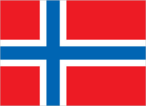
Flag
the flag of Norway is used
Leaders
Chief of State--King OLAV V (since 21 September 1957); Head of Government Governor Leif ELDRING (since NA)
Long-form name
none
Type
territory of Norway administered by the Ministry of Industry, Oslo, through a governor (sysselmann) residing in Longyearbyen, Spitsbergen; by treaty (9 February 1920) sovereignty was given to Norway
Economy
Currency
Norwegian krone (plural--kroner); 1 Norwegian krone (NKr) = 100 ore
Electricity
21,000 kW capacity; 45 million kWh produced, 11,420 kWh per capita (1989)
Exchange rates
Norwegian kroner (NKr) per US$1--6.5405 (January 1990), 6.9045 (1989), 6.5170 (1988), 6.7375 (1987), 7.3947 (1986), 8.5972 (1985)
Overview
Coal mining is the major economic activity on Svalbard. By treaty (9 February 1920), the nationals of the treaty powers have equal rights to exploit mineral deposits, subject to Norwegian regulation. Although US, UK, Dutch, and Swedish coal companies have mined in the past, the only companies still mining are Norwegian and Soviet. Each company mines about half a million tons of coal annually. The settlements on Svalbard are essentially company towns. The Norwegian state-owned coal company employs nearly 60% of the Norwegian population on the island, runs many of the local services, and provides most of the local infrastructure. There is also some trapping of seal, polar bear, fox, and walrus.
Communications
Airports
4 total, 4 usable; 1 with permanent-surface runways; none with runways over 2,439 m; 1 with runways 1,220-2,439 m
Ports
limited facilities--Ny-Alesund, Advent Bay
Telecommunications
5 meteorological/radio stations; stations--1 AM, 1 (2 relays) FM, 1 TV
Military and Security
Note
demilitarized by treaty (9 February 1920)