1986 Edition
CIA World Factbook 1986 (Internet Archive)
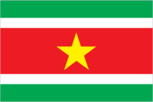
Geography
Agriculture
main crops — rice, bananas, palm oil, timber
Aid
economic — bilateral commitments, including Ex-Im— US (FY70-83), $2.5 million, Western (non-US) countries, ODA and OOF (1970-83), $1.4 billion; no military aid
Area
163,265 km2; slightly larger than Georgia; negligible arable land, meadow and pasture; 76% forest; 16% built on, waste, or other; 8% unused but potentially productive
Branches
civilian government controlled by the military
Budget
revenues, $261 million; expenditures, $421 million (1984 est.)
Capital
Paramaribo
Coastline
386 km People
Elections
none planned Political parties and leaders: 25 February National Unity Movement (November 1983) established by Bouterse; regular party activity limited; given greater freedom of assembly in 1985; leftists (all small groups) — Revolutionary People's Party (RVP), Michael Naarendorp; Progressive Workers and Farmers (PALU), Iwan Krolis
Electric power
420,000 kW capacity (1985); 1.61 billion kWh produced (1985), 4,290 kWh per capita
Ethnic divisions
37.0% Hindustani (East Indian), 31.0% Creole (black and mixed), 15.3% Javanese, 10.3% Bush Negro, 2.6% Amerindian, 1.7% Chinese, 1.0% Europeans, 1.1% other
Exports
$356 million (f.o.b., 1984); alumina, bauxite, aluminum, rice, wood and wood products
GDP
$1.1 billion (1984); $2,980 per capita (1984); real growth rate - 1.0% (1984)
Government leaders
Lt. Col. Desire BOUTERSE, Head of Government, Army Commander and strongman (since February 1980); Lachmipersad Frederick RAMDATMISIER, Acting President (figurehead; since February 1982); Willem Alfred UDENHOUT, Prime Minister (since February 1984)
Imports
$346 million (c.i.f., 1984); capital equipment, petroleum, iron and steel, cotton, flour, meat, dairy products
Infant mortality rate
23/1,000(1984)
Labor force
104,000(1984); unemployment 25% (1985); about 10.6% of work force engaged in agriculture, animal husbandry, and fishing
Land boundaries
1,561 km Water
Language
Dutch (official); English widely spoken; Sranan Tongo (Surinamese, sometimes called Taki-Taki) is native language of Creoles and much of the younger population and is lingua franca among others; also Hindi Suriname Hindustani (a variant of Bhoqpuri), and Javanese
Legal system
suspended constitution; judicial system functions in ordinary civil and criminal cases
Life expectancy
men 64.8, women 69.8
Limits of territorial waters (claimed)
12 nm (200 nm exclusive economic zone)
Literacy
65%
Major industries
bauxite mining, alumina and aluminum production, lumbering, food processing
Major trade partners
exports — 26% Netherlands, 17% US, 13% FRG; imports— 30% US, 21% Trinidad and Tobago, 9% Netherlands (1983)
Member of
ECLA, FAO, GATT, G-77, IBA, IBRD, ICAO, IDE— Inter-American Development Bank, IFAD, ILO, IMF, IMO, INTERPOL, ITU, NAM, OAS, PAHO, SELA, UN, UNESCO, UPU, WHO, WIPO, WMO Economy
National holiday
Independence Day, 25 November
Nationality
noun — Surinamer(s); adjective— Surinamese
Natural resources
forests, hydroelectric power potential, fish, shrimp, bauxite, iron ore, and other minerals
Official name
Republic of Suriname
Organized labor
49,000 members of labor force organized Government
Political subdivisions
9 districts, each headed by District Commissioner responsible to Minister of Internal Affairs and Local Administration; 100 "People's Committees" installed at local level
Population
381,000 (July 1986), average annual growth rate 1.7%
Religion
27.4% Hindu, 19.6% Muslim, 22.8% Roman Catholic, 25.2% Protestant (predominantly Moravian), about 5% indigenous beliefs
Suffrage
suspended
Type
military-civilian rule