1984 Edition
CIA World Factbook 1984 (Internet Archive)
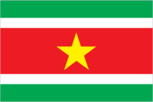
Geography
Agriculture
main products — coffee, rice, corn, sugarcane, soybeans, cotton, manioc, oranges; nearly self-sufficient
Airfields
- 4,351 total, 3,475 usable; 264 with permanent-surface runways; 1 with runways over 3,659 m; 22 with runways 2,4403,659 m; 417 with runways 1,220-2,439 m
- 90 total, 81 usable; 8 with permanent-surface runways; 4 with runways 2,440-3,659 m, 34 with runways 1,2202,439 m
Area
8,512,100 km2; 60% forest; 23% built-on area, waste, and other; 13% pasture; 4% cultivated
Branches
- strong executive with very broad powers; bicameral legislature (National Congress — Senate, Chamber of Deputies; powers of the two bodies have been sharply reduced); 1 1-man Supreme Court
- Army, Navy, Air Force, Air Defense Force
- civilian government controlled by the military
Budget
(1982 est.) revenues $25.7 billion, expenditures $25.7 billion (Treasury budget only)
Capital
- Brasilia
- Paramaribo
Civil air
- 176 major transport aircraft
- 10 major transport aircraft
CNP
$295 billion, $2,360 per capita (1982 est); 19% gross investment, 82% consumption, — 1% net foreign balance (1982 est.); real growth rate 0% (1982 est.)
Coastline
- 7,491 km People
- 386 km People
Communists
6,000, less than 1,000 militants
Crude steel
17.5 million metric tons capacity; 13.0 million metric tons produced (1982 est.)
Elections
- Figueiredo, who took office on 15 March 1979, was elected by an electoral college, composed of the members of Congress and delegates selected from the state legislatures on 15 October 1978; next presidential election 1985 Political parties and leaders: Social Democratic Party (PDS), progovernment, Jose Sarney, president; Brazilian Democratic Movement Party (PMDB), Ulysses Guimaraes, president; three smaller parties are Workers Party (PT), Brazilian Labor Party (PTB), and Democratic Labor Party (PDT)
- none planned Political parties and leaders: 25 February National Unity Movement (November 1983) official party established by Bouterse; regular party activity officially suspended, although some continue low-level functioning; leftists (all small groups) — Revolutionary People's Party (RVP), Michael Naarendorp; Progressive Workers and Farmers (PALU), Iwan Krolis
Electric power
40,000,000 kW capacity (1983); 150.0 billion kWh produced (1983), 1,140 kWh per capita
Ethnic divisions
- Portuguese, Italian, German, Japanese, black, Amerindian; 55% white, 38% mixed, 6% black, and 1% other
- 37% Hindustani (East Indian), 31% Creole (black and mixed), 15.3% Javanese, 10.3% Bush Negro, 2.6% Amerindian, 1.7% Chinese, 1.0% Europeans, 1.7% other
Exports
$20.2 billion (f.o.b., 1982); soybeans, coffee, transport equipment, iron ore, steel products, chemicals, meat, shoes, sugar
Fiscal year
calendar year Communications
Fishing
catch 858,183 metric tons (1979); exports, $162 million (f.o.b., 1982); imports, $80 million (f.o.b., 1982)
Government leader
Gen. (Ret.), JoSo Baptista de Oliveira FIGUEIREDO, President
Government leaders
Lt. Col. Desire BOUTERSE, Army Commander and strongman; Lachmipersad Frederick RAMDAT-MISIER, Acting President (figurehead); Wim UDENHART, Prime Minister
Highways
- 1,399,440 km total; 83,965 km paved, 1,315,475 km gravel or earth
- 20,000 km total; 1 ,700 km bituminous treated, 3,652 km gravel, 2,304 km improved earth; remainder unimproved earth and track
Imports
$19.4 billion (f.o.b., 1982); petroleum, machinery, chemicals, pharmaceuticals, wheat, copper, aluminum
Inland waterways
- 50,000 km navigable
- 5,310 km navigable
Labor force
- about 50 million in 1982 — 29.9% agriculture, livestock, forestry, and fishing; 24.4% industry, 20.3% services, transportation, and communication; 9.4% commerce; 7.0% social activities; 4.1% public administration; 2.9% other
- 129,000; unemployment 20% (1983)
Land boundaries
- 13,076 km Water
- 1,561 km Water
Language
- Portuguese (official)
- Dutch (official); English widely spoken; Sranang Tongo (Surinamese, sometimes called Taki-Taki) is native language of Creoles and much of the younger population and is lingua franca among others; Hindi; Ja-
Legal system
- based on Latin codes; dual system of courts, state and federal; constitution adopted 1967 and extensively amended in 1969; has not accepted compulsory ICJ jurisdiction
- suspended constitution
Limits of territorial waters (claimed)
- 200 nm
- 12 nm (economic, including fishing, 200 nm)
Literacy
- 74%
- 80%
Major industries
textiles and other consumer goods, chemicals, cement, lumber, steel, motor vehicles, other metalworking industries, capital goods
Major trade partners
exports— 20% US, 6% Netherlands, 6% FRG, 6% Japan, 5% Italy, 4% France (1982 est.); imports— 40% OPEC, 15% US, 5% Japan, 4% FRG, 4% Mexico, 3% France, 3% Argentina (1982 est.)
Member of
FAO, G-77, GATT, IADB, IAEA, IBRD, ICAC, ICAO, ICO, IDA, IDB — Inter-American Development Bank, IFAD, IFC, IHO, ILO, IMF, IMO, INTELSAT, IPU, IRC, ISO, ITU, IWC— International Wheat Council, OAS, PAHO, SELA, UN, UNESCO, UPU, WHO, WIPO, WMO, WTO Economy
Military budget
for fiscal year ending 30 June 1983, $222.3 million; 0.95% of Central government budget Land 1 63,265 km2; negligible arable land, meadow and pasture; 76% forest; 16% built on, waste, or other; 8% unused but potentially productive
Military manpower
males 15-49, 4,878,000; 2,981,000 fit for military service; 223,000 reach military age (18) annually
Monetary conversion rate
842 cruzeiros=US$l (31 October 1983)
National holiday
- Independence Day, 7 September
- Independence Day, 25 November
Nationality
- noun — Brazilian(s); adjective — Brazilian
- noun — Surinamer(s); adjective — Surinamese
Official name
- Federative Republic of Brazil
- Republic of Suriname
Organized labor
- about 6 million (1982) Government
- approx. 33% of labor force Government
Other political or pressure groups
the Catholic Church, over the years, has been a consistent critic of the regime; labor unions, at least as far as wage demands, have been active at times; business organizations can be influential, especially in the economically powerful states of Sao Paulo, Rio de Janeiro, and Minas Gerais
Pipelines
- crude oil, 2,000 km; refined products, 465 km; natural gas, 257 km
- refined products, 815 km
Political subdivisions
- 23 states, 3 territories, federal district (Brasilia)
- 9 districts before 1980 coup, each headed by District Commissioner responsible to Minister of District Government and Decentralization except for Paramaribo, whose commissioner is responsible to Minister of Home Affairs, not functioning at present; 100"People'sCommittees" installed at local level
Population
- 134,380,000 (July 1984), average annual growth rate 2.3%
- 370,000 (July 1984), average annual growth rate 1.8%
Ports
- 8 major, 23 significant minor
- 1 major (Port Sudan)
Railroads
24,600 km total; 22,450 km 1.000meter gauge, 1,750km 1.600-meter gauge, 200 km 1.435-meter standard gauge, 200 km 0.760-meter gauge; 1,050 km electrified
Religion
- (1980) 89% Roman Catholic (nominal)
- Hindu, Muslim, Roman Catholic, Moravian, other
Suffrage
- compulsory over age 18, except illiterates; approximately 58,200,000 eligible to vote in 1982
- suspended
Telecommunications
- good telecom system; extensive radio relay facilities; 2 Atlantic Ocean INTELSAT stations with total of 3 antennas; 18 domestic satellite stations; 7.5 million telephones (6.3 per 100 pop!.); 1,485 AM, 150 FM, and 200 TV stations; 3 coaxial submarine cables Brazil (continued)
- large system by African standards, but barely adequate; consists of radio relay, cables, radiocommunications, and troposcatter; domestic satellite system with 14 stations; 65,030 telephones (0.3 per 100 popl.); 4 AM, no FM, and 2 TV stations; 1 Atlantic Ocean satellite station Defense Forces
Type
- federal republic; military-backed presidential regime since April 1964
- military-civilian rule
Voting strength
(November 1982 federal and state elections) 37% progovernment PDS; 63% divided among four opposition parties (PMDB, PT, PTB, and PDT)