2024 Edition
CIA World Factbook 2024 (factbook.json @ b8538d78e87c)
Introduction
Background
The first Sinhalese arrived in Sri Lanka late in the 6th century B.C., probably from northern India. Buddhism was introduced circa 250 B.C., and the first kingdoms developed at the cities of Anuradhapura (from about 200 B.C. to about A.D. 1000) and Polonnaruwa (from about A.D. 1070 to 1200). In the 14th century, a South Indian dynasty established a Tamil kingdom in northern Sri Lanka. The Portuguese controlled the coastal areas of the island in the 16th century, followed by the Dutch in the 17th century. The island was ceded to the British in 1796, became a crown colony in 1802, and was formally united under British rule by 1815. As Ceylon, it became independent in 1948; the name was changed to Sri Lanka in 1972. Prevailing tensions between the Sinhalese majority and Tamil separatists erupted into war in 1983. Fighting between the government and Liberation Tigers of Tamil Eelam (LTTE) continued for over a quarter-century. Although Norway brokered peace negotiations that led to a cease-fire in 2002, the fighting slowly resumed and was again in full force by 2006. The government defeated the LTTE in 2009. During the post-conflict years under then-President Mahinda RAJAPAKSA, the government initiated infrastructure development projects, many of which were financed by loans from China. His regime faced allegations of human rights violations and a shrinking democratic space for civil society. In 2015, a new coalition government headed by President Maithripala SIRISENA of the Sri Lanka Freedom Party and Prime Minister Ranil WICKREMESINGHE of the United National Party came to power with pledges to advance economic, political, and judicial reforms. However, implementation of these reforms was uneven. In 2019, Gotabaya RAJAPAKSA won the presidential election and appointed his brother Mahinda prime minister. Civil society raised concerns about the RAJAPAKSA administration’s commitment to pursuing justice, human rights, and accountability reforms, as well as the risks to foreign creditors that Sri Lanka faced given its ongoing economic crisis. A combination of factors including the COVID-19 pandemic; severe shortages of food, medicine, and fuel; and power outages triggered increasingly violent protests in Columbo beginning in 2022. In response, WICKREMESINGHE -- who had already served as prime minister five times -- was named to replace the prime minister, but he became president within a few months when Gotabaya RAJAPAKSA fled the country.
Geography
Area
- land
- 64,630 sq km
- total
- 65,610 sq km
- water
- 980 sq km
Area - comparative
slightly larger than West Virginia
Climate
tropical monsoon; northeast monsoon (December to March); southwest monsoon (June to October)
Coastline
1,340 km
Elevation
- highest point
- Pidurutalagala 2,524 m
- lowest point
- Indian Ocean 0 m
- mean elevation
- 228 m
Geographic coordinates
7 00 N, 81 00 E
Geography - note
strategic location near major Indian Ocean sea lanes; Adam's Bridge is a chain of limestone shoals between the southeastern coast of India and the northwestern coast of Sri Lanka; geological evidence suggests that this 50-km long Bridge once connected India and Sri Lanka; ancient records seem to indicate that a foot passage was possible between the two land masses until the 15th century when the land bridge broke up in a cyclone
Irrigated land
5,700 sq km (2012)
Land boundaries
- total
- 0 km
Land use
- agricultural land
- 43.5% (2018 est.)
- agricultural land: arable land
- arable land: 20.7% (2018 est.)
- agricultural land: permanent crops
- permanent crops: 15.8% (2018 est.)
- agricultural land: permanent pasture
- permanent pasture: 7% (2018 est.)
- forest
- 29.4% (2018 est.)
- other
- 27.1% (2018 est.)
Location
Southern Asia, island in the Indian Ocean, south of India
Map references
Asia
Maritime claims
- contiguous zone
- 24 nm
- continental shelf
- 200 nm or to the edge of the continental margin
- exclusive economic zone
- 200 nm
- territorial sea
- 12 nm
Natural hazards
occasional cyclones and tornadoes
Natural resources
limestone, graphite, mineral sands, gems, phosphates, clay, hydropower, arable land
Population distribution
the population is primarily concentrated within a broad wet zone in the southwest, urban centers along the eastern coast, and on the Jaffna Peninsula in the north
Terrain
mostly low, flat to rolling plain; mountains in south-central interior
People and Society
Age structure
- 0-14 years
- 22.6% (male 2,537,918/female 2,423,615)
- 15-64 years
- 65% (male 6,954,869/female 7,336,897)
- 65 years and over
- 12.4% (2024 est.) (male 1,149,256/female 1,580,053)
Alcohol consumption per capita
- beer
- 0.22 liters of pure alcohol (2019 est.)
- other alcohols
- 0.03 liters of pure alcohol (2019 est.)
- spirits
- 2.32 liters of pure alcohol (2019 est.)
- total
- 2.58 liters of pure alcohol (2019 est.)
- wine
- 0.01 liters of pure alcohol (2019 est.)
Birth rate
14.5 births/1,000 population (2024 est.)
Child marriage
- women married by age 15
- 0.9%
- women married by age 18
- 9.8% (2016 est.)
Children under the age of 5 years underweight
20.5% (2016)
Contraceptive prevalence rate
64.6% (2016)
Current health expenditure
4.1% of GDP (2020)
Currently married women (ages 15-49)
65.1% (2023 est.)
Death rate
7.5 deaths/1,000 population (2024 est.)
Dependency ratios
- elderly dependency ratio
- 17
- potential support ratio
- 5.9 (2021 est.)
- total dependency ratio
- 53.7
- youth dependency ratio
- 35.4
Drinking water source
- improved: rural
- rural: 91.2% of population
- improved: total
- total: 92.8% of population
- improved: urban
- urban: 99.7% of population
- unimproved: rural
- rural: 8.8% of population
- unimproved: total
- total: 7.2% of population (2020 est.)
- unimproved: urban
- urban: 0.3% of population
Education expenditures
1.9% of GDP (2019 est.)
Ethnic groups
Sinhalese 74.9%, Sri Lankan Tamil 11.2%, Sri Lankan Moors 9.2%, Indian Tamil 4.2%, other 0.5% (2012 est.)
Gross reproduction rate
1.04 (2024 est.)
Hospital bed density
4.2 beds/1,000 population (2017)
Infant mortality rate
- female
- 6.1 deaths/1,000 live births
- male
- 7.5 deaths/1,000 live births
- total
- 6.8 deaths/1,000 live births (2024 est.)
Languages
- Sinhala (official) 87%, Tamil (official) 28.5%, English 23.8% (2012 est.)
- note
- note: data represent main languages spoken by the population aged 10 years and older; shares sum to more than 100% because some respondents gave more than one answer on the census; English is commonly used in government and is referred to as the "link language" in the constitution
Life expectancy at birth
- female
- 79.9 years
- male
- 73.7 years
- total population
- 76.8 years (2024 est.)
Literacy
- definition
- age 15 and over can read and write
- female
- 91.6% (2019)
- male
- 93%
- total population
- 92.3%
Major urban areas - population
103,000 Sri Jayewardenepura Kotte (legislative capital) (2018), 633,000 COLOMBO (capital) (2023)
Maternal mortality ratio
29 deaths/100,000 live births (2020 est.)
Median age
- female
- 35.8 years
- male
- 32.2 years
- total
- 34.1 years (2024 est.)
Mother's mean age at first birth
- 25.6 years (2016 est.)
- note
- note: data represents median age at first birth among women 30-34
Nationality
- adjective
- Sri Lankan
- noun
- Sri Lankan(s)
Net migration rate
-3 migrant(s)/1,000 population (2024 est.)
Obesity - adult prevalence rate
5.2% (2016)
Physician density
1.23 physicians/1,000 population (2020)
Population
- female
- 11,340,565 (2024 est.)
- male
- 10,642,043
- total
- 21,982,608
Population distribution
the population is primarily concentrated within a broad wet zone in the southwest, urban centers along the eastern coast, and on the Jaffna Peninsula in the north
Population growth rate
0.39% (2024 est.)
Religions
Buddhist (official) 70.2%, Hindu 12.6%, Muslim 9.7%, Roman Catholic 6.1%, other Christian 1.3%, other 0.05% (2012 est.)
Sanitation facility access
- improved: rural
- rural: 97.9% of population
- improved: total
- total: 97.6% of population
- improved: urban
- urban: 96.6% of population
- unimproved: rural
- rural: 2.1% of population
- unimproved: total
- total: 2.4% of population (2020 est.)
- unimproved: urban
- urban: 3.4% of population
School life expectancy (primary to tertiary education)
- female
- 14 years (2018)
- male
- 14 years
- total
- 14 years
Sex ratio
- 0-14 years
- 1.05 male(s)/female
- 15-64 years
- 0.95 male(s)/female
- 65 years and over
- 0.73 male(s)/female
- at birth
- 1.05 male(s)/female
- total population
- 0.94 male(s)/female (2024 est.)
Tobacco use
- female
- 2.6% (2020 est.)
- male
- 41.4% (2020 est.)
- total
- 22% (2020 est.)
Total fertility rate
2.13 children born/woman (2024 est.)
Urbanization
- rate of urbanization
- 1.22% annual rate of change (2020-25 est.)
- urban population
- 19.2% of total population (2023)
Government
Administrative divisions
9 provinces; Central, Eastern, North Central, Northern, North Western, Sabaragamuwa, Southern, Uva, Western
Capital
- etymology
- Colombo may derive from the Sinhala "kolon thota," meaning "port on the river" (referring to the Kelani River that empties into the Indian Ocean at Colombo); alternatively, the name may derive from the Sinhala "kola amba thota" meaning "harbor with mango trees"; it is also possible that the Portuguese named the city after Christopher COLUMBUS, who lived in Portugal for many years (as Cristovao COLOMBO) before discovering the Americas for the Spanish crown in 1492 - not long before the Portuguese made their way to Sri Lanka in 1505; Sri Jayewardenepura Kotte translates as "Resplendent City of Growing Victory" in Sinhala
- geographic coordinates
- 6 55 N, 79 50 E
- name
- Colombo (commercial capital); Sri Jayewardenepura Kotte (legislative capital)
- time difference
- UTC+5.5 (10.5 hours ahead of Washington, DC, during Standard Time)
Citizenship
- citizenship by birth
- no
- citizenship by descent only
- at least one parent must be a citizen of Sri Lanka
- dual citizenship recognized
- no, except in cases where the government rules it is to the benefit of Sri Lanka
- residency requirement for naturalization
- 7 years
Constitution
- amendments
- proposed by Parliament; passage requires at least two-thirds majority vote of its total membership, certification by the president of the republic or the Parliament speaker, and in some cases approval in a referendum by absolute majority of valid votes; amended many times, last in 2020
- history
- several previous; latest adopted 16 August 1978, certified 31 August 1978
Country name
- conventional long form
- Democratic Socialist Republic of Sri Lanka
- conventional short form
- Sri Lanka
- etymology
- the name means "resplendent island" in Sanskrit
- former
- Serendib, Ceylon
- local long form
- Shri Lanka Prajatantrika Samajavadi Janarajaya (Sinhala)/ Ilankai Jananayaka Choshalichak Kutiyarachu (Tamil)
- local short form
- Shri Lanka (Sinhala)/ Ilankai (Tamil)
Diplomatic representation from the US
- chief of mission
- Ambassador Julie J. CHUNG (since 17 February 2022)
- email address and website
- colomboacs@state.govhttps://lk.usembassy.gov/
- embassy
- 210 Galle Road, Colombo 03
- FAX
- [94] (11) 243-7345
- mailing address
- 6100 Colombo Place, Washington DC 20521-6100
- telephone
- [94] (11) 249-8500
Diplomatic representation in the US
- chancery
- 3025 Whitehaven Street NW, Washington, DC 20008
- chief of mission
- Ambassador Mahinda SAMARASINGHE (since 13 January 2022)
- consulate(s)
- New York
- consulate(s) general
- Los Angeles
- email address and website
- slemb.washington@mfa.gov.lkhttps://slembassyusa.org/new/
- FAX
- [1] 202-232-2329
- telephone
- [1] (202) 483-4025
Executive branch
- cabinet
- Cabinet appointed by the president in consultation with the prime minister
- chief of state
- President Anura Kumara DISSANAYAKE (since 23 September 2024)
- election results
- 2024: Anura Kumara DISSANAYAKE elected president; percent of vote after reallocation - Anura Kumara DISSANAYAKE (JVP) 55.9%, Sajith PREMADASA (SJB) 44.1%2022: Ranil WICKREMESINGHE elected president by Parliament on 20 July 2022; Parliament vote - WICKREMESINGHE (UNP) 134, Dullas ALAHAPPERUMA (SLPP) 82
- elections/appointments
- president directly elected by preferential majority popular vote for a 5-year term (eligible for a second term); election last held on 21 September 2024 (next to be held in 2029); prime minister appointed by the president
- head of government
- Prime Minister Harini AMARASURIYA (since 24 September 2024)
Flag description
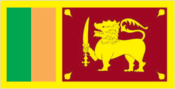
yellow with two panels; the smaller hoist-side panel has two equal vertical bands of green (hoist side) and orange; the other larger panel depicts a yellow lion holding a sword on a maroon rectangular field that also displays a yellow bo leaf in each corner; the yellow field appears as a border around the entire flag and extends between the two panels; the lion represents Sinhalese ethnicity, the strength of the nation, and bravery; the sword demonstrates the sovereignty of the nation; the four bo leaves - symbolizing Buddhism and its influence on the country - stand for the four virtues of kindness, friendliness, happiness, and equanimity; orange signifies Sri Lankan Tamils, green Sri Lankan Moors, and maroon the Sinhalese majority; yellow denotes other ethnic groups; also referred to as the Lion Flag
Government type
presidential republic
Independence
4 February 1948 (from the UK)
International law organization participation
has not submitted an ICJ jurisdiction declaration; non-party state to the ICCt
International organization participation
ABEDA, ADB, ARF, BIMSTEC, C, CD, CICA (observer), CP, FAO, G-11, G-15, G-24, G-77, IAEA, IBRD, ICAO, ICC (national committees), ICRM, IDA, IFAD, IFC, IFRCS, IHO, ILO, IMF, IMO, IMSO, Interpol, IOC, IOM, IPU, ISO, ITSO, ITU, ITUC (NGOs), MIGA, MINURSO, MINUSTAH, MONUSCO, NAM, OAS (observer), OPCW, PCA, SAARC, SACEP, SCO (dialogue member), UN, UNCTAD, UNESCO, UNIDO, UNIFIL, UNISFA, UNMISS, UNOOSA, UNWTO, UPU, WCO, WFTU (NGOs), WHO, WIPO, WMO, WTO
Judicial branch
- highest court(s)
- Supreme Court of the Republic (consists of the chief justice and 9 justices); note - the court has exclusive jurisdiction to review legislation
- judge selection and term of office
- chief justice nominated by the Constitutional Council (CC), a 9-member high-level advisory body, and appointed by the president; other justices nominated by the CC and appointed by the president on the advice of the chief justice; all justices can serve until age 65
- subordinate courts
- Court of Appeals; High Courts; Magistrates' Courts; municipal and primary courts
Legal system
mixed legal system of Roman-Dutch civil law, English common law, Jaffna Tamil customary law, and Muslim personal law
Legislative branch
- description
- unicameral Parliament (225 seats; 196 members directly elected in multi-seat district constituencies by proportional representation vote using a preferential method in which voters select 3 candidates in order of preference; remaining 29 seats, referred to as the "national list" are allocated by each party secretary according to the island wide proportional vote the party obtains; members serve 5-year terms)
- election results
- percent of vote by party/coalition - SLFPA 59.1%, SJB 23.9%, JVP 3.8%, TNA 2.8%, UNP 2.2%, TNPF 0.6%, EPDP 0.5%, other 7.1%; seats by party/coalition - SLFPA 145, SJB 54, TNA 10, JVP 3, other 13; composition- men 213, women 12, percentage women 5.3%
- elections
- last held on 5 August 2020 (next to be held on 14 November 2024)
National anthem
- lyrics/music
- Ananda SAMARKONE
- name
- "Sri Lanka Matha" (Mother Sri Lanka)
- note
- note: adopted 1951
National heritage
- selected World Heritage Site locales
- Ancient City of Polonnaruwa (c); Ancient City of Sigiriya (c); Sacred City of Anuradhapura (c); Old Town of Galle and its Fortifications (c); Sacred City of Kandy (c); Sinharaja Forest Reserve (n); Rangiri Dambulla Cave Temple (c); Central Highlands of Sri Lanka (n)
- total World Heritage Sites
- 8 (6 cultural, 2 natural)
National holiday
Independence Day (National Day), 4 February (1948)
National symbol(s)
lion, water lily; national colors: maroon, yellow
Political parties
Crusaders for Democracy or CFDEelam People's Democratic Party or EPDPEelam People's Revolutionary Liberation Front or EPRLFIllankai Tamil Arasu Kachchi or ITAKJanatha Vimukthi Peramuna or JVPJathika Hela Urumaya or JHUNational People's Power or NPP (also known as Jathika Jana Balawegaya or JJB)People's Liberation Organisation of Tamil Eelam or PLOTESamagi Jana Balawegaya or SJBSri Lanka Freedom Party or SLFPSri Lanka Muslim Congress or SLMCSri Lanka People's Freedom Alliance or SLPFA (includes SLPFP, SLPP, and several smaller parties)Sri Lanka Podujana Peramuna (Sri Lanka's People's Front) or SLPPTamil Eelam Liberation Organization or TELOTamil National Alliance or TNA (includes ITAK, PLOTE, TELO)Tamil National People's Front or TNPFTamil People's National Alliance or TPNAUnited National Front for Good Governance or UNFGG (coalition includes JHU, UNP)United National Party or UNP
Suffrage
18 years of age; universal
Economy
Agricultural products
- rice, coconuts, plantains, tea, sugarcane, milk, cassava, fiber crops, maize, chicken (2022)
- note
- note: top ten agricultural products based on tonnage
Average household expenditures
- on alcohol and tobacco
- 3.4% of household expenditures (2022 est.)
- on food
- 26.8% of household expenditures (2022 est.)
Budget
- expenditures
- $15.477 billion (2021 est.)
- note
- note: central government revenues and expenses (excluding grants/extrabudgetary units/social security funds) converted to US dollars at average official exchange rate for year indicated
- revenues
- $7.365 billion (2021 est.)
Credit ratings
- Fitch rating
- CCC (2020)
- Moody's rating
- Caa1 (2020)
- note
- note: The year refers to the year in which the current credit rating was first obtained.
- Standard & Poors rating
- CCC+ (2020)
Current account balance
- Current account balance 2021
- -$3.284 billion (2021 est.)
- Current account balance 2022
- -$1.448 billion (2022 est.)
- Current account balance 2023
- $1.559 billion (2023 est.)
- note
- note: balance of payments - net trade and primary/secondary income in current dollars
Debt - external
- Debt - external 2022
- $37.487 billion (2022 est.)
- note
- note: present value of external debt in current US dollars
Economic overview
economic contraction in 2022-23 marked by increased poverty and significant inflation; IMF two-year debt relief program following 2022 sovereign default; structural challenges from non-diversified economy and rigid labor laws; heavy dependence on tourism receipts and remittances
Exchange rates
- Currency
- Sri Lankan rupees (LKR) per US dollar -
- Exchange rates 2017
- 152.446 (2017 est.)
- Exchange rates 2018
- 162.465 (2018 est.)
- Exchange rates 2019
- 178.745 (2019 est.)
- Exchange rates 2020
- 185.593 (2020 est.)
- Exchange rates 2021
- 198.764 (2021 est.)
Exports
- Exports 2021
- $14.974 billion (2021 est.)
- Exports 2022
- $16.169 billion (2022 est.)
- Exports 2023
- $17.327 billion (2023 est.)
- note
- note: balance of payments - exports of goods and services in current dollars
Exports - commodities
- garments, tea, used rubber tires, rubber products, precious stones (2022)
- note
- note: top five export commodities based on value in dollars
Exports - partners
- US 24%, India 8%, UK 7%, Germany 6%, Italy 4% (2022)
- note
- note: top five export partners based on percentage share of exports
GDP - composition, by end use
- exports of goods and services
- 20.4% (2023 est.)
- government consumption
- 6.9% (2023 est.)
- household consumption
- 69.3% (2023 est.)
- imports of goods and services
- -21.9% (2023 est.)
- investment in fixed capital
- 17.6% (2023 est.)
- investment in inventories
- 7.7% (2023 est.)
- note
- note: figures may not total 100% due to rounding or gaps in data collection
GDP - composition, by sector of origin
- agriculture
- 8.3% (2023 est.)
- industry
- 25.6% (2023 est.)
- note
- note: figures may not total 100% due to non-allocated consumption not captured in sector-reported data
- services
- 59.9% (2023 est.)
GDP (official exchange rate)
- $84.357 billion (2023 est.)
- note
- note: data in current dollars at official exchange rate
Gini Index coefficient - distribution of family income
- Gini Index coefficient - distribution of family income 2019
- 37.7 (2019 est.)
- note
- note: index (0-100) of income distribution; higher values represent greater inequality
Household income or consumption by percentage share
- highest 10%
- 30.8% (2019 est.)
- lowest 10%
- 3.1% (2019 est.)
- note
- note: % share of income accruing to lowest and highest 10% of population
Imports
- Imports 2021
- $21.526 billion (2021 est.)
- Imports 2022
- $19.244 billion (2022 est.)
- Imports 2023
- $18.823 billion (2023 est.)
- note
- note: balance of payments - imports of goods and services in current dollars
Imports - commodities
- refined petroleum, fabric, ships, cotton fabric, synthetic fabric (2022)
- note
- note: top five import commodities based on value in dollars
Imports - partners
- India 34%, China 19%, UAE 5%, Malaysia 4%, Singapore 4% (2022)
- note
- note: top five import partners based on percentage share of imports
Industrial production growth rate
- -9.23% (2023 est.)
- note
- note: annual % change in industrial value added based on constant local currency
Industries
processing of rubber, tea, coconuts, tobacco and other agricultural commodities; tourism; clothing and textiles; mining
Inflation rate (consumer prices)
- Inflation rate (consumer prices) 2021
- 7.01% (2021 est.)
- Inflation rate (consumer prices) 2022
- 49.72% (2022 est.)
- Inflation rate (consumer prices) 2023
- 16.54% (2023 est.)
- note
- note: annual % change based on consumer prices
Labor force
- 8.707 million (2023 est.)
- note
- note: number of people ages 15 or older who are employed or seeking work
Population below poverty line
- 14.3% (2019 est.)
- note
- note: % of population with income below national poverty line
Public debt
- note
- note: central government debt as a % of GDP
- Public debt 2017
- 79.1% of GDP (2017 est.)
Real GDP (purchasing power parity)
- note
- note: data in 2021 dollars
- Real GDP (purchasing power parity) 2021
- $317.188 billion (2021 est.)
- Real GDP (purchasing power parity) 2022
- $293.885 billion (2022 est.)
- Real GDP (purchasing power parity) 2023
- $287.132 billion (2023 est.)
Real GDP growth rate
- note
- note: annual GDP % growth based on constant local currency
- Real GDP growth rate 2021
- 4.21% (2021 est.)
- Real GDP growth rate 2022
- -7.35% (2022 est.)
- Real GDP growth rate 2023
- -2.3% (2023 est.)
Real GDP per capita
- note
- note: data in 2021 dollars
- Real GDP per capita 2021
- $14,300 (2021 est.)
- Real GDP per capita 2022
- $13,200 (2022 est.)
- Real GDP per capita 2023
- $13,000 (2023 est.)
Remittances
- note
- note: personal transfers and compensation between resident and non-resident individuals/households/entities
- Remittances 2021
- 6.23% of GDP (2021 est.)
- Remittances 2022
- 5.15% of GDP (2022 est.)
- Remittances 2023
- 6.4% of GDP (2023 est.)
Reserves of foreign exchange and gold
- note
- note: holdings of gold (year-end prices)/foreign exchange/special drawing rights in current dollars
- Reserves of foreign exchange and gold 2019
- $7.648 billion (2019 est.)
- Reserves of foreign exchange and gold 2020
- $5.664 billion (2020 est.)
- Reserves of foreign exchange and gold 2021
- $3.137 billion (2021 est.)
Taxes and other revenues
- 7.28% (of GDP) (2022 est.)
- note
- note: central government tax revenue as a % of GDP
Unemployment rate
- note
- note: % of labor force seeking employment
- Unemployment rate 2021
- 5.26% (2021 est.)
- Unemployment rate 2022
- 6.33% (2022 est.)
- Unemployment rate 2023
- 6.36% (2023 est.)
Youth unemployment rate (ages 15-24)
- female
- 33.9% (2023 est.)
- male
- 20.9% (2023 est.)
- note
- note: % of labor force ages 15-24 seeking employment
- total
- 25.3% (2023 est.)
Energy
Carbon dioxide emissions
- from coal and metallurgical coke
- 4.663 million metric tonnes of CO2 (2022 est.)
- from petroleum and other liquids
- 17.103 million metric tonnes of CO2 (2022 est.)
- total emissions
- 21.766 million metric tonnes of CO2 (2022 est.)
Coal
- consumption
- 2.084 million metric tons (2022 est.)
- exports
- (2022 est.) less than 1 metric ton
- imports
- 2.205 million metric tons (2022 est.)
Electricity
- consumption
- 10.401 billion kWh (2022 est.)
- installed generating capacity
- 5.04 million kW (2022 est.)
- transmission/distribution losses
- 1.62 billion kWh (2022 est.)
Electricity access
- electrification - total population
- 100% (2022 est.)
Electricity generation sources
- biomass and waste
- 0.8% of total installed capacity (2022 est.)
- fossil fuels
- 47.4% of total installed capacity (2022 est.)
- hydroelectricity
- 40.6% of total installed capacity (2022 est.)
- solar
- 5.3% of total installed capacity (2022 est.)
- wind
- 5.8% of total installed capacity (2022 est.)
Energy consumption per capita
- Total energy consumption per capita 2022
- 14.449 million Btu/person (2022 est.)
Petroleum
- refined petroleum consumption
- 121,000 bbl/day (2022 est.)
Communications
Broadband - fixed subscriptions
- subscriptions per 100 inhabitants
- 8 (2020 est.)
- total
- 1,781,530 (2020 est.)
Broadcast media
government operates 5 TV channels and 19 radio channels; multi-channel satellite and cable TV subscription services available; 25 private TV stations and about 43 radio stations; 6 non-profit TV stations and 4 radio stations
Internet country code
.lk
Internet users
- percent of population
- 67% (2021 est.)
- total
- 14.74 million (2021 est.)
Telecommunication systems
- domestic
- fixed-line is 12 per 100 and mobile-cellular is 143 per 100 (2022)
- general assessment
- Sri Lanka’s fixed-line telephony market was one of the very few in the world to experience a significant upsurge in subscriptions in 2020; while the country suffers from a relatively poor fixed-line infrastructure and a correspondingly strong mobile sector, demand for traditional phone services increased 14% in 2020; preliminary results suggest a further jump of up to 13% can also be expected in 2021; this will take Sri Lanka’s fixed-line penetration to levels not seen since 2013; the most reason behind the market’s reversal of fortunes is the Covid-19 crisis and Sri Lanka’s ensuring lock downs; these forced much of the population back inside and reverting to ‘traditional’ methods of communication for both voice and data services; the fixed broadband market was equally robust, growing 20% in 2020 alone; Sri Lanka possesses a relatively low number of computers per household so the fixed broadband market’s success comes off a small base; the one area of the telecommunications market that experienced a fall was the mobile segment; up until the start of the pandemic, Sri Lanka had a very high mobile penetration rate of 155%; this near-saturation level reflected the preponderance for subscribers to carry multiple SIM cards to take advantage of cheaper on-net call rates; the reduction in demand and traffic because of the pandemic led to a sharp drop in the number of active subscriptions, down to just 135% – a 17% decline in just one year; the market is expected to bounce back quickly, as soon as the country eases back on its lock down measures and reduces travel restrictions; it will also be boosted, come 2022, by the anticipated launch of commercial 5G mobile services (2021)
- international
- country code - 94; landing points for the SeaMeWe -3,-5, Dhiraagu-SLT Submarine Cable Network, WARF Submarine Cable, Bharat Lanka Cable System and the Bay of Bengal Gateway submarine cables providing connectivity to Asia, Africa, Southeast Asia, Australia, the Middle East, and Europe; satellite earth stations - 2 Intelsat (Indian Ocean) (2019)
Telephones - fixed lines
- subscriptions per 100 inhabitants
- 12 (2022 est.)
- total subscriptions
- 2.582 million (2022 est.)
Telephones - mobile cellular
- subscriptions per 100 inhabitants
- 143 (2022 est.)
- total subscriptions
- 31.237 million (2022 est.)
Transportation
Airports
18 (2024)
Civil aircraft registration country code prefix
4R
Heliports
1 (2024)
Merchant marine
- by type
- bulk carrier 5, general cargo 15, oil tanker 11, other 65
- total
- 96 (2023)
National air transport system
- annual freight traffic on registered air carriers
- 436.2 million (2018) mt-km
- annual passenger traffic on registered air carriers
- 5,882,376 (2018)
- inventory of registered aircraft operated by air carriers
- 34
- number of registered air carriers
- 3 (2020)
Pipelines
7 km refined products
Ports
- key ports
- Batticaloa Roads, Colombo, Galle Harbor, Hambantota, Kankesanturai, Trincomalee Harbor
- medium
- 2
- ports with oil terminals
- 2
- size unknown
- 2
- small
- 1
- total ports
- 6 (2024)
- very small
- 1
Railways
- broad gauge
- 1,562 km (2016) 1.676-m gauge
- total
- 1,562 km (2016)
Roadways
- paved
- 16,977 km
- total
- 114,093 km
- unpaved
- 97,116 km (2010)
Waterways
160 km (2012) (primarily on rivers in southwest)
Military and Security
Military - note
the military of Sri Lanka is responsible for external defense and may be called upon to handle specifically delineated domestic security responsibilities that generally do not include arrest authority; it has sent small numbers of personnel on UN peacekeeping missions; from 1983 to 2009, the military fought against the Liberation Tigers of Tamil Eelam (LTTE), a conflict that involved both guerrilla and conventional warfare, as well as acts of terrorism and human rights abuses, and cost the military nearly 30,000 killed; since the end of the war, a large portion of the Army reportedly remains deployed in the majority Tamil-populated northern and eastern provinces; the military over the past decade also has increased its role in a range of commercial sectors including agriculture, hotels, leisure, and restaurants Sri Lanka traditionally has had close security ties to India; India participated in the LTTE war in 1987-1991, losing over 1,000 soldiers; the Sri Lankan and Indian militaries continue to conduct exercises together, and India trains over 1,000 Sri Lankan soldiers per year; in recent years, Sri Lanka has increased military ties with China, including acquiring military equipment, hosting naval port calls, and sending personnel to China for training (2024)
Military and security forces
- Sri Lanka Armed Forces: Sri Lanka Army (includes National Guard and the Volunteer Force), Sri Lanka Navy (includes Marine Corps), Sri Lanka Air Force, Sri Lanka Coast Guard; Civil Security Department (Home Guard) Ministry of Public Security: Sri Lanka National Police (2024)
- note
- note 1: the Civil Security Department, also known as the Civil Defense Force, is an auxiliary force administered by the Ministry of Defensenote 2: the Sri Lanka Police includes the Special Task Force, a paramilitary unit responsible for counterterrorism and counterinsurgency operations; it coordinates internal security operations with the military
Military and security service personnel strengths
- approximately 260,000 total personnel (200,000 Army; 30,000 Navy; 30,000 Air Force); approximately 11,000 Special Task Force personnel (2023)
- note
- note: in January 2023, Sri Lanka’s Ministry of Defense announced plans to decrease the size of the Army to 135,000 by 2024 and 100,000 by 2030
Military deployments
110 Central African Republic (MINUSCA); 125 Lebanon (UNIFIL); 240 Mali (MINUSMA) (2024)
Military equipment inventories and acquisitions
the military's inventory consists mostly of Chinese- and Russian-origin equipment with a smaller mix of material from countries such as India and the US, including donations; defense acquisitions have been limited over the past decade (2024)
Military expenditures
- Military Expenditures 2019
- 2% of GDP (2019 est.)
- Military Expenditures 2020
- 2% of GDP (2020 est.)
- Military Expenditures 2021
- 1.9% of GDP (2021 est.)
- Military Expenditures 2022
- 1.7% of GDP (2022 est.)
- Military Expenditures 2023
- 1.6% of GDP (2023 est.)
Military service age and obligation
18-22 years of age for voluntary military service for men and women; no conscription (2023)
Transnational Issues
Refugees and internally displaced persons
- IDPs
- 12,000 (civil war; more than half displaced prior to 2008; many of the more than 480,000 IDPs registered as returnees have not reached durable solutions) (2022)
- stateless persons
- 35 (2022)
Terrorism
Terrorist group(s)
- Islamic State of Iraq and ash-Sham (ISIS); Liberation Tigers of Tamil Eelam (LTTE)
- note
- note: details about the history, aims, leadership, organization, areas of operation, tactics, targets, weapons, size, and sources of support of the group(s) appear(s) in the Terrorism reference guide
Environment
Air pollutants
- carbon dioxide emissions
- 23.36 megatons (2016 est.)
- methane emissions
- 10.95 megatons (2020 est.)
- particulate matter emissions
- 23.88 micrograms per cubic meter (2019 est.)
Climate
tropical monsoon; northeast monsoon (December to March); southwest monsoon (June to October)
Environment - current issues
deforestation; soil erosion; wildlife populations threatened by poaching and urbanization; coastal degradation from mining activities and increased pollution; coral reef destruction; freshwater resources being polluted by industrial wastes and sewage runoff; waste disposal; air pollution in Colombo
Environment - international agreements
- party to
- Biodiversity, Climate Change, Climate Change-Kyoto Protocol, Climate Change-Paris Agreement, Desertification, Endangered Species, Environmental Modification, Hazardous Wastes, Law of the Sea, Nuclear Test Ban, Ozone Layer Protection, Ship Pollution, Wetlands
- signed, but not ratified
- Comprehensive Nuclear Test Ban, Marine Life Conservation
Food insecurity
- widespread lack of access
- due to unfavorable prospects for 2023 agricultural output and high prices of key food items - the 2023 cereal production is forecast below the five-year average, mostly reflecting constraints on farmers’ access to agricultural inputs; elevated prices of key food items are also constraining economic access to food for a large number of households (2023)
Land use
- agricultural land
- 43.5% (2018 est.)
- agricultural land: arable land
- arable land: 20.7% (2018 est.)
- agricultural land: permanent crops
- permanent crops: 15.8% (2018 est.)
- agricultural land: permanent pasture
- permanent pasture: 7% (2018 est.)
- forest
- 29.4% (2018 est.)
- other
- 27.1% (2018 est.)
Revenue from coal
0% of GDP (2018 est.)
Revenue from forest resources
0.06% of GDP (2018 est.)
Total renewable water resources
52.8 billion cubic meters (2020 est.)
Total water withdrawal
- agricultural
- 11.31 billion cubic meters (2020 est.)
- industrial
- 830 million cubic meters (2020 est.)
- municipal
- 810 million cubic meters (2020 est.)
Urbanization
- rate of urbanization
- 1.22% annual rate of change (2020-25 est.)
- urban population
- 19.2% of total population (2023)
Waste and recycling
- municipal solid waste generated annually
- 2,631,650 tons (2016 est.)
- municipal solid waste recycled annually
- 336,588 tons (2016 est.)
- percent of municipal solid waste recycled
- 12.8% (2016 est.)