1987 Edition
CIA World Factbook 1987 (Internet Archive)
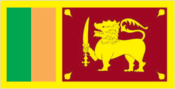
Geography
Climate
tropical; monsoonal; northeast monsoon (December to March); southwest monsoon (June to October)
Coastline
1,340 km
Comparative area
about one-half the size of North Carolina
Contiguous zone
24 nm
Continental shelf
edge of continental margin or 200 nm
Environment
occasional cyclones, tornados; deforestation; soil erosion
Extended economic zone
200 nm
Land use
16% arable land; 17% permanent crops; 7% meadows and pastures; 87% forest and woodland; 23% other; includes 8% irrigated
Special notes
only 29 km from India; near major Indian Ocean sea lanes
Terrain
mostly low, flat to rolling plain; mountains in south-central interior
Territorial sea
12 nm
Total area
- da tng 100km - Paik Bay Manna’ Gut of Mannar Hambantota
- 65,610 km?; land area: 64,740 km?
People and Society
Ethnic divisions
74% Sinhalese; 18% Tamil; 7% Moor; 1% Burgher, Malay, and Veddha
Infant mortality rate
37/1,000 (1983)
Labor force
6.6 million (1985 est.); 45.9% agriculture, 13.3% mining and manufacturing, 12.4% trade and transport, 26.3% services and other; extensive underemployment; 19% unemployment (1985 est.)
Language
Sinhala (official); Sinhala and Tamil listed as national languages; Sinhala spoken by about 74% of population, Tamil spoken by about 18%; English commonly used in government and spoken by about 10% of the population
Life expectancy
68
Literacy
87%
Nationality
noun—Sri Lankan(s); adjective—Sri Lankan
Organized labor
about 33% of labor force, over 50% of which employed on tea, rubber, and coconut estates
Population
16,406,576 (July 1987), average annual growth rate 1.37%
Religion
69% Buddhist, 15% Hindu, 8% Christian, 8% Muslim
Government
Administrative divisions
9 provinces, 24 administrative districts
Branches
the 1978 constitution established a strong presidential form of government under J. R. Jayewardene, who had been Prime Minister since his party’s election victory in July 1977; Jayewardene was elected to a second term in October 1982 and will serve until 1989 regardless of whether Parliament is dissolved; the current Parliament was extended until August 1989 by a national referendum held in December 1982
Capital
Colombo
Elections
national elections ordinarily held every six years; must be held more frequently if government loses confidence vote; the constitution was amended in August 1982 to permit the President to call an early presidential election Political parties and leaders: Sri Lanka Freedom Party (SLFP), Sirimavo Ratwatte Dias Bandaranaike; Sri Lanka Mahajana Party, Vijaya Kumaratunga; Lanka Sama Samaja Party (LSSP; Trotskyite), C. R. de Silva; Nava Sama Samaja Party (NSSP), V. Nanayakkara; Tamil United Liberation Front, A. Amirthalingam; United National Party (UNP), J. R. Jayewardene; Communist Party/Moscow, K. P. Silva; Communist Party/Beijing, N. Shanmugathasan; Mahajana Eksath Peramuna (People’s United Front), M. B. Ratnayaka; Janatha Vimukthi Peramuna (JVP; People’s Liberation Front), Rohana Wijeweera; All-Ceylon Tamil Congress, Kumar Ponnambalam
Government leader
Junius Richard JAYEWARDENE, President (since 1978)
Legal system
a highly complex mixture of English common law, Roman-Dutch, Muslim, and customary law; new constitution 7 September 1978 reinstituted a strong, independent judiciary; has not accepted compulsory ICJ jurisdiction
Member of
ADB, ANRPC, Colombo Plan, Commonwealth, ESCAP, FAO, G-77, GATT, IAEA, IBRD, ICAO, IDA, IFAD, IFC, ILO, IMF, IMO, INTELSAT, INTERPOL, IPU, IRC, ITU, NAM, SAARC, UN, UNESCO, UPU, WFTU, WHO, WIPO, WMO, WTO
National holiday
Independence Day, 22 May
Official name
Democratic Socialist Republic of Sri Lanka
Other political or pressure groups
Tamil separatist groups, Buddhist clergy, Sinhalese Buddhist lay groups; far-left violent revolutionary groups; labor unions
Suffrage
universal over age 18
Type
republic
Voting strength
(October 1982 presidential election) UNP 52.91%, SLFP 39.07%, JVP 4.18%, All Ceylon Tamil Congress 2.67%, LSSP .9%, NSSP .27%
Economy
Agriculture
agriculture accounts for about 26% of GDP; main crops—paddy, coconuts, tea, rubber
Budget
(1985) revenues, $1.4 billion; expenditures, $2.0 billion
Electric power
982,000 kW capacity; 8,200 million kWh produced, 190 kWh per capita (1986)
Exports
$].4 billion (f.0.b., 1985); tea, textiles and garments, petroleum products, coconut, rubber, agricultural products, gems and jewelry, marine products
Fiscal year
calendar year
Fishing
catch 140,000 metric tons (1985 est.)
GDP
$6.3 billion, $390 per capita (1985); real growth rate 5% (1984); 50% services, 26% agriculture, forestry, and fishing, 15% manufacturing, 7% construction, 2% mining and quarrying (1985)
Imports
$2.0 billion (c.i.f., 1985); petroleum, machinery and equipment, textiles and textile materials, wheat, transport equipment, electrical machinery, sugar, rice
Major industries
processing of rubber, tea, coconuts, and other agricultural commodities; consumer goods manufacture; garment industry
Major trade partners
(1985) exports—US (22%), UAR, lraqg, UK, FRG, Singapore, Japan; imports—Japan, Saudi Arabia, US, India, Singapore, FRG, UK, Iran
Monetary conversion rate
28.5 rupees=US$1 (October 1986)
Natural resources
limestone, graphite, mineral sands, gems, phosphates
Communications
Airfields
14 total, 12 usable; 11 with permanent-surface runways; | with runways 2,440-3,659 m, 7 with runways 1,220-2,439 m
Highways
66,176 km total (1985); 24,300 km paved (mostly bituminous treated), 28,916 km crushed stone or gravel, 12,960 km improved earth or unimproved earth; in addition, several thousand km of tracks, mostly unmotorable
Inland waterways
430 km; navigable by shallow-draft craft
Pipelines
crude, 14 km; refined products, 55 km
Ports
3 major, 9 minor Civil air; 8 major transport (including 1 leased)
Railroads
1,868 km total (1985); all 1.868meter broad gauge; 102 km double track; no electrification; government owned
Telecommunications
good international service; 106,500 (est.) telephones (0.6 per 100 popl.); 12 AM, 3 FM, and | TV stations; submarine cables extend to Indonesia, Djibouti, India; 1 satellite ground station
Military and Security
Branches
Army, Air Force, Navy, Police Force, Special Police Task Force, National Auxiliary Force
Military budget
for fiscal year ending 31 December 1986, $370 million, 18% of central government estimated budget
Military manpower
males 15-49, 4,262,000; 3,344,000 fit for military service; 174,000 reach military age (18) annually