1985 Edition
CIA World Factbook 1985 (Internet Archive)
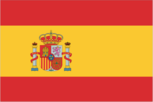
Geography
Agriculture
main crops — grains, vegetables, fruits; virtually self-sufficient in good crop years
Aid
economic commitments — US authorizations, $1.9 billion, including Ex-Im (FY7083); other Western bilateral (ODA and OOF), $545.0 million (1970-79); military authorizations—US (FY70-83), $1.6 billion
Airfields
- 17 total, 17 usable; 5 with permanent-surface runways; 3 with runways 2,4403,659 m, 9 with runways 1,220-2,439 m Defense Forcjes
- (including Balearic and Canary Islands) 117 total, 113 usable; 61 with permanent-surface runways; -4 with runways over 3,659 m, 20 with runways 2,440-3,659 m, 33 with runways 1,220-2,439 m
Area
Budget:(198S) public revenues, $444 million; current expenditures, $330 million; development expenditures, $104 million
Branches
- Army (ground forces), Navy (acts primarily as a coast guard), Air Force, paramilitary National Gendaramerie
- Ground Forces, Navy, Air Defense Forces, Air Forces, Strategic Rocket Forces
- executive, with King's acts subject to countersignature, Prime Minister (Presidente) and his ministers responsible to lower house; bicameral legislature — Cortes Generates, consisting of more powerful Congress of Deputies (350 members) and Senate (208 members), with possible addition of one to six members from each new autonomous region; judiciary, independent
- Army, Navy, Air Force
Budget
(1983 central government) revenues, $26 billion; expenditures, $34 billion; deficit, $8 billion
Capital
Madrid
Civil air
- 1 major transport aircraft
- 142 major transport aircraft Spain (continued) Sri Lanka
Coastline
- 274 km People
- 4,964 km (includes Balearic Islands, 677 km, and Canary Islands, 1 , 1 58 km) People
Communists
PCE membership has declined from a possible high of 160,000in 1977 to roughly 60,000 today; the party lost 64% of itsvotersand 20deputiesin the 1982 election; remaining strength is in labor where it dominates the Workers Commissions trade union (one of the country's two major labor centrals), which claims a membership of about 1 million; experienced a modest recovery in 1983 municipal election, receiving 8% of the vote
Crude steel
12.7 million metric tons produced (1983), 332 kg per capita
Elections
parliamentary election 28 October 1982 for four-year term; local elections for municipal councils April 1983; regional elections staggered Political parties and leaders: principal national parties, from right to left — Popular Alliance (AP), Manuel Fraga Iribarne; Popular Democratic Party (PDP), Oscar Alzaga; Liberal Union (UL), Jose Antonio Segurado; Social Democratic Center (CDS), Adolfo Suarez; Spanish Socialist Workers Party (PSOE), Felipe Gonzalez Marquez; Spanish Communist Party (PCE), Gerardo Iglesias; chief regional parties — Convergence and Unity (CiU), Jordi Pujol, in Catalonia; Republican Left of Catalonia (ERG), Herribert Barrera; Basque Nationalist Party (PNV), Roman Sudure; Basque radical coalitions Popular Unity (HB) and Basque Left (EE); Andalusian Party (PA), Luis Urunuela; Democratic Reform Party (PRD), Antonio Garrigues Walker
Electric power
37,815,000 kW capacity (1984); 1 19.887 billion kWh produced (1984), 3,120 kWh per capita
Ethnic divisions
- about 99% African (30% Balanta, 20% Fula, 14% Manjaca, 13% Mandinga, 7% Papel); less than 1% European and mulatto
- composite of Mediterranean and Nordic types
Exports
$19.76 billion (f.o.b., 1983); principal items — iron and steel products, machinery, automobiles, fruits and vegetables, textiles, footwear
Fiscal year
- calendar year Communications
- calendar year Communications
Fishing
catch, 1,248,882 metric tons (1982)
GNP
$156.4 billion (1983); 70% private consumption, 12% government consumption, 19% gross fixed capital investment; — 1% net exports; real growth rate 2.3% (1983)
Government leaders
JUAN CARLOS I, King (since November 1975); Felipe GONZALEZ Marquez, Prime Minister (Presidente; since December 1982)
Highways
- 30,000 km total; 1,087 km paved, 13,013 km gravel or laterite, 16,000 km unimproved earth
- 149,352 km total; 82,070 km national 2,433 km limited-access divided highway, 63,042 km bituminous treated, 17,038 km intermediate bituminous, concrete, or stone block; the remaining 67,282 km are provincial or local roads (bituminous treated, intermediate bituminous, or stone block)
Imports
$29.2 billion (c.i.f., 1983); principal items — fuels (40%), machinery, chemicals, iron and steel, vegetables, automobiles Major trade partners .-(1983) 48% EC, 7% US, 8% other developed countries, 3% Communist countries, 33% less developed countries
Inland waterways
- 1,295 km navigable by shallow-draft native craft
- 1,045 km; of minor importance as transport arteries and contribute little to economy
Labor force
- 90% agriculture; 5% industry, services, and commerce; 5% government
- 13.2 million (1984); 43% services, 24% industry, 16% agriculture, 9% construction; unemployment now estimated at nearly 20.5% of labor force (September 1984)
Land boundaries
- 740 km Water
- 1,899 km Water
Language
- Portuguese (official); Criolo and numerous African languages
- Castilian Spanish; second languages include 17% Catalan, 7% Galician, and 2% Basque
Legal system
civil law system, with regional applications; new constitution provides for rule of law, established jury system as well as independent constitutional court to rule on unconstitutionally of laws and to serve as court of last resort in protecting liberties and rights granted in constitution; does not accept compulsory ICJ jurisdiction
Limits of territorial waters (claimed)
- 1 2 nm (economic, including, fishing 200 nm)
- 12 nm (economic, including fishing, 200 nm)
Literacy
- 9%
- 97%
Major industries
textiles and apparel (including footwear), food and beverages, metals and metal manufactures, chemicals, shipbuilding, automobiles
Member of
Andean Pact (observer), ASSIMER, Council of Europe, ESRO, FAO, GATT, IAEA, IBRD, ICAC, ICAO, ICES, ICO, IDA, 1DB — Inter-American Development Bank, IEA, IFAD, IFC, IHO, ILO, IMF, IMO, INTELSAT, International Lead and Zinc Study Group, INTERPOL, IOOC, IPU, ITC, ITU, IWC— International Wheat Council, NATO, OAS (observer), OECD, UN, UNESCO, UPU, WHO, WIPO, WMO, WSG, WTO; applied for full membership in the EC 28 July 1977 Economy
Military budget
for fiscal year ending 31 December 1984, $3.5 billion; 10.2% of the central government budget 100km Ste rrgiom! map VIII
Military manpower
- males 15-49, 1,282,000; 645,000 fit for military service 80 km North At/antic Ocean Land 36,260 km2 (includes Bijagos archipelago); about the size of New Hampshire and Connecticut combined
- males 15-49, 6.5,461,000; 55,070,000 fit for military service; 2,058,000 reach military age (17) annually Bay of Biscay • Islands Mediterranean Sea Canary Islands. Ceuta. and Melilla are not shown See re|ioiul mip V ind VII Land 504,782 km2, including Canary (7,51 1 km2) and Balearic Islands (5,025 km2); the size of Arizona and Utah combined; 41% arable and crop, 27% meadow and pasture, 22% forest, 10% urban or other
- males 15-49, 9,310,000; 7,565,000 fit for military service; 344,000 reach military age (20) annually
Monetary conversion rate
- 25.1 sylis=US$l (December 1984)
- 169.96 pesetas=US $1 (October 1984)
National holiday
24 June
Nationality
- noun — Guinea-Bissauan(s); adjective— Guinea-Bissauan
- noun — Spaniard(s); adjective — Spanish
Official name
Spanish State
Organized labor
labor unions legalized April 1977; represent no more than a quarter of the labor force (1983) Government
Other political or pressure groups
on the extreme left, the Basque Fatherland and Liberty (ETA) and the First of October Antifascist Resistance Group (GRAPO) use terrorism to oppose the government; free labor unions (authorized in April 1977) include the Communist-dominated Workers Commissions (CCOO); the Socialist General Union of Workers (UGT), and the smaller independent Workers Syndical Union (USO); the Catholic Church; busine'ss and landowning interests; Opus Dei; university students
Pipelines
- 75,000 km crude oil and refined products; 155,000 km natural gas (1983)
- 265 km crude oil; 1,719 km refined products; 1,130 km natural gas
Political subdivisions
metropolitan Spain, including the Canaries and Balearics, divided into 50 provinces, which form 17 autonomous regions assuming numerous powers previously exercised by the central government; also five places of sovereignty (presidios) on the Mediterranean coast of Morocco; transferred administration of Spanish Sahara to Morocco and Mauritania on 26 February 1976
Population
- 858,000 (July 1985), average annual growth rate 1.9%
- 38,629,000 (July 1985), including the Balearic and Canary Islands and Ceuta and Melilla (two towns on the Moroccan coast); average annual growth rate 0.5%
Ports
- 1 major (Conakry), 2 minor
- 53 major (most important — Leningrad, Riga, Tallinn, Kaliningrad, Liepaja, Ventspils, Murmansk, Arkhangel'sk, Odessa, Novorossiysk, Il'ichevsk, Nikolayev, Sevastopol, Vladivostok, Nakhodka); over 180 selected minor; 58 major inland ports (some of the more important — Astrakhan, Baku, Gorkiy, Kazan, Khabarovsk, Krasnoyarsk, Kuybyshev, Moscow, Rostov, Volgograd, Kiev (1982) Defense Forces
- 23 major, 175 minor
Railroads
- 1,045 km; 806 km 1.000-meter gauge, 239 km 1.435-meter standard gauge
- 16,282 km total; Spanish National Railways (RENFE) operates 13,543 km 1.668-meter gauge, 6,156km electrified, and 2,295 km double track; FEVE (governmentowned narrow-gauge railways) operates 1,821 km, of predominantly 1.000-meter gauge, and 441 km electrified; privately owned railways operate 91 8 km, of predominantly 1.000-meter gauge, 512 km electrified, and 56 km double track
Religion
- 65% indigenous beliefs, 30% Muslim, 5% Christian
- 99% Roman Catholic, 1% other sects
Suffrage
universal at age 18
Telecommunications
generally adequate, modern facilities; 13.3 million telephones (35.0 per 100 popl.); 175 AM, 293 FM, 1,405 TV stations; 20 coaxial submarine cables; 2 satellite stations with total of 5 antennas Defense Forces
Type
parliamentary monarchy defined by new constitution of December 1978, that completed transition from authoritarian regime of the late Generalissimo Franco and confirmed Juan Carlos I as monarch, but without the exceptional powers inherited from Franco on being proclaimed King 22 November 1975
Voting strength
(1982 parliamentary election in lower house) PSOE 46%, and 202 seats (26 seats over a majority); AP, PDP, and UL in coalition 25.4%, 106 seats; UCD 7.31%, 12 seats; PCE 3.9%, 4 seats; CiU 3.7%, 12 seats; CDS 2.9%, 2 seats; PNV 1.9%, 8 seats; HB1%, 2 seats; EE .47%, 1 seat; ERC .47%, 1 seat; PA .33% 0 seats