2019 Edition
CIA World Factbook 2019 Archive (Wayback Machine)
Introduction
Background
The fossil record indicates humans have inhabited South Africa since prehistoric times, and during the modern era the region was settled by Khoisan and Bantu peoples. Dutch traders landed at the southern tip of present-day South Africa in 1652 and established a stopover point on the spice route between the Netherlands and the Far East, founding the city of Cape Town. After the British seized the Cape of Good Hope area in 1806, many of the Dutch settlers (Afrikaners, also called "Boers" (farmers) at the time) trekked north to found their own republics, Transvaal and Orange Free State. The discovery of diamonds (1867) and gold (1886) spurred wealth and immigration and intensified the subjugation of the native inhabitants. The Afrikaners resisted British encroachments but were defeated in the Second South African War (1899-1902); however, the British and the Afrikaners ruled together beginning in 1910 under the Union of South Africa, which became a republic in 1961 after a whites-only referendum. In 1948, the Afrikaner-dominated National Party was voted into power and instituted a policy of apartheid – billed as "separate development" of the races - which favored the white minority at the expense of the black majority. The African National Congress (ANC) led the opposition to apartheid and many top ANC leaders, such as Nelson MANDELA, spent decades in South Africa's prisons. Internal protests and insurgency, as well as boycotts by some Western nations and institutions, led to the regime's eventual willingness to negotiate a peaceful transition to majority rule. The first multi-racial elections in 1994 following the end of apartheid ushered in majority rule under an ANC-led government. South Africa has since struggled to address apartheid-era imbalances in housing, education, and health care. Jacob ZUMA became president in 2009 and was reelected in 2014, but was forced to resign in February 2018 after numerous corruption scandals and gains by opposition parties in municipal elections in 2016. His successor, Cyril RAMAPHOSA, has made some progress in reigning in corruption and restructuring state-owned enterprises, though many challenges persist. In May 2019 national elections, the country’s sixth since the end of apartheid, the ANC won a majority of parliamentary seats, delivering RAMAPHOSA a five-year term to continue anti-corruption measures and efforts to attract foreign investment.
Geography
Area
- Land
- 1,214,470 sq km
- Total
- 1,219,090 sq km
- Water
- 4,620 sq km
Area Comparative
slightly less than twice the size of Texas
Climate
mostly semiarid; subtropical along east coast; sunny days, cool nights
Coastline
2,798 km
Elevation
- Highest Point
- Njesuthi 3,408 m
- Lowest Point
- Atlantic Ocean 0 m
- Mean Elevation
- 1,034 m
Environment Current Issues
lack of important arterial rivers or lakes requires extensive water conservation and control measures; growth in water usage outpacing supply; pollution of rivers from agricultural runoff and urban discharge; air pollution resulting in acid rain; deforestation; soil erosion; land degradation; desertification; solid waste pollution; disruption of fragile ecosystem has resulted in significant floral extinctions
Environment International Agreements
- Party To
- Antarctic-Environmental Protocol, Antarctic-Marine Living Resources, Antarctic Seals, Antarctic Treaty, Biodiversity, Climate Change, Climate Change-Kyoto Protocol, Desertification, Endangered Species, Hazardous Wastes, Law of the Sea, Marine Dumping, Marine Life Conservation, Ozone Layer Protection, Ship Pollution, Wetlands, Whaling
- Signed But Not Ratified
- none of the selected agreements
Geographic Coordinates
29 00 S, 24 00 E
Geography Note
South Africa completely surrounds Lesotho and almost completely surrounds Eswatini
Irrigated Land
16,700 sq km (2012)
Land Boundaries
- Border Countries
- Botswana 1969 km, Lesotho 1106 km, Mozambique 496 km, Namibia 1005 km, Eswatini 438 km, Zimbabwe 230 km
- Total
- 5,244 km
Land Use
- Agricultural Land
- 79.4% (2011 est.)
- Agricultural Land Arable Land
- 9.9% (2011 est.)
- Agricultural Land Permanent Crops
- 0.3% (2011 est.)
- Agricultural Land Permanent Pasture
- 69.2% (2011 est.)
- Forest
- 7.6% (2011 est.)
- Other
- 13% (2011 est.)
Location
Southern Africa, at the southern tip of the continent of Africa
Map References
Africa
Maritime Claims
- Contiguous Zone
- 24 nm
- Continental Shelf
- 200 nm or to edge of the continental margin
- Exclusive Economic Zone
- 200 nm
- Territorial Sea
- 12 nm
Natural Hazards
prolonged droughtsvolcanism: the volcano forming Marion Island in the Prince Edward Islands, which last erupted in 2004, is South Africa's only active volcano
Natural Resources
gold, chromium, antimony, coal, iron ore, manganese, nickel, phosphates, tin, rare earth elements, uranium, gem diamonds, platinum, copper, vanadium, salt, natural gas
Population Distribution
the population concentrated along the southern and southeastern coast, and inland around Pretoria; the eastern half of the country is more densly populated than the west
Terrain
vast interior plateau rimmed by rugged hills and narrow coastal plain
People and Society
Age Structure
- 0 14 Years
- 28.18% (male 7,815,651 /female 7,793,261)
- 15 24 Years
- 17.24% (male 4,711,480 /female 4,837,897)
- 25 54 Years
- 42.05% (male 11,782,848 /female 11,503,831)
- 55 64 Years
- 6.71% (male 1,725,034 /female 1,992,035)
- 65 Years And Over
- 5.81% (male 1,351,991 /female 1,866,182) (2018 est.)
Birth Rate
19.9 births/1,000 population (2018 est.)
Children Under The Age Of 5 Years Underweight
5.9% (2016)
Contraceptive Prevalence Rate
54.6% (2016)
Current Health Expenditure
8.1% (2016)
Death Rate
9.3 deaths/1,000 population (2018 est.)
Demographic Profile
South Africa’s youthful population is gradually aging, as the country’s total fertility rate (TFR) has declined dramatically from about 6 children per woman in the 1960s to roughly 2.2 in 2014. This pattern is similar to fertility trends in South Asia, the Middle East, and North Africa, and sets South Africa apart from the rest of sub-Saharan Africa, where the average TFR remains higher than other regions of the world. Today, South Africa’s decreasing number of reproductive age women is having fewer children, as women increase their educational attainment, workforce participation, and use of family planning methods; delay marriage; and opt for smaller families.As the proportion of working-age South Africans has grown relative to children and the elderly, South Africa has been unable to achieve a demographic dividend because persistent high unemployment and the prevalence of HIV/AIDs have created a larger-than-normal dependent population. HIV/AIDS was also responsible for South Africa’s average life expectancy plunging to less than 43 years in 2008; it has rebounded to 63 years as of 2017. HIV/AIDS continues to be a serious public health threat, although awareness-raising campaigns and the wider availability of anti-retroviral drugs is stabilizing the number of new cases, enabling infected individuals to live longer, healthier lives, and reducing mother-child transmissions.Migration to South Africa began in the second half of the 17th century when traders from the Dutch East India Company settled in the Cape and started using slaves from South and southeast Asia (mainly from India but also from present-day Indonesia, Bangladesh, Sri Lanka, and Malaysia) and southeast Africa (Madagascar and Mozambique) as farm laborers and, to a lesser extent, as domestic servants. The Indian subcontinent remained the Cape Colony’s main source of slaves in the early 18th century, while slaves were increasingly obtained from southeast Africa in the latter part of the 18th century and into the 19th century under British rule.After slavery was completely abolished in the British Empire in 1838, South Africa’s colonists turned to temporary African migrants and indentured labor through agreements with India and later China, countries that were anxious to export workers to alleviate domestic poverty and overpopulation. Of the more than 150,000 indentured Indian laborers hired to work in Natal’s sugar plantations between 1860 and 1911, most exercised the right as British subjects to remain permanently (a small number of Indian immigrants came freely as merchants). Because of growing resentment toward Indian workers, the 63,000 indentured Chinese workers who mined gold in Transvaal between 1904 and 1911 were under more restrictive contracts and generally were forced to return to their homeland.In the late 19th century and nearly the entire 20th century, South Africa’s then British colonies’ and Dutch states’ enforced selective immigration policies that welcomed "assimilable" white Europeans as permanent residents but excluded or restricted other immigrants. Following the Union of South Africa’s passage of a law in 1913 prohibiting Asian and other non-white immigrants and its elimination of the indenture system in 1917, temporary African contract laborers from neighboring countries became the dominant source of labor in the burgeoning mining industries. Others worked in agriculture and smaller numbers in manufacturing, domestic service, transportation, and construction. Throughout the 20th century, at least 40% of South Africa’s miners were foreigners; the numbers peaked at over 80% in the late 1960s. Mozambique, Lesotho, Botswana, and Eswatini were the primary sources of miners, and Malawi and Zimbabwe were periodic suppliers.Under apartheid, a "two gates" migration policy focused on policing and deporting illegal migrants rather than on managing migration to meet South Africa’s development needs. The exclusionary 1991 Aliens Control Act limited labor recruitment to the highly skilled as defined by the ruling white minority, while bilateral labor agreements provided exemptions that enabled the influential mining industry and, to a lesser extent, commercial farms, to hire temporary, low-paid workers from neighboring states. Illegal African migrants were often tacitly allowed to work for low pay in other sectors but were always under threat of deportation.The abolishment of apartheid in 1994 led to the development of a new inclusive national identity and the strengthening of the country’s restrictive immigration policy. Despite South Africa’s protectionist approach to immigration, the downsizing and closing of mines, and rising unemployment, migrants from across the continent believed that the country held work opportunities. Fewer African labor migrants were issued temporary work permits and, instead, increasingly entered South Africa with visitors’ permits or came illegally, which drove growth in cross-border trade and the informal job market. A new wave of Asian immigrants has also arrived over the last two decades, many operating small retail businesses.In the post-apartheid period, increasing numbers of highly skilled white workers emigrated, citing dissatisfaction with the political situation, crime, poor services, and a reduced quality of life. The 2002 Immigration Act and later amendments were intended to facilitate the temporary migration of skilled foreign labor to fill labor shortages, but instead the legislation continues to create regulatory obstacles. Although the education system has improved and brain drain has slowed in the wake of the 2008 global financial crisis, South Africa continues to face skills shortages in several key sectors, such as health care and technology.South Africa’s stability and economic growth has acted as a magnet for refugees and asylum seekers from nearby countries, despite the prevalence of discrimination and xenophobic violence. Refugees have included an estimated 350,000 Mozambicans during its 1980s civil war and, more recently, several thousand Somalis, Congolese, and Ethiopians. Nearly all of the tens of thousands of Zimbabweans who have applied for asylum in South Africa have been categorized as economic migrants and denied refuge.
Dependency Ratios
- Elderly Dependency Ratio
- 7.7 (2015 est.)
- Potential Support Ratio
- 12.9 (2015 est.)
- Total Dependency Ratio
- 52.5 (2015 est.)
- Youth Dependency Ratio
- 44.8 (2015 est.)
Drinking Water Source
- Improved Rural
- 81.4% of population
- Improved Total
- 93.2% of population
- Improved Urban
- 99.6% of population
- Unimproved Rural
- 18.6% of population
- Unimproved Total
- 6.8% of population (2015 est.)
- Unimproved Urban
- 0.4% of population
Education Expenditures
6.2% of GDP (2018)
Ethnic Groups
black African 80.9%, colored 8.8%, white 7.8%, Indian/Asian 2.5% (2018 est.)
HIV/AIDS Adult Prevalence Rate
20.4% (2018 est.)
HIV/AIDS Deaths
71,000 (2018 est.)
HIV/AIDS People Living With HIV/AIDS
7.7 million (2018 est.)
Infant Mortality Rate
- Female
- 26.5 deaths/1,000 live births
- Male
- 33.2 deaths/1,000 live births
- Total
- 29.9 deaths/1,000 live births (2018 est.)
Languages
isiZulu (official) 24.7%, isiXhosa (official) 15.6%, Afrikaans (official) 12.1%, Sepedi (official) 9.8%, Setswana (official) 8.9%, English (official) 8.4%, Sesotho (official) 8%, Xitsonga (official) 4%, siSwati (official) 2.6%, Tshivenda (official) 2.5%, isiNdebele (official) 1.6%, other (includes Khoi, Nama, and San languages) 1.9% (2017 est.)
Life Expectancy at Birth
- Female
- 65.6 years
- Male
- 62.7 years
- Total Population
- 64.1 years (2018 est.)
Literacy
- Definition
- age 15 and over can read and write
- Female
- 93.4% (2015)
- Male
- 95.4%
- Total Population
- 94.4%
Major Infectious Diseases
- Degree Of Risk
- intermediate (2016)
- Food Or Waterborne Diseases
- bacterial diarrhea, hepatitis A, and typhoid fever (2016)
- Water Contact Diseases
- schistosomiasis (2016)
Major Urban Areas Population
9.453 million Johannesburg (includes Ekurhuleni), 4.524 million Cape Town (legislative capital), 3.145 million Durban, 2.473 million PRETORIA (administrative capital), 1.242 million Port Elizabeth, 769,000 Vereeniging (2019)
Maternal Mortality Rate
119 deaths/100,000 live births (2017 est.)
Median Age
- Female
- 27.6 years
- Male
- 27.2 years
- Total
- 27.4 years (2018 est.)
Nationality
- Adjective
- South African
- Noun
- South African(s)
Net Migration Rate
-0.9 migrant(s)/1,000 population (2018 est.)
Obesity Adult Prevalence Rate
28.3% (2016)
Physicians Density
0.91 physicians/1,000 population (2017)
Population
55,380,210 (July 2018 est.)
Population Growth Rate
0.97% (2018 est.)
Religions
Christian 86%, ancestral, tribal, animist, or other traditional African religions 5.4%, Muslim 1.9%, other 1.5%, nothing in particular 5.2% (2015 est.)
Sanitation Facility Access
- Improved Rural
- 60.5% of population (2015 est.)
- Improved Total
- 66.4% of population (2015 est.)
- Improved Urban
- 69.6% of population (2015 est.)
- Unimproved Rural
- 39.5% of population (2015 est.)
- Unimproved Total
- 33.6% of population (2015 est.)
- Unimproved Urban
- 30.4% of population (2015 est.)
School Life Expectancy Primary To Tertiary Education
- Female
- 14 years (2016)
- Male
- 13 years
- Total
- 14 years
Sex Ratio
- 0 14 Years
- 1 male(s)/female
- 15 24 Years
- 0.97 male(s)/female
- 25 54 Years
- 1.02 male(s)/female
- 55 64 Years
- 0.87 male(s)/female
- 65 Years And Over
- 0.72 male(s)/female
- At Birth
- 1.02 male(s)/female
- Total Population
- 0.98 male(s)/female (2018 est.)
Total Fertility Rate
2.26 children born/woman (2018 est.)
Unemployment Youth Ages 15 24
- Female
- 58.8% (2018 est.)
- Male
- 49.2%
- Total
- 53.4%
Urbanization
- Rate Of Urbanization
- 1.97% annual rate of change (2015-20 est.)
- Urban Population
- 66.9% of total population (2019)
Government
Administrative Divisions
9 provinces; Eastern Cape, Free State, Gauteng, KwaZulu-Natal, Limpopo, Mpumalanga, Northern Cape, North West, Western Cape
Capital
- Geographic Coordinates
- 25 42 S, 28 13 E
- Name
- Pretoria (administrative capital); Cape Town (legislative capital); Bloemfontein (judicial capital)
- Time Difference
- UTC+2 (7 hours ahead of Washington, DC, during Standard Time)
Citizenship
- Citizenship By Birth
- no
- Citizenship By Descent Only
- at least one parent must be a citizen of South Africa
- Dual Citizenship Recognized
- yes, but requires prior permission of the government
- Residency Requirement For Naturalization
- 1 year
Constitution
- Amendments
- proposed by the National Assembly of Parliament; passage of amendments affecting constitutional sections on human rights and freedoms, non-racism and non-sexism, supremacy of the constitution, suffrage, the multi-party system of democratic government, and amendment procedures requires at least 75% majority vote of the Assembly, approval by at least six of the nine provinces represented in the National Council of Provinces, and assent of the president of the republic; passage of amendments affecting the Bill of Rights, and those related to provincial boundaries, powers, and authorities requires at least two-thirds majority vote of the Assembly, approval by at least six of the nine provinces represented in the National Council, and assent of the president; amended many times, last in 2013 (2017)
- History
- several previous; latest drafted 8 May 1996, approved by the Constitutional Court 4 December 1996, effective 4 February 1997
Country Name
- Abbreviation
- RSA
- Conventional Long Form
- Republic of South Africa
- Conventional Short Form
- South Africa
- Etymology
- self-descriptive name from the country's location on the continent; "Africa" is derived from the Roman designation of the area corresponding to present-day Tunisia "Africa terra," which meant "Land of the Afri" (the tribe resident in that area), but which eventually came to mean the entire continent
- Former
- Union of South Africa
Diplomatic Representation From The Us
- Chief Of Mission
- Ambassador (vacant); Charge d'Affaires Jessica "Jessye" LAPENN (since 16 December 2016)
- Consulate's General
- Cape Town, Durban, Johannesburg
- Embassy
- 877 Pretorius Street, Arcadia, Pretoria
- Fax
- [27] (12) 342-2299
- Mailing Address
- P.O. Box 9536, Pretoria 0001
- Telephone
- [27] (12) 431-4000
Diplomatic Representation In The Us
- Chancery
- 3051 Massachusetts Avenue NW, Washington, DC 20008
- Chief Of Mission
- Ambassador (vacant); Charge d’Affaires Yoliswa MVEBE (since 1 April 2019)
- Consulate's General
- Chicago, Los Angeles, New York
- Fax
- [1] (202) 265-1607
- Telephone
- [1] (202) 232-4400
Executive Branch
- Cabinet
- Cabinet appointed by the president
- Chief Of State
- President Matamela Cyril RAMAPHOSA (since 15 February 2018); Deputy President David MABUZA (26 February 2018); note - the president is both chief of state and head of government; Jacob ZUMA resigned the presidency on 14 February 2018
- Election Results
- Matamela Cyril RAMAPHOSA (ANC) elected president by the National Assembly unopposed
- Elections Appointments
- president indirectly elected by the National Assembly for a 5-year term (eligible for a second term); election last held on 22 May 2019 (next to be held in May 2024)
- Head Of Government
- President Matamela Cyril RAMAPHOSA (since 15 February 2018); deputy president David MABUZA (26 February 2018)
Flag Description
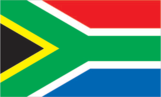
two equal width horizontal bands of red (top) and blue separated by a central green band that splits into a horizontal Y, the arms of which end at the corners of the hoist side; the Y embraces a black isosceles triangle from which the arms are separated by narrow yellow bands; the red and blue bands are separated from the green band and its arms by narrow white stripes; the flag colors do not have any official symbolism, but the Y stands for the "convergence of diverse elements within South African society, taking the road ahead in unity"; black, yellow, and green are found on the flag of the African National Congress, while red, white, and blue are the colors in the flags of the Netherlands and the UK, whose settlers ruled South Africa during the colonial era
Government Type
parliamentary republic
Independence
31 May 1910 (Union of South Africa formed from four British colonies: Cape Colony, Natal, Transvaal, and Orange Free State); 22 August 1934 (Status of the Union Act); 31 May 1961 (republic declared); 27 April 1994 (majority rule)
International Law Organization Participation
has not submitted an ICJ jurisdiction declaration; accepts ICCt jurisdiction
International Organization Participation
ACP, AfDB, AU, BIS, BRICS, C, CD, FAO, FATF, G-20, G-24, G-5, G-77, IAEA, IBRD, ICAO, ICC (national committees), ICCt, ICRM, IDA, IFAD, IFC, IFRCS, IHO, ILO, IMF, IMO, IMSO, Interpol, IOC, IOM, IPU, ISO, ITSO, ITU, ITUC (NGOs), MIGA, MONUSCO, NAM, NSG, OECD (enhanced engagement), OPCW, Paris Club (associate), PCA, SACU, SADC, UN, UNAMID, UNCTAD, UNESCO, UNHCR, UNIDO, UNITAR, UNWTO, UPU, WCO, WFTU (NGOs), WHO, WIPO, WMO, WTO, ZC
Judicial Branch
- Highest Courts
- Supreme Court of Appeals (consists of the court president, deputy president, and 21 judges); Constitutional Court (consists of the chief and deputy chief justices and 9 judges)
- Judge Selection And Term Of Office
- Supreme Court of Appeals president and vice president appointed by the national president after consultation with the Judicial Services Commission (JSC), a 23-member body chaired by the chief justice and includes other judges and judicial executives, members of parliament, practicing lawyers and advocates, a teacher of law, and several members designated by the president of South Africa; other Supreme Court judges appointed by the national president on the advice of the JSC and hold office until discharged from active service by an Act of Parliament; Constitutional Court chief and deputy chief justices appointed by the president of South Africa after consultation with the JSC and with heads of the National Assembly; other Constitutional Court judges appointed by the national president after consultation with the chief justice and leaders of the National Assembly; Constitutional Court judges serve 12-year nonrenewable terms or until age 70
- Subordinate Courts
- High Courts; Magistrates' Courts; labor courts; land claims courts
Legal System
mixed legal system of Roman-Dutch civil law, English common law, and customary law
Legislative Branch
- Description
- bicameral Parliament consists of: National Council of Provinces (90 seats; 10-member delegations appointed by each of the 9 provincial legislatures to serve 5-year terms; note - the Council has special powers to protect regional interests, including safeguarding cultural and linguistic traditions among ethnic minorities) National Assembly (400 seats; members directly elected in multi-seat constituencies by proportional representation vote to serve 5-year terms)
- Election Results
- National Council of Provinces - percent of vote by party - NA; seats by party - ANC 29, DA 13, EFF 9, FF+ 2, IFP 1; note - 36 appointed seats not filled National Assembly - percent of vote by party - ANC 57.5%, DA 20.8%, EFF 10.8%, IFP 3.8%, FF+ 2.4%, other 4.7%; seats by party - ANC 230, DA 84, EFF 44, IFP 14, FF+ 10, other 18; composition - men 237, women 163, percent of women 40.8%
- Elections
- National Council of Provinces and National Assembly - last held on 8 May 2019 (next to be held in 2024)
National Anthem
- Lyrics Music
- Enoch SONTONGA and Cornelius Jacob LANGENHOVEN/Enoch SONTONGA and Marthinus LOURENS de Villiers
- Name
- National Anthem of South Africa
National Holiday
Freedom Day, 27 April (1994)
National Symbol S
springbok (antelope), king protea flower; national colors: red, green, blue, yellow, black, white
Political Parties And Leaders
African Christian Democratic Party or ACDP [Kenneth MESHOE] African Independent Congress or AIC [Mandla GALO] African National Congress or ANC [Cyril RAMAPHOSA] African People's Convention or APC [Themba GODI] Agang SA [Mike TSHISHONGA] Congress of the People or COPE [Mosiuoa LEKOTA] Democratic Alliance or DA [John STEENHUISEN] Economic Freedom Fighters or EFF [Julius Sello MALEMA] Freedom Front Plus or FF+ [Pieter GROENEWALD] GOOD [Patricia de LILLE] Inkatha Freedom Party or IFP [Mangosuthu BUTHELEZI] National Freedom Party or NFP [Zanele kaMAGWAZA-MSIBI] Pan-Africanist Congress of Azania or PAC [Luthanado MBINDA] United Christian Democratic Party or UCDP [Isaac Sipho MFUNDISI] United Democratic Movement or UDM [Bantu HOLOMISA]
Suffrage
18 years of age; universal
Economy
Agriculture Products
corn, wheat, sugarcane, fruits, vegetables; beef, poultry, mutton, wool, dairy products
Budget
- Expenditures
- 108.3 billion (2017 est.)
- Revenues
- 92.86 billion (2017 est.)
Budget Surplus Or Deficit
-4.4% (of GDP) (2017 est.)
Central Bank Discount Rate
- 31 December 2009
- 7%
- 31 December 2014
- 5.75%
Commercial Bank Prime Lending Rate
- 31 December 2016
- 10.46%
- 31 December 2017
- 10.38%
Current Account Balance
- 2016
- -$8.237 billion
- 2017
- -$8.584 billion
Debt External
- 31 December 2016
- $144.6 billion
- 31 December 2017
- $156.3 billion
Distribution Of Family Income Gini Index
- 2011
- 63.4
- 2013
- 62.5
Economy Overview
South Africa is a middle-income emerging market with an abundant supply of natural resources; well-developed financial, legal, communications, energy, and transport sectors; and a stock exchange that is Africa’s largest and among the top 20 in the world.Economic growth has decelerated in recent years, slowing to an estimated 0.7% in 2017. Unemployment, poverty, and inequality - among the highest in the world - remain a challenge. Official unemployment is roughly 27% of the workforce, and runs significantly higher among black youth. Even though the country's modern infrastructure supports a relatively efficient distribution of goods to major urban centers throughout the region, unstable electricity supplies retard growth. Eskom, the state-run power company, is building three new power stations and is installing new power demand management programs to improve power grid reliability but has been plagued with accusations of mismanagement and corruption and faces an increasingly high debt burden.South Africa's economic policy has focused on controlling inflation while empowering a broader economic base; however, the country faces structural constraints that also limit economic growth, such as skills shortages, declining global competitiveness, and frequent work stoppages due to strike action. The government faces growing pressure from urban constituencies to improve the delivery of basic services to low-income areas, to increase job growth, and to provide university level-education at affordable prices. Political infighting among South Africa’s ruling party and the volatility of the rand risks economic growth. International investors are concerned about the country’s long-term economic stability; in late 2016, most major international credit ratings agencies downgraded South Africa’s international debt to junk bond status.
Exchange Rates
- 2013
- 10.8469
- 2014
- 12.7581
- 2015
- 14.6924
- 2016
- 14.6924
- 2017
- 13.67
- Currency
- rand (ZAR) per US dollar -
Exports
- 2016
- $75.16 billion
- 2017
- $94.93 billion
Exports Commodities
gold, diamonds, platinum, other metals and minerals, machinery and equipment
Exports Partners
China 9.5%, US 7.7%, Germany 7.1%, Japan 4.7%, India 4.6%, Botswana 4.3%, Namibia 4.1% (2017)
Fiscal Year
1 April - 31 March
GDP Composition By End Use
- Exports Of Goods And Services
- 29.8% (2017 est.)
- Government Consumption
- 20.9% (2017 est.)
- Household Consumption
- 59.4% (2017 est.)
- Imports Of Goods And Services
- -28.4% (2017 est.)
- Investment In Fixed Capital
- 18.7% (2017 est.)
- Investment In Inventories
- -0.1% (2017 est.)
GDP Composition By Sector Of Origin
- Agriculture
- 2.8% (2017 est.)
- Industry
- 29.7% (2017 est.)
- Services
- 67.5% (2017 est.)
GDP Official Exchange Rate
$349.3 billion (2017 est.)
GDP Per Capita Ppp
- 2015
- $13,800
- 2016
- $13,600
- 2017
- $13,600
GDP Purchasing Power Parity
- 2015
- $752.9 billion
- 2016
- $757.2 billion
- 2017
- $767.2 billion
GDP Real Growth Rate
- 2015
- 1.3%
- 2016
- 0.6%
- 2017
- 1.3%
Gross National Saving
- 2015
- 16.4% of GDP
- 2016
- 16.6% of GDP
- 2017
- 16.1% of GDP
Household Income Or Consumption By Percentage Share
- Highest 10
- 51.3% (2011 est.)
- Lowest 10
- 1.2%
Imports
- 2016
- $79.57 billion
- 2017
- $89.36 billion
Imports Commodities
machinery and equipment, chemicals, petroleum products, scientific instruments, foodstuffs
Imports Partners
China 18.3%, Germany 11.9%, US 6.6%, Saudi Arabia 4.7%, India 4.7% (2017)
Industrial Production Growth Rate
1.2% (2017 est.)
Industries
mining (world's largest producer of platinum, gold, chromium), automobile assembly, metalworking, machinery, textiles, iron and steel, chemicals, fertilizer, foodstuffs, commercial ship repair
Inflation Rate Consumer Prices
- 2016
- 6.3%
- 2017
- 5.3%
Labor Force
22.19 million (2017 est.)
Labor Force By Occupation
- Agriculture
- 4.6%
- Industry
- 23.5%
- Services
- 71.9% (2014 est.)
Market Value Of Publicly Traded Shares
- 31 December 2013
- $942.8 billion
- 31 December 2014
- $933.9 billion
- 31 December 2015
- $735.9 billion
Population Below Poverty Line
16.6% (2016 est.)
Public Debt
- 2016
- 51.6% of GDP
- 2017
- 53% of GDP
Reserves Of Foreign Exchange And Gold
- 31 December 2016
- $47.23 billion
- 31 December 2017
- $50.72 billion
Stock Of Broad Money
- 31 December 2016
- $117.3 billion
- 31 December 2017
- $137.5 billion
Stock Of Direct Foreign Investment Abroad
- 31 December 2016
- $172.8 billion
- 31 December 2017
- $270.3 billion
Stock Of Direct Foreign Investment at Home
- 31 December 2016
- $136.8 billion
- 31 December 2017
- $156.8 billion
Stock Of Domestic Credit
- 31 December 2016
- $244.8 billion
- 31 December 2017
- $295.9 billion
Stock Of Narrow Money
- 31 December 2016
- $117.3 billion
- 31 December 2017
- $137.5 billion
Taxes And Other Revenues
26.6% (of GDP) (2017 est.)
Unemployment Rate
- 2016
- 26.7%
- 2017
- 27.5%
Energy
Carbon Dioxide Emissions From Consumption Of Energy
572.3 million Mt (2017 est.)
Crude Oil Exports
0 bbl/day (2015 est.)
Crude Oil Imports
404,000 bbl/day (2015 est.)
Crude Oil Production
1,600 bbl/day (2018 est.)
Crude Oil Proved Reserves
15 million bbl (1 January 2018 est.)
Electricity Access
- Electrification Rural Areas
- 67.9% (2016)
- Electrification Total Population
- 84.2% (2016)
- Electrification Urban Areas
- 92.9% (2016)
- Population Without Electricity
- 9 million (2017)
Electricity Consumption
207.1 billion kWh (2016 est.)
Electricity Exports
16.55 billion kWh (2016 est.)
Electricity From Fossil Fuels
85% of total installed capacity (2016 est.)
Electricity From Hydroelectric Plants
1% of total installed capacity (2017 est.)
Electricity From Nuclear Fuels
4% of total installed capacity (2017 est.)
Electricity From Other Renewable Sources
10% of total installed capacity (2017 est.)
Electricity Imports
10.56 billion kWh (2016 est.)
Electricity Installed Generating Capacity
50.02 million kW (2016 est.)
Electricity Production
234.5 billion kWh (2016 est.)
Natural Gas Consumption
5.069 billion cu m (2017 est.)
Natural Gas Exports
0 cu m (2017 est.)
Natural Gas Imports
4.162 billion cu m (2017 est.)
Natural Gas Production
906.1 million cu m (2017 est.)
Natural Gas Proved Reserves
0 cu m (1 January 2012 est.)
Refined Petroleum Products Consumption
621,000 bbl/day (2016 est.)
Refined Petroleum Products Exports
105,600 bbl/day (2015 est.)
Refined Petroleum Products Imports
195,200 bbl/day (2015 est.)
Refined Petroleum Products Production
487,100 bbl/day (2015 est.)
Communications
Broadband Fixed Subscriptions
- Subscriptions Per 100 Inhabitants
- 3 (2017 est.)
- Total
- 1,698,360
Broadcast Media
the South African Broadcasting Corporation (SABC) operates 4 TV stations, 3 are free-to-air and 1 is pay TV; e.tv, a private station, is accessible to more than half the population; multiple subscription TV services provide a mix of local and international channels; well-developed mix of public and private radio stations at the national, regional, and local levels; the SABC radio network, state-owned and controlled but nominally independent, operates 18 stations, one for each of the 11 official languages, 4 community stations, and 3 commercial stations; more than 100 community-based stations extend coverage to rural areas
Internet Country Code
.za
Internet Users
- Percent Of Population
- 54% (July 2016 est.)
- Total
- 29,322,380
Telephone System
- Domestic
- fixed-line 7 per 100 persons and mobile-cellular 168 telephones per 100 persons; consists of carrier-equipped open-wire lines, coaxial cables, microwave radio relay links, fiber-optic cable, radiotelephone communication stations, and wireless local loops; key centers are Bloemfontein, Cape Town, Durban, Johannesburg, Port Elizabeth, and Pretoria (2018)
- General Assessment
- the system is the best-developed and most modern in Africa; mobile Internet accounts for about 95% of Internet connections; 94% with access to WiMAX/LTE services; 5G trials; LTE-A services launched for commercial use (2018)
- International
- country code - 27; landing points for the WACS, ACE, SAFE, SAT-3, Equiano, SABR, SAEx1, SAEx2, IOX Cable System, METISS, EASSy, and SEACOM/ Tata TGN-Eurasia fiber-optic submarine cable systems connecting South Africa, East Africa, West Africa, Europe, Southeast Asia, Asia, South America, Indian Ocean Islands, and the US; satellite earth stations - 3 Intelsat (1 Indian Ocean and 2 Atlantic Ocean) (2019)
Telephones Fixed Lines
- Subscriptions Per 100 Inhabitants
- 7 (2017 est.)
- Total Subscriptions
- 3,629,141
Telephones Mobile Cellular
- Subscriptions Per 100 Inhabitants
- 168 (2017 est.)
- Total Subscriptions
- 91,878,275
Transportation
Airports
566 (2013)
Airports With Paved Runways
- 1 524 To 2 437 M
- 52 (2013)
- 2 438 To 3 047 M
- 7 (2013)
- 914 To 1 523 M
- 65 (2013)
- Over 3 047 M
- 11 (2013)
- Total
- 144 (2013)
- Under 914 M
- 9 (2013)
Airports With Unpaved Runways
- 1 524 To 2 437 M
- 31 (2013)
- 2 438 To 3 047 M
- 1 (2013)
- 914 To 1 523 M
- 258 (2013)
- Total
- 422 (2013)
- Under 914 M
- 132 (2013)
Civil Aircraft Registration Country Code Prefix
ZS (2016)
Heliports
1 (2013)
Merchant Marine
- By Type
- bulk carrier 2, general cargo 1, oil tanker 6, other 79 (2018)
- Total
- 88
National Air Transport System
- Annual Freight Traffic On Registered Air Carriers
- 885,277,991 mt-km (2015)
- Annual Passenger Traffic On Registered Air Carriers
- 17,188,887 (2015)
- Inventory Of Registered Aircraft Operated By Air Carriers
- 216 (2015)
- Number Of Registered Air Carriers
- 23 (2015)
Pipelines
94 km condensate, 1293 km gas, 992 km oil, 1460 km refined products (2013)
Ports And Terminals
- Container Port's Teus
- Durban (2,699,978) (2017)
- Lng Terminal's Import
- Mossel Bay
- Major Seaport S
- Cape Town, Durban, Port Elizabeth, Richards Bay, Saldanha Bay
Railways
- Narrow Gauge
- 19,756 km 1.065-m gauge (8,271 km electrified) (2014)
- Other
- 1,150 km (passenger rail, gauge unspecified, 1,115.5 km electrified) (2014)
- Standard Gauge
- 80 km 1.435-m gauge (80 km electrified) (2014)
- Total
- 20,986 km (2014)
Roadways
- Paved
- 158,124 km (2016)
- Total
- 750,000 km (2016)
- Unpaved
- 591,876 km (2016)
Military and Security
Military And Security Forces
South African National Defence Force (SANDF): South African Army (includes Reserve Force), South African Navy (SAN), South African Air Force (SAAF), South African Military Health Services (2019)
Military Expenditures
- 2014
- 1.11% of GDP
- 2015
- 1.1% of GDP
- 2016
- 1.08% of GDP
- 2017
- 1.04% of GDP
- 2018
- 0.98% of GDP
Military Service Age And Obligation
18-26 years of age for voluntary military service; women are eligible to serve in noncombat roles; 2-year service obligation (2019)
Transnational Issues
Disputes International
South Africa has placed military units to assist police operations along the border of Lesotho, Zimbabwe, and Mozambique to control smuggling, poaching, and illegal migration; the governments of South Africa and Namibia have not signed or ratified the text of the 1994 Surveyor's General agreement placing the boundary in the middle of the Orange River
Illicit Drugs
transshipment center for heroin, hashish, and cocaine, as well as a major cultivator of marijuana in its own right; cocaine and heroin consumption on the rise; world's largest market for illicit methaqualone, usually imported illegally from India through various east African countries, but increasingly producing its own synthetic drugs for domestic consumption; attractive venue for money launderers given the increasing level of organized criminal and narcotics activity in the region and the size of the South African economy
Refugees And Internally Displaced Persons
59,480 (Democratic Republic of the Congo) (refugees and asylum seekers), 27,113 (Somalia), 17,726 (Ethiopia), 5,273 (Republic of the Congo) (2018),