1985 Edition
CIA World Factbook 1985 (Internet Archive)
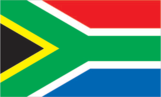
Geography
Airfields
- 28 total, 28 usable; 1 with permanent surface runways; 1 with runways 2,4403,659 m, 3 with runways 1,220-2,439 m
- 128 total, 114 usable; 11 with permanent-surface runways; 1 with runways over 3,659 m, 4 with runways 2,440-3,659 m, 18 with runways 1,220-2,439 m
Area
1,221,037 km2 (includes enclave of Walvis Bay, 1,124 km2; Transkei, 44,000 km2, and Bophuthatswana, 38,000 km2); four-fifths the size of Alaska; 86% desert, waste, or urban; 12% cultivable; 2% forest
Branches
- Army, Army Air Wing, Police Department
- president is chief of state, head of government, and chairman of cabinet; tricameral legislature — House of Assembly (whites), House of Representatives (Coloreds), and House of Delegates (Indians) elected directly by respective racial electorates; judiciary maintains substantial independence of government influence
- Army, Air Force, paramilitary Police Mobile Force, Police Paramilitary
Budget
(central government, 1983) revenues, $860 million (est.); expenditures, $1,070 million (est.)
Capital
administrative, Pretoria; legislative, Cape Town; judicial, Bloemfontein
Civil air
- 1 major transport aircraft
- 9 major transport aircraft
Coastline
2,881 km, including Transkei People
Communists
small Communist Party illegal since 1950; party in exile maintains headquarters in London; Moses Mabhida, Joe Slovo «
Elections
must be held at least every five years; last white election April 1981; last Colored and Indian elections August 1984; because of the introduction of a new constitution in 1984, the next white elections probably will be delayed until 1989 to coincide with nonwhite elections White political parties and leaders: National Party, P. W. Botha; Progressive Federal Party, Frederick Van Zyl Slabbert; New Republic Party, Bill Sutton; Conservative Party, Dr. Andries P. Treurnicht; Herstigte National Party, Jaap Marais Colored political parties and leaders: Labor Party, Allan Hendrickse (majority party); People's Congress Party, Peter Marais Indian political parties and leaders: National People's Party, Amichand Rajbansi (majority party); Solidarity, J. N. Reddy
Ethnic divisions
69.9% African, 17.8% white, 9.4% Colored, 2.9% Indian
Fiscal year
calendar year Communications
Government leaders
Pieter Willem BOTHA, President (since September 1984)
Highways
- approx. 4,221 km total; 508 km paved; 1,585 km crushed stone, gravel, or stabilized soil; 946 km improved, 2,128 km unimproved earth
- 36,370 km total; 6,500 km paved, 7,000 km crushed stone, gravel, or stabilized soil; 22,870 km improved and unimproved earth
Inland waterways
2,250 km, including Zambezi River, Luapula River, Lake Tanganyika; Mpulungu is small port on Lake Tanganyika
Labor force
8.7 million economically active (1980); 53% agriculture, 27% miscellaneous services, 8% manufacturing, 7% mining, 5% commerce
Land boundaries
2,044 km Water
Language
Afrikaans, English (official); Africans have many vernacular languages, including Zulu, Xhosa, North and Soulh Sotho, Tswana
Legal system
based on Roman-Dutch law and English common law; constitution enacted 1961, changing the Union of South Africa into a republic; possibility of judicial review of Acts of Parliament concerning dual official languages; accepts compulsory ICJ jurisdiction, with reservations
Limits of territorial waters (claimed)
12 nm (fishing 200 nm)
Literacy
almost all white population literate; government estimates 50% of Africans literate
Member of
GATT, IAEA, IBRD, ICAO, IDA, IFC, IHO, International Lead and Zinc Study Group, IMF, INTELSAT, ISO, ITU, IWC — International Whaling Commission, IWC— International Wheat Council, UN,
Military manpower
- males 15-49, 344,000; 184,000 fit for military service
- males 15-49, 1,413,000; 737,000 fit for military service
Monetary conversion rate
1.831 Zambian kwachas=US$l (July 1984)
National holiday
Republic Day, 31 May
Nationality
noun — South African(s); adjective— South African
Official name
Republic of South Africa
Organized labor
about 7% of total labor force is unionized (mostly white workers); African unions represent less than 15% of black labor force Government
Other political groups
(insurgent groups in exile) African National Congress (ANC), Oliver Tambo; Pan-Africanist Congress (PAC), John Pokela
Pipelines
1,724 km crude oil
Political subdivisions
4 provinces, each headed by centrally appointed administrator; provincial councils, elected by white electorate, retain limited powers
Population
32,465,000 (July 1985), including Bophuthatswana, Ciskei, Kwazulu, Lebowa, Transkei, and Venda; average annual growth rate 2.4%; Bophuthatswana 1 ,623,000 (July 1985), average annual growth rate 3.9%; Ciskei 763,000 (July 1985), average annual growth rate 2.3%; Kwazulu 4,347,000 (July 1985), average annual growth rate 4.6%; Lebowa 2,208,000 (July 1985), average annual growth rate 4.5%; Transkei 2,960,000 (July 1985), average annual growth rate 3. 4%; Venda 412,000 (July 1985), average annual growth rate 2.7%
Railroads
1,204 km, all 1.067-meter gauge; 13 km double track
Religion
most whites and Coloreds and roughly 60% of Africans are Christian; roughly 60% of Indians are Hindu, 20% Mus-
Suffrage
general suffrage limited to whites over 18 (17 in Natal Province) and to Coloreds and Indians over 18
Telecommunications
- system a modest one consisting of a few landlines, a small radiorelay system, and minor radiocommunication stations; 5,920 telephones (0.3 per lOOpopl.); 2 AM, 2 FM stations; 1 TV station planned; 1 Atlantic Ocean satellite station Defense Forces
- facilities are among the best in Sub-Saharan Africa; high-capacity radio relay connects most larger towns and cities; 67,300 telephones; ( 1 .0 per 100 popl.); 9 AM, 2 FM, 10 TV stations; 1 Indian Ocean satellite station Defense Forces
Type
republic
Voting strength
white parliamentary seats — National Party, 125; Progressive Federal Party, 27; Conservative Party, 18; New Republic, 8