1981 Edition
CIA World Factbook 1981 (Internet Archive)
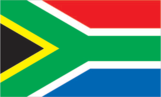
Geography
Area
- 1,222,480 km2 (includes enclave of Walvis Bay, 1,124 km8; Transkei, 44,000 km2, and Bophuthatswana, 38,000 km2); 12% cultivable, 2% forested, 86% desert, waste, or urban
- 22,402,200 km2; 10.2% cultivated, 35.5% forest, 16.8% pasture and hay land, 37.5% other
Coastline
- 2,881 km, including Transkei
- 46,670 km (incl. Sakhalin)
Land boundaries
- 2,044 km
- 20,619 km
Limits of territorial waters (claimed)
- 12 nm (fishing 200 nm)
- 12 nm (fishing 200 nm)
People and Society
Ethnic divisions
- 69.9% African, 17.8% white, 9.4% Colored, 2.9% Asian
- 72% Slavic, 28% among some 170 ethnic groups
Labor force
- 8.7 million (total of economically active, 1970); 53% agriculture, 8% manufacturing, 7% mining, 5% commerce, 27% miscellaneous services
- civilian 144 million (midyear 1981), 22% agriculture, 78% industry and other nonagricultural fields, unemployed not reported, shortage of skilled labor reported
Language
- Afrikaans and English official, Africans have many vernacular languages
- more than 200 languages and dialects (at least 18 with more than 1 million speakers); 76% Slavic group, 8% other Indo-European, 11% Altaic, 3% Uralian, 2% Caucasian
Literacy
- almost all white population literate; government estimates 50% of Africans literate
- 98.5% of population (ages 9-49)
Nationality
- noun — South African(s); adjective — South African
- noun — Soviet(s); adjective — Soviet
Organized labor
about 7% of total labor force is unionized (mostly white workers); relatively small African unions, representing about 1% of black labor force, have recently gained official recognition
Population
- 30,02 1,000 (July 1982), including Bophuthatswana, Transkei, and Venda, average annual growth rate 2.4%; Bophuthatswana 1,347,000 (July 1982), average annual growth rate 2.4%; Transkei 2,390,000 (July 1982), average annual growth rate 2.2%; Venda 374,000 (July 82), average annual growth rate 2.4%
- 269,876,000 (July 1982), average annual growth rate 0.8%
Religion
- most whites and coloreds and roughly 60% of Africans are Christian; roughly 60% of Asians are Hindu, 20% are Muslim
- Russian Orthodox, Armenian Orthodox, Protestant, Roman Catholic, Moslem, and Jews
Government
Branches
- State President as formal chief of state; Prime Minister as head of government; Cabinet responsible to the legislature; legislature elected -directly by white electorate; judiciary maintains substantial independence of government influence
- Council of Ministers (executive), Supreme Soviet (legislative), Supreme Court of USSR (judicial)
Capital
- administrative, Pretoria; legislative, Cape Town; judicial, Bloemfontein
- Moscow
Communists
- small Communist Party illegal since 1950; party in exile maintains headquarters in London; Dr. Yasuf Dadoo, Moses Kotane, Joe Slovo
- over 17 million party members
Elections
- must be held at least every five years; last elections 30 November 1977 Political parties and leaders: National Party, P. W. Botha; Progressive Federal Party, Frederick Van Zyl Slabbert, Colin Eglin; New Republic Party, Vause Raw
- to Supreme Soviet every five years; 1,500 deputies elected in 1979; 71.7% party members
Government leaders
- State President Marais VILJOEN; Prime Minister Pieter W. BOTHA
- Leonid I. BREZHNEV, General Secretary of the Central Committee of the Communist Party and Chairman of the Presidium of the USSR Supreme Soviet; Nikolay A. TIKHONOV, Chairman of the USSR Council of Ministers
Legal system
- based on Roman-Dutch law and English common law; constitution enacted 1961, changing the Union of South Africa into a republic; possibility of judicial review of Acts of Parliament concerning dual official languages; accepts compulsory ICJ jurisdiction, with reservations
- civil law system as modified by Communist legal theory; revised constitution adopted 1977; no judicial review of legislative acts; legal education at 18 universities and 4 law institutes; has not accepted compulsory ICJ jurisdiction
Member of
- GATT, IAEA, IBRD, ICAO, IDA, IFC, IHO, International Lead and Zinc Study Group, IMF, ISO, ITU, IWC — International Whaling Commission, IWC — International Wheat Council, UN, UPU (South Africa in process of being expelled from UPU but they have not been officially notified as yet), WHO, WIPO, WMO, WSG
- CEMA, Geneva Disarmament Conference, IAEA, IBEC, ICAC, ICAO, ICCAT, ICCO, ICES, ILB, ILO, IMCO, International Lead and Zinc Study Group, INRO, IPU, ISO, ITC, ITU, IWC— International Whaling Commission, IWC— International Wheat Council, UN, UNESCO, UPU, Warsaw Pact, WFTU, WHO, WIPO, WMO, WTO
National holiday
- Republic Day, 31 May
- October Revolution Day, 7 November
Official name
- Republic of South Africa
- Union of Soviet Socialist Republics
Other political groups
(insurgent groups in exile) African National Congress (ANC), Oliver Tambo; Pan-Africanist Congress (PAC), Vusumzi Make
Other political or pressure groups
Komsomol, trade unions, and other organizations which facilitate Communist control
Political party
Communist Party of the Soviet Union (CPSU) only party permitted Voting strength (1979 election): 174,944,173 persons over 18; allegedly 99.99% voted
Political subdivisions
- 4 provinces, each headed by centrally appointed administrator; provincial councils, elected by white electorate, retain limited powers
- 15 union republics, consisting of 20 autonomous republics, 6 krays, 122 oblasts, 8 autonomous oblasts, and 10 autonomous okrugs * The US Government does not recognize the incorporation of the Baltic States — Estonia, Latvia, and Lithuania — into the Soviet Union. SOVIET UNION (Continued)
Suffrage
- general suffrage limited to whites over 18 (17 in Natal Province)
- universal over age 18; direct, equal
Type
- republic
- Communist state
Voting strength
(1977 general elections) parliamentary seats: 134 National Party, 17 Progressive Federal Party, 10 New Republic Party, 3 South Africa Party (recently absorbed into the National Party) ,
Economy
Agriculture
- main crops — corn, wool, wheat, sugarcane, tobacco, citrus fruits; dairy products; self-sufficient in foodstuffs
- principal food crops — grain (especially wheat), potatoes; main industrial crops — sugar, cotton, sunflowers, and flax; degree of self-sufficiency depends on fluctuations in crop yields; calorie intake, 3,300 calories per day per capita in recent years
Aid
- no military or economic aid
- economic — total extended to non-Communist LDCs (1954-80), $21.5 billion
Budget
FY80 — revenue $17.6 billion, current expenditures $16.1 billion
Crude steel
163 million metric ton capacity as of 1 January 1979; 149 million metric tons produced in 1981, 555 kg per capita
Electric power
- 20,600,000 kW capacity (1980); 98.7 billion kWh produced (1980), 3,439 kWh per capita
- 279,500,000 kW capacity (1981); 1,325.0 billion kWh produced (1981), 4,927 kWh per capita
Exports
- $25.5 billion (f.o.b., 1980, including gold); wool, diamonds, corn, uranium, sugar, fruit, hides, skins, metals, metallic ores, asbestos, fish products; gold output $13.0 billion (1980)
- $76,437 million (f.o.b., 1980); petroleum and petroleum products, natural gas, metals, wood, agricultural products, and a wide variety of manufactured goods (primarily capital goods)
Fiscal year
- calendar year
- calendar year
Fishing
- catch 658,688 metric tons (1979) SOVIET UNION SOUTH AFRICA (Continued)
- catch 9.5 million metric tons (1980); exports 483,504 metric tons (1980), imports 181,938 metric tons (1980)
GDP
$70.3 billion (1980), about $2,400 per capita; 8% real growth in 1980
GNP
$1,392.5 billion (1980, in 1980 US prices), $5,245 per capita; in 1980 percentage shares were — 54% consumption, 33% investment, 13% government and other, including defense (based on 1970 GNP in rubles at adjusted factor cost); average annual growth rate of real GNP (1971-80), 3.2%, average annual growth rate (1976-80), 2.7%
Imports
- $18.4 billion (f.o.b., 1980); motor vehicles, machinery, metals, petroleum products, textiles, chemicals
- $68,473 million (f.o.b., 1980); grain and other agricultural products, machinery and equipment, steel products (particularly large diameter pipe), consumer manufactures
Major industries
- mining, automobile assembly, metalworking, machinery, textiles, iron and steel, chemical, fertilizer, fishing
- diversified, highly developed capital goods industries; consumer goods industries comparatively less developed
Major trade partners
- US, West Germany, Japan, UK
- $144.9 billion (1979 total turnover); trade 54% with Communist countries, 33% with industrialized West, and 13% with less developed countries
Monetary conversion rate
1 SA Rand = US$1. 2854 (1980)
Official monetary conversion rate
0.649 rubles=US$l (average 1980)
Shortages
natural rubber, bauxite and alumina, tantalum, tin, tungsten, fluorspar, and molybdenum
Communications
Airfields
761 total, 613 usable; 83 with permanentsurface runways; 3 with runways over 3,659 m, 7 with runways 2,440-3,659 m, 155 with runways 1,220-2,439 m
Civil air
79 major transport aircraft, including 1 leased in, 3 leased out
Freight carried
rail— 3,728.0 million metric tons, 3,439.9 billion metric ton/km (1980); highways — 24.1 billion metric tons, 432.3 billion metric ton/km j(1980); waterway— 568. 1 million metric tons, 244.9 billion metric ton/km, excluding Caspian Sea (1980)
Highways
- 229,090 km total; 80,296 km paved, 148,794 km crushed stone, gravel, or improved earth
- 1,346,500 km total; 373,000 km asphalt, concrete, stone block; 554,000 km asphalt treated, gravel, crushed stone; 419,500 km earth (1980)
Inland waterways
142,000 km navigable, exclusive of Caspian Sea (1980)
Military budget
for year ending 31 March 1981, $2.9 billion; 18.4% of central government budget
Military manpower
- males 15-49, 5,809,000; 3,669,000 fit for military service; 295,000 reach military age (18) annually; obligation for service in Citizen Force or Commandos begins at 18; volunteers for service in permanent force must be 17; national service obligation is two years
- males 15-49, 68,359,000; 54,009,000 fit for military service; 2,101,000 reach military age (17) annually
Pipelines
- 836 km crude oil; 1,748 km refined products; 322 km natural gas
- 70,000 km crude oil; 20,000 km refined products; 135,000 km natural gas
Ports
- 7 major (Durban, Cape Town, Port Elizabeth, Richards Bay, Saldanha Bay, East London, and Mossel Bay)
- 53 major (most important: Leningrad, Riga, Tallinn, Kaliningrad, Liepaja, Ventspils, Murmansk, Arkhangel'sk, Odessa, Novorossiysk, Ilichevsk, Nikolayev, Sevastopol, Vladivostok, Nakhodka); over 180 selected minor; 58 major inland ports (some of the more important: Astrakhan, Baku, Gorkiy, Kazan, Khabarovsk, Krasnoyarsk, Kubyshev, Moscow, Rostov, Volgograd, and Kiev (1982) DEFENSE FORCES
Railroads
- 35,434 km total (includes Namibia); 34,728 km 1.067-meter gauge of which 6,143 km are multiple track; 13,949 km electrified; 706 km 0.610-meter gauge single track
- 141,800 km total; 139,917 km broad gauge (1.524 m); 1,833 km narrow gauge (mostly 0.750 m); 110,815 km broad gauge single track; 43,700 km electrified; does not include industrial lines (1980)
Telecommunications
the system is the best developed, most modern, and highest capacity in Africa and consists of carrier-equipped open-wire lines, coaxial cables, radio-relay links, and radiocommunication stations; key centers are Bloemfontein, Cape Town, Durban, Johannesburg, Port Elizabeth, and Pretoria; 2.66 million telephones (10.8 per 100 pop).); 13 AM, 100 FM, and 40 main TV stations with 450 relay transmitters; 1 submarine cable; 1 satellite station with 1 Indian Ocean and 2 Atlantic Ocean antennas DEFENSE FORCES