1995 Edition
CIA World Factbook 1995 (Project Gutenberg)
Geography
Area
total area: 637,660 sq km land area: 627,340 sq km comparative area: slightly smaller than Texas
Climate
principally desert; December to February - northeast monsoon, moderate temperatures in north and very hot in south; May to October - southwest monsoon, torrid in the north and hot in the south, irregular rainfall, hot and humid periods (tangambili) between monsoons
Coastline
3,025 km
Environment
current issues: famine; use of contaminated water contributes to human health problems; deforestation; overgrazing; soil erosion; desertification natural hazards: recurring droughts; frequent dust storms over eastern plains in summer international agreements: party to - Endangered Species, Law of the Sea; signed, but not ratified - Marine Dumping, Nuclear Test Ban
International disputes
southern half of boundary with Ethiopia is a Provisional Administrative Line; territorial dispute with Ethiopia over the Ogaden
Irrigated land
1,600 sq km (1989 est.)
Land boundaries
total 2,366 km, Djibouti 58 km, Ethiopia 1,626 km, Kenya 682 km
Land use
arable land: 2% permanent crops: 0% meadows and pastures: 46% forest and woodland: 14% other: 38%
Location
Eastern Africa, bordering the Gulf of Aden and the Indian Ocean, east of Ethiopia
Map references
Africa
Maritime claims
territorial sea: 200 nm
Natural resources
uranium and largely unexploited reserves of iron ore, tin, gypsum, bauxite, copper, salt
Note
strategic location on Horn of Africa along southern approaches to Bab el Mandeb and route through Red Sea and Suez Canal
Terrain
mostly flat to undulating plateau rising to hills in north
People and Society
Age structure
0-14 years: 45% (female 1,653,175; male 1,650,377) 15-64 years: 51% (female 1,845,886; male 1,932,012) 65 years and over: 4% (female 138,264; male 127,840) (July 1995 est.)
Birth rate
45.53 births/1,000 population (1995 est.)
Death rate
13.3 deaths/1,000 population (1995 est.)
Ethnic divisions
Somali 85%, Bantu, Arabs 30,000
Infant mortality rate
119.5 deaths/1,000 live births (1995 est.)
Labor force
2.2 million (very few are skilled laborers) by occupation: pastoral nomad 70%, agriculture, government, trading, fishing, handicrafts, and other 30%
Languages
Somali (official), Arabic, Italian, English
Life expectancy at birth
total population: 55.74 years male: 55.48 years female: 56 years (1995 est.)
Literacy
age 15 and over can read and write (1990 est.) total population: 24% male: 36% female: 14%
Nationality
noun: Somali(s) adjective: Somali
Net migration rate
123.62 migrant(s)/1,000 population (1995 est.)
Population
7,347,554 (July 1995 est.)
Population growth rate
15.58% (1995 est.)
Religions
Sunni Muslim
Total fertility rate
7.13 children born/woman (1995 est.)
Government
Administrative divisions
18 regions (plural - NA, singular - gobolka); Awdal, Bakool, Banaadir, Bari, Bay, Galguduud, Gedo, Hiiraan, Jubbada Dhexe, Jubbada Hoose, Mudug, Nugaal, Sanaag, Shabeellaha Dhexe, Shabeellaha Hoose, Sool, Togdheer, Woqooyi Galbeed
Capital
Mogadishu
Constitution
25 August 1979, presidential approval 23 September 1979
Digraph
SO
Diplomatic representation in US
Somalian Embassy ceased operations on 8 May 1991
Executive branch
Somalia has no functioning government; the United Somali Congress (USC) ousted the regime of Maj. Gen. Mohamed SIAD Barre on 27 January 1991; the present political situation is one of anarchy, marked by inter-clan fighting and random banditry
FAX
[254] (2) 340838
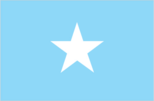
Flag
light blue with a large white five-pointed star in the center; design based on the flag of the UN (Italian Somaliland was a UN trust territory)
Independence
1 July 1960 (from a merger of British Somaliland, which became independent from the UK on 26 June 1960, and Italian Somaliland, which became independent from the Italian-administered UN trusteeship on 1 July 1960, to form the Somali Republic)
Judicial branch
Supreme Court (not functioning)
Legal system
NA
Legislative branch
unicameral People's Assembly
Member of
ACP, AfDB, AFESD, AL, AMF, CAEU, ECA, FAO, G-77, IBRD, ICAO, ICRM, IDA, IDB, IFAD, IFC, IFRCS, IGADD, ILO, IMF, IMO, INTELSAT, INTERPOL, IOC, IOM (observer), ITU, NAM, OAU, OIC, UN, UNCTAD, UNESCO, UNHCR, UNIDO, UPU, WFTU, WHO, WIPO, WMO
Names
conventional long form: none conventional short form: Somalia former: Somali Republic
National holiday
NA
Other political or pressure groups
numerous clan and subclan factions are currently vying for power
People's Assembly (Golaha Shacbiga)
not functioning
Political parties and leaders
the United Somali Congress (USC) ousted the former regime on 27 January 1991; formerly the only party was the Somali Revolutionary Socialist Party (SRSP), headed by former President and Commander in Chief of the Army Maj. Gen. Mohamed SIAD Barre
Suffrage
18 years of age; universal
Type
none
US diplomatic representation
note: the US Embassy in Mogadishu was evacuated and closed indefinitely in January 1991; Ambassador Daniel SIMPSON, ambassador to Kenya, represents US interests in Somalia liaison office: US Embassy, Nairobi, Kenya address: corner of Moi Avenue and Haile Selassie Avenue, Nairobi mailing address: P.O. Box 30137, Unit 64100, Nairobi or APO AE 09831 telephone: [254] (2) 334141
Economy
Agriculture
dominant sector, led by livestock raising (cattle, sheep, goats); crops - bananas, sorghum, corn, mangoes, sugarcane; not self-sufficient in food; distribution of food disrupted by civil strife; fishing potential largely unexploited
Budget
revenues: $NA expenditures: $NA, including capital expenditures of $NA
Currency
1 Somali shilling (So. Sh.) = 100 cents
Economic aid
recipient: US commitments, including Ex-Im (FY70-89), $639 million; Western (non-US) countries, ODA and OOF bilateral commitments (1970-89), $3.8 billion; OPEC bilateral aid (1979-89), $1.1 billion; Communist countries (1970-89), $336 million
Electricity
capacity: prior to the civil war, 75,000 kW, but now almost completely shut down due to war damage; note - UN and relief organizations use their own portable power systems production: NA kWh consumption per capita: NA kWh
Exchange rates
Somali shillings (So. Sh.) per US$1 - approximately 5,000 (1 January 1995), 2,616 (1 July 1993), 4,200 (December 1992), 3,800.00 (December 1990), 490.7 (1989),
Exports
$58 million (1990 est.) commodities: bananas, live animals, fish, hides partners: Saudi Arabia, Italy, FRG (1986)
External debt
$1.9 billion (1989)
Fiscal year
calendar year
Imports
$249 million (1990 est.) commodities: petroleum products, foodstuffs, construction materials partners: US 13%, Italy, FRG, Kenya, UK, Saudi Arabia (1986)
Industrial production
growth rate NA%
Industries
a few small industries, including sugar refining, textiles, petroleum refining (mostly shut down) (1994)
Inflation rate (consumer prices)
NA% (1994)
National product
GDP - purchasing power parity - $3.3 billion (1994 est.)
National product per capita
$500 (1994 est.)
National product real growth rate
NA%
Overview
One of the world's poorest and least developed countries, Somalia has few resources. Moreover, much of the economy has been devastated by the civil war. Agriculture is the most important sector, with livestock accounting for about 40% of GDP and about 65% of export earnings. Nomads and seminomads who are dependent upon livestock for their livelihood make up about 70% of the population. Crop production generates only 10% of GDP and employs about 20% of the work force. The main export crop is bananas; sugar, sorghum, and corn are grown for the domestic market. The small industrial sector is based on the processing of agricultural products and accounts for less than 10% of GDP; most facilities have been shut down because of the civil strife. The greatly increased political turmoil of 1991-93 has resulted in a substantial drop in agricultural output, with widespread famine. In 1994 economic conditions stabilized in the countryside but may turn worse in 1995 if civil strife intensifies after the UN withdrawal.
Unemployment rate
NA%
Communications
Radio
broadcast stations: AM NA, FM NA, shortwave NA radios: NA
Telephone system
NA telephones; the public telecommunications system was completely destroyed or dismantled by the civil war factions; all relief organizations depend on their own private systems (1993) local: NA intercity: NA international: NA
Television
broadcast stations: NA televisions: NA
Transportation
Airports
total: 76 with paved runways over 3,047 m: 3 with paved runways 2,438 to 3,047 m: 1 with paved runways 1,524 to 2,437 m: 3 with paved runways 914 to 1,523 m: 1 with paved runways under 914 m: 14 with unpaved runways 2,438 to 3,047 m: 5 with unpaved runways 1,524 to 2,438 m: 16 with unpaved runways 914 to 1,523 m: 33
Highways
total: 22,500 km paved: 2,700 km unpaved: gravel 3,000 km; improved, stabilized earth 16,800 km (1992)
Merchant marine
total: 2 ships (1,000 GRT or over) totaling 5,529 GRT/6,892 DWT ships by type: cargo 1, refrigerated cargo 1
Pipelines
crude oil 15 km
Ports
Bender Cassim (Boosaaso), Berbera, Chisimayu (Kismaayo), Merca, Mogadishu
Railroads
0 km
Military and Security
Branches
no functioning central government military forces; clan militias continue to battle for control of key economic or political prizes
Defense expenditures
$NA, NA% of GDP ________________________________________________________________________ SOUTH AFRICA
Manpower availability
males age 15-49 1,736,673; males fit for military service 972,203 (1995 est.