1984 Edition
CIA World Factbook 1984 (Internet Archive)
Geography
Agriculture
main crops — palm kernels, coffee, cocoa, rice, yams, millet, ginger, cassava; much of cultivated land devoted to subsistence farming; food crops insufficient for domestic consumption
Area
72,325 km2; 65% arable (6% cultivated), 27% pasture, 4% swamp, 4% forest
Branches
executive authority exercised by President; unicameral parliament (House of Representatives) consists of 104 authorized seats, 85 of which are filled by elected representatives of constituencies and 12 by Paramount Chiefs elected by fellow Paramount Chiefs in each district; President authorized to appoint up to seven members; independent judiciary
Budget
(1983/84 planned) revenues $129 million, current expenditures $143 million, development expenditures $68 million
Capital
Freetown
Coastline
402 km People
Communists
no party, although there are a few Communists and a slightly larger number of sympathizers
Elections
the Constitution of Sierra Leone Act, 1971, has been replaced by the Constitution of Sierra Leone, 1978, which provides for one-party rule; Dr. Siaka Stevens was named as the first Executive President under the one-party constitution; the President's tenure has been extended from five to seven years; next presidential election 1985 Political parties and leaders: All People's Congress (APC), headed by Stevens
Electric power
96,000 kW capacity (1983); 220 million kWh produced (1983), 60 kWh per capita
Ethnic divisions
over 99% native African (30% Temne, 30% Mende, 2% Creole), rest European and Asian; 13 tribes
Exports
$110.5 million (f.o.b., 1982); diamonds, iron ore, palm kernels, cocoa, coffee
Fishing
catch 57,600 metric tons (1979)
GDP
(current factor cost) $1.2 billion (1981 est); real growth rate 0.0% (1981/82 est.)
Government leader
Dr. Siaka Probyn STEVENS, President; Sorie Ibrahim KOROMA, First Vice President
Imports
$264.8 million (f.o.b., 1982); machinery and transportation equipment, manufactured goods, foodstuffs, petroleum products
Labor force
about 1.5 million; most of population engages in subsistence agriculture; only small minority, some 65,000, earn wages
Land boundaries
933 km Water
Language
English (official); regular use limited to literate minority; principal vernaculars are Mende in south and Temne in north; "Krio," the language of the resettled ex-slave population of the Freetown area, is used as a lingua franca
Legal system
based on English law and customary laws indigenous to local tribes; constitution adopted 1978; highest court of appeal is the Sierra Leone Court of Appeals; has not accepted compulsory ICJ jurisdiction
Limits of territorial waters (claimed)
200 nm
Literacy
about 15%
Major industries
mining — diamonds, iron ore, bauxite, rutile; manufacturing — beverages, textiles, cigarettes, construction goods; 1 oil refinery
Major trade partners
UK, EC, US, Japan, Communist countries
Member of
AfDB, AIOEC, Commonwealth, ECA, ECOWAS, FAO, G-77, GATT, IAEA, IBA, IBRD, ICAO, ICO, IDA, IDE— Islamic Development Bank, IFAD, IFC, ILO, IMF, IMO, INTERPOL, IPU, IRC, ITU, NAM, OAU, QIC, UN, UNESCO, UPU, WHO, WMO, WTO Economy
Monetary conversion rate
2.5 leones=US$l (October 1983)
National holiday
Republic Day, 19 April
Nationality
noun — Sierra Leonean(s); adjective — Sierra Leonean
Official name
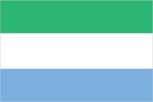
Republic of Sierra Leone
Organized labor
35% of wage earners Government
Political subdivisions
3 provinces; divided into 12 districts with 146 chief doms, where paramount chief and council of elders constitute basic unit of government; plus western area, which comprises Freetown and other coastal areas of the former colony
Population
3,805,000 (July 1984), average annual growth rate 2.7%
Religion
70% indigenous beliefs, 25% Muslim, 5% Christian
Suffrage
universal over age 21
Type
republic under presidential regime since April 1971