1987 Edition
CIA World Factbook 1987 (Internet Archive)
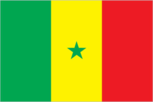
Geography
Boundary disputes
short section with The Gambia is indefinite
Climate
tropical; hot, humid; rainy season (December to April) has strong southeast winds; dry season (May to November) dominated by hot, dry harmattan wind
Comparative area
about the size of South Dakota
Contiguous zone
24 nm
Continental shelf
edge of continental margin or 200 nm
Environment
lowlands seasonally flooded; deforestation; overgrazing; soil erosion; desertification
Exclusive fishing zone
200 nm
Land boundaries
2,680 km total Coastline; 531 km
Land use
27% arable land; 0% permanent crops; 30% meadows and pastures; 31% forest and woodland; 12% other; includes 1% irrigated
Special notes
The Gambia is almost an enclave
Terrain
generally low, rolling, plains rising to foothills in southeast
Territorial sea
12 nm
Total area
- 150km North Atlantic Ocaan Ziguinchor Boundary representation 1s not necessarily authoritative “See regional map VII
- 196,190 km?; land area: 192,000 km?
People and Society
Ethnic divisions
- 99% African (42% Mandinka, 18% Fula, 16% Wolof, 10% Jola, 9% Serahuli, 4% other); 1% non-Gambian
- 836% Wolof, 17% Fulani, 17% Serer, 9% Toucouleur, 9% Diola, 9% Mandingo, 1% European and Lebanese
Infant mortality
112/1,000
Infant mortality rate
174/1,000
Labor force
- 165,000 (1988 est.); 75.0% agriculture; 18.9% industry, commerce, and services; 6.1% government
- 2,509,000; 77% subsistence agricultural workers; 175,000 wage earners—40% private sector, 60% government and parapublic
Language
- English (official); Mandinka, Wolof, Fula, other indigenous vernaculars
- French (official); Wolof, Pulaar, Diola, Mandingo
Life expectancy
- 42
- 48
Literacy
- 12%
- 10%
Nationality
- noun—-Gambian(s); adjective—Gambian
- noun—Senegalese (sing. and pl.); adjective—Senegalese
Organized labor
- 25-30% of wage labor force
- majority of wage-labor force represented by unions; however, dues-paying membership very limited, major confederation is National Confederation of Senegalese Labor (CNTS), an affiliate of governing party
Population
- 760,362 (July 1987), average annual growth rate 2.44%
- 7,064,025 (July 1987), average annual growth rate 3.01%
Religion
- 90% Muslim, 9% Christian, 1% indigenous beliefs
- 92% Muslim, 6% indigenous beliefs, 2% Christian (mostly Roman Catholic)
Government
Administrative divisions
- Banjul and five divisions
- 10 regions, subdivided into 28 departments, 99 arrondissements
Branches
- unicameral legislative branch (43-member parliament), in which four seats are reserved for tribal chiefs, four are government appointed, 35 are filled by election for five-year terms, a Speaker is elected by the House, and the Attorney General is an appointed member; independent judiciary
- government dominated by the President; unicameral legislature (120member National Assembly), elected for five years; President elected for five-year term by universal suffrage; judiciary headed by Supreme Court, with members appointed by President
Capital
- Banjul
- Dakar
Communists
- no Communist party
- small number of Communists and sympathizers
Elections
- general election held March
- presidential and legislative elections held February 1983; Socialist Party holds 111 of 120 seats Political parties and leaders: Socialist Party (PS), Abdou Diouf; Senegalese Democratic Party (PDS), Abdoulaye Wade; 18 other small uninfluential parties
Government leader
Sir Dawda Kairaba JAWARA, President (since February 1970) Political parties and leaders: People’s Progressive Party (PPP), secretary general, Dawda K. Jawara; National Convention Party (NCP), Sheriff Dibba; Gambian People’s Party (GPP), Assan Musa Camara; United Party (UP)
Government leaders
Abdou DIOUF, President (since January 1981)
Legal system
- based on a composite of English common law, Koranic law, and customary law; constitution came into force upon independence in 1965, new republican constitution adopted in April 1970; accepts compulsory 1CJ jurisdiction, with reservations
- based on French civil law system; constitution adopted 1960, revised 1963, 1970, and 1981; judicial review of legislative acts in Supreme Court, which also audits the government’s accounting office; has not accepted compulsory ICJ jurisdiction
Member of
- AfBD, APC, Commonwealth, ECA, ECOWAS, FAO, G-77, GATT, IBRD, ICAO, IDA, 1DB—Inter-American Development Bank, IFAD, IFC, IMF, IMO, IRC, ITU, NAM, OAU, OIC, UN, UNESCO, UPU, WFTU, WHO, WMO, WTO
- AfDB, APC, CEAO, EAMA, ECA, ECOWAS, EIB (associate), FAO, G-77, GATT, IAEA, IBRD, ICAO, IDA, IDB—Islamic Development Bank, IFAD, IFC, ILO, IMF, IMO, INTELSAT, INTERPOL, ITU, NAM, OAU, OCAM, OIC, OMVS (Organization for the Development of the Senegal River Valley), UN, UNESCO, UPU, WFTU, WHO, WIPO, WMO, WTO
National holiday
- Independence Day, 18 February
- Independence Day, 4 April Senegal (continued)
Official name
- Republic of The Gambia
- Republic of Senegal
Other political or pressure groups
students, teachers, labor, Muslim Brotherhoods
Suffrage
- universal adult over 21
- universal adult
Type
- republic; independent since February 1965; in 1982 The Gambia and Senegal formed a loose confederation named Senegambia that calls for the eventual integration of their armed forces and economic cooperation
- republic under multiparty democratic rule; (early in 1982, Senegal and The Gambia formed a loose confederation named Senegambia, which calls for the eventual integration of their armed forces and economic cooperation)
Voting strength
PPP 27 seats, NCP 4 seats, others 4 seats
Economy
Agriculture
- peanuts, millet, sorghum, rice, maize, palm kernels, cotton
- peanuts (primary cash crop), millet, sorghum, manioc, maize, rice, livestock; deficit production of food
Aid
Western (non-US) countries, ODA and OOF (1970-84), $283 million; US (FY70-85), $54 million
Budget
- revenues, $44.2 million; current expenditures, $34.90 million; development expenditures, $19.7 million (1982-83 est.)
- (1984/85) public revenues, $467 million; current expenditures, $489 million; capital expenditures, $75 million
Electric power
- 29,000 kW capacity; 63 million kWh produced, 81 kWh per capita (1986)
- 187,000 kW capacity; 737 million kWh produced, 105 kWh per capita (1986)
Exports
- $59 million (f.o.b., FY85 est.) peanuts and peanut products, fish, palm kernels
- $525 million (f.0.b., 1984); peanuts and peanut products, phosphate rock, fish, petroleum products (reexport)
Fiscal year
- 1 July-30 June
- 1 July-30 June
Fishing
- catch 9,600 metric tons (1983)
- catch 230,000 metric tons (1984); exports $120 million (1984)
GDP
- $125 million, about $200 per capita; real growth rate —7.8% (FY84)
- $2.3 billion, $850 per capita; real growth rate 3.8% (1984)
Imports
- $73 million (f.0.b., FY85 est.); textiles, foodstuffs, tobacco, machinery, petroleum products, chemicals
- $805 million (f.0.b., 1984); food, consumer goods, machinery, transport equipment, petroleum
Major industries
- peanut processing, tourism, brewing, soft drinks, agricultural machinery assembly, small woodworking and metalworking, clothing
- fishing, agricultural processing plants, light manufacturing, mining
Major trade partners
- exports—mainly EC, Africa; imports—EC, Africa
- France, other EC, and franc zone
Monetary conversion rate
- 7.52 dalasi=US$1 (November 1986)
- about 331.24 Communauté Financiére Africaine (CFA) francs=US$1 (November 1986)
Natural resources
- fish
- fish, phosphates
Communications
Airfields
25 total, 21 usable; 10 with permanent-surface runways; | with runways 2,440-3,659 m, 16 with runways 1,220-2,439 m
Highways
13,898 km total; 3,461 km paved, 6,741 km gravel or graded earth, 8,696 km of unimproved roads
Inland waterways
1,505 km
Ports
] major (Dakar), 2 minor Civil air; 8 major transport aircraft
Railroads
- none
- 1,084 km 1.000-meter gauge; 70 km double track
Telecommunications
above-average urban system, using radio-relay and cable; 40,200 telephones (0.6 per 100 popl.); 8 AM , no FM stations; 1 TV station; 3 submarine cables; 1 Atlantic Ocean satellite station
Military and Security
Branches
Army, Navy, Air Force, paramilitary Gendarmerie Military manpower; males 15-49, 1,498,000; 782,000 fit for military service; 80,000 reach military age (18) annually