1986 Edition
CIA World Factbook 1986 (Internet Archive)
Geography
Agriculture
- sugar crop is a major economic asset; over 90% of cultivated land area is planted in sugar; also sugar derivatives, tea, tobacco; most food imported
- main crops — peanuts (primary cash crop); millet, sorghum, manioc, maize, rice, livestock; deficit production of food
Airfields
- 31 total, 31 usable; 10 with permanent-surface runways; 4 with runways 2,440-3,659 m; 16 with runways 1,220-2,439 m
- 5 total, 4 usable; 2 with permanent-surface runways; 1 with runways 2,440-3,659 m
Area
196,192 km2; the size of South Dakota; 40% agricultural (12% cultivated); 13% forest; 47% built up, waste, or other
Branches
- Army, Navy, Air Force, paramilitary Gendarmerie, paramilitary National Guard, paramilitary National Police
- executive power exercised by Prime Minister and 19-member Council of Ministers; unicameral legislature (Legislative Assembly) with 62 members elected by direct suffrage, 8 specially elected under "best loser" system
- paramilitary Special Mobile Force, Police Riot Units, and Police Force
- government dominated by the President; unicameral legislature (120member National Assembly), elected for five years; President elected for five-year term by universal suffrage; judiciary headed by Supreme Court, with members appointed by President
Budget
- $225 million budgeted in 1984; $184 million revenues (planned 1984)
- central government — (1984/85 prov.) revenues, $217 million; external grants, $10 million; current expenditures, $247 million; capital expenditures, $40 million
Capital
- Port Louis
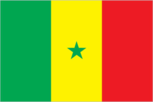
- Dakar
Civil air
- 5 major transport aircraft
- 1 major transport aircraft
Coastline
- 177 km People
- 531 km People
Communists
- may be 2,000 sympathizers; several Communist organizations; Mauritius Lenin Youth Organization, Mauritius Women's Committee, Mauritius Communist Party, Mauritius People's Progressive Party, Mauritius Young Communist League, Mauritius Liberation Front, Chinese Middle School Friendly Association, Mauritius/ USSR Friendship Society
- small number of Communists and sympathizers
Elections
- legislative August 1983 Political parties and leaders: the government is currently controlled by a coalition composed of the Militant Socialist Movement (MSM), A. Jugnauth, and the Mauritian Social Democratic Party (PMSD), G. Duval and the Mauritian Workers' Assembly (RTM), Beergoonath Ghurburrun; the Mauritian Labor Party (MLP) faction, led by party head S. Boolell, voted to leave the coalition in February 1984; the main opposition parties are the Mauritian Militant Movement (MMM), P. Berenger, and the Rodrigues People's Organization (OPR)
- presidential and legislative elections held February 1983; Socialist Party holds 111 of 120 seats Political parties and leaders: Socialist Party (PS), Abdou Diouf; Senegalese Democratic Party (PDS), Abdoulaye Wade; 13 other small uninfluential parties
Electric power
- 237,000 kW capacity (1985); 416 million kWh produced (1985), 411 kWh per capita
- 187,000 kW capacity (1985); 737 million kWh produced (1985), 109 kWh per capita
Ethnic divisions
- 68% Indo-Mauritian, 27% Creole, 3% Sino-Mauritian, 2% Franco-Mauritian
- 36% Wolof, 17% Fulani, 17% Serer, 9% Toucouleur, 9% Diola, 9% Mandingo, 1% European and Lebanese
Exports
- $387.8 million (merchandise, f.o.b., 1984/85 prov.); sugar (48%); Export Processing Zone exports
- $525 million (f.o.b., 1984); peanuts and peanut products, phosphate rock, fish, petroleum products (reexport)
Fiscal year
- calendar year Communications
- 1 July-30 June Communications
Fishing
catch 230,000 metric tons (1984); exports $120 million (1984)
GDP
- $1.0 billion (1984/85 prov.), $1,000 per capita; real growth rate, 4.2% (1984/85 prov.)
- $2.3 billion (1984), $360 (1984) per capita; real growth —4.2% in 1983
Government leader
Aneerood JUGNAUTH, Prime Minister (since June 1982)
Government leaders
Abdou DIOUF, President (since January 1981)
Highways
- 7,540 km total; 1,350 km paved; 710 km gravel, crushed stone, or otherwise improved; 5,480 km unimproved
- 2,000 km total; 1,200 km paved, 800 km earth
Imports
- $215 million (f.o.b., 1984); foodstuffs and other consumer goods, petroleum products, capital goods
- $406 million (f.o.b., 1984/85); food, petroleum products, manufactured goods
- $805 million (f.o.b., 1984); food, consumer goods, machinery, transport equipment, petroleum
Infant mortality
140/1,000(1983)
Infant mortality rate
28/1,000(1985)
Inland waterways
800 km
Labor force
- 335,000; 29% government services, 27% agriculture and fishing, 22% manufacturing, 22% other; 20% are unemployed
- 2,509,000; 77% subsistence agricultural workers; 175,000 wage earners — 40% private sector, 60% government and parapublic
Land boundaries
2,680 km Water
Language
- English (official), Creole, French, Hindi, Urdu, Hakka, Bojpoori
- French (official); Wolof, Pulaar, Diola, Mandingo
Legal system
- based on French civil law system with elements of English common law in certain areas; constitution adopted 6 March 1968
- based on French civil law system; constitution adopted 1960, revised 1963, 1970, and 1981; judicial review of legislative acts in Supreme Court, which also audits the government's accounting office; legal education at University of Dakar; has not accepted compulsory ICJ jurisdiction
Life expectancy
- 67
- 45.5
Limits of territorial waters (claimed)
- 12 nm (200 nm exclusive economic zone)
- 12 run
Literacy
- 79%
- 10%
Major industries
- mainly food manufacturing (largely sugar milling); textiles and wearing apparel; chemical and chemical products; and metal products, transport equipment, and nonelectrical machinery
- fishing, agricultural processing plants, light manufacturing, mining
Major trade partners
- France and other EC members, Senegal, and US
- all EC countries and US have preferential treatment, UK buys almost all of Mauri tius's sugar export at subsidized prices; small amount of sugar exported to Canada, US, and Italy; nonoil imports from UK and EC primarily, also from South Africa, Australia, US, and Japan; some minor trade with China
- France, other EC, and franc zone
Member of
- Af DB, Commonwealth, FAO, G-77, GATT, IAEA, IBRD, ICAO, IDA, IFAD, IFC, ILO, IMF, IMO, INTERPOL, ISO, ITU, IWC— International Wheat Council, NAM, OAU, OCAM, UN, UNESCO, UPU, WFTU, WHO, WIPO, WMO, WTO Economy
- AfDB, APC, CEAO, KAMA, ECA, ECOWAS, EIB (associate), FAO, G-77, GATT, IAEA, IBRD, ICAO, IDA, IDE— Islamic Development Bank, IFAD, IFC, ILO, IMF, IMO, INTELSAT, INTERPOL, ITU, NAM, OAU, OCAM, QIC, OMVS (Organization for the Development of the Senegal River Valley), UN, UNESCO, UPU, WFTU, WHO, WIPO, WMO, WTO Economy
Military budget
for fiscal year ending 30 June 1983, $13.45 million; 3.2% of central government budget
Military manpower
- males 15-49, 369,000; 179,000 fit for military service; conscription law not implemented
- males 15-49, 272,000; 142,000 fit for military service
Monetary conversion rate
- 61.4 ouguiyas=US$l (30 July 1984)
- 14.557 Mauritian rupees=US$l (31 October 1985)
National holiday
- Independence Day, 12 March
- Independence Day, 4 April
Nationality
- noun — Mauritian(s); adjective— Mauritian
- noun — Senegalese (sing, and pi.); adjective — Senegalese
Natural resources
fish, phosphates
Official name
- Mauritius
- Republic of Senegal
Organized labor
- about 35% of labor force, forming over 270 unions Government
- majority of wage-labor force represented by unions; however, duespaying membership very limited; major confederation is National Confederation of Senegalese Labor (CNTS), an affiliate of governing party Government
Other political or pressure groups
- various labor unions
- students, teachers, labor, Muslim Brotherhood
Political subdivisions
- 5 organized municipalities and various island dependencies
- 8 regions, subdivided into 28 departments, 95 arrondissements
Population
- 1,020, 000 (July 1986), average annual growth rate 0.9%
- 6,980,000 (July 1986), average annual growth rate 3.3%
Ports
- 2 major (Nouadhibou and Nouakchott)
- 1 major (Port Louis)
Railroads
740 km 1.435-meter standard gauge, single track, privately owned
Religion
- 51% Hindu, 30% Christian (mostly Roman Catholic with a few Anglicans), 17% Muslim
- 92% Muslim, 6% indigenous beliefs, 2% Christian (mostly Roman Catholic)
Shortage
land
Suffrage
- universal over age 18
- universal adult
Supply
primarily dependent on France; has also received material from Algeria, UK, Spain, and Romania; West Germany furnishes unspecified military cooperation/aid; military students being trained in France, Algeria, Libya, US, Morocco, Canada, Saudi Arabia, Iraq, Senegal, Burkina, and Zaire Agalega Islands Cargadcv Cataios Shoals and flixjngues are not shown Sff rcfionil map VII Land 1,865 km2; smaller than Rhode Island (excluding dependencies); 50% agricultural, intensely cultivated; 39% forest, wood, mountain, rivers, and natural resources; 5% lakes; 3% built on; 2% roads and tracks; 1% waste Water
Telecommunications
- poor system of cable and open-wire lines, minor radio-relay links, and radio communications stations; 5,200 telephones (0.2 per 100 popl.); 2 AM, no FM or TV stations; 2 satellite ground stations under construction Defense Forces
- small system with good service; new microwave link to Reunion; high-frequency radio links to several countries; 2 AM, no FM, 4 TV stations; 48,000 telephones (5.0 per 100 popl.); 1 Indian Ocean satellite station Defense Forces
Type
- independent state, recognizing Elizabeth II as Chief of State
- republic under multiparty democratic rule; (early in 1982, Senegal and The Gambia formed a loose confederation named Senegambia, which calls for the eventual integration of their armed forces
Voting strength
MSM, 30 of 70 seats in the Assembly; MMM, 21; MLP, 11; PMSD, 4; OPR, 2; and independents, 2