1988 Edition
CIA World Factbook 1988 (Internet Archive)
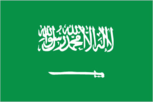
Geography
Aid
Western (non-US) countries (1970-84), $630 million; US, including Ex-Im (FY7085), $590 million
Boundary disputes
- India
- none; no defined boundaries with Oman, PDRY, UAE, YAR; shares Neutral Zone with Iraq
- short section with The Gambia is indefinite
Budget
- $952 million current expenditures, $510 million capital expenditures (1986)
- (1985) revenues, $5.55 billion; expenditures, $5.55 billion;
Climate
- tropical; cool, dry winter (October to March); hot, humid summer (March to June); cool, rainy monsoon (June to October)
- harsh, dry desert with great extremes of temperature
- tropical; hot, humid; rainy season (December to April) has strong southeast winds; dry season (May to November) dominated by hot, dry harmattan wind
- tropical monsoon; few extremes of temperature and weather
- desert; extraordinarily hot and dry
Coastline
- 580 km
- 2,510 km
- 531 km
- 5,313 km
Comparative area
- slightly smaller than Wisconsin
- about one-third the size of US
- about the size of South Dakota
- slightly larger than Maryland
Contiguous zone
- 18 nm
- 18 nm
- 24 nm
Continental shelf
- up to outer limits of continental margin
- not specific
- edge of continental margin or 200 nm
Environment
- vulnerable to droughts; much of country routinely flooded during summer monsoon season; overpopulation; deforestation
- no perennial rivers or permanent water bodies; developing extensive coastal seawater desalination facilities; desertification
- lowlands seasonally flooded; deforestation; overgrazing; soil erosion; desertification
- subject to typhoons, but rarely destructive; geologically active region with frequent earth tremors
- scarcity of natural fresh water resources; overgrazing; soil erosion; desertification
Ethnic divisions
- 90% Arab, 10% AfroAsian
- 36% Wolof, 17% Fulani, 17% Serer, 9% Toucouleur, 9% Diola, 9% Mandingo, 1% European and Lebanese
- 93.0% Melanesian, 4.0% Polynesian, 1.5% Micronesian, 0.8% European, 0.3% Chinese, 0.4% other
Exclusive fishing zone
200 nm
Extended economic zone
- 200 nm
- 200 nm
Fiscal year
- calendar year
- 1 April-31 March
Infant mortality
112/1,000
Infant mortality rate
- 118/1,000 (1983)
- 46/1,000 (1980)
Labor force
- about one-third (one-half foreign) of population; 45% commerce, services, government, and other; 30% agriculture; 15% construction; 5% industry; 5% oil and mining
- 2,509,000; 77% subsistence agricultural workers; 175,000 wage earners— 40% private sector, 60% government and parapublic
- 23,448 economically active (1984); 32.4% agriculture, forestry, and fishing; 7.0% construction, manufacturing, and mining; 4.7% commerce, transport, and finance
Land boundaries
- 2,535 km total
- 4,537 km total
- 2,680 km total
Land use
- 67% arable land; 2% permanent crops; 4% meadows and pastures; 16% forest and woodland; 11% other; includes 14% irrigated
- 1% arable land; NEGL% permanent crops; 39% meadows and pastures; 1% forest and woodland; 59% other; includes NEGL% irrigated
- 27% arable land; 0% permanent crops; 30% meadows and pastures; 31% forest and woodland; 12% other; includes 1% irrigated
- 1% arable land; 1% permanent crops; 1% meadows and pastures; 93% forest and woodland; 4% other
- 1% arable land; NEGL% permanent crops; 27% meadows and pastures; 7% forest and woodland; 65% other; includes NEGL% irrigated
Language
- Arabic
- French (official); Wolof, Pulaar, Diola, Mandingo
- 120 indigenous languages; Melanesian pidgin in much of the country is lingua franca; English spoken by 1-2% of population
Life expectancy
- 54
- 43
- 54
Literacy
- 52%
- 10%
- 60%
Maritime claims
(measured from claimed archipelagic baselines)
Military transfers
US (FY70-85), $2.3 million
Monetary conversion rate
- 0.38 Bahrain dinar=US$l (November 1986)
- 2.14 Singapore dollars=US$l (14 January 1987)
Nationality
- noun — Saudi(s); adjective — Saudi or Saudi Arabian
- noun — Senegalese (sing, and pi.); adjective — Senegalese
- noun — Solomon Islanders); adjective — Solomon Islander
Organized labor
- majority of wage-labor force represented by unions; however, dues-paying membership very limited; major confederation is National Confederation of Senegalese Labor (CNTS), an affiliate of governing party
- most of the cash economy workers have trade union representation
Population
- 14,904,794 (July 1987), average annual growth rate 4.95%
- 7,064,025 (July 1987), average annual growth rate 3.01%
- 301,180 (July 1987), average annual growth rate 3.62%
Religion
- 100% Muslim
- 92% Muslim, 6% indigenous beliefs, 2% Christian (mostly Roman Catholic)
- almost all at least nominally Christian; Anglican, Seventh-Day Adventist, and Roman Catholic churches dominant Somalia
Special notes
- almost completely surrounded by India; Joint River Commission on water sharing with upstream riparian
- extensive coastlines on Persian Gulf and Red Sea provide great leverage on shipping (especially crude oil) through Persian Gulf and Suez Canal
- The Gambia is almost an enclave
- none
- controls southern approaches to Bab el Mandeb linking Red Sea to Gulf of Aden, one of world's most active shipping lanes Yemen, People's Democratic Republic of (South Yemen) (continued)
Terrain
- mostly flat alluvial plain; hilly in southeast
- mostly uninhabited, sandy desert
- generally low, rolling, plains rising to foothills in southeast
- mostly ruggedly mountainous with some low coral atolls
- mostly upland desert plains; narrow, flat, sandy coastal plain backed by flat-topped hills and rugged mountains
Territorial sea
- 12 nm
- 12 nm
- 12 nm
- 12 nm
Total area
- 144,000 km2; land area: 133,910 km2
- 2,149,690 km2; land area: 2,149,690km2
- 196,190 km2; land area: 192,000 km2
- 28,450 km2; land area: 27,540 km2
People and Society
Ethnic divisions
almost all Arabs; a few Indians, Somalis, and Europeans
Infant mortality rate
114/1,000 (1980)
Language
Arabic
Life expectancy
men 40.6, women 42.4
Literacy
25%
Nationality
noun — Yemeni(s); adjective — Yemeni
Population
2,351,131 (July 1987); average annual growth rate 3.07%
Religion
Sunni Muslim, some Christian and Hindu
Government
Administrative divisions
- 14 provinces
- 10 regions, subdivided into 28 departments, 99 arrondissements
- 7 administrative districts
- six governorates
Branches
- King rules in consultation with royal family and Council of Ministers
- government dominated by the President; unicameral legislature (120member National Assembly), elected for five years; President elected for five-year term by universal suffrage; judiciary headed by Supreme Court, with members appointed by President
- executive authority in Governor General; unicameral legislature (38-member National Parliament)
- unicameral legislature (People's Assembly); Supreme Cabinet
Capital
- Riyadh
- Dakar
- Honiara
- Aden
Communists
- negligible
- small number of Communists and sympathizers
- no information
Elections
- presidential and legislative elections held February 1983; Socialist Party holds 111 of 120 seats Political parties and leaders: Socialist Party (PS), Abdou Diouf; Senegalese Democratic Party (PDS), Abdoulaye Wade; 13 other small uninfluential parties
- at least every four years; last held October 1984 Political parties and leaders: United Party, Sir Peter Kenilorea; People's Alliance Party, Solomon Mamaloni, National Democratic Party, Bartholemew Ulufa'alu
- elections for legislative body and Supreme People's Council are called for in the constitution, but none have been held Political parties and leaders: Yemeni Socialist Party (YSP), the only legal party, is a coalition of National Front, Ba'th, and Communist Parties
Government leader
FAHD bin 'Abd al-'Aziz Al Sa'ud, King and Prime Minister (since 1982)
Government leaders
- Abdou DIOUF, President (since January 1981)
- Sir Baddeley DEVESI, Governor General (since July 1978); Ezekiel Alabna, Prime Minister (since December 1986)
- Haydar Abu Bakr al-'ATTAS, Chairman, Presidium, Supreme People's Council (since February 1986); 'Ali Salim al-BID, Secretary General, Yemeni Socialist Party (since February 1986); Yasin Sa'id NU'MAN, Chairman, Council of Ministers (since February 1986)
Legal system
- based on Islamic law, several secular codes have been introduced; commercial disputes handled by special committees; has not accepted compulsory ICJ jurisdiction
- based on French civil law system; constitution adopted 1960, revised 1963, 1970, and 1981; judicial review of legislative acts in Supreme Court, which also audits the government's accounting office; has not accepted compulsory ICJ jurisdiction
- a High Court plus Magistrates Courts; also a system of native courts throughout the islands
- based on Islamic law (for personal matters) and English common law (for commercial matters); highest judicial organ, Federal High Court, interprets constitution and determines disputes between states
Member of
- Arab League, FAO, G-77, GCC, IAEA, IBRD, ICAO, IDA, IDE— Islamic Development Bank, IFAD, IFC, ILO, IMF, IMO, INTELSAT, International Maritime Satellite Organization, INTERPOL, ITU, IWC— International Wheat Council, NAM, OAPEC, OIC, OPEC, UN, UNESCO, UPU, WHO, WMO
- AfDB, APC, CEAO, KAMA, ECA, ECOWAS, EIB (associate), FAO, G-77, GATT, IAEA, IBRD, ICAO, IDA, IDE — Islamic Development Bank, IFAD, IFC, ILO, IMF, IMO, INTELSAT, INTERPOL, ITU, NAM, OAU, OCAM, QIC, OMVS (Organization for the Development of the Senegal River Valley), UN, UNESCO, UPU, WFTU, WHO, WIPO, WMO, WTO
- ADB, Commonwealth, ESCAP, G-77, GATT (de facto), IBRD, IDA, IFAD, IFC, ILO, IMF, SPF, UN, UPU, WHO
- Arab League, FAO, G-77, GATT (de facto), IBRD, ICAO, IDA, IDE— Islamic Development Bank, IFAD, ILO, IMF, IMO, ITU, NAM, QIC, UN, UNESCO, UPU, WFTU, WHO, WMO, WTO
National day
7 July — Independence Day
National holiday
- 23 September
- Independence Day, 4 April Senegal (continued) Seychelles
- 14 October
Official name
- Kingdom of Saudi Arabia
- Republic of Senegal
- Solomon Islands
- People's Democratic Republic of Yemen
Other political or pressure groups
students, teachers, labor, Muslim Brotherhoods
Suffrage
- universal adult
- universal adult at age 21
- all citizens age 18 and over
Type
- monarchy
- republic under multiparty democratic rule; (early in 1982, Senegal and The Gambia formed a loose confederation named Senegambia, which calls for the eventual integration of their armed forces and economic cooperation)
- independent parliamentary state within Commonwealth
- republic
Economy
Agriculture
- dates, grains, livestock; not self-sufficient in food except wheat
- peanuts (primary cash crop), millet, sorghum, manioc, maize, rice, livestock; deficit production of food
- dominated by coconut production with subsistence crops of yams, taro, bananas, rice
- cotton is main cash crop; cereals, dates, qat (a mild narcotic), coffee, and livestock are raised, and there is a growing fishing industry; large amount of food must be imported (particularly for Aden); cotton, hides, skins, dried and salted fish are exported
Aid
economic commitments from Australia and other Western donors, $16.1 million (1985)
Budget
- (FY87 proposed) appropriations, $31 billion; expenditures, $45 billion
- (1984/85) public revenues, $467 million; current expenditures, $489 million; capital expenditures, $75 million
- (1985) million revenues, $37.4 million; expenditures, $51.0 million
- (1985 est.) total receipts $433 million, current expenditures $495 million, development expenditures $327 million
Electric power
- 20,005,000 kW capacity; 43,810 million kWh produced, 3,800 kWh per capita (1986)
- 187,000 kW capacity; 737 million kWh produced, 105 kWh per capita (1986)
- 15,000 kW capacity; 30 million kWh produced, 110 kWh per capita (1986)
- 254,000 kW capacity; 556 million kWh produced, 240 kWh per capita (1986)
Exports
- $37 billion (f.o.b., 1985); 95% petroleum and petroleum products
- $525 million (f.o.b., 1984); peanuts and peanut products, phosphate rock, fish, petroleum products (reexport)
- $70.1 million (f.o.b., 1985); copra, timber, fish, palm oil, seashells and shell products
- $316 million (f.o.b. 1985 est.)
Fiscal year
- calendar year as of 1 January 1987 (previously followed Islamic calendar months Rajab through Jumada II)
- 1 July-30 June
- calendar year
Fishing
catch 230,000 metric tons (1984); exports $120 million (1984)
GDP
- $133.6 billion (FY85), $9,920 per capita; annual growth in nonoil GDP in constant 1969/70 prices about 7% (1981-84)
- $2.3 billion, $350 per capita; real growth rate 3.8% (1984)
- $137 million (1985), $640 per capita
GNP
$1.1 billion (1985 est), $500 per capita
Imports
- $34 billion (c.i.f., 1985); manufactured goods, transportation equipment, construction materials, and processed food products
- $805 million (f.o.b., 1984); food, consumer goods, machinery, transport equipment, petroleum
- $83.2 million (c.i.f., 1985)
- $762 million (f.o.b., 1985 est.)
Major industries
- crude oil production 5.0 million b/d (1986); oil revenue payments to Saudi Arabian Government, $15 billion (FY86); petroleum refining, basic petrochemicals, cement production and small steel-rolling mill; several other light industries, including factories producing detergents, plastic products, furniture
- fishing, agricultural processing plants, light manufacturing, mining
- petroleum refinery at Little Aden operates on imported crude
Major trade partners
- exports and reexports—Japan 32%, US 6%, Bahrain 5%, Italy 4%; imports— US 21%, Japan 18%, Italy 8%, FRG 8% (1985)
- France, other EC, and franc zone
- exports — Japan 37%, UK 11%, Australia 3%; importsAustralia 31%, Singapore 16%, Japan 15%, UK 9% (1981)
- 1985 imports mainly from USSR 14%, Australia 9%, UK 7%; exports mainly to Japan 36%, North Yemen 23%, Singapore 10%
Monetary conversion rate
- 3.74 Saudi riyals=US$l (December 1986)
- about 331.24 Communaute Financiere Africaine (CFA) francs=US$l (November 1986)
- 1.4808 Solomon Island dollars=US$l (February 1986)
- 0.3454 dinar=US$l (November 1986)
Natural resources
- oil, natural gas, iron ore, gold, copper
- fish, phosphates
- fish, forests, agricultural land, minerals (gold and bauxite)
- fish, oil, minerals (gold, copper, lead)
Communications
Airfields
- 3 total, 2 usable; 2 with permanent-surface runways; 1 with runways over 3,659 m; 1 with runways 1,220-2,439 m
- 202 total, 174 usable; 60 with permanent-surface runways; 11 with runways over 3,659 m, 26 with runways 2,440-3,659 m, 98 with runways 1,220-2,439 m Senegal
- 25 total, 21 usable; 10 with permanent-surface runways; 1 with runways 2,440-3,659 m, 16 with runways 1,220-2,439 m
- 6 total, 6 usable; 6 with permanent-surface runways; 2 with runways over 3,659 m, 2 with runways 2,440-3,659 m, 1 with runways 1,220-2,439
- 24 total, 22 usable; 2 with permanent-surface runways; 4 with runways 1,220-2,439 m
- 41 total, 30 usable; 5 with permanent-surface runways; 1 1 with runways 2,440-3,659 m, 1 1 with runways 1,220-2,439 m
Branches
- Army, Naval Wing, Air Wing
- Saudi Arabian Land Forces, Royal Saudi Naval Forces, Royal Saudi Air Force, Royal Saudi Air Defense Force, Saudi Arabian National Guard, Coast Guard and Frontier Forces, Special Security Force, Public Security Force, Special Emergency Force
- Army, Navy, Air Force, paramilitary Gendarmerie
- Army, Navy, Air Force, Army Reserve, Singapore Armed Forces
- Army, Navy, Air Force, People's Militia, People's Police
Civil air
- 3 major transport aircraft
- 191 major transport aircraft
- 3 major transport aircraft
- about 30 major transport aircraft
- no major transport aircraft
- 9 major transport aircraft
Highways
- 225 km bituminous surfaced; undetermined kilometers of natural surface tracks; 25 km bridge-causeway to Saudi Arabia opened in November 1986
- 67,000 km total; 28,000 km bituminous, 39,000 km gravel and improved earth
- 13,898 km total; 3,461 km paved, 6,741 km gravel or graded earth, 3,696 km of unimproved roads
- 2,597 km total (1984)
- about 2,100 km total (1982); 30 km sealed, 290 km gravel, 980 km earth, 800 private logging and plantation roads of varied construction
- 5,600 km total; 1,700 km bituminous treated, 630 km crushed stone and gravel, 3,270 km motorable track
Inland waterways
- 1,505 km
- none
Military budget
estimated for fiscal year ending 31 March 1987, $950 million; about 11.2% of central government budget South Pacific Ocean ^Choiseul Gizo Santa Isabel Yandina 0*upKiiAo, Guadalcanal Santa ^San ff Cru* Cristobal • Islands Coral Sea
Military manpower
- males 15-49, 168,000; 95,000 fit for military service 150km Bay of Bengal Sec regional map VIII
- males 15-49, 5,688,000; 3,209,000 fit for military service; 154,000 reach military age (18) annually ' Src regional map VII
- males 15-49, 1,498,000; 782,000 fit for military service; 80,000 reach military age (18) annually 300km VICTORIA*-^ " Amirante Isles Mahe Island
- males 15-49, 808,000; 606,000 fit for military service
- males 15-49, 491,000; 277,000 fit for military service
Pipelines
- crude oil, 56 km; refined products, 16 km; natural gas, 32 km
- 6,400 km crude oil; 150 km refined products; 2,200 km natural gas, includes 1,600 km of natural gas liquids
- refined products, 32 km
Ports
- 1 major (Mlna' Sulman), 1 minor (Mlna' al ManSmah), 1 petroleum, oil, and lubricant terminal (Sitrah)
- 7 major (Jiddah or Jeddah, Ad DammSm, Ras Tanura, Jlzan, Al Jubayl, Yanbu' al Bahr, Yanbu' a? SJnS'lyah), 17 minor
- 1 major (Dakar), 2 minor
- 3 major, 2 minor
- 5 minor
- 1 major (Aden), 5 minor
Railroad
none
Railroads
- none
- 886 km 1.435-meter standard gauge
- 1,034 km 1.000-meter gauge; 70 km double track
- 38 km of 1.000-meter gauge
- none
Telecommunications
- excellent international telecommunications; adequate domestic services; 98,000 telephones (23.2 per 100 popl.); 2 AM, 1 FM, and 2 TV stations; 1 Atlantic Ocean, 1 Indian Ocean, and 1 ARABSAT satellite stations; tropospheric scatter and microwave to Qatar, United Arab Emirates, Saudi Arabia; submarine cable to Qatar and United Arab Emirates Defense Forces
- good system exists, major expansion program completed with extensive microwave and coaxial cable systems; 1,624,000 telephones (14.1 per 100 popl.); 21 AM, 2 FM, 63 TV stations; 2 Atlantic and 2 Indian Ocean INTELSAT stations, 1 ARABSAT satellite control station; radio-relay to Bahrain, Jordan, Kuwait, Qatar, UAE, and Sudan; coaxial cable to Kuwait; submarine cable to Djibouti Defense Forces
- above-average urban system, using radio-relay and cable; 40,200 telephones (0.6 per 100 popl.); 8 AM , no FM stations; 1 TV station; 3 submarine cables; 1 Atlantic Ocean satellite station Defense Forces
- good domestic facilities; good international service; good radio and television broadcast coverage; 1.02 million telephones (39.0 per 100 popl.); 13 AM, 4 FM, 2 TV stations; submarine cables extend to Sabah (Malaysia), Peninsular Malaysia, Indonesia, and the Philippines; 1 satellite ground station Defense Forces
- 3,000 telephones; 4 AM, no FM, no TV stations; 1 satellite ground station GullalAdtn
- small system of open-wire, radio-relay, multiconductor cable, and radio communications stations; only center Aden; estimated 15,000 telephones (0.7 per 100 popl.); 1 AM, no FM, 5 TV stations; 1 Indian Ocean INTELSAT, 1 Intersputnik, and 1 ARABSAT satellite station; tropospheric scatter to North Yemen Defense Forces