1987 Edition
CIA World Factbook 1987 (Internet Archive)
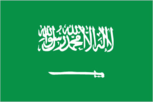
Geography
Aid
Western (non-US) countries (1970-84), $630 million; US, including Ex-Im (FY7085), $590 million
Boundary disputes
none; no defined boundaries with Oman, PDRY, UAE, YAR; shares Neutral Zone with Iraq
Budget
- $952 million current expenditures, $510 million capital expenditures (1986)
- (1985) revenues, $5.55 billion; expenditures, $5.55 billion;
Climate
- harsh, dry desert with great extremes of temperature
- desert; extraordinarily hot and dry
Coastline
2,510 km
Comparative area
about one-third the size of US
Contiguous zone
18 nm
Continental shelf
not specific
Environment
- no perennial rivers or permanent water bodies; developing extensive coastal seawater desalination facilities; desertification
- scarcity of natural fresh water resources; overgrazing; soil erosion; desertification
Fiscal year
- calendar year
- 1 April-381 March
Land boundaries
4,537 km total
Land use
- 1% arable land; NEGL% permanent crops; 39% meadows and pastures; 1% forest and woodland; 59% other; includes NEGL®% irrigated
- 1% arable land; NEGL% permanent crops; 27% meadows and pastures; 7% forest and woodland; 65% other; includes NEGL% irrigated
Military transfers
US (FY70-85), $2.3 million
Monetary conversion rate
- 0.38 Bahrain dinar=US$1 (November 1986)
- 2.14 Singapore dollars=US$) (14 January 1987)
Special notes
- extensive coastlines on Persian Gulf and Red Sea provide great leverage on shipping (especially crude oil) through Persian Gulf and Suez Canal
- controls southern approaches to Bab el Mandeb linking Red Sea to Gulf of Aden, one of world’s most active shipping lanes Yemen, People’s Democratic Republic of (South Yemen) (continued)
Terrain
- mostly uninhabited, sandy desert
- mostly upland desert plains; narrow, flat, sandy coastal plain backed by flat-topped hills and rugged mountains
Territorial sea
12 nm
Total area
- 500 km eTabuk Persian Gulf Ad Dammam Boundary representation is not necessarily authoritative
- 2,149,690 km?; land area: 2,149,690 km?
People and Society
Ethnic divisions
- 90% Arab, 10% AfroAsian
- almost all Arabs; a few Indians, Somalis, and Europeans
Infant mortality rate
- 118/1,000 (1983)
- 114/1,000 (1980)
Labor force
about one-third (one-half foreign) of population; 45% commerce, services, government, and other; 30% agriculture; 15% construction; 5% industry; 5% oil and mining
Language
- Arabic
- Arabic
Life expectancy
- 54
- men 40.6, women 42.4
Literacy
- 52%
- 25%
Nationality
- noun—Saudi(s); adjective— Saudi or Saudi Arabian
- noun—Yemeni(s); adjective— Yemeni
Population
- 14,904,794 (July 1987), average annual growth rate 4.95%
- 2,351,131 (July 1987); average annual growth rate 3.07%
Religion
- 100% Muslim
- Sunni Muslim, some Christian and Hindu
Government
Administrative divisions
- 14 provinces
- six governorates
Branches
- King rules in consultation with royal family and Council of Ministers
- unicameral legislature (People’s Assembly); Supreme Cabinet
Capital
- Riyadh
- Aden
Communists
- negligible
- no information
Elections
elections for legislative body and Supreme People’s Council are called for in the constitution, but none have been held Political parties and leaders: Yemeni Socialist Party (YSP), the only legal party, is a coalition of National Front, Ba‘th, and Communist Parties
Government leader
FAHD bin ‘Abd al-‘Aziz Al] Sa‘ud, King and Prime Minister (since 1982)
Government leaders
Haydar Abu Bakr al-‘ATTAS, Chairman, Presidium, Supreme People’s Council (since February 1986); ‘Ali Salim al-BID, Secretary General, Yemeni Socialist Party (since February 1986); Yasin Sa‘id NU‘MAN, Chairman, Council of Ministers (since February 1986)
Legal system
- based on Islamic law, several secular codes have been introduced; commercial disputes handled by special committees; has not accepted compulsory ICJ jurisdiction
- based on Islamic law (for personal matters) and English common law (for commercial matters); highest judicial organ, Federal High Court, interprets constitution and determines disputes between states
Member of
- Arab League, FAO, G-77, GCC, 1AEA, IBRD, ICAO, IDA, IDB— Islamic Development Bank, IFAD, IFC, ILO, IMF, IMO, INTELSAT, International Maritime Satellite Organization, INTERPOL, ITU, [WC—International Wheat Council, NAM, OAPEC, OIC, OPEC, UN, UNESCO, UPU, WHO, WMO
- Arab League, FAO, G-77, GATT (de facto), IBRD, ICAO, IDA, IDB—Islamic Development Bank, IFAD, ILO, IMF, IMO, ITU, NAM, OIC, UN, UNESCO, UPU, WFTU, WHO, WMO, WTO
National holiday
- 23 September
- 14 October
Official name
Kingdom of Saudi Arabia
Suffrage
all citizens age 18 and over
Type
- monarchy
- republic
Economy
Agriculture
- dates, grains, livestock; not self-sufficient in food except wheat
- cotton is main cash crop; cereals, dates, qat (a mild narcotic), coffee, and livestock are raised, and there is a growing fishing industry; large amount of food must be imported (particularly for Aden); cotton, hides, skins, dried and salted fish are exported
Budget
- (FY87 proposed) appropriations, $31 billion; expenditures, $45 billion
- (1985 est.) total receipts $433 million, current expenditures $495 million, development expenditures $327 million
Electric power
- 20,005,000 kW capacity; 43,810 million kWh produced, 3,800 kWh per capita (1986)
- 254,000 kW capacity; 556 million kWh produced, 240 kWh per capita (1986)
Exports
- $37 billion (f.0.b., 1985); 95% petroleum and petroleum products
- $316 million (f.0.b. 1985 est.)
Fiscal year
- calendar year as of 1 January 1987 (previously followed Islamic calendar months Rajab through Jumada II)
- calendar year
GDP
$133.6 billion (FY85), $9,920 per capita; annual growth in nonoil GDP in constant 1969/70 prices about 7% (1981-84)
GNP
$1.1 billion (1985 est.), $500 per capita
Imports
- $34 billion (c.i.f., 1985); manufactured goods, transportation equipment, construction materials, and processed food products
- $762 million (f.o.b., 1985 est.)
Major industries
- crude oil production 5.0 million b/d (1986); oil revenue payments to Saudi Arabian Government, $15 billion (FY86); petroleum refining, basic petrochemicals, cement production and small steel-rolling mill; several other light industries, including factories producing detergents, plastic products, furniture
- petroleum refinery at Little Aden operates on imported crude
Major trade partners
- exports and reexports—Japan 32%, US 6%, Bahrain 5%, Italy 4%; imports—US 21%, Japan 18%, Italy 8%, FRG 8% (1985)
- 1985 imports mainly from USSR 14%, Australia 9%, UK 7%; exports mainly to Japan 36%, North Yemen 23%, Singapore 10%
Monetary conversion rate
- 3.74 Saudi riyals=US$1 (December 1986)
- 0.3454 dinar=US$1 (November 1986)
Natural resources
- oil, natural gas, iron ore, gold, copper
- fish, oil, minerals (gold, copper, lead)
Communications
Airfields
- 3 total, 2 usable; 2 with permanent-surface runways; 1 with runways over 3,659 m; 1 with runways 1,220-2,489 m
- 202 total, 174 usable; 60 with permanent-surface runways; 11 with runways over 3,659 m, 26 with runways 2,440-3,659 m, 98 with runways 1,220-2,439 m
- 6 total, 6 usable; 6 with permanent-surface runways; 2 with runways over 3,659 m, 2 with runways 2,440-3,659 m, 1 with runways 1,220-2,439
- 41 total, 30 usable; 5 with permanent-surface runways; 1) with runways 2,440-3,659 m, 11 with runways 1,220-2,4389 m
Civil air
- 8 major transport aircraft
- about 30 major transport aircraft
- 9 major transport aircraft
Highways
- 225 km bituminous surfaced; undetermined kilometers of natural surface tracks; 25 km bridge-causeway to Saudi Arabia opened in November 1986
- 67,000 km total; 28,000 km bituminous, 39,000 km gravel and improved earth
- 2,597 km total (1984)
- 5,600 km total; 1,700 km bituminous treated, 630 km crushed stone and gravel, 3,270 km motorable track
Inland waterways
none
Pipelines
- crude oil, 56 km; refined products, 16 km; natural gas, 32 km
- 6,400 km crude oil; 150 km refined products; 2,200 km natural gas, includes 1,600 km of natural gas liquids
- refined products, 32 km
Ports
- ] major (Mina’ Sulman), 1 minor (Mina’ al Mandmah), | petroleum, oil, and lubricant terminal (Sitrah)
- 7 major (Jiddah or Jeddah, Ad Dammam, Ras Tanura, Jizin, Al Jubayl, Yanbu‘ al Bahr, Yanbu‘ as Sind‘iyah), 17 minor Civil air; 191 major transport aircraft
- 3 major, 2 minor
- 1 major (Aden), 5 minor
Railroads
- none
- 886 km 1.435-meter standard gauge
- 38 km of 1.000-meter gauge
- none
Telecommunications
- excellent international telecommunications; adequate domestic services; 98,000 telephones (23.2 per 100 popl.); 2 AM, 1 FM, and 2 TV stations; 1 Atlantic Ocean, | Indian Ocean, and 1 ARABSAT satellite stations; tropospheric scatter and microwave to Qatar, United Arab Emirates, Saudi Arabia; submarine cable to Qatar and United Arab Emirates
- good system exists, major expansion program completed with extensive microwave and coaxial cable systems; 1,624,000 telephones (14.1 per 100 popl.); 21 AM, 2 FM, 63 TV stations; 2 Atlantic and 2 Indian Ocean INTELSAT stations, 1 ARABSAT satellite control station; radio-relay to Bahrain, Jordan, Kuwait, Qatar, UAE, and Sudan; coaxial cable to Kuwait; submarine cable to
- good domestic facilities; good international service; good radio and television broadcast coverage; 1.02 million telephones (39.0 per 100 popl.); 18 AM, 4 FM, 2 TV stations; submarine cables extend to Sabah (Malaysia), Peninsular Malaysia, Indonesia, and the Philippines; ) satellite ground station
- small system of open-wire, radio-relay, multiconductor cable, and radio communications stations; only center Aden; estimated 15,000 telephones (0.7 per 100 popl.); 1 AM, no FM, 5 TV stations; 1 Indian Ocean INTELSAT, 1 Intersputnik, and 1 ARABSAT satellite station; tropospheric scatter to North
Military and Security
Branches
- Army, Naval Wing, Air Wing
- Army, Navy, Air Force, Army Reserve, Singapore Armed Forces
Military budget
estimated for fiscal year ending 31 March 1987, $950 million; about 11.2% of central government budget
Military manpower
- males 15-49, 168,000; 95,000 fit for military service
- males 15-49, 808,000; 606,000 fit for military service