1981 Edition
CIA World Factbook 1981 (Internet Archive)
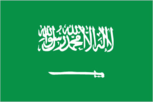
Geography
Area
16,058 km2 (excluding neutral zone but including islands); insignificant amount forested; nearly all desert, waste, or urban
Coastline
499 km
Communists
negligible
Government leader
King and Prime Minister Khalid ibn 'Abd al-'Aziz Al SA'UD
Land boundaries
459 km
Limits of territorial waters (claimed)
12 nni
Member of
Arab League, FAO, G-77, GCC, IAEA, IBRD, ICAO, IDA, IFAD, IFC, ILO, IMCO, IMF, ISCON, ITU, IWC— International Wheat Council, NAM, OAPEC, OPEC, UN, UNESCO, UPU, WHO, WMO
People and Society
Ethnic divisions
42% Kuwaitis, 41% other Arabs, 7% South Asians, 4% Iranians, 6% other
Labor force
360,000 (1978 est); 74% services, 11% industry, 11% construction; 70% of labor force is non-Kuwaiti
Language
Arabic; English commonly used foreign language
Literacy
about 60%
Nationality
noun — Kuwaiti(s); adjective — Kuwaiti
Organized labor
labor unions, first authorized in 1964, formed in oil industry and among government personnel
Population
1,553,000 (July 1982), average annual growth rate 6.2%
Religion
99% Muslim, 1% Christian, Hindu, Parsi, other
Government
Branches
Council of Ministers
Capital
Kuwait
Communists
insignificant
Elections
National Assembly elected in February 1981 Political parties and leaders: political parties prohibited, some small clandestine groups are active
Government leader
Amir Jabir al-Ahmad al-Jabir Al SABAH
Legal system
civil law system with Islamic law significant in personal matters; constitution took effect in 1963; popularly elected 50-man National Assembly (the 15 Cabinet members can also vote) reinstated in March 1981 after being suspended in 1976; judicial review of legislative acts not yet determined; has not accepted compulsory ICJ jurisdiction
Member of
Arab League, FAO, G-77, GATT, GCC, IAEA, IBRD, ICAO, IDA, IFAD, IFC, ILO, IMCO, IMF, IPU, ISCON, ITU, NAM, OAPEC, OPEC, UN, UNESCO, UPU, WHO, WMO, WTO
National holiday
25 February
Official name
State of Kuwait
Other political or pressure groups
large (300,000) Palestinian community
Political subdivisions
3 governorates, 25 voting constituencies
Suffrage
native born and naturalized males age 21 or over; law requires 20 years residency after naturalization
Type
nominal constitutional monarchy
Economy
Agriculture
- virtually none, dependent on imports for food; approx. 75% of potable water must be distilled or imported
- dates, grains, livestock; not self-sufficient in food
Budget
- (1980) $25.5 billion revenues, expenditures $7.9 billion, capital $2.3 billion
- FY82 appropriation $88.7 billion; current expenditure $27.5 billion, project expenditure $61.2 billion
Electric power
- 2,578,000 kW capacity (1980); 9.05 billion kWh produced (1980), 6,382 kWh per capita
- 10,460,800 kW capacity (1980); 27,490 billion kWh produced (1980), 2,719 kWh per capita
Exports
- $20.7 billion (f.o.b., 1980), of which petroleum accounted for about 90%; nonpetroleum exports are mostly reexports, $2.1 billion (1980 est.)
- $110 billion (f.o.b., 1981); 99% petroleum and petroleum products
Fiscal year
- 1 July-30 June
- follows Islamic year; the 1980-81 Saudi fiscal year covers the period 15 May 1980 through 4 May 1981
GDP
- $27.2 billion (1980), $18,390 per capita est.
- $115 billion (FY80 est), $9,500 per capita; annual growth in real nonoil GNP approx. 15% (1976/80 average, nonoil)
Imports
- $6.9 billion (f.o.b., 1980 est.); major suppliers — US, Japan, UK, West Germany
- $34 billion (f.o.b., 1981); manufactured goods, transportation equipment, construction materials, and processed food products
Major industries
- crude petroleum production average for 1980, 1.7 million b/d; refinery production 123 million bbls (1980), average b/d refinery capacity equaled 645,000 bbls at end of 1976; other major industries include processing of fertilizers, chemicals; building materials; flour
- petroleum production 10.2 million b/d (1980); payments to Saudi Arabian Government, $54 billion (1979); cement production and small steel-rolling mill and oil refinery; several other light industries, including factories producing detergents, plastic products, furniture, etc.; PETROMIN, a semipublic agency associated with the Ministry of Petroleum, has recently completed a major fertilizer plant
Major trade partners
exports — US, Western Europe, Japan; imports — US, Japan, West Germany
Monetary conversion rate
- 1 Kuwaiti dinar=US$3.69 (1980)
- 1 Saudi riyal=US$0.30 (1980; linked to SDR, freely convertible)
Communications
Airfields
157 total, 122 usable; 52 with permanentsurface runways; 7 with runways over 3,659 m, 21 with runways 2,440-3,659 m, 62 with runways 1,220-2,439 m, 4 with runways over 3,660 m
Civil air
112 major transport aircraft, including 22 leased in
Highways
30,100 km total; 16,500 km paved, 13,600 km improved earth
Military budget
for fiscal year ending 30 April 1982, $24,640 million; about 28% of central government budget
Military manpower
males 15-49, 2,562,000; 1,464,000 fit for military service; about 93,000 reach military age (18) annually
Pipelines
5,850 km crude oil; 386 km refined products; 1,570 km natural gas, includes 1,370 km of natural gas liquids
Ports
3 major (Jidda, Ad Damman, Ras Tanura), 6 minor
Railroads
- none
- 575 km standard gauge (1.435 m)
Telecommunications
good system exists, major expansion program nearly complete with microwave, coaxial cable, satellite systems; 200,000 telephones (2.5 per 100 popl.); 6 AM, 1 FM, 27 TV stations, 1 submarine cable; 1 Atlantic and 1 Indian Ocean satellite station; 13 domestic satellite stations DEFENSE FORCES