1983 Edition
CIA World Factbook 1983 (Internet Archive)
Geography
Agriculture
- bananas, arrowroot
- principal crops are wheat (average annual output about 4,400 metric tons/year) and grapes (average annual output about 700 metric tons/year); other grains, fruits, vegetables, and animal feedstuffs are also grown; livestock population numbers roughly 6,000 cows, oxen, and sheep; cheese and hides are most important livestock products
Aid
economic — bilateral economic commitments, ODA and OOF, from Western (nonUS) countries, (1970-81),$25 million; no military aid
Airfields
- 5 total, 5 usable; 3 with permanentsurface runways, 1 with runways 1,2202,439 m
- none
Branches
- unicameral legislature (House of Assembly), judiciary (Supreme Court)
- Royal St. Vincent Police Force Land 62 km2; 74% cultivated, 22% meadow and pasture, 4% built on
- the Grand and General Council is the legislative body elected by popular vote; its 60 members serve five-year terms; Council in turn elects two Captains-Regent who exercise executive power for term of six months, the Congress of State whose members head government administrative departments, and the Council of Twelve, the supreme judicial body; actual executive power is wielded by the Secretary of State for Foreign Affairs and the Secretary of State for Internal Affairs
Budget
(1982) revenues, $25 million; expenditures, $36 million
Capital
- Kingstown
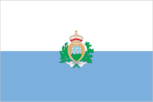
- San Marino
Civil air
- no major transport aircraft
- no major transport aircraft
Communists
approx. 300 members (number of sympathizers cannot be determined); the PCS, in conjunction with the PSS, PSU, and PSDS, has led the government since 1978
Elections
- every five years; most recent 5 December 1979 Political parties and leaders: St. Vincent Labor Party (SVLP), R. Milton Cato; Progressive Democratic Party (POP), Randolph Russell; People's Democratic Movement (PDM), Parnel Campbell and Kenneth John; New Democratic Party (NDP), James "Son" Mitchell; St. Vincent and the Grenadines National Movement (SNM), Dr. Gideon Cordice; People's Political Party (PPP), Clive Tannis; United People's Movement (UPM), Renwick Rose and Oscar Allen; Movement for National Unity (MNU), Ralph Gonsalves
- elections to the Grand and General Council required at least every five years; last election was held 29 May 1983 Political parties and leaders: Christian Democratic Party (DCS), Clara Boscaglia; Social Democratic Party (PSDS), Alvaro Casali; Socialist Party (PSS), Remy Giacomini; Communist Party (PCS), Umberto Barulli; Unitary Socialist Party (PSU), leader unknown; Committee for the Defense of the Republic (CDR), leader unknown
Electric power
- 9,000 kW capacity (1983); 20 million kWh produced (1983), 155 kWh per capita
- all electric power imported from Italy (1983)
Exports
$52.0 million (f.o.b., 1981 est.); bananas, arrowroot, copra
Foreign transactions
dominated by tourism; in summer months 20,000 to 30,000 foreigners visit San Marino every day; several hotels and restaurants have been built in recent years to accommodate them; remittances from Sanmarinese abroad also represent an important net foreign inflow; commodity trade consists primarily of exchanging building stone, lime, wood, chestnuts, wheat, wine, baked goods, hides, and ceramics for a wide variety of consumer manufactures
GNP
$69.2 million (1981), $539 per capita; 2% real growth in 1982
Government leaders
- Robert Milton CATO, Prime Minister; Sir Sydney Douglas GUNNMUNRO, Governor General (UK)
- Giordano Bruno REFFI (Socialist), Secretary of State for Foreign and Political Affairs and for Information; Alvaro SELVA (Communist), Secretary of State for Internal Affairs and Justice; Dr. Emilio DELLA BALDA (Unitary Socialist), Secretary of State for Budget, Finance, and Planning
Highways
- 600 km total; 300 km paved; 150 km otherwise improved; 150 km unimproved earth
- about 104 km
Imports
$65. 4 million (c.i.f., 1981 est.); foodstuffs, machinery and equipment, chemicals and fertilizers, minerals and fuels
Labor force
approx. 4,300
Land boundaries
34 km People
Language
Italian
Legal system
- based on English common law; constitution of 1960; highest judicial body is Court of Appeal of Leeward and Windward Islands
- based on civil law system with Italian law influences; electoral law of 1926 serves some of the functions of a constitution; has not accepted compulsory ICJ jurisdiction National /lo/ufay.-Anniversary of the Liberation of the Republic, 5 February
Literacy
97%
Major industries
food processing
Major trade partners
exports — 75% UK, 13% Trinidad and Tobago (1979); imports— 30% UK, 20% Trinidad and Tobago, 9% Canada, 9% US (1976)
Manufacturing
consists mainly of cotton textile production at Serravalle, brick and tile production at Dogane, cement production at Acquaviva, Dogane, and Fiorentino, and pottery production at Borgo Maggiore; some tanned hides, paper, candy, baked goods, Moscato wine, and gold and silver souvenirs are also produced
Member of
- CARICOM, FAO, G-77, GATT (de facto), IMF, IMO, OAS, UN, UPU, WFTU Economy
- ICJ, International Institute for Unification of Private Law, International Relief Union, ITU, IRC, UNESCO, UPU, WFTU, WHO, WTO; observer status in NAM Economy Principal economic activities of San Marino are farming, livestock raising, light manufacturing, and tourism; the largest share of government revenue is derived from the sale of postage stamps throughout the world and from payments by the Italian Government in exchange for Italy's monopoly in retailing tobacco, gasoline, and a few other goods; main problem is finding additional funds to finance badly needed water and electric power systems expansions
Monetary conversion rate
- 2.70 East Caribbean dollars= US$1 (February 1984) Communications
- 1704.0 Italian lire=US$l (January 1984) Communications
Official name
- St. Vincent and the Grenadines
- Republic of San Marino
Organized labor
Democratic Federation of Sanmarinese Workers (affiliated with ICFTU) has about 1,800 members; Communist-dominated General Federation of Labor, 1,400 members Government
Other political parties or pressure groups
political parties influenced by policies of their counterparts in Italy; the two Socialist parties are not united
Political subdivisions
San Marino is divided into 9 "castles": Acquaviva, Borgo Maggiore, Chiesanuova, Dogmanano, Faetano, Fiorentino, Monte Giardino, San Marino, Serravalle
Population
23,000 (July 1984), average annual growth rate 1.6% Nationality, noun — Sanmarinese (sing, and pi.); adjective — Sanmarinese
Ports
1 major (Kingstown), 1 minor
Railroads
- none
- none
Religion
Roman Catholic
Suffrage
- universal adult at age 18
- universal (since 1960)
Telecommunications
- islandwide fully automatic telephone system with 5,400 sets (4.6 per 100 pop!.); VHF/UHF interisland links to Barbados and the Grenadines; new SHF links to Grenada and St. Lucia; 2 AM stations Defense Forces
- automatic telephone system serving 7, 700 telephones (25.7 per 100 popl.); no radiobroadcasting or television facilities
Type
- independent state within Commonwealth
- republic (dates from 4th century A.D.); in 1862 the Kingdom of Italy concluded a treaty guaranteeing the independence of San Marino; although legally sovereign, San Marino is vulnerable to pressure from the Italian Government
Voting strength
- (1979 election) House of Assembly—LP, 1 1 seats; NDP, 2 seats
- (1983 election) 42. 1 % DCS, 24.4% PCS, 14.8% PSS, 13.9% PSU, 2.9% PSDS