2016 Edition
CIA World Factbook 2016 Archive (HTML)
Introduction
Background
Although sighted by Christopher COLUMBUS in 1493 and claimed for Spain, it was the Dutch who occupied the island in 1631 and set about exploiting its salt deposits. The Spanish retook the island in 1633, but continued to be harassed by the Dutch. The Spanish finally relinquished Saint Martin to the French and Dutch, who divided it between themselves in 1648. Friction between the two sides caused the border to frequently fluctuate over the next two centuries, with the French eventually holding the greater portion of the island (about 57%). The cultivation of sugar cane introduced African slavery to the island in the late 18th century; the practice was not abolished until 1848. The island became a free port in 1939; the tourism industry was dramatically expanded during the 1970s and 1980s. In 2003, the populace of Saint Martin voted to secede from Guadeloupe and in 2007, the northern portion of the island became a French overseas collectivity. In 2010, the southern Dutch portion of the island became the independent nation of Sint Maarten within the Kingdom of the Netherlands.
Geography
Area
- 54.4 sq km 54.4 sq km NEGL
- land
- 54.4 sq km
- total
- 54.4 sq km
- water
- NEGL
Area - comparative
more than one-third the size of Washington, DC
Climate
temperature averages 27-29 degrees Celsius all year long; low humidity, gentle trade winds, brief, intense rain showers; hurricane season stretches from July to November
Coastline
58.9 km (for entire island)
Elevation
- NA lowest point: Caribbean Ocean 0 m highest point: Pic du Paradis 424 m
- elevation extremes
- lowest point: Caribbean Ocean 0 m
- highest point
- Pic du Paradis 424 m
- mean elevation
- NA
Environment - current issues
freshwater supply is dependent on desalination of sea water
Geographic coordinates
18 05 N, 63 57 W
Geography - note
the island of Saint Martin is the smallest landmass in the world shared by two independent states, the French territory of Saint Martin and the Dutch territory of Sint Maarten
Land boundaries
- 16 km Sint Maarten 16 km
- border countries (1)
- Sint Maarten 16 km
- total
- 16 km
Location
Caribbean, located in the Leeward Islands (northern) group; French part of the island of Saint Martin in the Caribbean Sea; Saint Martin lies east of the US Virgin Islands
Map references
Central America and the Caribbean
Natural hazards
subject to hurricanes from July to November
Natural resources
salt
Population - distribution
most of the population is found along the coast, with a largest concentrations around Marigot, Orleans, and Grand-Case
People and Society
Age structure
- 26.38% (male 4,197/female 4,232) 10.43% (male 1,656/female 1,676) 46.87% (male 7,139/female 7,836) 8.67% (male 1,287/female 1,483) 7.65% (male 1,085/female 1,358) (2016 est.)
- 0-14 years
- 26.38% (male 4,197/female 4,232)
- 15-24 years
- 10.43% (male 1,656/female 1,676)
- 25-54 years
- 46.87% (male 7,139/female 7,836)
- 55-64 years
- 8.67% (male 1,287/female 1,483)
- 65 years and over
- 7.65% (male 1,085/female 1,358) (2016 est.)
Ethnic groups
Creole (mulatto), black, Guadeloupe Mestizo (French-East Asia), white, East Indian
Languages
French (official), English, Dutch, French Patois, Spanish, Papiamento (dialect of Netherlands Antilles)
Major infectious diseases
- active local transmission of Zika virus by Aedes species mosquitoes has been identified in this country (as of August 2016); it poses an important risk (a large number of cases possible) among US citizens if bitten by an infective mosquito; other less common ways to get Zika are through sex, via blood transfusion, or during pregnancy, in which the pregnant woman passes Zika virus to her fetus (2016)
- note
- active local transmission of Zika virus by Aedes species mosquitoes has been identified in this country (as of August 2016); it poses an important risk (a large number of cases possible) among US citizens if bitten by an infective mosquito; other less common ways to get Zika are through sex, via blood transfusion, or during pregnancy, in which the pregnant woman passes Zika virus to her fetus (2016)
Median age
- 32.3 years 31.3 years 33.2 years (2016 est.)
- female
- 33.2 years (2016 est.)
- male
- 31.3 years
- total
- 32.3 years
Population
31,949 (July 2016 est.)
Population distribution
most of the population is found along the coast, with a largest concentrations around Marigot, Orleans, and Grand-Case
Religions
Roman Catholic, Jehovah's Witnesses, Protestant, Hindu
Sex ratio
- 1.04 male(s)/female 0.99 male(s)/female 0.99 male(s)/female 0.91 male(s)/female 0.87 male(s)/female 0.81 male(s)/female 0.93 male(s)/female (2016 est.)
- 0-14 years
- 0.99 male(s)/female
- 15-24 years
- 0.99 male(s)/female
- 25-54 years
- 0.91 male(s)/female
- 55-64 years
- 0.87 male(s)/female
- 65 years and over
- 0.81 male(s)/female
- at birth
- 1.04 male(s)/female
- total population
- 0.93 male(s)/female (2016 est.)
Government
Capital
- Marigot 18 04 N, 63 05 W UTC-4 (1 hour ahead of Washington, DC, during Standard Time)
- geographical coordinates
- 18 04 N, 63 05 W
- name
- Marigot
- time difference
- UTC-4 (1 hour ahead of Washington, DC, during Standard Time)
Citizenship
see France
Constitution
4 October 1958 (French Constitution)
Country name
- Overseas Collectivity of Saint Martin Saint Martin Collectivite d'outre mer de Saint-Martin Saint-Martin explorer Christopher COLUMBUS named the island after Saint MARTIN of Tours because the 11 November 1493 day of discovery was the saint's feast day
- conventional long form
- Overseas Collectivity of Saint Martin
- conventional short form
- Saint Martin
- etymology
- explorer Christopher COLUMBUS named the island after Saint MARTIN of Tours because the 11 November 1493 day of discovery was the saint's feast day
- local long form
- Collectivite d'outre mer de Saint-Martin
- local short form
- Saint-Martin
Dependency status
overseas collectivity of France
Diplomatic representation from the US
none (overseas collectivity of France)
Diplomatic representation in the US
none (overseas collectivity of France)
Executive branch
- President Francois HOLLANDE (since 15 May 2012); represented by Deputy Prefect Philippe CHOPIN (since 16 November 2011) President of Territorial Council Aline HANSON (since 17 April 2013) Executive Council; note - there is also an advisory economic, social, and cultural council French president directly elected by absolute majority popular vote in 2 rounds if needed for a 5-year term (eligible for a second term); prefect appointed by French president on the advice of French Ministry of Interior; president of Territorial Council elected by its members for a 5-year term; election last held on 17 April 2013 (next to be held in 2018) Aline HANSON elected president by the Territorial Council
- cabinet
- Executive Council; note - there is also an advisory economic, social, and cultural council
- chief of state
- President Francois HOLLANDE (since 15 May 2012); represented by Deputy Prefect Philippe CHOPIN (since 16 November 2011)
- election results
- Aline HANSON elected president by the Territorial Council
- elections/appointments
- French president directly elected by absolute majority popular vote in 2 rounds if needed for a 5-year term (eligible for a second term); prefect appointed by French president on the advice of French Ministry of Interior; president of Territorial Council elected by its members for a 5-year term; election last held on 17 April 2013 (next to be held in 2018)
- head of government
- President of Territorial Council Aline HANSON (since 17 April 2013)
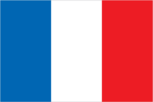
Flag description
the flag of France is used
Independence
none (overseas collectivity of France)
International organization participation
UPU
Legal system
French civil law
Legislative branch
- unicameral Territorial Council (23 seats; members directly elected by absolute majority vote to serve 5-year terms) Saint Martin elects 1 member to the French Senate; election last held on 28 September 2014 (next to be held not later than September 2017); results - percent of vote by party - NA; seats by party - UMP 1; one seat (shared with Saint Barthelemy) was elected to the French National Assembly on 17 June 2012 (next to be held by June 2017); results - percent of vote by party - NA; seats by party - UMP 1 last held on 18 and 25 March 2012 (next to be held in July 2017) percent of seats by party - RRR 34.1%, Team Daniel Gibbs 2012 32%, UPP 13.3%, Saint-Martin pour tous 9.4%, other 11.2%; seats by party - NA; second round, percent of seats by party - RRR 56.9%, Team Daniel Gibbs 43.1%; seats by party - RRR 17, Team Daniel Gibbs 6
- description
- unicameral Territorial Council (23 seats; members directly elected by absolute majority vote to serve 5-year terms)
- election results
- percent of seats by party - RRR 34.1%, Team Daniel Gibbs 2012 32%, UPP 13.3%, Saint-Martin pour tous 9.4%, other 11.2%; seats by party - NA; second round, percent of seats by party - RRR 56.9%, Team Daniel Gibbs 43.1%; seats by party - RRR 17, Team Daniel Gibbs 6
- elections
- last held on 18 and 25 March 2012 (next to be held in July 2017)
- note
- Saint Martin elects 1 member to the French Senate; election last held on 28 September 2014 (next to be held not later than September 2017); results - percent of vote by party - NA; seats by party - UMP 1; one seat (shared with Saint Barthelemy) was elected to the French National Assembly on 17 June 2012 (next to be held by June 2017); results - percent of vote by party - NA; seats by party - UMP 1
National anthem
- "O Sweet Saint Martin's Land" Gerard KEMPS the song, written in 1958, is used as an unofficial anthem for the entire island (both French and Dutch sides); as a collectivity of France, in addition to the local anthem, "La Marseillaise" remains official on the French side (see France); as a constituent part of the Kingdom of the Netherlands, in addition to the local anthem, "Het Wilhelmus" remains official on the Dutch side (see Netherlands)
- lyrics/music
- Gerard KEMPS
- name
- "O Sweet Saint Martin's Land"
- note
- the song, written in 1958, is used as an unofficial anthem for the entire island (both French and Dutch sides); as a collectivity of France, in addition to the local anthem, "La Marseillaise" remains official on the French side (see France); as a constituent part of the Kingdom of the Netherlands, in addition to the local anthem, "Het Wilhelmus" remains official on the Dutch side (see Netherlands)
National holiday
Fete de la Federation, 14 July (1789); note - local holiday is Schoalcher Day (Slavery Abolition Day) 12 July (1848)
National symbol(s)
brown pelican
Political parties and leaders
Rally Responsibility Success (Rassemblement Responsabilite Reussite or RRR [Alain RICHARDSON] Team Daniel Gibbs [Daniel GIBBS] Union for Progress (Union Pour le Progres or UPP) [Louis-Constant FLEMING]; affiliated with UMP
Political pressure groups and leaders
NA
Suffrage
18 years of age, universal
Economy
Economy - overview
The economy of Saint Martin centers on tourism with 85% of the labor force engaged in this sector. Over one million visitors come to the island each year with most arriving through the Princess Juliana International Airport in Sint Maarten. No significant agriculture and limited local fishing means that almost all food must be imported. Energy resources and manufactured goods are also imported, primarily from Mexico and the US. Saint Martin is reported to have the highest per capita income in the Caribbean.
Exchange rates
euros (EUR) per US dollar - 0.885 (2015 est.) 0.7489 (2014 est.) 0.7634 (2013 est.) 0.7752 (2012 est.) 0.7185 (2011 est.)
GDP - composition, by sector of origin
- 1% 15% 84% (2000)
- agriculture
- 1%
- industry
- 15%
- services
- 84% (2000)
GDP - per capita (PPP)
$19,300 (2005 est.)
GDP (official exchange rate)
$561.5 million (2005 est.)
GDP (purchasing power parity)
$561.5 million (2005 est.)
Imports - commodities
crude petroleum, food, manufactured items
Industries
tourism, light industry and manufacturing, heavy industry
Labor force
17,300 (2008 est.)
Labor force - by occupation
85% directly or indirectly employed in tourist industry
Energy
Electricity access
- 3,194 91% 100% 80% (2012)
- electrification - rural areas
- 80% (2012)
- electrification - total population
- 91%
- electrification - urban areas
- 100%
- population without electricity
- 3,194
Communications
Broadcast media
1 local TV station; access to about 20 radio stations, including RFO Guadeloupe radio broadcasts via repeater (2008)
Internet country code
.mf; note - .gp, the Internet country code for Guadeloupe, and .fr, the Internet country code for France, might also be encountered
Internet users
- 1,100 3.5% (July 2015 est.)
- percent of population
- 3.5% (July 2015 est.)
- total
- 1,100
Telephone system
- fully integrated access direct dial capability with both fixed and wireless systems country code - 590; undersea fiber-optic cable provides voice and data connectivity to Puerto Rico and Guadeloupe (2009)
- domestic
- direct dial capability with both fixed and wireless systems
- general assessment
- fully integrated access
- international
- country code - 590; undersea fiber-optic cable provides voice and data connectivity to Puerto Rico and Guadeloupe (2009)
Transportation
Airports
1 (2013)
Airports - with paved runways
- 1 (2013)
- 914 to 1,523 m
- 1 (2013)
- total
- 1
Transportation - note
nearest airport for international flights is Princess Juliana International Airport (SXM) located on Sint Maarten
Military and Security
Military - note
defense is the responsibility of France