2008 Edition
CIA World Factbook 2008 (Project Gutenberg)
Introduction
Background
Although sighted by Christopher COLUMBUS in 1493 and claimed for Spain, it was the Dutch who occupied the island in 1631 and set about exploiting its salt deposits. The Spanish retook the island in 1633, but continued to be harassed by the Dutch. The Spanish finally relinquished St. Martin to the French and Dutch, who divided it amongst themselves in 1648. The cultivation of sugar cane introduced slavery to the island in the late 18th century; the practice was not abolished until 1848. The island became a free port in 1939; the tourism industry was dramatically expanded during the 1970s and 1980s. In 2003, the populace of St. Martin voted to secede from Guadeloupe and in 2007, the northern portion of the island became a French overseas collectivity.
Geography
Area
total: 54.4 sq km land: 54.4 sq km water: NEGL
Area - comparative
more than one-third the size of Washington, DC
Climate
temperature averages 80-85 degrees all year long; low humidity, gentle trade winds, brief, intense rain showers; July-Novemeber is the hurricane season
Coastline
58.9 km (for entire island)
Elevation extremes
lowest point: Caribbean Ocean 0 m highest point: Pic du Paradis 424 m
Environment - current issues
fresh water supply is dependent on desalinization of sea water
Geographic coordinates
18 05 N, 63 57 W
Geography - note
the island of Saint Martin is the smallest landmass in the world shared by two independent states, the French territory of Saint Martin and the Dutch territory of Sint Maarten
Land boundaries
total: 15 km border countries: Netherlands Antilles (Sint Maarten) 15 km
Location
island 300 km southeast of Puerto Rico
Map references
Central America and the Caribbean
Natural resources
salt
People and Society
Ethnic groups
creole (mulatto), black, Guadeloupe Mestizo (French-East Asia), white, East Indian
Languages
French (official language), English, Dutch, French Patois, Spanish, Papiamento (dialect of Netherlands Antilles)
Population
29,376 (July 2008 est.)
Religions
Roman Catholic, Jehovah's Witness, Protestant, Hindu
Government
Capital
name: Marigot geographical coordinates: 18 04 N, 63 05 W time difference: UTC-4 (1 hour behind Washington, DC, during Standard Time) daylight savings: +1 hour
Constitution
4 October 1958 (French Constitution)
Country name
conventional long form: Overseas Collectivity of Saint Martin conventional short form: Saint Martin local long form: Collectivity d'outre mer de Saint-Martin local short form: Saint-Martin
Dependency status
overseas collectivity of France
Diplomatic representation from the US
none (overseas collectivity of France)
Diplomatic representation in the US
none (overseas collectivity of France)
Executive branch
chief of state: President Nicolas SARKOZY (since 16 May 2007), represented by Prefect Dominique LACROIX (since 21 March 2007) head of government: President of the Territorial Council Frantz GUMBS (since 7 August 2008) cabinet: Executive Council; note - there is also an advisory economic, social, and cultural council election: French president elected by popular vote to a five-year term; prefect appointed by the French president on the advice of the French Ministry of Interior; president of the Territorial Council is elected by the members of the Council for a five-year term election results: Frantz GUMBS elected president by the Territorial Council on 7 August 2008
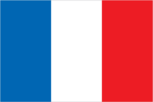
Flag description
the flag of France is used
Independence
none (overseas collectivity of France)
International organization participation
UPU, WFTU
Legal system
the laws of France, where applicable, apply
Legislative branch
unicameral Territorial Council (23 seats; members are elected by popular vote to serve five-year terms) elections: last held 1 and 8 July 2007 (next to be held July 2012) election results: percent of seats by party - UPP 49%, RRR 42.2%, Reussir Saint-Martin 8.9%; seats by party - UPP 16, RRR 6, Reussir Saint-Martin 1
National holiday
Bastille Day, 14 July (1789); note - local holiday is Schoalcher Day (Slavery Abolition Day) 12 July (1848)
Political parties and leaders
Union Pour le Progres or UPP [Louis-Constant FLEMING]; Rassemblement Responsabilite Reussite or RRR [Alain RICHARDSON]; Reussir Saint-Martin [Jean-Luc HAMLET]
Political pressure groups and leaders
NA
Suffrage
18 years of age, universal
Economy
Currency (code)
euro (EUR); note - US dollar (USD) widely used
Economy - overview
The economy of Saint Martin centers around tourism with 85% of the labor force engaged in this sector. Over one million visitors come to the island each year with most arriving through the Princess Juliana International Airport in Sint Maarten. No significant agriculture and limited local fishing means that almost all food must be imported. Energy resources and manufactured goods are also imported, primarily from Mexico and the United States. Saint Martin is reported to have the highest per capita income in the Caribbean.
Exchange rates
euros (EUR) per US dollar - 0.7345 (2007), 0.7964 (2006), 0.8041 (2005), 0.8054 (2004), 0.886 (2003)
GDP - composition by sector
agriculture: 1% industry: 15% services: 84% (2000)
Imports - commodities
crude petroleum, food, manufactured items
Imports - partners
US, Mexico (2006)
Industries
tourism, light industry and manufacturing, heavy industry
Labor force - by occupation
85% directly or indirectly employed in tourist industry
Communications
Internet country code
.mf; note - .gp, the ccTLD for Guadeloupe, and .fr, the ccTLD for France, might also be encountered
Radio broadcast stations
FM 3 (2007)
Telephone system
general assessment: fully integrated access domestic: direct dial capability with both fixed and wireless systems international: country code - 590; undersea fiber-optic cable provides voice and data connectivity to Puerto Rico and Guadeloupe
Transportation
Airports
1
Airports - with paved runways
total: 1 914 to 1,523 m: 1
Transportation - note
nearest airport for international flights is Princess Juliana International Airport (SXM) located in Sint Maarten
Military and Security
Manpower reaching militarily significant age annually
male: 186 female: 162 (2008 est.)
Military - note
defense is the responsibility of France This page was last updated on 18 December, 2008