2015 Edition
CIA World Factbook 2015 Archive (Wayback Machine ZIP)
Introduction
Background
Discovered in 1493 by Christopher COLUMBUS who named it for his brother Bartolomeo, Saint Barthelemy was first settled by the French in 1648. In 1784, the French sold the island to Sweden, which renamed the largest town Gustavia, after the Swedish King GUSTAV III, and made it a free port; the island prospered as a trade and supply center during the colonial wars of the 18th century. France repurchased the island in 1877 and took control the following year. It was placed under the administration of Guadeloupe. Saint Barthelemy retained its free port status along with various Swedish appellations such as Swedish street and town names, and the three-crown symbol on the coat of arms. In 2003 the islanders voted to secede from Guadeloupe, and in 2007 the island became a French overseas collectivity.
Geography
Area
21 sq km
Area - comparative
less than one-eighth the size of Washington, DC
Climate
tropical, with practically no variation in temperature; has two seasons (dry and humid)
Elevation extremes
- highest point
- Morne du Vitet 286 m
- lowest point
- Caribbean Ocean 0 m
Environment - current issues
with no natural rivers or streams, fresh water is in short supply, especially in summer, and provided by desalinization of sea water, collection of rain water, or imported via water tanker
Geographic coordinates
17 90 N, 62 85 W
Land boundaries
0 km
Location
Caribbean, island between the Caribbean Sea and the North Atlantic Ocean; located in the Leeward Islands (northern) group; Saint Barthelemy lies east of the US Virgin Islands
Map references
Central America and the Caribbean
Natural resources
few natural resources; beaches foster tourism
Terrain
hilly, almost completely surrounded by shallow-water reefs, with plentiful beaches
People and Society
Age structure
- 0-14 years
- 17.36% (male 645/female 611)
- 15-24 years
- 7.03% (male 269/female 240)
- 25-54 years
- 45.32% (male 1,783/female 1,497)
- 55-64 years
- 15.3% (male 602/female 505)
- 65 years and over
- 14.99% (male 542/female 543) (2015 est.)
Ethnic groups
white, Creole (mulatto), black, Guadeloupe Mestizo (French-East Asia)
Languages
French (primary), English
Median age
- female
- 42.3 years (2014 est.)
- male
- 42.4 years
- total
- 42.4 years
Population
7,237 (July 2015 est.)
Religions
Roman Catholic, Protestant, Jehovah's Witnesses
Sex ratio
- 0-14 years
- 1.06 male(s)/female
- 15-24 years
- 1.12 male(s)/female
- 25-54 years
- 1.19 male(s)/female
- 55-64 years
- 1.19 male(s)/female
- 65 years and over
- 1 male(s)/female
- at birth
- 1.06 male(s)/female
- total population
- 1.13 male(s)/female (2015 est.)
Government
Capital
- geographic coordinates
- 17 53 N, 62 51 W
- name
- Gustavia
- time difference
- UTC-4 (1 hour ahead of Washington, DC, during Standard Time)
Constitution
4 October 1958 (French Constitution) (2013)
Country name
- abbreviation
- Saint-Barth (French); St. Barts or St. Barths (English)
- conventional long form
- Overseas Collectivity of Saint Barthelemy
- conventional short form
- Saint Barthelemy
- local long form
- Collectivite d'outre mer de Saint-Barthelemy
- local short form
- Saint-Barthelemy
Dependency status
overseas collectivity of France
Diplomatic representation from the US
none (overseas collectivity of France)
Diplomatic representation in the US
none (overseas collectivity of France)
Executive branch
- cabinet
- Executive Council elected by the Territorial Council; note - there is also an advisory, economic, social, and cultural council
- chief of state
- President Francois HOLLANDE (since 15 May 2012), represented by Prefect Philippe CHOPIN (since 16 November 2011)
- election results
- Bruno MAGRAS (SBA) reelected president; Territorial Council vote NA
- elections/appointments
- French president directly elected by absolute majority popular vote in 2 rounds if needed for a 5-year term (eligible for a second term); prefect appointed by the French president on the advice of French Ministry of Interior; president of Territorial Council indirectly elected by its members for a 5-year term; election last held in July 2012 (next to be held in 2017)
- head of government
- President of Territorial Council Bruno MAGRAS (since 16 July 2007)
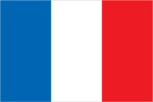
Flag description
the flag of France is used
Independence
none (overseas collectivity of France)
International organization participation
UPU
Legal system
French civil law
Legislative branch
- description
- unicameral Territorial Council (19 seats; members elected by absolute majority vote in the first round vote and proportional representation vote in the second round; members serve 5-year terms)
- election results
- percent of vote by party - SBA 73.8%, Ensemble pour Saint-Barthelemy 15.9%, Tous Unis pour Saint-Barthelemy 10.3%; seats by party - SBA 16, Ensemble pour Saint-Barthelemy 2, Tous Unis pour Saint-Barthelemy 1
- elections
- last held on 18 March 2012 (next to be held in July 2017)
- note
- Saint Barthelemy holds one seat in the French Senate; elections last held on 28 September 2014 (next to be held not later than September 2017); results - percent of vote by party NA; seats by party UMP 1; Saint Barthelemy elects one seat to the National Assembly; elections last held on 17 June 2012 (next to be held by June 2017); results - percent of vote by party NA; seats by party UMP 1
National anthem
- lyrics/music
- Isabelle Massart DERAVIN/Michael VALENTI
- name
- "L'Hymne a St. Barthelemy" (Hymn to St. Barthelemy)
- note
- local anthem in use since 1999; as a collectivity of France, "La Marseillaise" is official (see France)
National holiday
Fete de la Federation, 14 July (1789); note - local holiday is St. Barthelemy Day, 24 August (1572)
National symbol(s)
pelican
Political parties and leaders
- Action-Equilibre-Transparence [Maxime DESOUCHES]
- Ensemble pour Saint-Barthelemy [Benoit CHAUVIN]
- Saint-Barth d'Abord! or SBA [Bruno MAGRAS]
- Tous Unis pour Saint-Barthelemy [Karine MIOT-RICHARD]
Political pressure groups and leaders
Rotary Club
Suffrage
18 years of age, universal
Economy
Economy - overview
The economy of Saint Barthelemy is based upon high-end tourism and duty-free luxury commerce, serving visitors primarily from North America. The luxury hotels and villas host 70,000 visitors each year with another 130,000 arriving by boat. The relative isolation and high cost of living inhibits mass tourism. The construction and public sectors also enjoy significant investment in support of tourism. With limited fresh water resources, all food must be imported, as must all energy resources and most manufactured goods. Employment is strong and attracts labor from Brazil and Portugal.
Exchange rates
- euros (EUR) per US dollar -
- 0.7489 (2014 est.)
- 0.7634 2013 est.)
- 0.7752 (2012 est.)
- 0.7185 (2011 est.)
- 0.755 (2010 est.)
Communications
Broadcast media
no local TV broadcasters; 3 FM radio channels (2 via repeater)
Internet country code
.bl; note - .gp, the Internet country code for Guadeloupe, and .fr, the Internet country code for France, might also be encountered
Telephone system
- domestic
- direct dial capability with both fixed and wireless systems
- general assessment
- fully integrated access
- international
- country code - 590; undersea fiber-optic cable provides voice and data connectivity to Puerto Rico and Guadeloupe (2008)
Transportation
Airports
1 (2013)
Airports - with paved runways
- total
- 1
- under 914 m
- 1 (2013)
Ports and terminals
- major seaport(s)
- Gustavia
Transportation - note
nearest airport for international flights is Princess Juliana International Airport (SXM) located on Sint Maarten
Military and Security
Manpower fit for military service
- females age 16-49
- 1,263 (2010 est.)
- males age 16-49
- 1,495
Manpower reaching militarily significant age annually
- female
- 21 (2010 est.)
- male
- 23
Military - note
defense is the responsibility of France