1984 Edition
CIA World Factbook 1984 (Internet Archive)
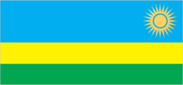
Geography
Agriculture
cash crops — mainly coffee, tea, some pyrethrum; main food crops — bananas, cassava; stock raising; self-sufficiency declining; country imports foodstuffs
Branches
- Romanian People's Army, Security Troops; Patriotic Guard, Air and Air Defense Forces, Romanian Navy
- executive (President, 16-member Cabinet); unicameral legislative (National Development Council); judiciary (4 senior courts, magistrates)
Capital
Kigali
Communists
no Communist party
Elections
national elections, including constitutional referendum and presidential plebiscite, held December 1978; National Development Council elected and President reelected in December 1983 Political parties and leaders: National Revolutionary Movement for Development (MRND), General Habyarimana (officially a "development movement," not a party)
Electric power
42,000 kW capacity (1983); 180 million kWh produced (1983), 30 kWh per capita
Ethnic divisions
85% Hutu, 14% Tutsi, 1% Twa (Pygmoid)
Exports
$115 million (f.o.b., 1981 est); mainly coffee, tea, cassiterite, wolfram, pyrethrum
Freight carried
rail — 274.6 million metric tons, 75.5 billion metric ton/km (1980); highway— 451.2 million metric tons, 11.7 billion metric ton/km (1980); waterway — 12.3 million metric tons, 2.3 billion metric ton/km (1980)
GDP
$1.388 billion (1981), $270 per capita; real growth rate (1980), 3.8%
Government leader
Maj. Gen. Juvenal HABYAR1MANA, President and Head of State
Highways
73,364 km total; 29,228 km concrete, asphalt, stone block; 38,880 km asphalt treated, gravel, crushed stone and 5,256 km other (1980)
Imports
$188 million (c.i.f., 1981 est.); textiles, foodstuffs, machines, equipment
Inland waterways
1,660 km (1980)
Labor force
2.7 million (1983); 93% agriculture, 3% industry and commerce, 3% government, 1% services Government
Land boundaries
877 km People
Language
Kinyarwanda and French official; Kiswahili used in commercial centers
Legal system
based on German and Belgian civil law systems and customary law; judicial review of legislative acts in the Supreme Court; has not accepted compulsory ICJ jurisdiction
Literacy
37%
Major industries
mining of cassiterite (tin ore) and wolfram (tungsten ore), agricultural processing, and production of beer, soft drinks, soap, furniture, shoes, plastic goods, textiles, cigarettes St. Christopher and Nevis
Major trade partners
US, Belgium, FRG,
Member of
AfDB, EAMA, FAO, G-77, GATT, IBRD, ICAO, ICO, IDA, IFAD, IFC, ILO, IMF, INTERPOL, IPU, ITU, NAM, OAU, OCAM, UN, UNESCO, UPU, WHO, WMO, WTO Economy
Military budget
announced for fiscal year ending 31 December 1983, 11.7 billion lei; about 3.9% of total budget Land 26,338 km2; almost all arable land; about 33% cultivated; about 33% pasture
Military manpower
males 15-49, 5,564,000; 4,688,000 fit for military service; 166,000 reach military age (20) annually
National holiday
Independence Day, 1 July
Nationality
noun — R wandan(s); adjective — Rwandan
Official name
Republic of Rwanda
Pipelines
2,735 km crude oil; 1,429 km refined products; 5,149 km natural gas
Political subdivisions
10 prefectures, subdivided into 143 communes
Population
5,836,000 (July 1984), average annual growth rate 3.3%
Ports
4 major (Constanta, Galati, Braila, Mangalia), 7 minor; principal inland waterway ports are Giurgiu, Turnu Severin, and Orsova Defense Forces
Religion
65% Catholic, 9% Protestant, 1% Muslim, rest indigenous beliefs
Ships
3 patrol combatants, 6 mine warfare ships, 81 coastal patrol-river/roadstead craft, 30 mine warfare craft, 2 material support ships, 2 fleet support ships, 4 other auxiliaries
Suffrage
universal adult
Type
republic; presidential system in which military leaders hold key offices; new constitution adopted 17 December 1978