2020 Edition
factbook.json (GitHub)
Introduction
Background
Ruled by the Al Thani family since the mid-1800s, Qatar within the last 60 years transformed itself from a poor British protectorate noted mainly for pearling into an independent state with significant hydrocarbon revenues. Former Amir HAMAD bin Khalifa Al Thani, who overthrew his father in a bloodless coup in 1995, ushered in wide-sweeping political and media reforms, unprecedented economic investment, and a growing Qatari regional leadership role, in part through the creation of the pan-Arab satellite news network Al-Jazeera and Qatar's mediation of some regional conflicts. In the 2000s, Qatar resolved its longstanding border disputes with both Bahrain and Saudi Arabia, and by 2007, Doha had attained the highest per capita income in the world. Qatar did not experience domestic unrest or violence like that seen in other Near Eastern and North African countries in 2011, due in part to its immense wealth and patronage network. In mid-2013, HAMAD peacefully abdicated, transferring power to his son, the current Amir TAMIM bin Hamad. TAMIM is popular with the Qatari public for his role in shepherding the country through an economic embargo from some other regional countries, for his efforts to improve the country's healthcare and education systems, and for his expansion of the country's infrastructure in anticipation of hosting international sporting events. Qatar became the first country in the Arab world to host the FIFA Men’s World Cup in 2022. Following the outbreak of regional unrest in 2011, Doha prided itself on its support for many popular revolutions, particularly in Libya and Syria. This stance was to the detriment of Qatar’s relations with Bahrain, Egypt, Saudi Arabia, and the United Arab Emirates (UAE), which temporarily recalled their respective ambassadors from Doha in 2014. TAMIM later oversaw a warming of Qatar’s relations with Bahrain, Egypt, Saudi Arabia, and the UAE in November 2014 following Kuwaiti mediation and signing of the Riyadh Agreement. This reconciliation, however, was short-lived. In 2017, Bahrain, Egypt, Saudi Arabia, and the UAE (the "Quartet") cut diplomatic and economic ties with Qatar in response to alleged violations of the agreement, among other complaints. They restored ties in 2021 after signing a declaration at the Gulf Cooperation Council Summit in Al Ula, Saudi Arabia. In 2022, the United States designated Qatar as a major non-NATO ally.
Geography
Area
- land
- 11,586 sq km
- total
- 11,586 sq km
- water
- 0 sq km
Area - comparative
almost twice the size of Delaware; slightly smaller than Connecticut
Climate
arid; mild, pleasant winters; very hot, humid summers
Coastline
563 km
Elevation
- highest point
- Tuwayyir al Hamir 103 m
- lowest point
- Persian Gulf 0 m
- mean elevation
- 28 m
Geographic coordinates
25 30 N, 51 15 E
Geography - note
the peninsula occupies a strategic location in the central Persian Gulf near major petroleum deposits
Irrigated land
130 sq km (2022)
Land boundaries
- border countries
- Saudi Arabia 87 km
- total
- 87 km
Land use
- agricultural land
- 6.4% (2023 est.)
- agricultural land: arable land
- arable land: 1.8% (2023 est.)
- agricultural land: permanent crops
- permanent crops: 0.3% (2023 est.)
- agricultural land: permanent pasture
- permanent pasture: 4.4% (2023 est.)
- forest
- 0.1% (2023 est.)
- other
- 93.4% (2023 est.)
Location
Middle East, peninsula bordering the Persian Gulf and Saudi Arabia
Major aquifers
Arabian Aquifer System
Map references
Middle East
Maritime claims
- contiguous zone
- 24 nm
- exclusive economic zone
- as determined by bilateral agreements or the median line
- territorial sea
- 12 nm
Natural hazards
haze, dust storms, sandstorms common
Natural resources
petroleum, fish, natural gas
Population distribution
most of the population is clustered in or around the capital of Doha on the eastern side of the peninsula
Terrain
mostly flat and barren desert
People and Society
Age structure
- 0-14 years
- 13.1% (male 168,844/female 165,905)
- 15-64 years
- 85.4% (male 1,767,294/female 411,977)
- 65 years and over
- 1.5% (2024 est.) (male 24,997/female 13,071)
Alcohol consumption per capita
- beer
- 0.29 liters of pure alcohol (2019 est.)
- other alcohols
- 0.01 liters of pure alcohol (2019 est.)
- spirits
- 0.59 liters of pure alcohol (2019 est.)
- total
- 0.96 liters of pure alcohol (2019 est.)
- wine
- 0.07 liters of pure alcohol (2019 est.)
Birth rate
9.19 births/1,000 population (2025 est.)
Children under the age of 5 years underweight
2.3% (2023 est.)
Currently married women (ages 15-49)
64.6% (2020 est.)
Death rate
1.42 deaths/1,000 population (2025 est.)
Dependency ratios
- elderly dependency ratio
- 1.8 (2025 est.)
- potential support ratio
- 54.4 (2025 est.)
- total dependency ratio
- 17.3 (2025 est.)
- youth dependency ratio
- 15.4 (2025 est.)
Drinking water source
- improved: total
- total: 100% of population (2022 est.)
- unimproved: total
- total: 0% of population (2022 est.)
Education expenditure
- Education expenditure (% GDP)
- 3.2% of GDP (2020 est.)
- Education expenditure (% national budget)
- 9.3% national budget (2020 est.)
Ethnic groups
non-Qatari 88.4%, Qatari 11.6% (2015 est.)
Gross reproduction rate
0.94 (2025 est.)
Health expenditure
- Health expenditure (as % of GDP)
- 2.9% of GDP (2021)
- Health expenditure (as % of national budget)
- 7.4% of national budget (2022 est.)
Hospital bed density
1.1 beds/1,000 population (2019 est.)
Infant mortality rate
- female
- 5.8 deaths/1,000 live births
- male
- 7 deaths/1,000 live births
- total
- 6.2 deaths/1,000 live births (2025 est.)
Languages
- Languages
- Arabic (official), English commonly used as a second language
- major-language sample(s)
- كتاب حقائق العالم، المصدر الذي لا يمكن الاستغناء عنه للمعلومات الأساسية (Arabic) The World Factbook, the indispensable source for basic information.
Life expectancy at birth
- female
- 82.4 years
- male
- 78.2 years
- total population
- 80.3 years (2024 est.)
Major urban areas - population
798,000 Ar-Rayyan, 658,000 DOHA (capital) (2023)
Maternal mortality ratio
4 deaths/100,000 live births (2023 est.)
Median age
- female
- 28.1 years
- male
- 35.7 years
- total
- 34.4 years (2025 est.)
Nationality
- adjective
- Qatari
- noun
- Qatari(s)
Net migration rate
-2.09 migrant(s)/1,000 population (2025 est.)
Obesity - adult prevalence rate
35.1% (2016)
Physician density
3.02 physicians/1,000 population (2023)
Population
- female
- 597,821
- male
- 1,970,605
- total
- 2,568,426 (2025 est.)
Population growth rate
0.57% (2025 est.)
Religions
Muslim 65.2%, Christian 13.7%, Hindu 15.9%, Buddhist 3.8%, folk religion <0.1%, Jewish <0.1%, other <1%, unaffiliated <1% (2020 est.)
Sanitation facility access
- improved: total
- total: 99.9% of population (2022 est.)
- unimproved: total
- total: 0.1% of population (2022 est.)
School life expectancy (primary to tertiary education)
- female
- 15 years (2022 est.)
- male
- 12 years (2022 est.)
- total
- 13 years (2022 est.)
Sex ratio
- 0-14 years
- 1.02 male(s)/female
- 15-64 years
- 4.29 male(s)/female
- 65 years and over
- 1.91 male(s)/female
- at birth
- 1.02 male(s)/female
- total population
- 3.32 male(s)/female (2024 est.)
Tobacco use
- female
- 2.3% (2025 est.)
- male
- 24.6% (2025 est.)
- total
- 19.2% (2025 est.)
Total fertility rate
1.9 children born/woman (2025 est.)
Urbanization
- rate of urbanization
- 1.66% annual rate of change (2020-25 est.)
- urban population
- 99.4% of total population (2023)
Government
Administrative divisions
8 municipalities (baladiyat, singular - baladiyah); Ad Dawhah, Al Khawr wa adh Dhakhirah, Al Wakrah, Ar Rayyan, Ash Shamal, Ash Shihaniyah, Az Za'ayin, Umm Salal
Capital
- etymology
- the name is derived from the Arabic ad-dawha, meaning "the big tree," and probably referred to a large tree at the site of the original fishing village
- geographic coordinates
- 25 17 N, 51 32 E
- name
- Doha
- time difference
- UTC+3 (8 hours ahead of Washington, DC, during Standard Time)
Citizenship
- citizenship by birth
- no
- citizenship by descent only
- the father must be a citizen of Qatar
- dual citizenship recognized
- no
- residency requirement for naturalization
- 20 years; 15 years if an Arab national
Constitution
- amendment process
- proposed by the Amir or by one third of Advisory Council members; passage requires two-thirds majority vote of Advisory Council members and approval and promulgation by the emir; articles pertaining to the rule of state and its inheritance, functions of the emir, and citizen rights and liberties cannot be amended
- history
- previous 1972 (provisional); latest drafted 2 July 2002, approved by referendum 29 April 2003, endorsed 8 June 2004, effective 9 June 2005
Country name
- conventional long form
- State of Qatar
- conventional short form
- Qatar
- etymology
- the name may derive from the Arabic word katran, meaning "tar" or "resin" in reference to the area's oil and natural gas reserves
- local long form
- Dawlat Qatar
- local short form
- Qatar
Diplomatic representation from the US
- chief of mission
- Ambassador (vacant); Chargé d’Affaires Stefanie ALTMAN-WINANS (since June 2025)
- email address and website
- PasDoha@state.gov https://qa.usembassy.gov/
- embassy
- 22 February Street, Al Luqta District, P.O. Box 2399, Doha
- FAX
- [974] 4488-4298
- mailing address
- 6130 Doha Place, Washington DC 20521-6130
- telephone
- [974] 4496-6000
Diplomatic representation in the US
- chancery
- 2555 M Street NW, Washington, DC 20037
- chief of mission
- Ambassador Meshal bin Hamad AL THANI (since 24 April 2017)
- consulate(s) general
- Houston, Los Angeles, New York
- email address and website
- info.dc@mofa.gov.qa https://washington.embassy.qa/en/home
- FAX
- [1] (202) 237-0682
- telephone
- [1] (202) 274-1600
Executive branch
- cabinet
- Council of Ministers appointed by the amir
- chief of state
- Amir TAMIM bin Hamad Al Thani (since 25 June 2013)
- election/appointment process
- the monarchy is hereditary; prime minister appointed by the amir
- head of government
- Prime Minister and Foreign Minister MUHAMMAD bin Abd al-Rahman Al Thani (since 7 March 2023)
Flag
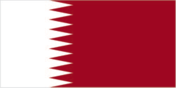
description: maroon with a broad, serrated white band on the left side meaning: maroon stands for the blood shed in Qatari wars, and white for peace; the nine-pointed serrated edge is a reference to Qatar's status as the ninth member of the "reconciled emirates" after the Qatari-British treaty of 1916 -- the other eight members are Bahrain and the seven that make up the UAE
Government type
absolute monarchy
Independence
3 September 1971 (from the UK)
International law organization participation
has not submitted an ICJ jurisdiction declaration; non-party state to the ICCt
International organization participation
ABEDA, AFESD, AMF, CAEU, CD, CICA (observer), EITI (implementing country), FAO, G-77, GCC, IAEA, IBRD, ICAO, ICC (national committees), ICRM, IDA, IDB, IFAD, IFC, IFRCS, IHO, ILO, IMF, IMO, IMSO, Interpol, IOC, IOM (observer), IPU, ISO, ITSO, ITU, LAS, MIGA, NAM, OAPEC, OAS (observer), OIC, OIF, OPCW, OPEC, PCA, UN, UNCTAD, UNESCO, UNHRC, UNIDO, UNIFIL, UNOOSA, UNWTO, UPU, WCO, WHO, WIPO, WMO, WTO
Judicial branch
- highest court(s)
- Supreme Court or Court of Cassation (consists of the court president and several judges); Supreme Constitutional Court (consists of the chief justice and 6 members)
- judge selection and term of office
- Supreme Court judges nominated by the Supreme Judiciary Council, a 9-member independent body consisting of judiciary heads appointed by the amir; judges appointed for 3-year renewable terms; Supreme Constitutional Court members nominated by the Supreme Judiciary Council and appointed by the monarch; term of appointment NA
- subordinate courts
- Courts of Appeal; Administrative Court; Courts of First Instance; sharia courts; Courts of Justice; Qatar International Court and Dispute Resolution Center, established in 2009, provides dispute resolution services for institutions and bodies in Qatar, as well as internationally
Legal system
mixed system of civil law and Islamic (sharia) law (in family and personal matters)
Legislative branch
- electoral system
- plurality/majority
- expected date of next election
- September 2029
- legislative structure
- unicameral
- legislature name
- Shura Council (Majlis Al-Shura)
- most recent election date
- 10/9/2025
- number of seats
- 49 (all appointed)
- percentage of women in chamber
- 6.1%
- scope of elections
- full renewal
- term in office
- 4 years
National anthem(s)
- history
- adopted 1996
- lyrics/music
- Sheikh MUBARAK bin Saif al-Thani/Abdul Aziz Nasser OBAIDAN
- title
- "Al-Salam Al-Amiri" (Peace be to the Emir)
National color(s)
maroon, white
National heritage
- selected World Heritage Site locales
- Al Zubarah Archaeological Site
- total World Heritage Sites
- 1 (cultural)
National holiday
National Day, 18 December (1878), anniversary of Al Thani family accession to the throne; Independence Day, 3 September (1971)
National symbol(s)
a white serrated band with nine white points on top of a maroon field
Political parties
political parties are banned
Suffrage
18 years of age; universal
Economy
Agricultural products
dates, chicken, tomatoes, camel milk, vegetables, cucumbers/gherkins, pumpkins/squash, eggs, sheep milk, eggplants (2023)
Average household expenditures
- on alcohol and tobacco
- 0.3% of household expenditures (2023 est.)
- on food
- 14.6% of household expenditures (2023 est.)
Budget
- expenditures
- $57.258 billion (2019 est.)
- revenues
- $65.922 billion (2019 est.)
Current account balance
- Current account balance 2022
- $63.118 billion (2022 est.)
- Current account balance 2023
- $36.453 billion (2023 est.)
- Current account balance 2024
- $38.117 billion (2024 est.)
Economic overview
high-income, oil-and-gas-based Middle Eastern economy; implementing “National Vision 2030” government strategy for economic development, diversification, and favorable business conditions to boost investment and employment; expansion of LNG sector expected to boost growth; Islamic finance leader
Exchange rates
- Currency
- Qatari rials (QAR) per US dollar -
- Exchange rates 2020
- 3.64 (2020 est.)
- Exchange rates 2021
- 3.64 (2021 est.)
- Exchange rates 2022
- 3.64 (2022 est.)
- Exchange rates 2023
- 3.64 (2023 est.)
- Exchange rates 2024
- 3.64 (2024 est.)
Exports
- Exports 2022
- $161.693 billion (2022 est.)
- Exports 2023
- $128.709 billion (2023 est.)
- Exports 2024
- $125.216 billion (2024 est.)
Exports - commodities
natural gas, crude petroleum, refined petroleum, plastics, fertilizers (2023)
Exports - partners
China 18%, India 11%, S. Korea 10%, Japan 7%, Pakistan 6% (2023)
GDP - composition, by end use
- exports of goods and services
- 68.6% (2022 est.)
- government consumption
- 12.9% (2022 est.)
- household consumption
- 19.5% (2022 est.)
- imports of goods and services
- -31.6% (2022 est.)
- investment in fixed capital
- 30.6% (2022 est.)
- investment in inventories
- 0% (2022 est.)
GDP - composition, by sector of origin
- agriculture
- 0.3% (2024 est.)
- industry
- 58.5% (2024 est.)
- services
- 45.9% (2024 est.)
GDP (official exchange rate)
$217.983 billion (2024 est.)
Gini Index coefficient - distribution of family income
- Gini Index coefficient - distribution of family income 2017
- 35.1 (2017 est.)
Household income or consumption by percentage share
- highest 10%
- 25.8% (2017 est.)
- lowest 10%
- 2.6% (2017 est.)
Imports
- Imports 2022
- $74.52 billion (2022 est.)
- Imports 2023
- $72.174 billion (2023 est.)
- Imports 2024
- $69.692 billion (2024 est.)
Imports - commodities
gas turbines, cars, aircraft, iron pipes, ships (2023)
Imports - partners
USA 12%, China 12%, UAE 9%, UK 7%, India 5% (2023)
Industrial production growth rate
1.6% (2024 est.)
Industries
liquefied natural gas, crude oil production and refining, ammonia, fertilizer, petrochemicals, steel reinforcing bars, cement, commercial ship repair
Inflation rate (consumer prices)
- Inflation rate (consumer prices) 2022
- 5% (2022 est.)
- Inflation rate (consumer prices) 2023
- 3% (2023 est.)
- Inflation rate (consumer prices) 2024
- 1.3% (2024 est.)
Labor force
2.123 million (2024 est.)
Public debt
- Public debt 2016
- 46.7% of GDP (2016 est.)
Real GDP (purchasing power parity)
- Real GDP (purchasing power parity) 2022
- $304.903 billion (2022 est.)
- Real GDP (purchasing power parity) 2023
- $308.522 billion (2023 est.)
- Real GDP (purchasing power parity) 2024
- $317.064 billion (2024 est.)
Real GDP growth rate
- Real GDP growth rate 2022
- 4.2% (2022 est.)
- Real GDP growth rate 2023
- 1.2% (2023 est.)
- Real GDP growth rate 2024
- 2.8% (2024 est.)
Real GDP per capita
- Real GDP per capita 2022
- $114,700 (2022 est.)
- Real GDP per capita 2023
- $116,200 (2023 est.)
- Real GDP per capita 2024
- $110,900 (2024 est.)
Remittances
- Remittances 2022
- 0.4% of GDP (2022 est.)
- Remittances 2023
- 0.7% of GDP (2023 est.)
- Remittances 2024
- 0.7% of GDP (2024 est.)
Reserves of foreign exchange and gold
- Reserves of foreign exchange and gold 2022
- $47.389 billion (2022 est.)
- Reserves of foreign exchange and gold 2023
- $51.539 billion (2023 est.)
- Reserves of foreign exchange and gold 2024
- $53.987 billion (2024 est.)
Unemployment rate
- Unemployment rate 2022
- 0.2% (2022 est.)
- Unemployment rate 2023
- 0.2% (2023 est.)
- Unemployment rate 2024
- 0.2% (2024 est.)
Youth unemployment rate (ages 15-24)
- female
- 1.2% (2024 est.)
- male
- 0.1% (2024 est.)
- total
- 0.4% (2024 est.)
Energy
Coal
- exports
- 300 metric tons (2023 est.)
- imports
- 4,000 metric tons (2023 est.)
Electricity
- consumption
- 51.965 billion kWh (2023 est.)
- installed generating capacity
- 11.4 million kW (2023 est.)
- transmission/distribution losses
- 3.177 billion kWh (2023 est.)
Electricity access
- electrification - total population
- 100% (2022 est.)
Electricity generation sources
- biomass and waste
- 0.2% of total installed capacity (2023 est.)
- fossil fuels
- 99.7% of total installed capacity (2023 est.)
Energy consumption per capita
- Total energy consumption per capita 2023
- 814.308 million Btu/person (2023 est.)
Natural gas
- consumption
- 48.034 billion cubic meters (2023 est.)
- exports
- 124.747 billion cubic meters (2023 est.)
- production
- 171.805 billion cubic meters (2023 est.)
- proven reserves
- 23.861 trillion cubic meters (2021 est.)
Petroleum
- crude oil estimated reserves
- 25.244 billion barrels (2021 est.)
- refined petroleum consumption
- 268,000 bbl/day (2023 est.)
- total petroleum production
- 1.818 million bbl/day (2023 est.)
Communications
Broadband - fixed subscriptions
- subscriptions per 100 inhabitants
- 12 (2023 est.)
- total
- 347,000 (2023 est.)
Broadcast media
state-controlled TV and radio licensing and access to local media markets; home of satellite TV channel Al-Jazeera, which was originally state-owned but is now independent; local radio includes state, private, and international broadcasters on FM frequencies; satellite TV available (2019)
Internet country code
.qa
Internet users
- percent of population
- 100% (2023 est.)
Telephones - fixed lines
- subscriptions per 100 inhabitants
- 18 (2023 est.)
- total subscriptions
- 526,000 (2023 est.)
Telephones - mobile cellular
- subscriptions per 100 inhabitants
- 154 (2024 est.)
- total subscriptions
- 4.68 million (2024 est.)
Transportation
Airports
8 (2025)
Civil aircraft registration country code prefix
A7
Heliports
12 (2025)
Merchant marine
- by type
- bulk carrier 5, container ship 4, general cargo 4, oil tanker 2, other 108
- total
- 123 (2023)
Ports
- key ports
- Al Rayyan Terminal, Al Shaheen Terminal, Doha, Jazirat Halul, Ras Laffan, Umm Said
- large
- 0
- medium
- 1
- ports with oil terminals
- 5
- small
- 2
- total ports
- 6 (2024)
- very small
- 3
Military and Security
Military - note
Qatar's military is responsible for territorial defense and maritime security; the military is in the midst of a large equipment acquisition program designed to enhance its capabilities and Qatar's regional standing; Qatar has military ties with a variety of countries, including France, the UK, the US, Turkey, and member countries of the Gulf Cooperation Council (GCC); it hosts the regional headquarters for the US Central Command (CENTCOM; established 1983) and several thousand US military forces at various military facilities, including the Al Udeid Air Base; Qatar has Major Non-NATO Ally status with the US, a designation under US law that provides foreign partners with certain benefits in the areas of defense trade and security cooperation; Qatar also hosts Turkish military forces at two bases established in 2014 and 2019; the Qatari military is part of the Peninsula Shield Forces, a joint military force established by the GCC countries with the aim of maintaining security and stability in the region (2025)
Military and security forces
Qatar Armed Forces (QAF): Qatari Amiri Land Force (QALF, includes Emiri Guard), Qatari Amiri Navy (QAN, includes Coast Guard), Qatari Amiri Air Force (QAAF) Ministry of Interior: General Directorate of Public Security, General Directorate of Coasts and Border Security, Internal Security Force (ISF or Lekhwiya) (2025)
Military and security service personnel strengths
approximately 15,000 active-duty Qatar Armed Forces (2025)
Military equipment inventories and acquisitions
the Qatari military's inventory is a mix of older and modern weapons systems, mostly from Türkiye, the US, and various European countries, including France, Germany, and Italy (2025)
Military expenditures
- Military Expenditures 2019
- 3.4% of GDP (2019 est.)
- Military Expenditures 2020
- 4% of GDP (2020 est.)
- Military Expenditures 2021
- 4% of GDP (2021 est.)
- Military Expenditures 2022
- 5% of GDP (2022 est.)
- Military Expenditures 2023
- 5% of GDP (2023 est.)
Military service age and obligation
typically 18-30 for voluntary service for men and women; compulsory military service for men 18-35; compulsory service is from 4-12 months, depending on educational and professional circumstances (2025)
Transnational Issues
Refugees and internally displaced persons
- refugees
- 349 (2024 est.)
- stateless persons
- 1,200 (2024 est.)
Environment
Carbon dioxide emissions
- from coal and metallurgical coke
- 10,000 metric tonnes of CO2 (2023 est.)
- from consumed natural gas
- 99.991 million metric tonnes of CO2 (2023 est.)
- from petroleum and other liquids
- 27.781 million metric tonnes of CO2 (2023 est.)
- total emissions
- 127.783 million metric tonnes of CO2 (2023 est.)
Environmental issues
air, land, and water pollution; limited natural freshwater resources; limited conservation of oil and wildlife
International environmental agreements
- party to
- Biodiversity, Climate Change, Climate Change-Kyoto Protocol, Comprehensive Nuclear Test Ban, Desertification, Endangered Species, Hazardous Wastes, Law of the Sea, Ozone Layer Protection, Ship Pollution
- signed, but not ratified
- none of the selected agreements
Methane emissions
- agriculture
- 9.5 kt (2019-2021 est.)
- energy
- 1,040.8 kt (2022-2024 est.)
- other
- 5.5 kt (2019-2021 est.)
- waste
- 64.7 kt (2019-2021 est.)
Particulate matter emissions
59 micrograms per cubic meter (2019 est.)
Total renewable water resources
58 million cubic meters (2022 est.)
Total water withdrawal
- agricultural
- 311.156 million cubic meters (2022)
- industrial
- 40.18 million cubic meters (2022)
- municipal
- 582.862 million cubic meters (2022)
Waste and recycling
- municipal solid waste generated annually
- 1.001 million tons (2024 est.)
- percent of municipal solid waste recycled
- 6% (2022 est.)