2023 Edition
CIA World Factbook 2023 (factbook.json @ 0d4fa4984ecb)
Introduction
Background
Following its heyday as a global maritime power during the 15th and 16th centuries, Portugal lost much of its wealth and status with the destruction of Lisbon in a 1755 earthquake, occupation during the Napoleonic Wars, and the independence of Brazil, its wealthiest colony, in 1822. A 1910 revolution deposed the monarchy, and for most of the next six decades, repressive governments ran the country. In 1974, a left-wing military coup installed broad democratic reforms. The following year, Portugal granted independence to all of its African colonies. Portugal is a founding member of NATO and entered the EC (now the EU) in 1986.
Geography
Area
- land
- 91,470 sq km
- note
- note: includes Azores and Madeira Islands
- total
- 92,090 sq km
- water
- 620 sq km
Area - comparative
slightly smaller than Virginia
Climate
maritime temperate; cool and rainy in north, warmer and drier in south
Coastline
1,793 km
Elevation
- highest point
- Ponta do Pico (Pico or Pico Alto) on Ilha do Pico in the Azores 2,351 m
- lowest point
- Atlantic Ocean 0 m
- mean elevation
- 372 m
Geographic coordinates
39 30 N, 8 00 W
Geography - note
Azores and Madeira Islands occupy strategic locations along western sea approaches to Strait of Gibraltar; they are two of the four North Atlantic archipelagos that make up Macaronesia; the others are the Canary Islands (Spain) and Cabo Verde
Irrigated land
5,662 sq km (2019)
Land boundaries
- border countries
- Spain 1,224 km
- total
- 1,224 km
Land use
- agricultural land
- 39.7% (2018 est.)
- agricultural land: arable land
- arable land: 11.9% (2018 est.)
- agricultural land: permanent crops
- permanent crops: 7.8% (2018 est.)
- agricultural land: permanent pasture
- permanent pasture: 20% (2018 est.)
- forest
- 37.8% (2018 est.)
- other
- 22.5% (2018 est.)
Location
Southwestern Europe, bordering the North Atlantic Ocean, west of Spain
Map references
Europe
Maritime claims
- contiguous zone
- 24 nm
- continental shelf
- 200-m depth or to the depth of exploitation
- exclusive economic zone
- 200 nm
- territorial sea
- 12 nm
Natural hazards
Azores subject to severe earthquakesvolcanism: limited volcanic activity in the Azores Islands; Fayal or Faial (1,043 m) last erupted in 1958; most volcanoes have not erupted in centuries; historically active volcanoes include Agua de Pau, Furnas, Pico, Picos Volcanic System, San Jorge, Sete Cidades, and Terceira
Natural resources
fish, forests (cork), iron ore, copper, zinc, tin, tungsten, silver, gold, uranium, marble, clay, gypsum, salt, arable land, hydropower
Population distribution
concentrations are primarily along or near the Atlantic coast; both Lisbon and the second largest city, Porto, are coastal cities
Terrain
the west-flowing Tagus River divides the country: the north is mountainous toward the interior, while the south is characterized by rolling plains
People and Society
Age structure
- 0-14 years
- 12.85% (male 672,673/female 641,409)
- 15-64 years
- 65.18% (male 3,274,201/female 3,389,374)
- 65 years and over
- 21.96% (2023 est.) (male 895,576/female 1,349,917)
Alcohol consumption per capita
- beer
- 2.62 liters of pure alcohol (2019 est.)
- other alcohols
- 0.37 liters of pure alcohol (2019 est.)
- spirits
- 1.34 liters of pure alcohol (2019 est.)
- total
- 10.37 liters of pure alcohol (2019 est.)
- wine
- 6.04 liters of pure alcohol (2019 est.)
Birth rate
8 births/1,000 population (2023 est.)
Children under the age of 5 years underweight
0.4% (2015/16)
Contraceptive prevalence rate
73.9% (2014)
Current health expenditure
10.6% of GDP (2020)
Currently married women (ages 15-49)
52.6% (2023 est.)
Death rate
10.9 deaths/1,000 population (2023 est.)
Dependency ratios
- elderly dependency ratio
- 35.2
- potential support ratio
- 2.8 (2021 est.)
- total dependency ratio
- 56
- youth dependency ratio
- 20.8
Drinking water source
- improved: rural
- rural: 99.7% of population
- improved: total
- total: 99.9% of population
- improved: urban
- urban: 100% of population
- unimproved: rural
- rural: 0.3% of population
- unimproved: total
- total: 0.1% of population (2020 est.)
- unimproved: urban
- urban: 0% of population
Education expenditures
5% of GDP (2020 est.)
Ethnic groups
Portuguese 95%; citizens from Portugal’s former colonies in Africa, Asia (Han Chinese), and South America (Brazilian) and other foreign born 5%
Gross reproduction rate
0.7 (2023 est.)
Hospital bed density
3.5 beds/1,000 population (2018)
Infant mortality rate
- female
- 2.1 deaths/1,000 live births
- male
- 2.8 deaths/1,000 live births
- total
- 2.5 deaths/1,000 live births (2023 est.)
Languages
Portuguese (official), Mirandese (official, but locally used)
Life expectancy at birth
- female
- 85 years
- male
- 78.6 years
- total population
- 81.7 years (2023 est.)
Literacy
- definition
- age 15 and over can read and write
- female
- 95.9% (2021)
- male
- 97.8%
- total population
- 95.9%
Major urban areas - population
3.001 million LISBON (capital), 1.325 million Porto (2023)
Maternal mortality ratio
12 deaths/100,000 live births (2020 est.)
Median age
- female
- 47.9 years
- male
- 44 years
- total
- 46 years (2023 est.)
Mother's mean age at first birth
29.9 years (2020 est.)
Nationality
- adjective
- Portuguese
- noun
- Portuguese (singular and plural)
Net migration rate
1.2 migrant(s)/1,000 population (2023 est.)
Obesity - adult prevalence rate
20.8% (2016)
Physicians density
5.48 physicians/1,000 population (2019)
Population
10,223,150 (2023 est.)
Population distribution
concentrations are primarily along or near the Atlantic coast; both Lisbon and the second largest city, Porto, are coastal cities
Population growth rate
-0.17% (2023 est.)
Religions
- Roman Catholic 79.7%, Protestant 2.2%, other Christian 2.5%, other non-Christian, 1.1%, none 14.5% (2021 est.)
- note
- note: data represent population 15 years of age and older
Sanitation facility access
- improved: rural
- rural: 100% of population
- improved: total
- total: 99.9% of population
- improved: urban
- urban: 99.9% of population
- unimproved: rural
- rural: 0% of population
- unimproved: total
- total: 0.1% of population (2020 est.)
- unimproved: urban
- urban: 0.1% of population
School life expectancy (primary to tertiary education)
- female
- 17 years (2020)
- male
- 17 years
- total
- 17 years
Sex ratio
- 0-14 years
- 1.05 male(s)/female
- 15-64 years
- 0.97 male(s)/female
- 65 years and over
- 0.66 male(s)/female
- at birth
- 1.05 male(s)/female
- total population
- 0.9 male(s)/female (2023 est.)
Tobacco use
- female
- 20.2% (2020 est.)
- male
- 30.5% (2020 est.)
- total
- 25.4% (2020 est.)
Total fertility rate
1.44 children born/woman (2023 est.)
Urbanization
- rate of urbanization
- 0.44% annual rate of change (2020-25 est.)
- urban population
- 67.9% of total population (2023)
Government
Administrative divisions
18 districts (distritos, singular - distrito) and 2 autonomous regions* (regioes autonomas, singular - regiao autonoma); Aveiro, Acores (Azores)*, Beja, Braga, Braganca, Castelo Branco, Coimbra, Evora, Faro, Guarda, Leiria, Lisboa (Lisbon), Madeira*, Portalegre, Porto, Santarem, Setubal, Viana do Castelo, Vila Real, Viseu
Capital
- daylight saving time
- +1hr, begins last Sunday in March; ends last Sunday in October
- etymology
- Lisbon is one of Europe's oldest cities (the second oldest capital city after Athens) and the origin of the name is lost in time; it may have been founded as an ancient Celtic settlement that subsequently maintained close commercial relations with the Phoenicians (beginning about 1200 B.C.); the name of the settlement may have been derived from the pre-Roman appellation for the Tagus River that runs through the city, Lisso or Lucio; the Romans named the city "Olisippo" when they took it from the Carthaginians in 205 B.C.; under the Visigoths the city name became "Ulixbona," under the Arabs it was "al-Ushbuna"; the medieval version of "Lissabona" became today's Lisboa
- geographic coordinates
- 38 43 N, 9 08 W
- name
- Lisbon
- time difference
- UTC 0 (5 hours ahead of Washington, DC, during Standard Time)
- time zone note
- Portugal has two time zones, including the Azores (UTC-1)
Citizenship
- citizenship by birth
- no
- citizenship by descent only
- at least one parent must be a citizen of Portugal
- dual citizenship recognized
- yes
- residency requirement for naturalization
- 10 years; 6 years if from a Portuguese-speaking country
Constitution
- amendments
- proposed by the Assembly of the Republic; adoption requires two-thirds majority vote of Assembly members; amended several times, last in 2005
- history
- several previous; latest adopted 2 April 1976, effective 25 April 1976
Country name
- conventional long form
- Portuguese Republic
- conventional short form
- Portugal
- etymology
- name derives from the Roman designation "Portus Cale" meaning "Port of Cale"; Cale was an ancient Celtic town and port in present-day northern Portugal
- local long form
- Republica Portuguesa
- local short form
- Portugal
Diplomatic representation from the US
- chief of mission
- Ambassador Randi Charno LEVINE (since 22 April 2022)
- consulate(s)
- Ponta Delgada (Azores)
- email address and website
- conslisbon@state.govhttps://pt.usembassy.gov/
- embassy
- Avenida das Forcas Armadas, 1600-081 Lisboa
- FAX
- [351] (21) 726-9109
- mailing address
- 5320 Lisbon Place, Washington DC 20521-5320
- telephone
- [351] (21) 727-3300
Diplomatic representation in the US
- chancery
- 2012 Massachusetts Avenue NW, Washington, DC 20036
- chief of mission
- Ambassador Francisco Antonio DUARTE LOPES (since 7 June 2022)
- consulate(s)
- New Bedford (MA), Providence (RI)
- consulate(s) general
- Boston, Newark (NJ), New York, San Francisco
- email address and website
- info.washington@mne.pthttps://washingtondc.embaixadaportugal.mne.gov.pt/en/
- FAX
- [1] (202) 462-3726
- telephone
- [1] (202) 350-5400
Executive branch
- cabinet
- Council of Ministers appointed by the president on the recommendation of the prime minister
- chief of state
- President Marcelo REBELO DE SOUSA (since 9 March 2016)
- election results
- 2021: Marcelo REBELO DE SOUSA reelected president in the first round; percent of vote - Marcelo REBELO DE SOUSA (PSD) 60.7%, Ana GOMES (ran as an independent but is a member of PS) 13%, Andre VENTURA (CH) 11.9%, João FERREIRA (PCP-PEV) 4.3%, other 10.1%2016: Marcelo REBELO DE SOUSA elected president; percent of vote - Marcelo REBELO DE SOUSA (PSD) 52%, António SAMPAIO DA NOVOA (independent) 22.9%, Marisa MATIAS (BE) 10.1%, Maria DE BELEM ROSEIRA (PS) 4.2%, other 10.8%
- elections/appointments
- president directly elected by absolute majority popular vote in 2 rounds if needed for a 5-year term (eligible for a second term); election last held on 24 January 2021 (next to be held on 10 March 2024); following legislative elections the leader of the majority party or majority coalition is usually appointed prime minister by the president
- head of government
- Prime Minister Antonio Luis Santos da COSTA (since 24 November 2015; resigned on 7 November 2023 but remains in caretaker status until new elections on 10 March 2024)
- note
- note: there is also a Council of State that acts as a consultative body to the president
Flag description
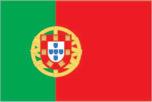
two vertical bands of green (hoist side, two-fifths) and red (three-fifths) with the national coat of arms (armillary sphere and Portuguese shield) centered on the dividing line; explanations for the color meanings are ambiguous, but a popular interpretation has green symbolizing hope and red the blood of those defending the nation
Government type
semi-presidential republic
Independence
1143 (Kingdom of Portugal recognized); 1 December 1640 (independence reestablished following 60 years of Spanish rule); 5 October 1910 (republic proclaimed)
International law organization participation
accepts compulsory ICJ jurisdiction with reservations; accepts ICCt jurisdiction
International organization participation
ADB (nonregional member), AfDB (nonregional member), Australia Group, BIS, CD, CE, CERN, CPLP, EAPC, EBRD, ECB, EIB, EMU, ESA, EU, FAO, FATF, IADB, IAEA, IBRD, ICAO, ICC (national committees), ICCt, ICRM, IDA, IEA, IFAD, IFC, IFRCS, IHO, ILO, IMF, IMO, IMSO, Interpol, IOC, IOM, IPU, ISO, ITSO, ITU, ITUC (NGOs), LAIA (observer), MIGA, NATO, NEA, NSG, OAS (observer), OECD, OPCW, OSCE, Pacific Alliance (observer), Paris Club (associate), PCA, Schengen Convention, SELEC (observer), UN, UNCTAD, UNESCO, UNHCR, UNIDO, Union Latina, UNOOSA, UNWTO, UPU, Wassenaar Arrangement, WCO, WFTU (NGOs), WHO, WIPO, WMO, WTO, ZC
Judicial branch
- highest court(s)
- Supreme Court or Supremo Tribunal de Justica (consists of 12 justices); Constitutional Court or Tribunal Constitucional (consists of 13 judges)
- judge selection and term of office
- Supreme Court justices nominated by the president and appointed by the Assembly of the Republic; judges can serve for life; Constitutional Court judges - 10 elected by the Assembly and 3 elected by the other Constitutional Court judges; judges elected for 6-year nonrenewable terms
- subordinate courts
- Supreme Administrative Court (Supremo Tribunal Administrativo); Audit Court (Tribunal de Contas); appellate, district, and municipal courts
Legal system
civil law system; Constitutional Court review of legislative acts
Legislative branch
- description
- unicameral Assembly of the Republic or Assembleia da Republica (230 seats; 226 members directly elected in multi-seat constituencies by closed-list proportional representation vote and 4 members - 2 each in 2 constituencies representing Portuguese living abroad - directly elected by proportional representation vote; members serve 4-year terms)
- election results
- percent of vote by party - PS 42.5%, PSD 28.4%, Enough 7.4%, IL 5%, BE 4.5%, PCP-PEV 4.4%, other 7.8%; seats by party - PS 120, PSD 72, Enough 12, IL 8, PCP-PEV 6, BE 5, other 3; composition - men 145, women 85, percent of women 37%
- elections
- last held on 30 January 2022 (next to be held in January 2026); note - early elections were called after parliament was dissolved on 3 November 2021 because of the 27 October 2021 rejection of the government's budget
National anthem
- lyrics/music
- Henrique LOPES DE MENDOCA/Alfredo KEIL
- name
- "A Portugesa" (The Song of the Portuguese)
- note
- note: adopted 1910; "A Portuguesa" was originally written to protest the Portuguese monarchy's acquiescence to the 1890 British ultimatum forcing Portugal to give up areas of Africa; the lyrics refer to the "insult" that resulted from the event
National heritage
- selected World Heritage Site locales
- Historic Évora (c); Central Zone of the Town of Angra do Heroismo in the Azores (c); Cultural Landscape of Sintra (c); Laurisilva of Madeira (n); Historic Guimarães (c); Monastery of the Hieronymites and Tower of Belém in Lisbon (c); Convent of Christ in Tomar (c); Prehistoric Rock Art Sites in the Côa Valley and Siega Verde (c); University of Coimbra – Alta and Sofia (c); Sanctuary of Bom Jesus do Monte in Braga (c)
- total World Heritage Sites
- 17 (16 cultural, 1 natural)
National holiday
Portugal Day (Dia de Portugal), 10 June (1580); note - also called Camoes Day, the day that revered national poet Luis DE CAMOES (1524-80) died
National symbol(s)
armillary sphere (a spherical astrolabe modeling objects in the sky and representing the Republic); national colors: red, green
Political parties and leaders
Democratic Alliance (2022 electoral alliance in the Azores, includes PSD, CDS-PP, PPM)Democratic and Social Center/People's Party (Partido do Centro Democratico Social-Partido Popular) or CDS-PP [Nuno MELO]Ecologist Party "The Greens" or "Os Verdes" (Partido Ecologista-Os Verdes) or PEV [Heloisa APOLONIA]Enough (Chega) [Andre VENTURA]Liberal Initiative (Iniciativa Liberal) or IL [Joao COTRIM DE FIGUEIREDO]Madeira First (2022 electoral alliance in Madeira, includes PSD, CDS-PP)People-Animals-Nature Party (Pessoas-Animais-Natureza) or PAN [Ines SOUSA REAL]People's Monarchist Party or PPM [Gonçalo DA CAMARA PEREIRA]Portuguese Communist Party (Partido Comunista Portugues) or PCP [Jeronimo DE SOUSA]Social Democratic Party (Partido Social Democrata) or PSD [Luis MONTENEGRO] (formerly the Partido Popular Democratico or PPD)Socialist Party (Partido Socialista) or PS [Paulo RAIMUNDO]The Left Bloc (Bloco de Esquerda) or BE or O Bloco [Catarina MARTINS]Unitary Democratic Coalition (Coligacao Democratica Unitaria) or CDU [Jeronimo DE SOUSA] (includes PCP and PEV)
Suffrage
18 years of age; universal
Economy
Agricultural products
milk, tomatoes, olives, grapes, maize, potatoes, pork, apples, oranges, poultry
Average household expenditures
- on alcohol and tobacco
- 3.2% of household expenditures (2018 est.)
- on food
- 16.6% of household expenditures (2018 est.)
Budget
- expenditures
- $101.854 billion (2019 est.)
- revenues
- $102.052 billion (2019 est.)
Budget surplus (+) or deficit (-)
-3% (of GDP) (2017 est.)
Credit ratings
- Fitch rating
- BBB (2007)
- Moody's rating
- Baa3 (2018)
- note
- note: The year refers to the year in which the current credit rating was first obtained.
- Standard & Poors rating
- BBB (2019)
Current account balance
- Current account balance 2019
- $1.013 billion (2019 est.)
- Current account balance 2020
- -$2.292 billion (2020 est.)
- Current account balance 2021
- -$2.987 billion (2021 est.)
Debt - external
- Debt - external 2018
- $483.206 billion (2018 est.)
- Debt - external 2019
- $462.431 billion (2019 est.)
Economic overview
fast-growing, high-income European economy; EU and NATO member; heavy Chinese infrastructure ownership; key tourism, banking, and telecommunications sectors; declining populations; major energy exporter
Exchange rates
- Currency
- euros (EUR) per US dollar -
- Exchange rates 2017
- 0.885 (2017 est.)
- Exchange rates 2018
- 0.847 (2018 est.)
- Exchange rates 2019
- 0.893 (2019 est.)
- Exchange rates 2020
- 0.876 (2020 est.)
- Exchange rates 2021
- 0.845 (2021 est.)
Exports
- Exports 2019
- $104.846 billion (2019 est.) note: data are in current year dollars
- Exports 2020
- $85.128 billion (2020 est.) note: data are in current year dollars
- Exports 2021
- $105.648 billion (2021 est.) note: data are in current year dollars
Exports - commodities
cars and vehicle parts, refined petroleum, leather footwear, tires, paper (2021)
Exports - partners
Spain 26%, France 12%, Germany 12%, United States 6%, United Kingdom 5% (2021)
Fiscal year
calendar year
GDP - composition, by end use
- exports of goods and services
- 43.1% (2017 est.)
- government consumption
- 17.6% (2017 est.)
- household consumption
- 65.1% (2017 est.)
- imports of goods and services
- -42.1% (2017 est.)
- investment in fixed capital
- 16.2% (2017 est.)
- investment in inventories
- 0.1% (2017 est.)
GDP - composition, by sector of origin
- agriculture
- 2.2% (2017 est.)
- industry
- 22.1% (2017 est.)
- services
- 75.7% (2017 est.)
GDP (official exchange rate)
$237.698 billion (2019 est.)
Gini Index coefficient - distribution of family income
- Gini Index coefficient - distribution of family income 2019
- 32.8 (2019 est.)
Household income or consumption by percentage share
- highest 10%
- 25.9% (2015 est.)
- lowest 10%
- 2.6%
Imports
- Imports 2019
- $103.009 billion (2019 est.) note: data are in current year dollars
- Imports 2020
- $89.515 billion (2020 est.) note: data are in current year dollars
- Imports 2021
- $112.413 billion (2021 est.) note: data are in current year dollars
Imports - commodities
crude petroleum, cars and vehicle parts, refined petroleum, packaged medicines, natural gas (2021)
Imports - partners
Spain 31%, Germany 12%, France 6%, Italy 5%, Netherlands 5% (2021)
Industrial production growth rate
5.63% (2021 est.)
Industries
textiles, clothing, footwear, wood and cork, paper and pulp, chemicals, fuels and lubricants, automobiles and auto parts, base metals, minerals, porcelain and ceramics, glassware, technology, telecommunications; dairy products, wine, other foodstuffs; ship construction and refurbishment; tourism, plastics, financial services, optics
Inflation rate (consumer prices)
- Inflation rate (consumer prices) 2019
- 0.34% (2019 est.)
- Inflation rate (consumer prices) 2020
- -0.01% (2020 est.)
- Inflation rate (consumer prices) 2021
- 1.27% (2021 est.)
Labor force
5.174 million (2021 est.)
Population below poverty line
17.2% (2018 est.)
Public debt
- note
- note: data cover general government debt and include debt instruments issued (or owned) by government entities other than the treasury; the data include treasury debt held by foreign entities; the data include debt issued by subnational entities, as well as intragovernmental debt; intragovernmental debt consists of treasury borrowings from surpluses in the social funds, such as for retirement, medical care, and unemployment; debt instruments for the social funds are not sold at public auctions
- Public debt 2016
- 129.9% of GDP (2016 est.)
- Public debt 2017
- 125.7% of GDP (2017 est.)
Real GDP (purchasing power parity)
- note
- note: data are in 2017 dollars
- Real GDP (purchasing power parity) 2019
- $359.46 billion (2019 est.)
- Real GDP (purchasing power parity) 2020
- $329.623 billion (2020 est.)
- Real GDP (purchasing power parity) 2021
- $347.694 billion (2021 est.)
Real GDP growth rate
- Real GDP growth rate 2019
- 2.68% (2019 est.)
- Real GDP growth rate 2020
- -8.3% (2020 est.)
- Real GDP growth rate 2021
- 5.48% (2021 est.)
Real GDP per capita
- note
- note: data are in 2017 dollars
- Real GDP per capita 2019
- $34,900 (2019 est.)
- Real GDP per capita 2020
- $32,000 (2020 est.)
- Real GDP per capita 2021
- $33,700 (2021 est.)
Reserves of foreign exchange and gold
- Reserves of foreign exchange and gold 31 December 2019
- $25.003 billion (31 December 2019 est.)
- Reserves of foreign exchange and gold 31 December 2020
- $29.46 billion (31 December 2020 est.)
- Reserves of foreign exchange and gold 31 December 2021
- $32.535 billion (31 December 2021 est.)
Taxes and other revenues
22.04% (of GDP) (2020 est.)
Unemployment rate
- Unemployment rate 2019
- 6.46% (2019 est.)
- Unemployment rate 2020
- 6.79% (2020 est.)
- Unemployment rate 2021
- 6.65% (2021 est.)
Youth unemployment rate (ages 15-24)
- female
- 26.2%
- male
- 20.6%
- total
- 23.1% (2021 est.)
Energy
Carbon dioxide emissions
- from coal and metallurgical coke
- 4.882 million metric tonnes of CO2 (2019 est.)
- from consumed natural gas
- 12.059 million metric tonnes of CO2 (2019 est.)
- from petroleum and other liquids
- 33.429 million metric tonnes of CO2 (2019 est.)
- total emissions
- 50.37 million metric tonnes of CO2 (2019 est.)
Coal
- consumption
- 957,000 metric tons (2020 est.)
- exports
- 1,000 metric tons (2020 est.)
- imports
- 238,000 metric tons (2020 est.)
- production
- 0 metric tons (2020 est.)
- proven reserves
- 36 million metric tons (2019 est.)
Electricity
- consumption
- 48.409 billion kWh (2020 est.)
- exports
- 6.097 billion kWh (2020 est.)
- imports
- 7.553 billion kWh (2020 est.)
- installed generating capacity
- 22.364 million kW (2020 est.)
- transmission/distribution losses
- 5.269 billion kWh (2020 est.)
Electricity access
- electrification - total population
- 100% (2021)
Electricity generation sources
- biomass and waste
- 7.7% of total installed capacity (2020 est.)
- fossil fuels
- 39% of total installed capacity (2020 est.)
- geothermal
- 0.4% of total installed capacity (2020 est.)
- hydroelectricity
- 26.5% of total installed capacity (2020 est.)
- nuclear
- 0% of total installed capacity (2020 est.)
- solar
- 3.2% of total installed capacity (2020 est.)
- tide and wave
- 0% of total installed capacity (2020 est.)
- wind
- 23.3% of total installed capacity (2020 est.)
Energy consumption per capita
- Total energy consumption per capita 2019
- 101.734 million Btu/person (2019 est.)
Natural gas
- consumption
- 5.94 billion cubic meters (2020 est.)
- exports
- 0 cubic meters (2021 est.)
- imports
- 6.09 billion cubic meters (2020 est.)
- production
- 0 cubic meters (2021 est.)
- proven reserves
- 0 cubic meters (2021 est.)
Petroleum
- crude oil and lease condensate exports
- 0 bbl/day (2018 est.)
- crude oil and lease condensate imports
- 255,400 bbl/day (2018 est.)
- crude oil estimated reserves
- 0 barrels (2021 est.)
- refined petroleum consumption
- 249,100 bbl/day (2019 est.)
- total petroleum production
- 8,000 bbl/day (2021 est.)
Refined petroleum products - exports
143,500 bbl/day (2017 est.)
Refined petroleum products - imports
78,700 bbl/day (2017 est.)
Refined petroleum products - production
323,000 bbl/day (2017 est.)
Communications
Broadband - fixed subscriptions
- subscriptions per 100 inhabitants
- 41 (2020 est.)
- total
- 4,160,795 (2020 est.)
Broadcast media
Radio e Televisao de Portugal, the publicly owned TV broadcaster, operates 4 domestic channels and external service channels to Africa; overall, roughly 40 domestic TV stations; viewers have widespread access to international broadcasters with more than half of all households connected to multi-channel cable or satellite TV systems; publicly owned radio operates 3 national networks and provides regional and external services; several privately owned national radio stations and some 300 regional and local commercial radio stations
Internet country code
.pt
Internet users
- percent of population
- 82% (2021 est.)
- total
- 8.2 million (2021 est.)
Telecommunication systems
- domestic
- fixed-lineis 52 per 100 persons and mobile-cellular is 121 per 100 persons (2021)
- general assessment
- Portugal has a medium-sized telecom market with a strong mobile sector and a growing broadband customer base; before the pandemic, the country had seen improving economic growth, following several years of austerity measures; revenue among some operators remains under pressure, though investments in network upgrades are continuing in an effort to attract customers to high-end services; Portugal’s broadband services have grown steadily in recent years, largely the result of joint efforts between the regulator and the key market operators which have invested in significant infrastructure upgrades; these operators are focused on fiber-based services, resulting in a migration of subscribers from digital subscriber line DSL infrastructure; the government has also supported open-access wholesale networks; the mobile virtual network operator (MVNO) market remains largely undeveloped, partly because network operators have their own low-cost brands; collectively, MVNOs have about 2.9% share of the market; population coverage by 3G infrastructure is universal, and most investment in the sector is being directed to LTE and 5G technologies; the MNOs have trialed 5G and are looking to launch commercial services (2021)
- international
- country code - 351; landing points for the Ella Link, BUGIO, EIG, SAT-3/WASC, SeaMeWe-3, Equino, MainOne, Tat TGN-Western Europe, WACS, ACE, Atlantis2 and Columbus-III submarine cables provide connectivity to Europe, Africa, the Middle East, Asia, Southeast Asia, Australia, South America and the US; satellite earth stations - 3 Intelsat (2 Atlantic Ocean and 1 Indian Ocean), NA Eutelsat; tropospheric scatter to Azores (2019)
Telephones - fixed lines
- subscriptions per 100 inhabitants
- 52 (2021 est.)
- total subscriptions
- 5,318,750 (2021 est.)
Telephones - mobile cellular
- subscriptions per 100 inhabitants
- 121 (2021 est.)
- total subscriptions
- 12,476,165 (2021 est.)
Transportation
Airports
64 (2021)
Airports - with paved runways
- 43
- note
- note: paved runways have a concrete or asphalt surface but not all have facilities for refueling, maintenance, or air traffic control; the length of a runway required for aircraft to safely operate depends on a number of factors including the type of aircraft, the takeoff weight (including passengers, cargo, and fuel), engine types, flap settings, landing speed, elevation of the airport, and average maximum daily air temperature; paved runways can reach a length of 5,000 m (16,000 ft.), but the “typical” length of a commercial airline runway is between 2,500-4,000 m (8,000-13,000 ft.)
Airports - with unpaved runways
- 21
- note
- note: unpaved runways have a surface composition such as grass or packed earth and are most suited to the operation of light aircraft; unpaved runways are usually short, often less than 1,000 m (3,280 ft.) in length; airports with unpaved runways often lack facilities for refueling, maintenance, or air traffic control
Civil aircraft registration country code prefix
CR, CS
Merchant marine
- by type
- bulk carrier 103, container ship 290, general cargo 175, oil tanker 28, other 224
- total
- 820 (2022)
National air transport system
- annual freight traffic on registered air carriers
- 454.21 million (2018) mt-km
- annual passenger traffic on registered air carriers
- 17,367,956 (2018)
- inventory of registered aircraft operated by air carriers
- 168
- number of registered air carriers
- 10 (2020)
Pipelines
1,344 km gas, 11 km oil, 188 km refined products (2013)
Ports and terminals
- container port(s) (TEUs)
- Sines (1,420,000) (2019)
- LNG terminal(s) (import)
- Sines
- major seaport(s)
- Leixoes, Lisbon, Setubal, Sines
Railways
- total
- 2,526 km (2020) 1,696 km electrified
Roadways
- paved
- 71,294 km (2008) (includes 2,613 km of expressways)
- total
- 82,900 km (2008)
- unpaved
- 11,606 km (2008)
Waterways
210 km (2011) (on Douro River from Porto)
Military and Security
Military - note
the Portuguese military is an all-volunteer and professional force with the primary responsibilities of external defense, humanitarian operations, and fulfilling Portugal’s commitments to European and international security; Portugal was one of the original signers of the North Atlantic Treaty (also known as the Washington Treaty) in 1949 establishing NATO, and the Alliance forms a key pillar of Portugal’s defense policy; Portugal is also a signatory of the EU’s Common Security and Defense Policy, and it regularly participates in a variety of EU, NATO, and UN deployments around the world; the military’s largest commitments include air, ground, and naval forces under NATO-led missions and standing task forces in the Baltics, Eastern Europe, and the Mediterranean Sea; the military also participates regularly in exercises with NATO partners Portugal has had a standing army since the 1570s; the modern-day Army’s primary combat forces are a heavy mechanized brigade, a light mechanized “intervention” brigade, and a rapid reaction brigade comprised of commandos, paratroopers, and special forces; there are also garrison units in the Azores and Madeira Portugal’s Navy is one of the oldest in the world, having been permanently established in in the 1300s, and maritime security has long been a key component of the military’s portfolio; the current Navy has a wide variety of missions in addition to war fighting, such as combating piracy, evacuating national citizens from conflict zones, fishery inspections, maritime interdiction, search and rescue, providing support to other domestic security agencies, and assisting with scientific research; its principal warships are 11 frigates, corvettes, and offshore patrol ships, and two attack-type submarines; the Navy also has a small marine force, which constitutes the Navy’s commando and special operations component the Air Force was formed in 1952 although the first flying unit was created in 1911; the current Air Force has about 20 US-made fighter aircraft, as well as reconnaissance and surveillance, maritime patrol, transport, search and rescue, and firefighting fixed- and rotary-wing aircraft (2023)
Military and security forces
- Portuguese Armed Forces (Forças Armadas): Portuguese Army (Exercito Portuguesa), Portuguese Navy (Marinha Portuguesa; includes Marine Corps, aka Corpo de Fuzileiros or Corps of Fusiliers), Portuguese Air Force (Forca Aerea Portuguesa, FAP)Ministry of Internal Administration: Foreigners and Borders Service, Public Security Service, National Republican Guard (Guarda Nacional Republicana, GNR) (2023)
- note
- note: the Foreigners and Borders Service has jurisdiction over immigration and border matters, the Public Security Police has jurisdiction in cities, and the GNR has jurisdiction in rural areas; the GNR is a national gendarmerie force comprised of military personnel with law enforcement, internal security, civil defense, disaster response, and coast guard duties; it is responsible to both the Ministry of Internal Administration and to the Ministry of National Defense; it is not part of the Armed Forces, but may be placed under the operational command of the Chief of the General Staff of the Armed Forces in the event of a national emergency; the GNR describes itself as a hinge between the Armed Forces and the police forces and other security services
Military and security service personnel strengths
approximately 26,000 active-duty personnel (13,000 Army; 7,000 Navy, including about 1,000 marines; 6,000 Air Force); 24,500 National Republican Guard (military personnel) (2023)
Military deployments
- 225 Central African Republic (MINUSCA/EUTM); approximately 200 Lithuania (NATO); approximately 230 Romania (NATO) (2023)
- note
- note 1: in 2021, Portugal deployed about 80 troops to Mozambique to assist with the EU training missionnote 2: in response to Russia’s 2022 invasion of Ukraine, some NATO countries, including Portugal, have sent additional troops to the battlegroups deployed in NATO territory in eastern Europenote 3: Portugal also participates in several NATO maritime and air policing operations, as well as some EU international missions
Military equipment inventories and acquisitions
the military's inventory includes mostly European- and US-origin weapons systems along with a smaller mix of domestically produced equipment; in recent years, leading foreign suppliers have included Germany and the US; Portugal's defense industry is primarily focused on shipbuilding (2023)
Military expenditures
- Military Expenditures 2019
- 1.4% of GDP (2019)
- Military Expenditures 2020
- 1.4% of GDP (2020)
- Military Expenditures 2021
- 1.5% of GDP (2021)
- Military Expenditures 2022
- 1.4% of GDP (2022 est.)
- Military Expenditures 2023
- 1.5% of GDP (2023 est.)
Military service age and obligation
- 18-30 years of age for voluntary or contract military service; no compulsory military service (abolished 2004) but conscription possible if insufficient volunteers available; women serve in the armed forces but are prohibited from serving in some combatant specialties; contract service lasts for an initial period of 2-6 years, and can be extended to a maximum of 20 years of service; initial voluntary military service lasts 12 months; reserve obligation to age 35 (2023)
- note
- note: as of 2020, women made up about 12% of the military's full-time personnel
Transnational Issues
Disputes - international
Portugal-Spain: Portugal does not recognize Spanish sovereignty over the territory of Olivenza based on a difference of interpretation of the 1815 Congress of Vienna and the 1801 Treaty of Badajoz
Illicit drugs
a European gateway for Southwest Asian heroin; transshipment point for hashish from North Africa to Europe; consumer of Southwest Asian heroin
Refugees and internally displaced persons
- refugees (country of origin)
- 56,995 (Ukraine) (as of 4 June 2023)
- stateless persons
- 55 (2022)
Space
Space agency/agencies
Portugal Space (aka Portuguese Space Agency or Agência Espacial Portuguesa; established 2019); Foundation for Science and Technology (FCT; government agency that funds space research established in 2009) (2023)
Space launch site(s)
in 2019, announced intentions to build a commercial space port on Santa Maria Island in the Azores (2023)
Space program overview
- has a national space program which is is integrated within the framework of the European Space Agency (ESA); builds and operates satellites; researches and develops a range of space-related technologies with an emphasis on small/micro/nano satellites for remote sensing (RS), navigation, science/technology, and telecommunications, as well as satellite launch services; in addition to the ESA/EU and their member states, cooperates with the space agencies and industries of a variety of countries, including those of Algeria, Brazil, China, India, Japan, Morocco, South Korea, and the US, as well as such international organizations and projects as the Europe South Observatory (ESO) and the Square Kilometer Array (SKA) Observatory project; Portugal Space acts as a business and development unit for universities, research entities and companies (2023)
- note
- note: further details about the key activities, programs, and milestones of the country’s space program, as well as government spending estimates on the space sector, appear in Appendix S
Terrorism
Terrorist group(s)
- Islamic State of Iraq and ash-Sham (ISIS)
- note
- note: details about the history, aims, leadership, organization, areas of operation, tactics, targets, weapons, size, and sources of support of the group(s) appear(s) in Appendix-T
Environment
Air pollutants
- carbon dioxide emissions
- 48.74 megatons (2016 est.)
- methane emissions
- 10.93 megatons (2020 est.)
- particulate matter emissions
- 7.34 micrograms per cubic meter (2019 est.)
Climate
maritime temperate; cool and rainy in north, warmer and drier in south
Environment - current issues
soil erosion; air pollution caused by industrial and vehicle emissions; water pollution, especially in urban centers and coastal areas
Environment - international agreements
- party to
- Air Pollution, Air Pollution-Heavy Metals, Air Pollution-Multi-effect Protocol, Antarctic-Environmental Protection, Antarctic Treaty, Biodiversity, Climate Change, Climate Change-Kyoto Protocol, Climate Change-Paris Agreement, Comprehensive Nuclear Test Ban, Desertification, Endangered Species, Hazardous Wastes, Law of the Sea, Marine Dumping-London Convention, Marine Life Conservation, Ozone Layer Protection, Ship Pollution, Tropical Timber 2006, Wetlands, Whaling
- signed, but not ratified
- Air Pollution-Persistent Organic Pollutants, Air Pollution-Volatile Organic Compounds, Environmental Modification, Nuclear Test Ban
Land use
- agricultural land
- 39.7% (2018 est.)
- agricultural land: arable land
- arable land: 11.9% (2018 est.)
- agricultural land: permanent crops
- permanent crops: 7.8% (2018 est.)
- agricultural land: permanent pasture
- permanent pasture: 20% (2018 est.)
- forest
- 37.8% (2018 est.)
- other
- 22.5% (2018 est.)
Revenue from coal
0% of GDP (2018 est.)
Revenue from forest resources
0.13% of GDP (2018 est.)
Total renewable water resources
77.4 billion cubic meters (2020 est.)
Total water withdrawal
- agricultural
- 3.42 billion cubic meters (2020 est.)
- industrial
- 1.83 billion cubic meters (2020 est.)
- municipal
- 880 million cubic meters (2020 est.)
Urbanization
- rate of urbanization
- 0.44% annual rate of change (2020-25 est.)
- urban population
- 67.9% of total population (2023)
Waste and recycling
- municipal solid waste generated annually
- 4.71 million tons (2014 est.)
- municipal solid waste recycled annually
- 764,433 tons (2014 est.)
- percent of municipal solid waste recycled
- 16.2% (2014 est.)