2011 Edition
CIA World Factbook 2011 Archive (HTML)
Introduction
Background
Following its heyday as a global maritime power during the 15th and 16th centuries, Portugal lost much of its wealth and status with the destruction of Lisbon in a 1755 earthquake, occupation during the Napoleonic Wars, and the independence of its wealthiest colony of Brazil in 1822. A 1910 revolution deposed the monarchy; for most of the next six decades, repressive governments ran the country. In 1974, a left-wing military coup installed broad democratic reforms. The following year, Portugal granted independence to all of its African colonies. Portugal is a founding member of NATO and entered the EC (now the EU) in 1986. In January 2011, Portugal assumed a nonpermanent seat on the UN Security Council for the 2011-12 term.
Geography
Area
- 92,090 sq km 91,470 sq km 620 sq km includes Azores and Madeira Islands
- total
- 92,090 sq km
- water
- 620 sq km
Area - comparative
slightly smaller than Indiana
Climate
maritime temperate; cool and rainy in north, warmer and drier in south
Coastline
1,793 km
Elevation extremes
- Atlantic Ocean 0 m Ponta do Pico (Pico or Pico Alto) on Ilha do Pico in the Azores 2,351 m
- highest point
- Ponta do Pico (Pico or Pico Alto) on Ilha do Pico in the Azores 2,351 m
- lowest point
- Atlantic Ocean 0 m
Environment - current issues
soil erosion; air pollution caused by industrial and vehicle emissions; water pollution, especially in coastal areas
Environment - international agreements
- Air Pollution, Biodiversity, Climate Change, Climate Change-Kyoto Protocol, Desertification, Endangered Species, Hazardous Wastes, Law of the Sea, Marine Dumping, Marine Life Conservation, Ozone Layer Protection, Ship Pollution, Tropical Timber 83, Tropical Timber 94, Wetlands, Whaling Air Pollution-Persistent Organic Pollutants, Air Pollution-Volatile Organic Compounds, Environmental Modification
- party to
- Air Pollution, Biodiversity, Climate Change, Climate Change-Kyoto Protocol, Desertification, Endangered Species, Hazardous Wastes, Law of the Sea, Marine Dumping, Marine Life Conservation, Ozone Layer Protection, Ship Pollution, Tropical Timber 83, Tropical Timber 94, Wetlands, Whaling
- signed, but not ratified
- Air Pollution-Persistent Organic Pollutants, Air Pollution-Volatile Organic Compounds, Environmental Modification
Freshwater withdrawal (domestic/industrial/agricultural)
- 11.09 cu km/yr (10%/12%/78%) 1,056 cu m/yr (1998)
- per capita
- 1,056 cu m/yr (1998)
- total
- 11.09 cu km/yr (10%/12%/78%)
Geographic coordinates
39 30 N, 8 00 W
Geography - note
Azores and Madeira Islands occupy strategic locations along western sea approaches to Strait of Gibraltar
Irrigated land
5,840 sq km (2008)
Land boundaries
- 1,214 km Spain 1,214 km
- border countries
- Spain 1,214 km
- total
- 1,214 km
Land use
- 17.29% 7.84% 74.87% (2005)
- arable land
- 17.29%
- other
- 74.87% (2005)
- permanent crops
- 7.84%
Location
Southwestern Europe, bordering the North Atlantic Ocean, west of Spain
Map references
Europe
Maritime claims
- 12 nm 24 nm 200 nm 200 m depth or to the depth of exploitation
- contiguous zone
- 24 nm
- continental shelf
- 200 m depth or to the depth of exploitation
- exclusive economic zone
- 200 nm
- territorial sea
- 12 nm
Natural hazards
- Azores subject to severe earthquakes Portugal experiences limited volcanic activity in the Azores Islands; Fayal or Faial (elev. 1,043 m) last erupted in 1958; most volcanoes have not erupted in centuries; historically active volcanoes include Agua de Pau, Furnas, Pico, Picos Volcanic System, San Jorge, Sete Cidades, and Terceira
- volcanism
- Portugal experiences limited volcanic activity in the Azores Islands; Fayal or Faial (elev. 1,043 m) last erupted in 1958; most volcanoes have not erupted in centuries; historically active volcanoes include Agua de Pau, Furnas, Pico, Picos Volcanic System, San Jorge, Sete Cidades, and Terceira
Natural resources
fish, forests (cork), iron ore, copper, zinc, tin, tungsten, silver, gold, uranium, marble, clay, gypsum, salt, arable land, hydropower
Terrain
mountainous north of the Tagus River, rolling plains in south
Total renewable water resources
73.6 cu km (2005)
People and Society
Age structure
- 16.2% (male 910,012/female 835,025) 65.8% (male 3,539,457/female 3,541,989) 18% (male 791,950/female 1,141,872) (2011 est.)
- 0-14 years
- 16.2% (male 910,012/female 835,025)
- 15-64 years
- 65.8% (male 3,539,457/female 3,541,989)
- 65 years and over
- 18% (male 791,950/female 1,141,872) (2011 est.)
Birth rate
9.94 births/1,000 population (2011 est.)
Death rate
10.8 deaths/1,000 population (July 2011 est.)
Drinking water source
- urban: 99% of population rural: 100% of population total: 99% of population urban: 1% of population rural: 0% of population total: 1% of population (2008)
- rural
- 0% of population
- total
- 1% of population (2008)
- urban
- 1% of population
Education expenditures
4.4% of GDP (2008)
Ethnic groups
homogeneous Mediterranean stock; citizens of black African descent who immigrated to mainland during decolonization number less than 100,000; since 1990 East Europeans have entered Portugal
Health expenditures
11.3% of GDP (2009)
HIV/AIDS - adult prevalence rate
0.6% (2009 est.)
HIV/AIDS - deaths
fewer than 500 (2009 est.)
HIV/AIDS - people living with HIV/AIDS
42,000 (2009 est.)
Hospital bed density
3.37 beds/1,000 population (2008)
Infant mortality rate
- 4.66 deaths/1,000 live births 5.11 deaths/1,000 live births 4.18 deaths/1,000 live births (2011 est.)
- female
- 4.18 deaths/1,000 live births (2011 est.)
- total
- 4.66 deaths/1,000 live births
Languages
Portuguese (official), Mirandese (official, but locally used)
Life expectancy at birth
- 78.54 years 75.28 years 82.01 years (2011 est.)
- female
- 82.01 years (2011 est.)
- total population
- 78.54 years
Literacy
- age 15 and over can read and write 93.3% 95.5% 91.3% (2003 est.)
- definition
- age 15 and over can read and write
- female
- 91.3% (2003 est.)
- male
- 95.5%
- total population
- 93.3%
Major cities - population
LISBON (capital) 2.808 million; Porto 1.344 million (2009)
Maternal mortality rate
7 deaths/100,000 live births (2008)
Median age
- 40 years 38 years 42.3 years (2011 est.)
- female
- 42.3 years (2011 est.)
- male
- 38 years
- total
- 40 years
Nationality
- Portuguese (singular and plural) Portuguese
- adjective
- Portuguese
- noun
- Portuguese (singular and plural)
Net migration rate
2.98 migrant(s)/1,000 population (2011 est.)
Obesity - adult prevalence rate
14.2% (2005)
Physicians density
3.755 physicians/1,000 population (2009)
Population
10,760,305 (July 2011 est.)
Population growth rate
0.212% (2011 est.)
Religions
Roman Catholic 84.5%, other Christian 2.2%, other 0.3%, unknown 9%, none 3.9% (2001 census)
Sanitation facility access
- urban: 100% of population rural: 100% of population total: 100% of population (2008)
- rural
- 100% of population
- total
- 100% of population (2008)
- urban
- 100% of population
School life expectancy (primary to tertiary education)
- 16 years 16 years 16 years (2008)
- female
- 16 years (2008)
- male
- 16 years
- total
- 16 years
Sex ratio
- 1.067 male(s)/female 1.09 male(s)/female 1 male(s)/female 0.7 male(s)/female 0.95 male(s)/female (2011 est.)
- 15-64 years
- 1 male(s)/female
- 65 years and over
- 0.7 male(s)/female
- at birth
- 1.067 male(s)/female
- total population
- 0.95 male(s)/female (2011 est.)
- under 15 years
- 1.09 male(s)/female
Total fertility rate
1.5 children born/woman (2011 est.)
Unemployment, youth ages 15-24
- 20% 18.6% 21.6% (2009)
- female
- 21.6% (2009)
- total
- 20%
Urbanization
- 61% of total population (2010) 1% annual rate of change (2010-15 est.)
- rate of urbanization
- 1% annual rate of change (2010-15 est.)
- urban population
- 61% of total population (2010)
Government
Administrative divisions
18 districts (distritos, singular - distrito) and 2 autonomous regions* (regioes autonomas, singular - regiao autonoma); Aveiro, Acores (Azores)*, Beja, Braga, Braganca, Castelo Branco, Coimbra, Evora, Faro, Guarda, Leiria, Lisboa (Lisbon), Madeira*, Portalegre, Porto, Santarem, Setubal, Viana do Castelo, Vila Real, Viseu
Capital
- Lisbon 38 43 N, 9 08 W UTC 0 (5 hours ahead of Washington, DC during Standard Time) +1hr, begins last Sunday in March; ends last Sunday in October
- daylight saving time
- +1hr, begins last Sunday in March; ends last Sunday in October
- geographic coordinates
- 38 43 N, 9 08 W
- name
- Lisbon
- time difference
- UTC 0 (5 hours ahead of Washington, DC during Standard Time)
Constitution
adopted 2 April 1976; subsequently revised the revisions placed the military under strict civilian control, trimmed the powers of the president, and laid the groundwork for a stable, pluralistic liberal democracy; they allowed for the privatization of nationalized firms and government-owned communications media
Country name
- Portuguese Republic Portugal Republica Portuguesa Portugal
- conventional long form
- Portuguese Republic
- conventional short form
- Portugal
- local long form
- Republica Portuguesa
- local short form
- Portugal
Diplomatic representation from the US
- Ambassador Allan J. KATZ Avenida das Forcas Armadas, 1600-081 Lisbon Apartado 43033, 1601-301 Lisboa; PSC 83, APO AE 09726 [351] (21) 727-3300 [351] (21) 726-9109 Ponta Delgada (Azores)
- chief of mission
- Ambassador Allan J. KATZ
- consulate(s)
- Ponta Delgada (Azores)
- embassy
- Avenida das Forcas Armadas, 1600-081 Lisbon
- FAX
- [351] (21) 726-9109
- mailing address
- Apartado 43033, 1601-301 Lisboa; PSC 83, APO AE 09726
- telephone
- [351] (21) 727-3300
Diplomatic representation in the US
- Ambassador Nuno Filipe Alves Salvador e BRITO 2012 Massachusetts Avenue NW, Washington, DC 20036 [1] (202) 328-8610 [1] (202) 462-3726 Boston, New York, Newark (New Jersey), San Francisco New Bedford (Massachusetts), Providence (Rhode Island)
- chancery
- 2012 Massachusetts Avenue NW, Washington, DC 20036
- chief of mission
- Ambassador Nuno Filipe Alves Salvador e BRITO
- consulate(s)
- New Bedford (Massachusetts), Providence (Rhode Island)
- consulate(s) general
- Boston, New York, Newark (New Jersey), San Francisco
- FAX
- [1] (202) 462-3726
- telephone
- [1] (202) 328-8610
Executive branch
- President Anibal CAVACO SILVA (since 9 March 2006) Prime Minister Pedro Manuel Mamede PASSOS COELHO (since 21 June 2011) Council of Ministers appointed by the president on the recommendation of the prime minister there is also a Council of State that acts as a consultative body to the president president elected by popular vote for a five-year term (eligible for a second term); election last held on 23 January 2011 (next to be held in January 2016); following legislative elections, the leader of the majority party or leader of a majority coalition usually appointed prime minister by the president Anibal CAVACO SILVA reelected president; percent of vote - Anibal CAVACO SILVA 53%, Manuel ALEGRE 19.8%, Fernando NOBRE 14.1%, Francisco LOPES 7.1%, Manuel COELHO 4.5%, Defensor MOURA 1.6%
- cabinet
- Council of Ministers appointed by the president on the recommendation of the prime minister
- chief of state
- President Anibal CAVACO SILVA (since 9 March 2006)
- election results
- Anibal CAVACO SILVA reelected president; percent of vote - Anibal CAVACO SILVA 53%, Manuel ALEGRE 19.8%, Fernando NOBRE 14.1%, Francisco LOPES 7.1%, Manuel COELHO 4.5%, Defensor MOURA 1.6%
- elections
- president elected by popular vote for a five-year term (eligible for a second term); election last held on 23 January 2011 (next to be held in January 2016); following legislative elections, the leader of the majority party or leader of a majority coalition usually appointed prime minister by the president
- head of government
- Prime Minister Pedro Manuel Mamede PASSOS COELHO (since 21 June 2011)
Flag description
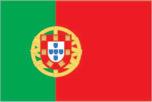
two vertical bands of green (hoist side, two-fifths) and red (three-fifths) with the national coat of arms (armillary sphere and Portuguese shield) centered on the dividing line; explanations for the color meanings are ambiguous, but a popular interpretation has green symbolizing hope and red the blood of those defending the nation
Government type
republic; parliamentary democracy
Independence
1143 (Kingdom of Portugal recognized); 5 October 1910 (republic proclaimed)
International law organization participation
accepts compulsory ICJ jurisdiction with reservations; accepts ICCt jurisdiction
International organization participation
ADB (nonregional member), AfDB (nonregional member), Australia Group, BIS, CD, CE, CERN, CPLP, EAPC, EBRD, ECB, EIB, EMU, ESA, EU, FAO, FATF, IADB, IAEA, IBRD, ICAO, ICC, ICRM, IDA, IEA, IFAD, IFC, IFRCS, IHO, ILO, IMF, IMO, IMSO, Interpol, IOC, IOM, IPU, ISO, ITSO, ITU, ITUC, LAIA (observer), MIGA, NATO, NEA, NSG, OAS (observer), OECD, OPCW, OSCE, Paris Club (associate), PCA, Schengen Convention, SECI (observer), UN, UN Security Council (temporary), UNCTAD, UNESCO, UNHCR, UNIDO, UNIFIL, Union Latina, UNMIT, UNWTO, UPU, WCO, WFTU, WHO, WIPO, WMO, WTO, ZC
Judicial branch
Supreme Court (Supremo Tribunal de Justica); judges appointed for life by the Conselho Superior da Magistratura
Legal system
civil law system; Constitutional Tribunal review of legislative acts
Legislative branch
- unicameral Assembly of the Republic or Assembleia da Republica (230 seats; members elected by popular vote to serve four-year terms) last held on 5 June 2011 (next to be held in 2015) percent of vote by party - PPD/PSD 38%, PS 28%, CDS/PP 11%, PCP/PEV 7%, BE 5%; seats by party - PPD/PSD 108, PS 74, CDS/PP 24, PCP/PEV 16, BE 8
- election results
- percent of vote by party - PPD/PSD 38%, PS 28%, CDS/PP 11%, PCP/PEV 7%, BE 5%; seats by party - PPD/PSD 108, PS 74, CDS/PP 24, PCP/PEV 16, BE 8
- elections
- last held on 5 June 2011 (next to be held in 2015)
National anthem
- "A Portugesa" (The Song of the Portuguese) Henrique LOPES DE MENDOCA/Alfredo KEIL adopted 1910; "A Portuguesa" was originally written to protest the Portuguese monarchy's acquiescence to the 1890 British ultimatum forcing Portugal to give up areas of Africa; the lyrics refer to the "insult" that resulted from the event
- lyrics/music
- Henrique LOPES DE MENDOCA/Alfredo KEIL
- name
- "A Portugesa" (The Song of the Portuguese)
National holiday
Portugal Day (Dia de Portugal), 10 June (1580); note - also called Camoes Day, the day that revered national poet Luis de Camoes (1524-80) died
National symbol(s)
armillary sphere (a spherical astrolabe modeling objects in the sky)
Political parties and leaders
Democratic and Social Center/Popular Party or CDS/PP [Paulo PORTAS]; Social Democratic Party or PSD [Pedro Manuel PASSOS COELHO]; Socialist Party or PS [Antonio de Almeida SANTOS]; The Left Bloc or BE; Unitarian Democratic Coalition or CDU [Jeronimo DE SOUSA] (includes Portuguese Communist Party or PCP and Ecologist Party ("The Greens") or PEV)
Political pressure groups and leaders
the media; labor unions
Suffrage
18 years of age; universal
Economy
Agriculture - products
grain, potatoes, tomatoes, olives, grapes; sheep, cattle, goats, pigs, poultry, dairy products; fish
Budget
- $95.4 billion $116.5 billion (2010 est.)
- expenditures
- $116.5 billion (2010 est.)
- revenues
- $95.4 billion
Budget surplus (+) or deficit (-)
-9.2% of GDP (2010 est.)
Central bank discount rate
1.75% (31 December 2010) 1.75% (31 December 2009) this is the European Central Bank's rate on the marginal lending facility, which offers overnight credit to banks in the euro area
Commercial bank prime lending rate
4.225% (31 December 2010 est.) 4.694% (31 December 2009 est.)
Current account balance
-$22.61 billion (2010 est.) -$25.6 billion (2009 est.)
Debt - external
$548.3 billion (30 June 2011) $497.8 billion (30 June 2010)
Distribution of family income - Gini index
38.5 (2007) 35.6 (1995)
Economy - overview
Portugal has become a diversified and increasingly service-based economy since joining the European Community - the EU's predecessor - in 1986. Over the past two decades, successive governments have privatized many state-controlled firms and liberalized key areas of the economy, including the financial and telecommunications sectors. The country qualified for the Economic and Monetary Union (EMU) in 1998 and began circulating the euro on 1 January 2002 along with 11 other EU members. The economy had grown by more than the EU average for much of the 1990s, but fell back in 2001-08, and contracted 2.6% in 2009, before growing 1% in 2010. GDP per capita stands at roughly two-thirds of the EU-27 average. A poor educational system and a rigid labor market have been obstacles to greater productivity and growth. Portugal also has been increasingly overshadowed by lower-cost producers in Central Europe and Asia as a destination for foreign direct investment. Portugal's low competitiveness, low growth prospects, and high levels of public debt have made it vulnerable to bond market turbulence. The government is implementing austerity measures, including a 5% public salary cut which went into effect on January 1, 2011 and a 2% increase in the value-added tax, to reduce the budget deficit from 9.3% of GDP in 2009 to 4.6% in 2011, but some investors have expressed concern about the government's ability to achieve these targets and cover its sovereign debt. Without the option for stimulus measures, the government is focusing instead on boosting exports and implementing labor market reforms to try to raise GDP growth and increase Portugal's competitiveness - which, over time, may help mitigate investor concerns.
Electricity - consumption
48.27 billion kWh (2008 est.)
Electricity - exports
2.822 billion kWh (2009 est.)
Electricity - imports
4.776 billion kWh (2009 est.)
Electricity - production
46.53 billion kWh (2009 est.)
Exchange rates
euros (EUR) per US dollar - 0.755 (2010) 0.7198 (2009) 0.6827 (2008) 0.7345 (2007) 0.7964 (2006)
Exports
$48.91 billion (2010 est.) $44.67 billion (2009 est.)
Exports - commodities
agricultural products, food products, wine, oil products, chemical products, plastics and rubber, hides, leather, wood and cork, wood pulp and paper, textile materials, clothing, footwear, machinery and tools
Exports - partners
Spain 26.8%, Germany 13.1%, France 11.9%, UK 5.5%, Angola 5.2% (2010)
GDP - composition by sector
- 2.5% 22.9% 74.7% (2010 est.)
- agriculture
- 2.5%
- industry
- 22.9%
- services
- 74.7% (2010 est.)
GDP - per capita (PPP)
$23,000 (2010 est.) $22,800 (2009 est.) $23,400 (2008 est.) data are in 2010 US dollars
GDP - real growth rate
1.4% (2010 est.) -2.5% (2009 est.) 0% (2008 est.)
GDP (official exchange rate)
$229.3 billion (2010 est.)
GDP (purchasing power parity)
$247 billion (2010 est.) $243.6 billion (2009 est.) $249.8 billion (2008 est.) data are in 2010 US dollars
Household income or consumption by percentage share
- 3.1% 28.4% (1995 est.)
- highest 10%
- 28.4% (1995 est.)
- lowest 10%
- 3.1%
Imports
$72.67 billion (2010 est.) $69.5 billion (2009 est.)
Imports - commodities
agricultural products, chemical products, vehicles and other transport material, and optical and precision instruments, computer accessories and parts, semi-conductors and related devices
Imports - partners
Spain 31.3%, Germany 13.8%, France 7.3%, Italy 5.7%, Netherlands 5.2% (2010)
Industrial production growth rate
1.6% (2010 est.)
Industries
textiles, clothing, footwear, wood and cork, paper, chemicals, auto-parts manufacturing, base metals, dairy products, wine and other foods, porcelain and ceramics, glassware, technology, telecommunications; ship construction and refurbishment; tourism
Inflation rate (consumer prices)
1.4% (2010 est.) -0.8% (2009 est.)
Investment (gross fixed)
19% of GDP (2010 est.)
Labor force
5.581 million (2010 est.)
Labor force - by occupation
- 11.7% 28.5% 59.8% (2009 est.)
- agriculture
- 11.7%
- industry
- 28.5%
- services
- 59.8% (2009 est.)
Market value of publicly traded shares
$82 billion (31 December 2010) $98.65 billion (31 December 2009) $68.71 billion (31 December 2008)
Natural gas - consumption
5.161 billion cu m (2010 est.)
Natural gas - exports
0 cu m (2010 est.)
Natural gas - imports
5.122 billion cu m (2010 est.)
Natural gas - production
0 cu m (2010 est.)
Natural gas - proved reserves
0 cu m (1 January 2011 est.)
Oil - consumption
277,400 bbl/day (2010 est.)
Oil - exports
49,650 bbl/day (2009 est.)
Oil - imports
294,600 bbl/day (2009 est.)
Oil - production
4,721 bbl/day (2010 est.)
Oil - proved reserves
0 bbl (1 January 2011 est.)
Population below poverty line
18% (2006)
Public debt
93% of GDP (2010 est.) 83% of GDP (2009 est.)
Reserves of foreign exchange and gold
$21 billion (31 December 2010 est.) $16.03 billion (31 December 2009 est.)
Stock of broad money
$319.4 billion (31 December 2010 est.) $311 billion (31 December 2009 est.)
Stock of direct foreign investment - abroad
$64.25 billion (31 December 2010 est.) $68.47 billion (31 December 2009 est.)
Stock of direct foreign investment - at home
$110.2 billion (31 December 2010 est.) $114.7 billion (31 December 2009 est.)
Stock of domestic credit
$556.3 billion (31 December 2009 est.) $490.8 billion (31 December 2008 est.)
Stock of narrow money
$95.9 billion (31 December 2010 est.) $103.8 billion (31 December 2009 est.) see entry for the European Union for money supply in the euro area; the European Central Bank (ECB) controls monetary policy for the 17 members of the Economic and Monetary Union (EMU); individual members of the EMU do not control the quantity of money circulating within their own borders
Taxes and other revenues
41.6% of GDP (2010 est.)
Unemployment rate
10.8% (2010 est.) 9.5% (2009 est.)
Communications
Broadcast media
the publicly-owned TV broadcaster operates 2 domestic channels and external service channels to Africa; overall, roughly 40 domestic TV stations; viewers have widespread access to international broadcasters with more than half of all households connected to multi-channel cable or satellite TV systems; publicly-owned radio operates 3 national networks and provides regional and external services; several privately-owned national radio stations and some 300 regional and local commercial radio stations (2008)
Internet country code
.pt
Internet hosts
3.267 million (2010)
Internet users
5.168 million (2009)
Telephone system
- Portugal's telephone system has a state-of-the-art network with broadband, high-speed capabilities integrated network of coaxial cables, open-wire, microwave radio relay, and domestic satellite earth stations country code - 351; a combination of submarine cables provide connectivity to Europe, North and East Africa, South Africa, the Middle East, Asia, and the US; satellite earth stations - 3 Intelsat (2 Atlantic Ocean and 1 Indian Ocean), NA Eutelsat; tropospheric scatter to Azores (2008)
- domestic
- integrated network of coaxial cables, open-wire, microwave radio relay, and domestic satellite earth stations
- general assessment
- Portugal's telephone system has a state-of-the-art network with broadband, high-speed capabilities
- international
- country code - 351; a combination of submarine cables provide connectivity to Europe, North and East Africa, South Africa, the Middle East, Asia, and the US; satellite earth stations - 3 Intelsat (2 Atlantic Ocean and 1 Indian Ocean), NA Eutelsat; tropospheric scatter to Azores (2008)
Telephones - main lines in use
4.485 million (2010)
Telephones - mobile cellular
15.195 million (2010)
Transportation
Airports
65 (2010)
Airports - with paved runways
- 10 (2010)
- 1,524 to 2,437 m
- 7
- 2,438 to 3,047 m
- 8
- 914 to 1,523 m
- 13
- over 3,047 m
- 5
- total
- 43
- under 914 m
- 10 (2010)
Airports - with unpaved runways
- 21 (2010)
- 914 to 1,523 m
- 1
- total
- 22
- under 914 m
- 21 (2010)
Merchant marine
- bulk carrier 8, cargo 33, carrier 1, chemical tanker 17, container 8, liquefied gas 9, passenger 13, passenger/cargo 5, petroleum tanker 7, roll on/roll off 1, vehicle carrier 9 80 (Belgium 8, Denmark 4, Germany 13, Greece 5, Italy 10, Japan 9, Mexico 1, Netherlands 1, Norway 1, Spain 15, Sweden 6, Switzerland 3, US 4) 14 (Cyprus 2, Malta 3, Panama 9) (2010)
- foreign-owned
- 80 (Belgium 8, Denmark 4, Germany 13, Greece 5, Italy 10, Japan 9, Mexico 1, Netherlands 1, Norway 1, Spain 15, Sweden 6, Switzerland 3, US 4)
- registered in other countries
- 14 (Cyprus 2, Malta 3, Panama 9) (2010)
- total
- 111
Pipelines
gas 1,307 km; oil 11 km; refined products 188 km (2010)
Ports and terminals
Leixoes, Lisbon, Setubal, Sines
Railways
- 3,319 km 2,700 km 1.668-m gauge (1,436 km electrified) 192 km 1.000-m gauge; 427 km 0.760-m gauge (2010)
- narrow gauge
- 192 km 1.000-m gauge; 427 km 0.760-m gauge (2010)
- total
- 3,319 km
Roadways
- 82,900 km 71,294 km (includes 2,613 km of expressways) 11,606 km (2008)
- total
- 82,900 km
- unpaved
- 11,606 km (2008)
Waterways
210 km (on Douro River from Porto) (2010)
Military and Security
Manpower available for military service
- 2,566,264 2,458,297 (2010 est.)
- females age 16-49
- 2,458,297 (2010 est.)
- males age 16-49
- 2,566,264
Manpower fit for military service
- 2,103,080 2,018,004 (2010 est.)
- females age 16-49
- 2,018,004 (2010 est.)
- males age 16-49
- 2,103,080
Manpower reaching militarily significant age annually
- 62,208 54,786 (2010 est.)
- female
- 54,786 (2010 est.)
- male
- 62,208
Military branches
Portuguese Army (Exercito Portuguesa), Portuguese Navy (Marinha Portuguesa; includes Marine Corps), Portuguese Air Force (Forca Aerea Portuguesa, FAP) (2011)
Military expenditures
2.3% of GDP (2005 est.)
Military service age and obligation
18 years of age for voluntary military service; no compulsory military service; women serve in the armed forces, on naval ships since 1993, but are prohibited from serving in some combatant specialties; reserve obligation to age 35 (2010)
Transnational Issues
Disputes - international
Portugal does not recognize Spanish sovereignty over the territory of Olivenza based on a difference of interpretation of the 1815 Congress of Vienna and the 1801 Treaty of Badajoz
Illicit drugs
seizing record amounts of Latin American cocaine destined for Europe; a European gateway for Southwest Asian heroin; transshipment point for hashish from North Africa to Europe; consumer of Southwest Asian heroin