2000 Edition
CIA World Factbook 2000 (Project Gutenberg)
Introduction
Background
Following its heyday as a world power during the 15th and 16th centuries, Portugal lost much of its wealth and status with the destruction of Lisbon in a 1755 earthquake, occupation during the Napoleonic Wars, and the loss of its Brazilian colony in 1822. A 1910 revolution deposed the monarchy; for most of the next six decades repressive governments ran the country. In 1974, a left-wing military coup installed broad democratic reforms. The following year Portugal granted independence to all of its African colonies. Portugal entered the EC in 1985.
Geography
Area
- land
- 91,951 sq km
- note
- includes Azores and Madeira Islands
- total
- 92,391 sq km
- water
- 440 sq km
Area - comparative
slightly smaller than Indiana
Climate
maritime temperate; cool and rainy in north, warmer and drier in south
Coastline
1,793 km
Elevation extremes
- highest point
- Ponta do Pico (Pico or Pico Alto) on Ilha do Pico in the Azores 2,351 m
- lowest point
- Atlantic Ocean 0 m
Environment - current issues
soil erosion; air pollution caused by industrial and vehicle emissions; water pollution, especially in coastal areas
Environment - international agreements
- party to
- Air Pollution, Biodiversity, Climate Change, Desertification, Endangered Species, Hazardous Wastes, Law of the Sea, Marine Dumping, Marine Life Conservation, Ozone Layer Protection, Ship Pollution, Tropical Timber 83, Tropical Timber 94, Wetlands signed, but not ratified: Air Pollution-Persistent Organic Pollutants, Air Pollution-Volatile Organic Compounds, Climate Change-Kyoto Protocol, Environmental Modification, Nuclear Test Ban
Geographic coordinates
39 30 N, 8 00 W
Geography - note
Azores and Madeira Islands occupy strategic locations along western sea approaches to Strait of Gibraltar
Irrigated land
6,300 sq km (1993 est.)
Land boundaries
- border countries
- Spain 1,214 km
- total
- 1,214 km
Land use
- arable land
- 26%
- forests and woodland
- 36%
- other
- 20% (1993 est.)
- permanent crops
- 9%
- permanent pastures
- 9%
Location
Southwestern Europe, bordering the North Atlantic Ocean, west of Spain
Map references
Europe
Maritime claims
- continental shelf
- 200-m depth or to the depth of exploitation
- exclusive economic zone
- 200 nm
- territorial sea
- 12 nm
Natural hazards
Azores subject to severe earthquakes
Natural resources
fish, forests (cork), tungsten, iron ore, uranium ore, marble, arable land, hydro power
Terrain
mountainous north of the Tagus River, rolling plains in south
People and Society
Age structure
0-14 years: 17% (male 880,501; female 834,062) 15-64 years: 68% (male 3,319,143; female 3,468,009) 65 years and over: 15% (male 628,101; female 918,416) (2000 est.)
Birth rate
11.49 births/1,000 population (2000 est.)
Death rate
10.2 deaths/1,000 population (2000 est.)
Ethnic groups
homogeneous Mediterranean stock; citizens of black African descent who immigrated to mainland during decolonization number less than 100,000
Infant mortality rate
6.05 deaths/1,000 live births (2000 est.)
Languages
Portuguese
Life expectancy at birth
- female
- 79.49 years (2000 est.)
- male
- 72.24 years
- total population
- 75.75 years
Literacy
- definition
- age 15 and over can read and write
- female
- NA%
- male
- NA%
- total population
- 87.4%
Nationality
- adjective
- Portuguese
- noun
- Portuguese (singular and plural)
Net migration rate
0.5 migrant(s)/1,000 population (2000 est.)
Population
10,048,232 (July 2000 est.)
Population growth rate
0.18% (2000 est.)
Religions
Roman Catholic 94%, Protestant (1995)
Sex ratio
- at birth
- 1.06 male(s)/female under 15 years: 1.06 male(s)/female 15-64 years: 0.96 male(s)/female 65 years and over: 0.68 male(s)/female
- total population
- 0.92 male(s)/female (2000 est.)
Total fertility rate
1.47 children born/woman (2000 est.)
Government
Administrative divisions
18 districts (distritos, singular - distrito) and 2 autonomous regions* (regioes autonomas, singular - regiao autonoma); Aveiro, Acores (Azores)*, Beja, Braga, Braganca, Castelo Branco, Coimbra, Evora, Faro, Guarda, Leiria, Lisboa, Madeira*, Portalegre, Porto, Santarem, Setubal, Viana do Castelo, Vila Real, Viseu
Capital
Lisbon
Constitution
25 April 1976, revised 30 October 1982, 1 June 1989, 5 November 1992, and 3 September 1997
Country name
- conventional long form
- Portuguese Republic
- conventional short form
- Portugal
- local long form
- Republica Portuguesa
- local short form
- Portugal
Data code
PO
Diplomatic representation from the US
- chief of mission
- Ambassador Gerald S. MCGOWAN
- embassy
- Avenida das Forcas Armadas, 1600 Lisbon
- mailing address
- PSC 83, APO AE 09726
- telephone
- (21) 727-3300
Diplomatic representation in the US
- chancery
- 2125 Kalorama Road NW, Washington, DC 20008
- chief of mission
- Ambassador Joao Alberto Bacelar DA ROCKA PARIS
- telephone
- (202) 328-8610
Executive branch
- cabinet
- Council of Ministers appointed by the president on the recommendation of the prime minister
- chief of state
- President Jorge SAMPAIO (since 9 March 1996)
- election results
- Jorge SAMPAIO elected president; percent of vote - Jorge SAMPAIO (Socialist) 53.8%, Anibal CAVACO SILVA (Social Democrat) 46.2%
- elections
- president elected by popular vote for a five-year term; election last held 14 January 1996 (next to be held NA January 2001); following legislative elections, the leader of the majority party or leader of a majority coalition is usually appointed prime minister by the president
- head of government
- Prime Minister Antonio Manuel de Oliviera GUTERRES (since 28 October 1995)
- note
- there is also a Council of State that acts as a consultative body to the president
FAX
- (202) 462-3726
- (21) 726-9109
- consulate(s)
- Los Angeles, New Bedford (Massachusetts), Providence (Rhode Island)
- consulate(s)
- Ponta Delgada (Azores)
- consulate(s) general
- Boston, New York, Newark (New Jersey), and San Francisco
Flag description
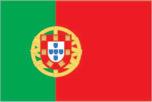
two vertical bands of green (hoist side, two-fifths) and red (three-fifths) with the Portuguese coat of arms centered on the dividing line
Government type
parliamentary democracy
Independence
1140 (independent republic proclaimed 5 October 1910)
International organization participation
AfDB, Australia Group, BIS, CCC, CE, CERN, EAPC, EBRD, ECE, ECLAC, EIB, EMU, EU, FAO, IADB, IAEA, IBRD, ICAO, ICC, ICFTU, ICRM, IDA, IEA, IFAD, IFC, IFRCS, IHO, ILO, IMF, IMO, Inmarsat, Intelsat, Interpol, IOC, IOM, ISO, ITU, LAIA (observer), MINURSO, NAM (guest), NATO, NEA, NSG, OAS (observer), OECD, OPCW, OSCE, PCA, UN, UNCTAD, UNESCO, UNIDO, UNMIBH, UNMIK, UNMOP, UPU, WCL, WEU, WFTU, WHO, WIPO, WMO, WToO, WTrO, ZC
Judicial branch
Supreme Court or Supremo Tribunal de Justica, judges appointed for life by the Conselho Superior da Magistratura
Legal system
civil law system; the Constitutional Tribunal reviews the constitutionality of legislation; accepts compulsory ICJ jurisdiction, with reservations
Legislative branch
- unicameral Assembly of the Republic or Assembleia da Republica (230 seats; members are elected by popular vote to serve four-year terms)
- election results
- percent of vote by party - PSP 43.9%, PSD 32.3%, CDU 9%, PP 8.3%, The Left Bloc 2.4%; seats by party - PSP 113, PSD 83, CDU 17, PP 15, The Left Bloc 2
- elections
- last held 10 October 1999 (next to be held by NA October 2003)
National holiday
Day of Portugal, 10 June (1580)
Political parties and leaders
Popular Party or PP ; Portuguese Communist Part/United Democratic Coalition or PCP/CDU ; Portuguese Socialist Party or PSP [Antonio GUTERRES]; Social Democratic Party or PSD ; The Left Bloc
Suffrage
18 years of age; universal
Economy
Agriculture - products
grain, potatoes, olives, grapes; sheep, cattle, goats, poultry, beef, dairy products
Budget
- expenditures
- $52 billion, including capital expenditures of $7.4 billion (1996 est.)
- revenues
- $48 billion
Currency
1 Portuguese escudo (Esc) = 100 centavos
Debt - external
$13.1 billion (1997 est.)
Economic aid - donor
ODA, $271 million (1995)
Economy - overview
Portugal is an upcoming capitalist economy with a per capita GDP two-thirds that of the four big West European economies. In 1999, it continued to enjoy sturdy economic growth, falling interest rates, and low unemployment. The country qualified for the European Monetary Union (EMU) in 1998 and joined with 10 other European countries in launching the euro on 1 January 1999. Portugal's inflation rate for 1999, 2.4%, was comfortably low. The country continues to run a trade deficit and a balance of payments deficit. The government is working to modernize capital plant and increase the country's competitiveness in the increasingly integrated world markets. Growth is expected to remain stable in 2000 as the economic integration of Europe proceeds. Improvement in the education sector is critical to the catch-up process.
Electricity - consumption
36.18 billion kWh (1998)
Electricity - exports
3.7 billion kWh (1998)
Electricity - imports
4 billion kWh (1998)
Electricity - production
38.581 billion kWh (1998)
Electricity - production by source
- fossil fuel
- 63.14%
- hydro
- 33.46%
- nuclear
- 0%
- other
- 3.4% (1998)
Exchange rates
- euros per US$1 - 0.9867 (January 2000), 0.9386 (1999); Portuguese escudos (Esc) per US$1 - 172.78 (January 1999), 180.10 (1998), 175.31 (1997), 154.24 (1996), 151.11 (1995)
- note
- on 1 January 1999, the EU introduced a common currency that is now being used by financial institutions in some member countries at a fixed rate of 200.482 escudos per euro; the euro will replace the local currency in consenting countries for all transactions in 2002
Exports
$25 billion (f.o.b., 1998)
Exports - commodities
clothing and footwear, machinery, chemicals, cork and paper products, hides
Exports - partners
EU 82% (Germany 20%, Spain 16%, France 14%, UK 12% Netherlands 5%, Benelux 5%, Italy), US 5% (1998)
Fiscal year
calendar year
GDP
purchasing power parity - $151.4 billion (1999 est.)
GDP - composition by sector
- agriculture
- 4%
- industry
- 36%
- services
- 60% (1999 est.)
GDP - per capita
purchasing power parity - $15,300 (1999 est.)
GDP - real growth rate
3.2% (1999 est.)
Household income or consumption by percentage share
lowest 10%: NA% highest 10%: NA%
Imports
$34.9 billion (f.o.b., 1998)
Imports - commodities
machinery and transport equipment, chemicals, petroleum, textiles, agricultural products
Imports - partners
EU 77% (Spain 24%, Germany 15%, France 11%, Italy 8%, UK 7%, Netherlands 5%), US, Japan (1998)
Industrial production growth rate
2.9% (1999 est.)
Industries
textiles and footwear; wood pulp, paper, and cork; metalworking; oil refining; chemicals; fish canning; wine; tourism
Inflation rate (consumer prices)
2.4% (1999 est.)
Labor force
4.75 million (1998 est.)
Labor force - by occupation
services 60%, industry 30%, agriculture 10% (1999 est.)
Population below poverty line
NA%
Unemployment rate
4.6% (1999 est.)
Communications
Internet Service Providers (ISPs)
20 (1999)
Radio broadcast stations
AM 47, FM 172 (many are repeaters), shortwave 2 (1998)
Radios
3.02 million (1997)
Telephone system
- domestic
- generally adequate integrated network of coaxial cables, open wire, microwave radio relay, and domestic satellite earth stations
- international
- 6 submarine cables; satellite earth stations - 3 Intelsat (2 Atlantic Ocean and 1 Indian Ocean), NA Eutelsat; tropospheric scatter to Azores; note - an earth station for Inmarsat (Atlantic Ocean region) is planned
Telephones - main lines in use
3.724 million (1996)
Telephones - mobile cellular
887,216 (1999)
Television broadcast stations
36 (plus 62 repeaters) (1997)
Televisions
3.31 million (1997)
Transportation
Airports
66 (1999 est.)
Airports - with paved runways
- total
- 40 over 3,047 m: 5 2,438 to 3,047 m: 8 1,524 to 2,437 m: 4 914 to 1,523 m: 18 under 914 m: 5 (1999 est.)
Airports - with unpaved runways
- total
- 26 914 to 1,523 m: 1 under 914 m: 25 (1999 est.)
Highways
- paved
- 59,110 km (including 797 km of expressways)
- total
- 68,732 km
- unpaved
- 9,622 km (1999 est.)
Merchant marine
- note
- Portugal has created a captive register on Madeira for Portuguese-owned ships; ships on the Madeira Register (MAR) will have taxation and crewing benefits of a flag of convenience (1998 est.)
- ships by type
- bulk 13, cargo 80, chemical tanker 14, container 8, liquified gas 8, multi-functional large load carrier 1, petroleum tanker 10, refrigerated cargo 1, roll-on/roll-off 6, short-sea passenger 5, vehicle carrier 5 (1999 est.)
- total
- 151 ships (1,000 GRT or over) totaling 1,061,202 GRT/1,601,267 DWT
Pipelines
- crude oil 22 km; petroleum products 58 km; natural gas 700 km
- note
- the secondary lines for the natural gas pipeline that will be 300 km long have not yet been built
Ports and harbors
Aveiro, Funchal (Madeira Islands), Horta (Azores), Leixoes, Lisbon, Porto, Ponta Delgada (Azores), Praia da Vitoria (Azores), Setubal, Viana do Castelo
Railways
- broad gauge
- 2,576 km 1.668-m gauge (623 km electrified; 426 km double track)
- narrow gauge
- 274 km 1.000-m gauge (1998)
- total
- 2,850 km
Waterways
820 km navigable; relatively unimportant to national economy, used by shallow-draft craft limited to 300 metric-ton or less cargo capacity
Military and Security
Military branches
Army, Navy (includes Marines), Air Force, National Republican Guard
Military expenditures - dollar figure
$2.458 billion (FY97)
Military expenditures - percent of GDP
2.6% (FY97)
Military manpower - availability
males age 15-49: 2,534,872 (2000 est.)
Military manpower - fit for military service
males age 15-49: 2,036,712 (2000 est.)
Military manpower - military age
20 years of age
Military manpower - reaching military age annually
- males
- 74,050 (2000 est.)
Transnational Issues
Illicit drugs
- important gateway country for Latin American cocaine entering the European market; transshipment point for hashish from North Africa to Europe; consumer of Southwest Asian heroin
- PUERTO RICO