1991 Edition
CIA World Factbook 1991 (Project Gutenberg)
Geography
Climate
maritime temperate; cool and rainy in north, warmer and drier in south
Coastline
1,793 km
Comparative area
slightly smaller than Indiana
Disputes
sovereignty over Timor Timur (East Timor Province) disputed with Indonesia
Environment
Azores subject to severe earthquakes
Land boundary
1,214 km with Spain
Land use
arable land 32%; permanent crops 6%; meadows and pastures 6%; forest and woodland 40%; other 16%; includes irrigated 7%
Maritime claims
Continental shelf: 200 m (depth) or to depth of exploitation; Exclusive economic zone: 200 nm; Territorial sea: 12 nm
Natural resources
fish, forests (cork), tungsten, iron ore, uranium ore, marble
Note
Azores and Madeira Islands occupy strategic locations along western sea approaches to Strait of Gibraltar
Terrain
mountainous north of the Tagus, rolling plains in south
Total area
92,080 km2; land area: 91,640 km2; includes Azores and Madeira Islands
People and Society
Birth rate
12 births/1,000 population (1991)
Death rate
10 deaths/1,000 population (1991)
Ethnic divisions
homogeneous Mediterranean stock in mainland, Azores, Madeira Islands; citizens of black African descent who immigrated to mainland during decolonization number less than 100,000
Infant mortality rate
13 deaths/1,000 live births (1991)
Labor force
4,605,700; services 45%, industry 35%, agriculture 20% (1988)
Language
Portuguese
Life expectancy at birth
71 years male, 78 years female (1991)
Literacy
85% (male 89%, female 82%) age 15 and over can read and write (1990 est.)
Nationality
noun--Portuguese (sing. and pl.); adjective--Portuguese
Net migration rate
1 migrant/1,000 population (1991)
Organized labor
about 55% of the labor force; the Communist-dominated General Confederation of Portuguese Workers--Intersindical (CGTP-IN) represents more than half of the unionized labor force; its main competition, the General Workers Union (UGT), is organized by the Socialists and Social Democrats and represents less than half of unionized labor
Population
10,387,617 (July 1991), growth rate 0.3% (1991)
Religion
Roman Catholic 97%, Protestant denominations 1%, other 2%
Total fertility rate
1.5 children born/woman (1991)
Government
Administrative divisions
18 districts (distritos, singular--distrito) and 2 autonomous regions* (regioes autonomas, singular--regiao autonoma); Aveiro, Acores (Azores)*, Beja, Braga, Braganca, Castelo Branco, Coimbra, Evora, Faro, Guarda, Leiria, Lisboa, Madeira*, Portalegre, Porto, Santarem, Setubal, Viana do Castelo, Vila Real, Viseu
Capital
Lisbon
Communists
Portuguese Communist Party claims membership of 200,753 (December 1983)
Constitution
25 April 1976, revised 30 October 1982 and 1 June 1989
Dependent area
Macau (scheduled to become a Special Administrative Region of China in 1999)
Diplomatic representation
Ambassador Joao Eduardo M. PEREIRA BASTOS; Chancery at 2125 Kalorama Road NW, Washington DC 20008; telephone (202) 328-8610; there are Portuguese Consulates General in Boston, New York, and San Francisco, and Consulates in Los Angeles, Newark (New Jersey), New Bedford (Massachusetts), and Providence (Rhode Island); US--Ambassador Everett E. BRIGGS; Embassy at Avenida das Forcas Armadas, 1600 Lisbon (mailing address is APO New York 09678-0002); telephone [351] (1) 726-6600 or 6659, 8670, 8880; there is a US Consulate in Ponta Delgada (Azores)
Elections
President--last held 13 February 1991 (next to be held February 1996); results--Dr. Mario Lopes SOARES 70%, Basilio HORTA 14%, Carlos CARVALHAS 13%, Carlos MARQUES 3%; Assembly of the Republic--last held 6 October 1991 (next to be held October 1995); results--Social Democrats 50.4%, Socialists 29.3%, United Democratic Coalition (CDU; Communists) 8.8%, Christian Democrats 4.4%, National Solidarity Party 1.7%, Democratic Renewal 0.6%, other 4.8%; seats--(230 total) Social Democrats 132, Socialists 70, United Democratic Coalition (CDU; Communists) 17, Christian Democrats 5, National Solidarity Party 1; after absentee ballots counted five seats to be allocated
Executive branch
president, Council of State, prime minister, deputy prime minister, Council of Ministers (cabinet)
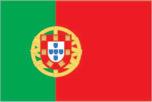
Flag
two vertical bands of green (hoist side, two-fifths) and red (three-fifths) with the Portuguese coat of arms centered on the dividing line
Independence
1140; independent republic proclaimed 5 October 1910
Judicial branch
Supreme Tribunal of Justice (Supremo Tribunal de Justica)
Leaders
Chief of State--President Dr. Mario Alberto Nobre Lopes SOARES (since 9 March 1986); Head of Government--Prime Minister Anibal CAVACO SILVA (since 6 November 1985)
Legal system
civil law system; the Constitutional Tribunal reviews the constitutionality of legislation; accepts compulsory ICJ jurisdiction, with reservations
Legislative branch
unicameral Assembly of the Republic (Assembleia da Republica)
Long-form name
Portuguese Republic
Member of
AfDB, BIS, CCC, CE, CERN, COCOM, CSCE, EBRD, EC, ECE, ECLAC, EIB, FAO, GATT, IADB, IAEA, IBRD, ICAO, ICC, ICFTU, IEA, IFAD, IFC, ILO, IMF, IMO, INMARSAT, INTELSAT, INTERPOL, IOC, IOM, ISO, ITU, LAIA (observer), LORCS, NAM (guest), NATO, NEA, OAS (observer), OECD, PCA, UN, UNCTAD, UNESCO, UNIDO, UPU, WCL, WEU, WHO, WIPO, WMO, WTO
National holiday
Day of Portugal, 10 June
Political parties and leaders
Social Democratic Party (PSD), Anibal CAVACO Silva; Portuguese Socialist Party (PS), Jorge SAMPAIO; Party of Democratic Renewal (PRD), Herminio MARTINHO; Portuguese Communist Party (PCP), Alvaro CUNHAL; Social Democratic Center (CDS), Andriano MORREIRA (interim); National Solidarity Party, Manuel SERGIO
Suffrage
universal at age 18
Type
republic
Economy
Agriculture
accounts for 9% of GDP and 20% of labor force; small inefficient farms; imports more than half of food needs; major crops--grain, potatoes, olives, grapes; livestock sector--sheep, cattle, goats, poultry, meat, dairy products
Budget
revenues $21.6 billion; expenditures $23.8 billion, including capital expenditures of $6.9 billion (1990)
Currency
Portuguese escudo (plural--escudos); 1 Portuguese escudo (Esc) = 100 centavos
Economic aid
US commitments, including Ex-Im (FY70-89), $1.8 billion; Western (non-US) countries, ODA and OOF bilateral commitments (1970-88), $1.13 billion
Electricity
6,729,000 kW capacity; 16,000 million kWh produced, 1,530 kWh per capita (1989)
Exchange rates
Portuguese escudos (Esc) per US$1--134.46 (January 1991), 142.55 (1990), 157.46 (1989), 143.95 (1988), 140.88 (1987), 149.59 (1986), 170.39 (1985)
Exports
$16.3 billion (f.o.b., 1990); commodities--cotton textiles, cork and cork products, canned fish, wine, timber and timber products, resin, machinery, appliances; partners--EC 72%, other developed countries 13%, US 5%
External debt
$18.4 billion (1990)
Fiscal year
calendar year
GDP
$57.8 billion, per capita $5,580; real growth rate 3.5% (1990)
Imports
$24.9 billion (c.i.f., 1990); commodities--petroleum, cotton, foodgrains, industrial machinery, iron and steel, chemicals; partners--EC 69%, other developed countries 11%, less developed countries 13%, US 4%
Industrial production
growth rate 4.9% (1989); accounts for 40% of GDP
Industries
textiles and footwear; wood pulp, paper, and cork; metalworking; oil refining; chemicals; fish canning; wine; tourism
Inflation rate (consumer prices)
13.4% (1990)
Overview
During the past four years, the economy has made a sustained recovery from the severe recession of 1983-85. The economy grew by 14% during the 1987-89 period, largely because of strong domestic consumption and investment spending. Unemployment has declined for the third consecutive year, but inflation continues to be about three times the European Community average. The government is pushing economic restructuring and privatization measures in anticipation of the 1992 European Community timetable to form a single large market in Europe.
Unemployment rate
5.5% (1990 est.)
Communications
Airports
69 total, 63 usable; 36 with permanent-surface runways; 1 with runways over 3,659 m; 12 with runways 2,440-3,659 m; 7 with runways 1,220-2,439 m
Civil air
29 major transport aircraft
Highways
73,661 km total; 61,599 km paved (bituminous, gravel, and crushed stone), including 140 km of limited-access divided highway; 7,962 km improved earth; 4,100 km unimproved earth (motorable tracks)
Inland waterways
820 km navigable; relatively unimportant to national economy, used by shallow-draft craft limited to 300-metric-ton cargo capacity
Merchant marine
52 ships (1,000 GRT or over) totaling 684,350 GRT/1,190,454 DWT; includes 1 short-sea passenger, 20 cargo, 2 refrigerated cargo, 1 container, 1 roll-on/roll-off cargo, 12 petroleum, oils, and lubricants (POL) tanker, 2 chemical tanker, 2 liquefied gas, 10 bulk, 1 combination bulk; note--Portugal has created a captive register on Madeira (MAR) for Portuguese-owned ships that will have the taxation and crewing benefits of a flag of convenience; although only one ship currently is known to fly the Portuguese flag on the MAR register, it is likely that a majority of Portuguese flag ships will transfer to this subregister in a few years
Pipelines
crude oil, 11 km; refined products, 58 km
Ports
Leixoes, Lisbon, Porto, Ponta Delgada (Azores), Velas (Azores), Setubal, Sines
Railroads
3,613 km total; state-owned Portuguese Railroad Co. (CP) operates 2,858 km 1.665-meter gauge (434 km electrified and 426 km double track), 755 km 1.000-meter gauge; 12 km (1.435-meter gauge) electrified, double track, privately owned
Telecommunications
facilities are generally adequate; 2,690,000 telephones; stations--57 AM, 66 (22 relays) FM, 25 (23 relays) TV; 7 submarine cables; communication satellite ground stations operating in the INTELSAT (2 Atlantic Ocean and 1 Indian Ocean), EUTELSAT, and domestic systems (mainland and Azores)
Military and Security
Branches
Army, Navy (including Marines), Air Force, National Republican Guard, Fiscal Guard, Public Security Police
Defense expenditures
$1.6 billion, 3% of GDP (1990) _%_
Manpower availability
males 15-49, 2,621,116; 2,131,628 fit for military service; 88,718 reach military age (20) annually