1986 Edition
CIA World Factbook 1986 (Internet Archive)
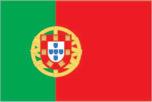
Geography
Agriculture
generally underdeveloped; main crops — grains, potatoes, olives, grapes for wine; deficit foods — sugar, grain, meat, fish, oilseed
Aid
economic authorizations — US, including Ex-Im, $1.5 billion (FY70-84); other Western countries (ODA and OOF), $749 million (1970-82); military authorizations — US, $475 million (FY70-84)
Branches
- Ground Forces, National Air Defense Forces, Air Force Command, Navy
- executive with President and Prime Minister; unicameral legislature (popularly elected 250-seat Assembly of the Republic); independent judiciary
- Army, Navy, Air Force
Budget
(1984) expenditures, $7.0 billion; revenues, $4.5 billion; deficit, $2.5 billion
Capital
Lisbon
Civil air
34 major transport aircraft Airfields (including Azores and Madeira
Coastline
860 km; excludes Azores (708 km) and Madeira Islands (225 km) People
Communists
Portuguese Communist Party claims membership of 200,753 (December 1983)
Crude steel
690,675 tons produced (1983), 69 kg per capita
Elections
national elections for Assembly of the Republic normally to be held every four years; Assembly elections held October 1985; national election for President to be held every five years (scheduled for 29 January 1986), second constitutional president elected in December 1980; local elections to be held every three years, last elections in December 1985 Political parties and leaders: Social Democratic Party (PSD), Anibal Cavaco Silva; Portuguese Socialist Party (PS), Mario Scares; Party of Democratic Renewal (PRD), Herminio Martinho; Portuguese Communist Party (PCP), Alvaro Cunhal; Social Democratic Center (CDS), Adriano Moreira
Electric power
5,124,000 kW capacity (1985); 16.829 billion kWh produced (1985), 1,675 kWh per capita
Ethnic divisions
homogeneous Mediterranean stock in mainland, Azores, Madeira Islands; citizens of black African descent who immigrated to mainland during decolonization number less than 100,000
Exports
$5.2 billion (f.o.b., 1984); principal items — cotton textiles, cork and cork products, canned fish, wine, timber and timber products, resin, machinery, and appliances
Fiscal year
calendar year Communications
Fishing
catch 243,423 metric tons (1984)
Freight carried
rail — 425.5 million metric tons, 123.5 billion metric ton/km (1985); highway — 1,420 million metric tons, 36.5 billion metric ton/km (1985); inland waterway— 15.45 million metric tons, 1.44 billion metric ton/km (1985); ocean— 193.4 billion metric ton/km (1985)
GNP
$19.2 billion (1984); 15% government consumption, 71% private consumption; 23% fixed capital formation; —0.7% change in stocks; —8% net exports; real growth rate -1.7% (1984)
Government leaders
Mario SCARES, President (since March 1986); Anibal Cavaco SILVA, Prime Minister (since November 1985)
Highways
- 254,000 km total; 57,353 km concrete, asphalt, stone block; 97,561 km crushed stone, gravel; 99,086 km earth (1983)
- 57,499 km total; 49,537 km paved (bituminous, gravel, and crushed stone), including 140 km of limited-access divided highway; 7,962 km improved earth; plus an additional 4,100 km of unimproved earth roads (motorable tracks)
Imports
$7.8 billion (c.i.f., 1984); principal items — petroleum, cotton, industrial machinery, iron and steel, chemicals
Infant mortality rate
19.8/1,000(1982)
Inland waterways
- 4,017 km navigable rivers and canals (1984)
- 820 km navigable; relatively unimportant to national economy, used by shallow-draft craft limited to 297metric-ton cargo capacity
Islands)
69 total, 66 usable; 35 with permanent-surface runways; 2 with runways over 3,659 m, 9 with runways 2,4403,659 m, 12 with runways 1,220-2,439 m
Labor force
4.5 million (1984); 37% services, 36% industry, 27% agriculture; unemployment, 10.6% (December 1984)
Land boundaries
1,207 km Water
Language
Portuguese
Legal system
civil law system; constitution adopted April 1976 and revised October 1982; the Constitutional Tribunal reviews the constitutionality of legislation; legal education at Universities of Lisbon and Coimbra; accepts compulsory ICJ jurisdiction, with reservations
Life expectancy
71
Limits of territorial waters (claimed)
12 nm (200 nm exclusive economic zone)
Literacy
80%
Major industries
textiles and footwear; wood pulp, paper, and cork; metalworking; oil refining; chemicals; fish canning; wine
Major trade partners
- $32.726 billion (1984); 66% with Communist countries, 24% with West, 10% with less developed countries
- 58% EC, 9% US, 2% Communist countries, 18% other developed countries, 11% less developed countries
Member of
Council of Europe, EC, EFTA, FAO, GATT, IAEA, IATP, IBRD, ICAC, ICAO, ICES, ICO, IDE— Inter-American Development Bank, IEA, IFAD, IFC, IHO, ILO, IMF, IMO, INTELSAT, INTERPOL, IOOC, IRC, ISO, ITU, IWC— Internationa] Wheat Council, NATO, OECD, UN, UNESCO, UPU, WHO, WIPO, WMO, WSG Economy
Military budget
- announced for fiscal year ending 31 December 1985, 307 billion ztotys; 7.7% of total budget _8«i»J* Azores and Madeira j Islands are not shown S« regional map Vtnd VII Land Portugal, 92,082 km2, including the Azores and Madeira Islands; slightly smaller than Indiana; 49% arable; 31% forest; 6% meadow and pasture; 14% waste, urban, inland water, or other
- for fiscal year ending 31 December 1984, $652 million; about 10% of central government budget
Military manpower
- males 15-49, 9,392,000; 7,454,000 fit for military service; 258,000 reach military age (19) annually
- males 15-49, 2,430,000; 1,989,000 fit for military service; 90,000 reach military age (20) annually
Monetary conversion rate
- 148ztotys=US$l (December 1985) Fiscal i/ear. calendar year Communications
- 163.31 escudos=US$l (October 1985)
National holiday
25 April
Nationality
noun — Portuguese (sing, and pi.); adjective — Portuguese
Natural resources
fish, forests (cork), tungsten, iron, uranium ores
Official name
Portuguese Republic
Organized labor
about 45% of Portuguese labor is organized; the Communistdominated General Confederation of Portuguese Workers — Intersindical (CGTP-IN) represents about half of the unionized labor force; its main competition, the General Workers Union (UGT), is organized by the Socialists and Social Democrats and represents a little less than half of unionized labor Government
Pipelines
- 4,500 km for natural gas; 1,986 km for crude oil (1984); 322 km for refined products
- crude oil, 1 1 km
Political subdivisions
18 districts in mainland Portugal; Portugal's two autonomous regions, the Azores and Madeira Islands, have 4 districts (3 of them in the Azores); Macau, Portugal's remaining overseas territory, was granted broad executive and legislative autonomy in February 1976; Portugal has not officially recognized the unilateral annexation of Portuguese Timor by Indone-
Population
10,095,000 (July 1986), including the Azores and Madeira Islands; average annual growth rate 0.5%
Ports
- 4 major (Gdansk, Gdynia, Szczecin, Swinoujscie), 12 minor (1979); principal inland waterway ports are Gliwice, Wroclaw, and Warsaw (1979) Defense Forces
- 1 major, 34 minor
Railroads
- 27,176 km total; 23,969 km 1.435meter standard gauge, 397 km 1.524-meter broad gauge, 2,810 km narrow gauge; 8,843 km double track; 8,307 km electrified; government owned (1984)
- 3,630 km total: state-owned Portuguese Railroad Co. (CP) operates 2,858 km 1.665-meter gauge (434 km electrified and 426 km double track), 760 km 1.000-meter gauge; 12 km (1.435-meter gauge) electrified, double, nongovernment owned
Religion
97% Roman Catholic, 1% Protestant sects, 2% other
Suffrage
universal over age 18
Telecommunications
facilities are generally adequate; 1.68 million telephones (16. 6 per 100 popl.); 50 AM, 52 FM, 66 TV stations; 6 submarine cables; 3 Atlantic Ocean satellite antennas (on mainland and Azores) Defense Forces
Type
republic, first government under new constitution formed July 1976
Voting strength
(1985 parliamentary election) Social Democrats, 29.87%; Socialists, 20.77%; Democratic Renewal, 17.92%; Communists (in a front coalition called the United Peoples Alliance— APU), 15.49%; Center Democrats, 9.96% (1985 local elections) PSD, 34.02%; PS, 27.39%; APU, 19.44%; CDS, 9.7%; PRD, 4.74% (unofficial results)