2016 Edition
CIA World Factbook 2016 Archive (HTML)
Introduction
Background
Poland's history as a state began near the middle of the 10th century. By the mid-16th century, the Polish-Lithuanian Commonwealth ruled a vast tract of land in Central and Eastern Europe. During the 18th century, internal disorders weakened the nation, and in a series of agreements between 1772 and 1795, Russia, Prussia, and Austria partitioned Poland among themselves. Poland regained its independence in 1918 only to be overrun by Germany and the Soviet Union in World War II. It became a Soviet satellite state following the war, but its government was comparatively tolerant and progressive. Labor turmoil in 1980 led to the formation of the independent trade union "Solidarity" that over time became a political force with over 10 million members. Free elections in 1989 and 1990 won Solidarity control of the parliament and the presidency, bringing the communist era to a close. A "shock therapy" program during the early 1990s enabled the country to transform its economy into one of the most robust in Central Europe. Poland joined NATO in 1999 and the EU in 2004. With its transformation to a democratic, market-oriented country largely completed and with large investments in defense, energy, and other infrastructure, Poland is an increasingly active member of Euro-Atlantic organizations.
Geography
Area
- 312,685 sq km 304,255 sq km 8,430 sq km
- land
- 304,255 sq km
- total
- 312,685 sq km
- water
- 8,430 sq km
Area - comparative
about twice the size of Georgia; slightly smaller than New Mexico
Climate
temperate with cold, cloudy, moderately severe winters with frequent precipitation; mild summers with frequent showers and thundershowers
Coastline
440 km
Elevation
- 173 m lowest point: near Raczki Elblaskie -2 m highest point: Rysy 2,499 m
- elevation extremes
- lowest point: near Raczki Elblaskie -2 m
- highest point
- Rysy 2,499 m
- mean elevation
- 173 m
Environment - current issues
decreased emphasis on heavy industry and increased environmental concern by post-communist governments has improved environment; air pollution remains serious because of emissions from coal-fired power plants and the resulting acid rain has caused forest damage; water pollution from industrial and municipal sources is also a problem, as is disposal of hazardous wastes
Environment - international agreements
- Air Pollution, Antarctic-Environmental Protocol, Antarctic-Marine Living Resources, Antarctic Seals, Antarctic Treaty, Biodiversity, Climate Change, Climate Change-Kyoto Protocol, Desertification, Endangered Species, Environmental Modification, Hazardous Wastes, Law of the Sea, Marine Dumping, Ozone Layer Protection, Ship Pollution, Wetlands Air Pollution-Nitrogen Oxides, Air Pollution-Persistent Organic Pollutants, Air Pollution-Sulfur 94
- party to
- Air Pollution, Antarctic-Environmental Protocol, Antarctic-Marine Living Resources, Antarctic Seals, Antarctic Treaty, Biodiversity, Climate Change, Climate Change-Kyoto Protocol, Desertification, Endangered Species, Environmental Modification, Hazardous Wastes, Law of the Sea, Marine Dumping, Ozone Layer Protection, Ship Pollution, Wetlands
- signed, but not ratified
- Air Pollution-Nitrogen Oxides, Air Pollution-Persistent Organic Pollutants, Air Pollution-Sulfur 94
Geographic coordinates
52 00 N, 20 00 E
Geography - note
historically, an area of conflict because of flat terrain and the lack of natural barriers on the North European Plain
Irrigated land
970 sq km (2012)
Land boundaries
- 3,071 km Belarus 418 km, Czech Republic 796 km, Germany 467 km, Lithuania 104 km, Russia (Kaliningrad Oblast) 210 km, Slovakia 541 km, Ukraine 535 km
- border countries (7)
- Belarus 418 km, Czech Republic 796 km, Germany 467 km, Lithuania 104 km, Russia (Kaliningrad Oblast) 210 km, Slovakia 541 km, Ukraine 535 km
- total
- 3,071 km
Land use
- 48.2% arable land 36.2%; permanent crops 1.3%; permanent pasture 10.7% 30.6% 21.2% (2011 est.)
- agricultural land
- 48.2%
- forest
- 30.6%
- other
- 21.2% (2011 est.)
Location
Central Europe, east of Germany
Map references
Europe
Maritime claims
- 12 nm defined by international treaties
- exclusive economic zone
- defined by international treaties
- territorial sea
- 12 nm
Natural hazards
flooding
Natural resources
coal, sulfur, copper, natural gas, silver, lead, salt, amber, arable land
Population - distribution
population concentrated in the southern (Krakow) and central (Warsaw, Lodz) areas, with an extension to the northern coastal city of Gdansk
Terrain
mostly flat plain; mountains along southern border
People and Society
Age structure
- 14.72% (male 2,915,840/female 2,754,098) 11.11% (male 2,195,587/female 2,082,634) 43.5% (male 8,456,789/female 8,301,167) 14.42% (male 2,623,838/female 2,931,215) 16.26% (male 2,460,648/female 3,801,445) (2016 est.)
- 0-14 years
- 14.72% (male 2,915,840/female 2,754,098)
- 15-24 years
- 11.11% (male 2,195,587/female 2,082,634)
- 25-54 years
- 43.5% (male 8,456,789/female 8,301,167)
- 55-64 years
- 14.42% (male 2,623,838/female 2,931,215)
- 65 years and over
- 16.26% (male 2,460,648/female 3,801,445) (2016 est.)
Birth rate
9.6 births/1,000 population (2016 est.)
Death rate
10.3 deaths/1,000 population (2016 est.)
Dependency ratios
- 43.8% 21.5% 22.3% 4.5% (2015 est.)
- elderly dependency ratio
- 22.3%
- potential support ratio
- 4.5% (2015 est.)
- total dependency ratio
- 43.8%
- youth dependency ratio
- 21.5%
Drinking water source
- urban: 99.3% of population rural: 96.9% of population total: 98.3% of population urban: 0.7% of population rural: 3.1% of population total: 1.7% of population (2015 est.)
- rural
- 3.1% of population
- total
- 1.7% of population (2015 est.)
- urban
- 0.7% of population
Education expenditures
4.8% of GDP (2012)
Ethnic groups
- Polish 96.9%, Silesian 1.1%, German 0.2%, Ukrainian 0.1%, other and unspecified 1.7% represents ethnicity declared first (2011 est.)
- note
- represents ethnicity declared first (2011 est.)
Health expenditures
6.4% of GDP (2014)
HIV/AIDS - adult prevalence rate
0.07% (2014 est.)
HIV/AIDS - deaths
NA
HIV/AIDS - people living with HIV/AIDS
NA
Hospital bed density
6.5 beds/1,000 population (2011)
Infant mortality rate
- 4.5 deaths/1,000 live births 4.8 deaths/1,000 live births 4 deaths/1,000 live births (2016 est.)
- female
- 4 deaths/1,000 live births (2016 est.)
- male
- 4.8 deaths/1,000 live births
- total
- 4.5 deaths/1,000 live births
Languages
- Polish (official) 98.2%, Silesian 1.4%, other 1.1%, unspecified 1.3% data represents the language spoken at home; shares sum to more than 100% because some respondents gave more than one answer on the census; Poland ratified the European Charter for Regional or Minority Languages in 2009 recognizing Kashub as a regional language, Czech, Hebrew, Yiddish, Belarusian, Lithuanian, German, Armenian, Russian, Slovak, and Ukrainian as national minority languages, and Karaim, Lemko, Romani (Polska Roma and Bergitka Roma), and Tatar as ethnic minority languages (2011 est.)
- note
- data represents the language spoken at home; shares sum to more than 100% because some respondents gave more than one answer on the census; Poland ratified the European Charter for Regional or Minority Languages in 2009 recognizing Kashub as a regional language, Czech, Hebrew, Yiddish, Belarusian, Lithuanian, German, Armenian, Russian, Slovak, and Ukrainian as national minority languages, and Karaim, Lemko, Romani (Polska Roma and Bergitka Roma), and Tatar as ethnic minority languages (2011 est.)
Life expectancy at birth
- 77.6 years 73.7 years 81.7 years (2016 est.)
- female
- 81.7 years (2016 est.)
- male
- 73.7 years
- total population
- 77.6 years
Literacy
- age 15 and over can read and write 99.8% 99.9% 99.7% (2015 est.)
- definition
- age 15 and over can read and write
- female
- 99.7% (2015 est.)
- male
- 99.9%
- total population
- 99.8%
Major infectious diseases
- intermediate tickborne encephalitis (2016)
- degree of risk
- intermediate
- vectorborne disease
- tickborne encephalitis (2016)
Major urban areas - population
WARSAW (capital) 1.722 million; Krakow 760,000 (2015)
Maternal mortality rate
3 deaths/100,000 live births (2015 est.)
Median age
- 40.3 years 38.6 years 42 years (2016 est.)
- female
- 42 years (2016 est.)
- male
- 38.6 years
- total
- 40.3 years
Mother's mean age at first birth
27.2 (2013 est.)
Nationality
- Pole(s) Polish
- adjective
- Polish
- noun
- Pole(s)
Net migration rate
-0.4 migrant(s)/1,000 population (2016 est.)
Obesity - adult prevalence rate
27% (2014)
Physicians density
2.22 physicians/1,000 population (2012)
Population
38,523,261 (July 2016 est.)
Population distribution
population concentrated in the southern (Krakow) and central (Warsaw, Lodz) areas, with an extension to the northern coastal city of Gdansk
Population growth rate
-0.11% (2016 est.)
Religions
Catholic 87.2% (includes Roman Catholic 86.9% and Greek Catholic, Armenian Catholic, and Byzantine-Slavic Catholic .3%), Orthodox 1.3% (almost all are Polish Autocephalous Orthodox), Protestant 0.4% (mainly Augsburg Evangelical and Pentacostal), other 0.4% (includes Jehovah's Witness, Buddhist, Hare Krishna, Gaudiya Vaishnavism, Muslim, Jewish, Mormon), unspecified 10.8% (2012 est.)
Sanitation facility access
- urban: 97.5% of population rural: 96.7% of population total: 97.2% of population urban: 2.5% of population rural: 3.3% of population total: 2.8% of population (2015 est.)
- rural
- 3.3% of population
- total
- 2.8% of population (2015 est.)
- urban
- 2.5% of population
School life expectancy (primary to tertiary education)
- 16 years 16 years 17 years (2013)
- female
- 17 years (2013)
- male
- 16 years
- total
- 16 years
Sex ratio
- 1.06 male(s)/female 1.06 male(s)/female 1.05 male(s)/female 1.02 male(s)/female 0.9 male(s)/female 0.64 male(s)/female 0.94 male(s)/female (2016 est.)
- 0-14 years
- 1.06 male(s)/female
- 15-24 years
- 1.05 male(s)/female
- 25-54 years
- 1.02 male(s)/female
- 55-64 years
- 0.9 male(s)/female
- 65 years and over
- 0.64 male(s)/female
- at birth
- 1.06 male(s)/female
- total population
- 0.94 male(s)/female (2016 est.)
Total fertility rate
1.34 children born/woman (2016 est.)
Unemployment, youth ages 15-24
- 23.9% 22.7% 25.5% (2014 est.)
- female
- 25.5% (2014 est.)
- male
- 22.7%
- total
- 23.9%
Urbanization
- 60.5% of total population (2015) -0.1% annual rate of change (2010-15 est.)
- rate of urbanization
- -0.1% annual rate of change (2010-15 est.)
- urban population
- 60.5% of total population (2015)
Government
Administrative divisions
16 provinces (wojewodztwa, singular - wojewodztwo); Dolnoslaskie (Lower Silesia), Kujawsko-Pomorskie (Kuyavia-Pomerania), Lodzkie (Lodz), Lubelskie (Lublin), Lubuskie (Lubusz), Malopolskie (Lesser Poland), Mazowieckie (Masovia), Opolskie (Opole), Podkarpackie (Subcarpathia), Podlaskie, Pomorskie (Pomerania), Slaskie (Silesia), Swietokrzyskie (Holy Cross), Warminsko-Mazurskie (Warmia-Masuria), Wielkopolskie (Greater Poland), Zachodniopomorskie (West Pomerania)
Capital
- Warsaw 52 15 N, 21 00 E UTC+1 (6 hours ahead of Washington, DC, during Standard Time) +1hr, begins last Sunday in March; ends last Sunday in October
- daylight saving time
- +1hr, begins last Sunday in March; ends last Sunday in October
- geographic coordinates
- 52 15 N, 21 00 E
- name
- Warsaw
- time difference
- UTC+1 (6 hours ahead of Washington, DC, during Standard Time)
Citizenship
- no both parents must be citizens of Poland no 5 years
- citizenship by birth
- no
- citizenship by descent only
- both parents must be citizens of Poland
- dual citizenship recognized
- no
- residency requirement for naturalization
- 5 years
Constitution
several previous; latest adopted 2 April 1997, approved by referendum 25 May 1997, effective 17 October 1997; amended 2006, 2009, 2015 (2016)
Country name
- Republic of Poland Poland Rzeczpospolita Polska Polska name derives from the Polanians, a west Slavic tribe that united several surrounding Slavic groups (9th-10th centuries A.D.) and who passed on their name to the country; the name of the tribe likely comes from the Slavic "pole" (field or plain), indicating the flat nature of their country
- conventional long form
- Republic of Poland
- conventional short form
- Poland
- etymology
- name derives from the Polanians, a west Slavic tribe that united several surrounding Slavic groups (9th-10th centuries A.D.) and who passed on their name to the country; the name of the tribe likely comes from the Slavic "pole" (field or plain), indicating the flat nature of their country
- local long form
- Rzeczpospolita Polska
- local short form
- Polska
Diplomatic representation from the US
- Ambassador Paul JONES (since 7 October 2015) Aleje Ujazdowskie 29/31 00-540 Warsaw American Embassy Warsaw, US Department of State, Washington, DC 20521-5010 (pouch) [48] (22) 504-2000 [48] (22) 504-2688 Krakow
- chief of mission
- Ambassador Paul JONES (since 7 October 2015)
- consulate(s) general
- Krakow
- embassy
- Aleje Ujazdowskie 29/31 00-540 Warsaw
- FAX
- [48] (22) 504-2688
- mailing address
- American Embassy Warsaw, US Department of State, Washington, DC 20521-5010 (pouch)
- telephone
- [48] (22) 504-2000
Diplomatic representation in the US
- Ambassador Ryszard SCHNEPF (since 28 September 2012) 2640 16th Street NW, Washington, DC 20009 [1] (202) 234-3800 through 3802 [1] (202) 328-6271 Chicago, Los Angeles, New York
- chancery
- 2640 16th Street NW, Washington, DC 20009
- chief of mission
- Ambassador Ryszard SCHNEPF (since 28 September 2012)
- consulate(s) general
- Chicago, Los Angeles, New York
- FAX
- [1] (202) 328-6271
- telephone
- [1] (202) 234-3800 through 3802
Executive branch
- President Andrzej DUDA (since 6 August 2015) Prime Minister Beata SZYDLO (since 16 November 2015); Deputy Prime Minister and Minister of Culture and National Heritage Piotr GLINSKI (since 16 November 2015), Deputy Prime Minister and Minister of Science and Higher Education Jaroslaw GOWIN (since 16 November 2015), and Deputy Prime Minister and Minister of Development Mateusz MORAWIECKI (since 16 November 2015) Council of Ministers proposed by the prime minister, appointed by the president, and approved by the Sejm president directly elected by absolute majority popular vote in 2 rounds if needed for a 5-year term (eligible for a second term); election last held on 10 and 24 May 2015 (next to be held in 2020); prime minister, deputy prime ministers, and Council of Ministers appointed by the president and confirmed by the Sejm Andrzej DUDA elected president; percent of vote in runoff - Andrzej DUDA 51.5%, Bronislaw KOMOROWSKI (independent) 48.5%
- cabinet
- Council of Ministers proposed by the prime minister, appointed by the president, and approved by the Sejm
- chief of state
- President Andrzej DUDA (since 6 August 2015)
- election results
- Andrzej DUDA elected president; percent of vote in runoff - Andrzej DUDA 51.5%, Bronislaw KOMOROWSKI (independent) 48.5%
- elections/appointments
- president directly elected by absolute majority popular vote in 2 rounds if needed for a 5-year term (eligible for a second term); election last held on 10 and 24 May 2015 (next to be held in 2020); prime minister, deputy prime ministers, and Council of Ministers appointed by the president and confirmed by the Sejm
- head of government
- Prime Minister Beata SZYDLO (since 16 November 2015); Deputy Prime Minister and Minister of Culture and National Heritage Piotr GLINSKI (since 16 November 2015), Deputy Prime Minister and Minister of Science and Higher Education Jaroslaw GOWIN (since 16 November 2015), and Deputy Prime Minister and Minister of Development Mateusz MORAWIECKI (since 16 November 2015)
Flag description
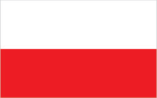
- two equal horizontal bands of white (top) and red; colors derive from the Polish emblem - a white eagle on a red field similar to the flags of Indonesia and Monaco which are red (top) and white
- note
- similar to the flags of Indonesia and Monaco which are red (top) and white
Government type
parliamentary republic
Independence
- 11 November 1918 (republic proclaimed); notable earlier dates: 966 (adoption of Christianity, traditional founding date), 1 July 1569 (Polish-Lithuanian Commonwealth created)
- 11 November 1918 (republic proclaimed); notable earlier dates
- 966 (adoption of Christianity, traditional founding date), 1 July 1569 (Polish-Lithuanian Commonwealth created)
International law organization participation
accepts compulsory ICJ jurisdiction with reservations; accepts ICCt jurisdiction
International organization participation
Arctic Council (observer), Australia Group, BIS, BSEC (observer), CBSS, CD, CE, CEI, CERN, EAPC, EBRD, ECB, EIB, ESA, EU, FAO, IAEA, IBRD, ICAO, ICC (national committees), ICCt, ICRM, IDA, IEA, IFC, IFRCS, IHO, ILO, IMF, IMO, IMSO, Interpol, IOC, IOM, IPU, ISO, ITSO, ITU, ITUC (NGOs), MIGA, MONUSCO, NATO, NEA, NSG, OAS (observer), OECD, OIF (observer), OPCW, OSCE, PCA, Schengen Convention, UN, UNCTAD, UNESCO, UNHCR, UNIDO, UNMIL, UNMISS, UNOCI, UNWTO, UPU, WCO, WFTU (NGOs), WHO, WIPO, WMO, WTO, ZC
Judicial branch
- Supreme Court or Sad Najwyzszy (consists of the president of the Supreme Court and 116 judges organized in criminal, civil, labor and social insurance, and military chambers) president of the Supreme Court nominated by the General Assembly of the Supreme Court and selected by the president of Poland; other judges nominated by the 25-member National Judiciary Council, and appointed by the president of Poland; judges appointed until retirement, usually at age 65, but tenure can be extended Constitutional Tribunal; regional and appellate courts subdivided into military, civil, criminal, labor, and family courts
- highest court(s)
- Supreme Court or Sad Najwyzszy (consists of the president of the Supreme Court and 116 judges organized in criminal, civil, labor and social insurance, and military chambers)
- judge selection and term of office
- president of the Supreme Court nominated by the General Assembly of the Supreme Court and selected by the president of Poland; other judges nominated by the 25-member National Judiciary Council, and appointed by the president of Poland; judges appointed until retirement, usually at age 65, but tenure can be extended
- subordinate courts
- Constitutional Tribunal; regional and appellate courts subdivided into military, civil, criminal, labor, and family courts
Legal system
civil law system; judicial review of legislative, administrative, and other governmental acts; constitutional law rulings of the Constitutional Tribunal are final
Legislative branch
- bicameral legislature consists of the Senate or Senat (100 seats; members directly elected in single-seat constituencies by simple majority vote to serve 4-year terms) and the Sejm (460 seats; members directly elected in multi-seat constituencies by proportional representation vote to serve 4-year terms); note - the designation National Assembly or Zgromadzenie Narodowe is only used on those rare occasions when the two houses meet jointly the German minority is exempt from the 5% threshold requirement for seats to the Sejm Senate - last held on 25 October 2015 (next to be held in October 2019); Sejm - last held on 25 October 2015 (next to be held in October 2019) Senate - percent of vote by party - NA; seats by party - PiS 62, PO 33, PSL 1, independents 4; Sejm - percent of vote by party - PiS 37.6%, PO 24.1%, K15 8.8%, N 7.6%, PSL 5.1% other 16.8%; seats by party - PiS 234, PO 138, K15 40, N 29, PSL 16, independent 2, German minority 1
- description
- bicameral legislature consists of the Senate or Senat (100 seats; members directly elected in single-seat constituencies by simple majority vote to serve 4-year terms) and the Sejm (460 seats; members directly elected in multi-seat constituencies by proportional representation vote to serve 4-year terms); note - the designation National Assembly or Zgromadzenie Narodowe is only used on those rare occasions when the two houses meet jointly
- election results
- Senate - percent of vote by party - NA; seats by party - PiS 62, PO 33, PSL 1, independents 4; Sejm - percent of vote by party - PiS 37.6%, PO 24.1%, K15 8.8%, N 7.6%, PSL 5.1% other 16.8%; seats by party - PiS 234, PO 138, K15 40, N 29, PSL 16, independent 2, German minority 1
- elections
- Senate - last held on 25 October 2015 (next to be held in October 2019); Sejm - last held on 25 October 2015 (next to be held in October 2019)
- note
- the German minority is exempt from the 5% threshold requirement for seats to the Sejm
National anthem
- "Mazurek Dabrowskiego" (Dabrowski's Mazurka) Jozef WYBICKI/traditional adopted 1927; the anthem, commonly known as "Jeszcze Polska nie zginela" (Poland Has Not Yet Perished), was written in 1797; the lyrics resonate strongly with Poles because they reflect the numerous occasions in which the nation's lands have been occupied
- lyrics/music
- Jozef WYBICKI/traditional
- name
- "Mazurek Dabrowskiego" (Dabrowski's Mazurka)
- note
- adopted 1927; the anthem, commonly known as "Jeszcze Polska nie zginela" (Poland Has Not Yet Perished), was written in 1797; the lyrics resonate strongly with Poles because they reflect the numerous occasions in which the nation's lands have been occupied
National holiday
Constitution Day, 3 May (1791)
National symbol(s)
- white eagle; national colors: white, red
- white eagle; national colors
- white, red
Political parties and leaders
Civic Platform or PO [Grzegorz SCHETYNA, chairperson; Slawomir NEUMANN, parliamentary caucus leader] Congress of the New Right or KNP [Michal MARUSIK, chairman] Democratic Left Alliance or SLD [Wlodzimierz CZARZASTY, chairman] German Minority of Lower Silesia or MNSO [Ryszard GALLA, representative] Kukiz 15 [Pawel KUKIZ; chairman, parliamentary caucus leader] Law and Justice or PiS [Jaroslaw KACZYNSKI, chairman; Ryszard TERLECKI, parliamentary caucus leader] Nowoczesna ("Modern") or N [Ryszard PETRU; chairman, parliamentary caucus leader] Polish People's Party or PSL [Wladyslaw KOSINIAK-KAMYSZ; chairman, parliamentary caucus leader] Razem (Together) [no party chair, led by nine-member management board]
Political pressure groups and leaders
All Poland Trade Union Alliance or OPZZ [Jan GUZ] (trade union) Independent Self-Governing Trade Union "Solidarity" [Piotr DUDA] Roman Catholic Church [Archbishop Wojciech POLAK, Archbishop Stanislaw GADECKI]
Suffrage
18 years of age; universal
Economy
Agriculture - products
potatoes, fruits, vegetables, wheat; poultry, eggs, pork, dairy
Budget
- $76.65 billion $87.95 billion (2015 est.)
- expenditures
- $87.95 billion (2015 est.)
- revenues
- $76.65 billion
Budget surplus (+) or deficit (-)
-2.4% of GDP (2015 est.)
Central bank discount rate
2.5% (31 December 2014) 1.5% (31 December 2013)
Commercial bank prime lending rate
4.92% (31 December 2015 est.) 6.25% (31 December 2014 est.)
Current account balance
-$2.215 billion (2015 est.) -$11.13 billion (2014 est.)
Debt - external
$332.2 billion (31 December 2015 est.) $338.6 billion (31 December 2014 est.)
Distribution of family income - Gini index
32.4 (2012) 33.7 (2008)
Economy - overview
Poland has pursued a policy of economic liberalization since 1990 and Poland's economy was the only EU country to avoid a recession through the 2008-09 economic downturn. Although EU membership and access to EU structural funds have provided a major boost to the economy since 2004, GDP per capita remains significantly below the EU average and the unemployment rate is now below the EU average. The government of Prime Minister Donald TUSK steered the Polish economy through the economic downturn by skillfully managing public finances and adopting controversial pension and tax reforms to further shore up public finances. While the Polish economy has performed well over the past five years, growth slowed in 2013 and picked back up in 2014-15. Poland’s new center-right Law and Justice government plans to introduce expansionary economic policies to spur long-term growth, but social spending programs are expected to lead to increased deficit spending over the medium term. Poland faces several challenges, which include addressing some of the remaining deficiencies in its road and rail infrastructure, business environment, rigid labor code, commercial court system, government red tape, and burdensome tax system, especially for entrepreneurs. Additional long-term challenges include diversifying Poland’s energy mix and sources of supply, strengthening investments in innovation, research, and development, and as well as stemming the outflow of educated young Poles to other EU member states, especially in light of a coming demographic contraction due to emigration, persistently low fertility rates, and the aging of the Solidarity-era baby boom generation.
Exchange rates
zlotych (PLN) per US dollar - 3.7721 (2015 est.) 3.1538 (2014 est.) 3.1538 (2013 est.) 3.26 (2012 est.) 2.9639 (2011 est.)
Exports
$190.8 billion (2015 est.) $210.7 billion (2014 est.)
Exports - commodities
machinery and transport equipment 37.8%, intermediate manufactured goods 23.7%, miscellaneous manufactured goods 17.1%, food and live animals 7.6% (2012 est.)
Exports - partners
Germany 27.1%, UK 6.8%, Czech Republic 6.6%, France 5.5%, Italy 4.8%, Netherlands 4.4% (2015)
Fiscal year
calendar year
GDP - composition, by end use
- 58.7% 18% 20.1% 0.4% 49.4% -46.6% (2015 est.)
- exports of goods and services
- 49.4%
- government consumption
- 18%
- household consumption
- 58.7%
- imports of goods and services
- -46.6% (2015 est.)
- investment in fixed capital
- 20.1%
- investment in inventories
- 0.4%
GDP - composition, by sector of origin
- 3.3% 41.1% 55.6% (2015 est.)
- agriculture
- 3.3%
- industry
- 41.1%
- services
- 55.6% (2015 est.)
GDP - per capita (PPP)
- $26,500 (2015 est.) $25,500 (2014 est.) $24,700 (2013 est.) data are in 2015 US dollars
- note
- data are in 2015 US dollars
GDP - real growth rate
3.6% (2015 est.) 3.3% (2014 est.) 1.3% (2013 est.)
GDP (official exchange rate)
$474.9 billion (2015 est.)
GDP (purchasing power parity)
- $1.005 trillion (2015 est.) $970.2 billion (2014 est.) $938.9 billion (2013 est.) data are in 2015 US dollars
- note
- data are in 2015 US dollars
Gross national saving
20.3% of GDP (2015 est.) 18.3% of GDP (2014 est.) 17.7% of GDP (2013 est.)
Household income or consumption by percentage share
- 3.3% 25.6% (2012 est.)
- highest 10%
- 25.6% (2012 est.)
- lowest 10%
- 3.3%
Imports
$188.4 billion (2015 est.) $215 billion (2014 est.)
Imports - commodities
machinery and transport equipment 38%, intermediate manufactured goods 21%, chemicals 15%, minerals, fuels, lubricants, and related materials 9% (2011 est.)
Imports - partners
Germany 27.6%, China 7.5%, Russia 7.2%, Netherlands 5.9%, Italy 5.2%, France 4.1% (2015)
Industrial production growth rate
5.4% (2015 est.)
Industries
machine building, iron and steel, coal mining, chemicals, shipbuilding, food processing, glass, beverages, textiles
Inflation rate (consumer prices)
-1% (2015 est.) 0.1% (2014 est.)
Labor force
17.76 million (2015 est.)
Labor force - by occupation
- 12.6% 30.4% 57% (2012)
- agriculture
- 12.6%
- industry
- 30.4%
- services
- 57% (2012)
Market value of publicly traded shares
$177.7 billion (31 December 2015 est.) $138.2 billion (31 December 2014 est.) $190.2 billion (31 December 2013 est.)
Population below poverty line
17.3% (2012 est.)
Public debt
- 45% of GDP (2015 est.) 43.9% of GDP (2014 est.) data cover general government debt, and includes debt instruments issued (or owned) by government entities other than the treasury; the data include treasury debt held by foreign entities, the data include subnational entities, as well as intra-governmental debt; intra-governmental debt consists of treasury borrowings from surpluses in the social funds, such as for retirement, medical care, and unemployment; debt instruments for the social funds are not sold at public auctions
- note
- data cover general government debt, and includes debt instruments issued (or owned) by government entities other than the treasury; the data include treasury debt held by foreign entities, the data include subnational entities, as well as intra-governmental debt; intra-governmental debt consists of treasury borrowings from surpluses in the social funds, such as for retirement, medical care, and unemployment; debt instruments for the social funds are not sold at public auctions
Reserves of foreign exchange and gold
$94.91 billion (31 December 2015 est.) $100.4 billion (31 December 2014 est.)
Stock of broad money
$306.7 billion (31 December 2014 est.) $318.8 billion (31 December 2013 est.)
Stock of direct foreign investment - abroad
$62.12 billion (31 December 2015 est.) $65.85 billion (31 December 2014 est.)
Stock of direct foreign investment - at home
$221.8 billion (31 December 2015 est.) $249.5 billion (31 December 2014 est.)
Stock of domestic credit
$337.4 billion (31 December 2015 est.) $348 billion (31 December 2014 est.)
Stock of narrow money
$177.4 billion (31 December 2015 est.) $172.9 billion (31 December 2014 est.)
Taxes and other revenues
16.1% of GDP (2015 est.)
Unemployment rate
10.5% (2015 est.) 12.3% (2014 est.)
Energy
Carbon dioxide emissions from consumption of energy
322 million Mt (2013 est.)
Crude oil - exports
5,162 bbl/day (2015 est.)
Crude oil - imports
532,300 bbl/day (2015 est.)
Crude oil - production
18,420 bbl/day (2015 est.)
Crude oil - proved reserves
100 million bbl (1 January 2010 es)
Electricity - consumption
142 billion kWh (2014 est.)
Electricity - exports
11 billion kWh (2014)
Electricity - from fossil fuels
89.5% of total installed capacity (2013 est.)
Electricity - from hydroelectric plants
1.5% of total installed capacity (2013 est.)
Electricity - from nuclear fuels
0% of total installed capacity (2013 est.)
Electricity - from other renewable sources
8.5% of total installed capacity (2013 est.)
Electricity - imports
14 billion kWh (2014 est.)
Electricity - installed generating capacity
36 million kW (2014 est.)
Electricity - production
150 billion kWh (2014 est.)
Electricity access
- 100% (2016)
- electrification - total population
- 100% (2016)
Natural gas - consumption
17.66 billion cu m (2014 est.)
Natural gas - exports
76 million cu m (2014 est.)
Natural gas - imports
11.82 billion cu m (2014 est.)
Natural gas - production
6.08 billion cu m (2014 est.)
Natural gas - proved reserves
81.66 billion cu m (1 January 2016 es)
Refined petroleum products - consumption
536,700 bbl/day (2015 est.)
Refined petroleum products - exports
160,100 bbl/day (2015 est.)
Refined petroleum products - imports
128,800 bbl/day (2015 est.)
Refined petroleum products - production
568,200 bbl/day (2015 est.)
Communications
Broadcast media
state-run public TV operates 2 national channels supplemented by 16 regional channels and several niche channels; privately owned entities operate several national TV networks and a number of special interest channels; many privately owned channels broadcasting locally; roughly half of all households are linked to either satellite or cable TV systems providing access to foreign television networks; state-run public radio operates 5 national networks and 17 regional radio stations; 2 privately owned national radio networks, several commercial stations broadcasting to multiple cities, and many privately owned local radio stations (2007)
Internet country code
.pl
Internet users
- 26.221 million 68% (July 2015 est.)
- percent of population
- 68% (July 2015 est.)
- total
- 26.221 million
Telephone system
- modernization of the telecommunications network has accelerated with market-based competition; fixed-line service, dominated by the former state-owned company, is dwarfed by the growth in mobile-cellular services several nation-wide networks provide mobile-cellular service; coverage is generally good; fixed-line service lags in rural areas country code - 48; international direct dialing with automated exchanges; satellite earth station - 1 with access to Intelsat, Eutelsat, Inmarsat, and Intersputnik (2015)
- domestic
- several nation-wide networks provide mobile-cellular service; coverage is generally good; fixed-line service lags in rural areas
- general assessment
- modernization of the telecommunications network has accelerated with market-based competition; fixed-line service, dominated by the former state-owned company, is dwarfed by the growth in mobile-cellular services
- international
- country code - 48; international direct dialing with automated exchanges; satellite earth station - 1 with access to Intelsat, Eutelsat, Inmarsat, and Intersputnik (2015)
Telephones - fixed lines
- 4.245 million 11 (July 2015 est.)
- subscriptions per 100 inhabitants
- 11 (July 2015 est.)
- total subscriptions
- 4.245 million
Telephones - mobile cellular
- 56.838 million 147 (July 2015 est.)
- subscriptions per 100 inhabitants
- 147 (July 2015 est.)
- total
- 56.838 million
Transportation
Airports
126 (2013)
Airports - with paved runways
- 6 (2013)
- 1,524 to 2,437 m
- 36
- 2,438 to 3,047 m
- 30
- 914 to 1,523 m
- 10
- over 3,047 m
- 5
- total
- 87
- under 914 m
- 6 (2013)
Airports - with unpaved runways
- 21 (2013)
- 1,524 to 2,437 m
- 1
- 914 to 1,523 m
- 17
- total
- 39
- under 914 m
- 21 (2013)
Civil aircraft registration country code prefix
SP (2016)
Heliports
6 (2013)
Merchant marine
- cargo 7, chemical tanker 1, passenger/cargo 1 106 (Antigua and Barbuda 2, Bahamas 34, Cyprus 24, Liberia 13, Malta 21, Saint Vincent and the Grenadines 3, Vanuatu 9) (2010)
- by type
- cargo 7, chemical tanker 1, passenger/cargo 1
- registered in other countries
- 106 (Antigua and Barbuda 2, Bahamas 34, Cyprus 24, Liberia 13, Malta 21, Saint Vincent and the Grenadines 3, Vanuatu 9) (2010)
- total
- 9
National air transport system
- 4,841,128 120,016,466 mt-km (2015)
- annual freight traffic on registered air carriers
- 120,016,466 mt-km (2015)
- annual passenger traffic on registered air carriers
- 4,841,128
- inventory of registered aircraft operated by air carriers
- 92
- number of registered air carriers
- 6
Pipelines
gas 14,198 km; oil 1,374 km; refined products 777 km (2013)
Ports and terminals
- Gdansk, Gdynia, Swinoujscie Szczecin (River Oder) Swinoujscie
- LNG terminal(s) (import)
- Swinoujscie
- major seaport(s)
- Gdansk, Gdynia, Swinoujscie
- river port(s)
- Szczecin (River Oder)
Railways
- 19,837 km 395 km 1.524-m gauge 19,442 km 1.435-m gauge (11,899 km electrified) (2014)
- broad gauge
- 395 km 1.524-m gauge
- standard gauge
- 19,442 km 1.435-m gauge (11,899 km electrified) (2014)
- total
- 19,837 km
Roadways
- 412,035 km 280,719 km (includes 2,418 km of expressways) 131,316 km (2012)
- paved
- 280,719 km (includes 2,418 km of expressways)
- total
- 412,035 km
- unpaved
- 131,316 km (2012)
Waterways
3,997 km (navigable rivers and canals) (2009)
Military and Security
Military branches
- Polish Armed Forces: Land Forces, Navy, Air and Air Defense Aviation Forces, Special Forces (2013)
- Polish Armed Forces
- Land Forces, Navy, Air and Air Defense Aviation Forces, Special Forces (2013)
Military expenditures
2% of GDP (2016) 2.27% of GDP (2015) 1.95% of GDP (2014) 1.95% of GDP (2013) 1.91% of GDP (2012) 1.83% of GDP (2011)
Military service age and obligation
18-28 years of age for male and female voluntary military service; conscription phased out in 2009-12; service obligation shortened from 12 to 9 months in 2005; women only allowed to serve as officers and noncommissioned officers (2013)
Transnational Issues
Disputes - international
as a member state that forms part of the EU's external border, Poland has implemented the strict Schengen border rules to restrict illegal immigration and trade along its eastern borders with Belarus and Ukraine
Illicit drugs
despite diligent counternarcotics measures and international information sharing on cross-border crimes, a major illicit producer of synthetic drugs for the international market; minor transshipment point for Southwest Asian heroin and Latin American cocaine to Western Europe
Refugees and internally displaced persons
- 12,304 (Russia) (2015); 71,302 applicants for forms of legal stay other than asylum (Ukraine) (2015) 10,825 (2015)
- refugees (country of origin)
- 12,304 (Russia) (2015); 71,302 applicants for forms of legal stay other than asylum (Ukraine) (2015)
- stateless persons
- 10,825 (2015)