1992 Edition
CIA World Factbook 1992 (Project Gutenberg)
Geography
Climate
temperate with cold, cloudy, moderately severe winters with frequent precipitation; mild summers with frequent showers and thundershowers
Coastline
491 km
Comparative area
slightly smaller than New Mexico
Disputes
none
Environment
plain crossed by a few north flowing, meandering streams; severe air and water pollution in south
Exclusive economic zone
200 nm
Land area
304,510 km2
Land boundaries
3,321 km total; Belarus 605 km, Czechoslovakia 1,309 km, Germany 456 km, Lithuania 91 km, Russia (Kaliningrad Oblast) 432 km, Ukraine 428 km
Land use
arable land 46%; permanent crops 1%; meadows and pastures 13%; forest and woodland 28%; other 12%; includes irrigated NEGL%
Natural resources
coal, sulfur, copper, natural gas, silver, lead, salt
Note
historically, an area of conflict because of flat terrain and the lack of natural barriers on the North European Plain
Terrain
mostly flat plain; mountains along southern border
Territorial sea
12 nm
Total area
312,680 km2
People and Society
Birth rate
14 births/1,000 population (1992)
Death rate
10 deaths/1,000 population (1992)
Ethnic divisions
Polish 97.6%, German 1.3%, Ukrainian 0.6%, Belorussian 0.5% (1990 est.)
Infant mortality rate
14 deaths/1,000 live births (1992)
Labor force
17,104,000; industry and construction 36.1%; agriculture 27.3%; trade, transport, and communications 14.8%; government and other 21.8% (1989)
Languages
Polish
Life expectancy at birth
68 years male, 76 years female (1992)
Literacy
98% (male 99%, female 98%) age 15 and over can read and write (1978)
Nationality
noun - Pole(s); adjective - Polish
Net migration rate
-1 migrant/1,000 population (1992)
Organized labor
trade union pluralism
Population
38,385,617 (July 1992), growth rate 0.4% (1992)
Religions
Roman Catholic 95% (about 75% practicing), Russian Orthodox, Protestant, and other 5%
Total fertility rate
2.0 children born/woman(1992)
Government
Administrative divisions
49 provinces (wojewodztwa, singular - wojewodztwo); Biaa Podlaska, Biaystok, Bielsko, Bydgoszcz, Chem, Ciechanow, Czestochowa, Elblag, Gdansk, Gorzow, Jelenia Gora, Kalisz, Katowice, Kielce, Konin, Koszalin, Krakow, Krosno, Legnica, Leszno, odz, omza, Lublin, Nowy Sacz, Olsztyn, Opole, Ostroteka, Pia, Piotrkow, Pock, Poznan, Przemysl, Radom, Rzeszow, Siedlce, Sieradz, Skierniewice, Supsk, Suwaki, Szczecin, Tarnobrzeg, Tarnow, Torun, Wabrzych, Warszawa, Wocawek, Wrocaw, Zamosc, Zielona Gora
Capital
Warsaw
Chief of State
President Lech WALESA (since 22 December 1990)
Communist origin or linked
- Social Democracy (SDRP, or SLD), Wlodzimierz Cimoszewicz; Polish Peasants' Party (PSL), Waldermar PAWLAK; Party X, Stanislaw Tyminski
- PSL 8%, SLD 4%; seats - (100 total)
- PSL 8, SLD 4
- SLD 11.98%, PSL 8.67%; seats - (460 total)
- SLD 60, PSL 48, Party X 3
Communists
70,000 members in the Communist successor parties (1990)
Constitution
Communist-imposed Constitution of 22 July 1952; developing a democratic Constitution
Diplomatic representation
Ambassador Kazimierz DZIEWANOWSKI; Chancery at 2640 16th Street NW, Washington, DC 20009; telephone (202) 234-3800 through 3802; there are Polish Consulates General in Chicago, Los Angeles, and New York
Executive branch
president, prime minister, Council of Ministers (cabinet)
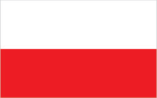
Flag
two equal horizontal bands of white (top) and red; similar to the flags of Indonesia and Monaco which are red (top) and white
Head of Government
Prime Minister Hanna SUCHOCKA (since 10 July 1992)
Independence
11 November 1918, independent republic proclaimed
Judicial branch
Supreme Court
Legal system
mixture of Continental (Napoleonic) civil law and holdover Communist legal theory; changes being gradually introduced as part of broader democratization process; no judicial review of legislative acts; has not accepted compulsory ICJ jurisdiction
Legislative branch
bicameral National Assembly (Zgromadzenie Narodowe) consists of an upper house or Senate (Senat) and a lower house or Diet (Sejm)
Long-form name
Republic of Poland
Member of
BIS, CCC, CE, CERN, CSCE, ECE, FAO, GATT, Hexagonale, IAEA, IBEC, IBRD, ICAO, ICFTU, IDA, IIB, ILO, IMF, IMO, INMARSAT, IOC, ISO, ITU, LORCS, PCA, UN, UNCTAD, UNESCO, UNDOF, UNIDO, UNIIMOG, UPU, WCL, WHO, WIPO
National holiday
Constitution Day, 3 May (1794)
Non-Communist, Non-Solidarity
- Confederation for an Independent Poland (KPN), Leszek MOCZULSKI; Beer Lovers' Party (PPPP), Janusz REWINSKI; Christian Democrats (CHD), Andrzej OWSINSKI; German Minority (MN), Henryk KROL; Western Union (KPN Front), Damian JAKUBOWSKI; RealPolitik (UPR), Janusz KORWIN-MIKKE; Democratic Party (SD), Antoni MACKIEWICZ
- KPN 4%, CHD 1%, MN 1%, local candidates 5%
- KPN 4, CHD 1, MN 1 local candidates 5
- KPN 7.50%, PPPP 3.27%, CHD 2.36%, UPR 2.25%, MN 1.70%
- KPN 46, PPPP 16, MN 7, CHD 5, Western Union 4, UPR 3, Autonomous Silesia 2, SD 1, Orthodox Election Committee 1, Committee of Women Against Hardships 1, Podhale Union 1, Wielkopolska Group 1, Wielkopolska and Lubuski Inhabitants 1
Other political or pressure groups
powerful Roman Catholic Church; Confederation for an Independent Poland (KPN), a nationalist group; Solidarity (trade union); All Poland Trade Union Alliance (OPZZ), populist program; Clubs of Catholic Intellectuals (KIKs)
President
first round held 25 November 1990, second round held 9 December 1990 (next to be held NA November 1995); results - second round Lech WALESA 74.7%, Stanislaw TYMINSKI 25.3%
Sejm
last held 27 October 1991 (next to be held no later than NA October 1995); results -
Senate
last held 27 October 1991 (next to be held no later than NA October 1995); results -
Solidarity Bloc
- Democratic Union (UD), Tadeusz MAZOWIECKI; Christian-National Union (ZCHN), Wieslaw CHRZANOWSKI; Centrum (PC), Jaroslaw KACZYNSKI; Liberal-Democratic Congress, Donald TUSK; Peasant Alliance (PL), Gabriel JANOWSKI; Solidarity Trade Union (NSZZ), Marian KRZAKLEWSKI; Solidarity Labor (SP), Ryszard BUGAJ; Christian-Democratic Party (PCHD), Pawel LACZKOWSKI; Democratic-Social Movement (RDS), Zbigniew BUJAK; Kracow Coalition in Solidarity with the President, Mieczyslaw GIL; Solidarity 80, Marian JURCZYK
- UD 21%, NSZZ 11%, ZCHN 9%, PC 9%, Liberal-Democratic Congress 6%, PL 7%, PCHD 3%, other local candidates 11%
- UD 21, NSZZ 11, ZCHN 9, Liberal-Democratic Congress 6, PL 7, PCHD 3, other local candidates 11;
- UD 12.31%, ZCHN 8.73%, PL 8.71%, Liberal-Democratic Congress 7.48%, PL 5.46%, NSZZ 5.05%, SP 2.05%, PCHD 1.11%
- UD 62, ZCHN 9, PC 44, Liberal-Democratic Congress 37, PL 28, NSZZ 27, SP 4, PCHD 4, RDS 1, Krackow Coalition in Solidarity with the President 1, Piast Agreement 1, Bydgoszcz Peasant List 1, Solidarity 80 1
Suffrage
universal at age 18
Type
democratic state
Economy
Agriculture
accounts for 15% of GDP and 27% of labor force; 75% of output from private farms, 25% from state farms; productivity remains low by European standards; leading European producer of rye, rapeseed, and potatoes; wide variety of other crops and livestock; major exporter of pork products; normally self-sufficient in food
Budget
revenues $19.5 billion; expenditures $22.4 billion, including capital expenditures of $1.5 billion (1991 est.)
Currency
Zoty (plural - Zotych); 1 Zoty (Z) = 100 groszy
Economic aid
donor - bilateral aid to non-Communist less developed countries, $2.2 billion (1954-89); note - the G-24 has pledged $8 billion in grants and credit guarantees to Poland
Electricity
31,530,000 kW capacity; 136,300 million kWh produced, 3,610 kWh per capita (1990)
Exchange rates
Zotych (z) per US$1 - 13,443 (March 1992), 10,576 (1991), 9,500 (1990), 1,439.18 (1989), 430.55 (1988), 265.08 (1987)
Exports
$12.8 billion (f.o.b., 1991 est.) commodities: machinery 23%, metals 17%, chemicals 13%, fuels 11%, food 10% (1991 est.) partners: FRG 25.1%, former USSR 15.3%, UK 7.1%, Switzerland 4.7% (1990)
External debt
$48.5 billion (January 1992); note - Poland's Western government creditors promised in 1991 to forgive 30% of Warsaw's official debt - currently $33 billion - immediately and to forgive another 20% by 1994, if Poland adheres to its IMF program
Fiscal year
calendar year
GDP
purchasing power equivalent - $162.7 billion, per capita $4,300; real growth rate -5% (1991 est.)
Illicit drugs
illicit producers of opium for domestic consumption and amphetamines for the international market; emerging as a transshipment point for illicit drugs to Western Europe
Imports
$12.9 billion (f.o.b., 1991 est.) commodities: machinery 35%, fuels 20%, chemicals 13%, food 11%, light industry 7% (1991 est.) partners: FRG 20.1%, former USSR 19.8%, Italy 7.5%, Switzerland 6.4% (1990)
Industrial production
growth rate -14% (State sector 1991 est.)
Industries
machine building, iron and steel, extractive industries, chemicals, shipbuilding, food processing, glass, beverages, textiles
Inflation rate (consumer prices)
60% (1991 est.)
Overview
Poland is undergoing a difficult transition from a Soviet-style economy - with state ownership and control of productive assets - to a market economy. On January 1, 1990, the new Solidarity-led government implemented shock therapy by slashing subsidies, decontrolling prices, tightening the money supply, stabilizing the foreign exchange rate, lowering import barriers, and restraining state sector wages. As a result, consumer goods shortages and lines disappeared, and inflation fell from 640% in 1989 to 60% in 1991. Western governments, which hold two-thirds of Poland's $48 billion external debt, pledged in 1991 to forgive half of Poland's official debt by 1994, and the private sector grew, accounting for 22% of industrial production and 40% of nonagricultural output by 1991. Production fell in state enterprises, however, and the unemployment rate climbed steadily from virtually nothing in 1989 to 11.4% in December 1991. Poland fell out of compliance with its IMF program by mid-1991, and talks with commercial creditors stalled. The increase in unemployment and the decline in living standards led to popular discontent and a change in government in January 1991 and again in December. The new government has promised selective industrial intervention, some relaxation in monetary policy, and an improved social safety net, but will be constrained by the decline in output and the growing budget deficit.
Unemployment rate
11.4% (end December 1991)
Communications
Airports
160 total, 160 usable; 85 with permanent-surface runways; 1 with runway over 3,659 m; 35 with runways 2,440-3,659 m; 65 with runways 1,220-2,439 m
Civil air
48 major transport aircraft
Highways
299,887 km total; 130,000 km improved hard surface (concrete, asphalt, stone block); 24,000 km unimproved hard surface (crushed stone, gravel); 100,000 km earth; 45,887 km other urban roads (1985)
Inland waterways
3,997 km navigable rivers and canals (1989)
Merchant marine
222 ships (1,000 GRT or over) totaling 2,851,016 GRT/4,019,531 DWT; includes 5 short-sea passenger, 79 cargo, 4 refrigerated cargo, 14 roll-on/roll-off cargo, 12 container, 1 petroleum tanker, 4 chemical tanker, 102 bulk, 1 passenger; Poland owns 1 ship of 6,333 DWT operating under Liberian registry
Pipelines
natural gas 4,500 km, crude oil 1,986 km, petroleum products 360 km (1987)
Ports
Gdansk, Gdynia, Szczecin, Swinoujscie; principal inland ports are Gliwice on Kana Gliwice, Wrocaw on the Oder, and Warsaw on the Vistula
Railroads
27,041 km total; 24,287 km 1.435-meter gauge, 397 km 1.520-meter gauge, 2,357 km narrow gauge; 8,987 km double track; 11,016 km electrified; government owned (1989)
Telecommunications
severely underdeveloped and outmoded system; cable, open wire and microwave; phone density is 10.5 phones per 100 residents (October 1990); 3.1 million subscribers; exchanges are 86% automatic (February 1990); broadcast stations - 27 AM, 27 FM, 40 (5 Soviet repeaters) TV; 9.6 million TVs; 1 satellite earth station using INTELSAT, EUTELSAT, INMARSAT and Intersputnik
Military and Security
Branches
Army, Navy, Air and Air Defense Force
Defense expenditures
exchange rate conversion - 19.2 trillion zotych, NA% of GDP (1991); note - conversion of defense expenditures into US dollars using the current exchange rate could produce misleading results
Manpower availability
males 15-49, 9,785,823; 7,696,425 fit for military service; 294,191 reach military age (19) annually