1983 Edition
CIA World Factbook 1983 (Internet Archive)
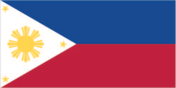
Geography
Agriculture
main crops — rice, corn, coconut, sugarcane, bananas, abaca, tobacco
Area
300,440 km2; 53% forest; 30% arable; 5% pasture; 12% other Water
Branches
constitution provides for unicameral legislature (Batasang Pambansa) and a strong executive branch under President and Prime Minister; judicial branch headed by Supreme Court with descending authority in a three-tiered system of local, regional trial, and intermediate appellate courts
Budget
(1982) revenues $6.6 billion, expenditures $8.4 billion (capital expenditures $2.5 billion), deficit $1.8 billion
Capital
Manila (de facto), Quezon City (designated)
CNP
$39 billion (1982), $760 per capita; 2.4% real growth, 1982
Coastline
about 22,540 km People
Communists
the Communist Party of the Philippines (CPP) controls about 7,500 armed insurgents; not recognized as legal party; a second Communist party, the Philippine Communist Party (PKP), has quasilegal status
Elections
Interim National Assembly serves as interim government pending regular elections scheduled for May 1984 Political parties and leaders: national parties are Marcos's New Society Party (KBL), the Liberals, Nacionalistas, and Laban; prominent regional parties include the Mindanao Alliance and the Pusyon Bisaya
Electric power
5,312,000 kW capacity (1982); 19.0 billion kWh produced (1982), 368 kWh per capita
Ethnic divisions
91.5% Christian Malay, 4% Muslim Malay, 1.5% Chinese, 3% other
Exports
$4.995 billion (f.o.b., 1982); coconut products, sugar, logs and lumber, copper concentrates, bananas, garments, nickel, electrical components, gold
Fiscal year
calendar year Communications
Fishing
catch 1.4 million metric tons (1979)
Government leader
Ferdinand Edralin MARCOS, President
Imports
$7.800 billion (f.o.b., 1982); petroleum, industrial equipment, wheat
Labor force
17.8 million (1982 est); 47% agriculture, 20% industry and commerce, 13.5% services, 10% government, 9.5% other Government
Language
Filipino (based on Tagalog) and English (both official)
Legal system
based on Spanish, Islamic, and Anglo-American law; parliamentary constitution passed 1973; constitution amended in 1981 to provide for French-style mixed presidential-parliamentary system; judicial review of legislative acts in the Supreme Court; legal education at University of the. Philippines, Ateneo de Manila University, and 71 other law schools; accepts compulsory ICJ jurisdiction, with reservations; martial law lifted in January 1981
Limits of territorial waters (claimed)
0-300 nm (under an archipelago theory, waters within straight lines joining appropriate points of outermost islands are considered internal waters; waters between these baselines and the limits described in the Treaty of Paris, 10 December 1898, the US-Spain Treaty of 7 November 1900, and the US-UK Treaty of 2 January 1930 are considered to be the territorial sea); fishing 200 nm; exclusive economic zone 200 nm
Literacy
about
Major industries
textiles, Pharmaceuticals, chemicals, wood products, food processing, electronics assembly
Major trade partners
(1981) exports — 31% US, 22% Japan; imports— 22% US, 19% Japan
Member of
ADB, ASEAN, ASPAC, Colombo Plan, ESCAP, FAO, G-77, GATT, IAEA, IBRD, ICAO, IDA, IFAD, IFC, IHO, ILO, IMF, IMO, INTELSAT, INTERPOL, IPU, IRC, ISO, ITU, UN, UNESCO, UPU, WFTU, WHO, WIPO, WMO, WTO Economy
Monetary conversion rate
14.832 oesos= US$1 (October 1983)
National holiday
Independence Day, 12 June
Nationality
noun — Filipino(s); adjective — Philippine
Official name
Republic of the Philippines
Political subdivisions
72 provinces
Population
55,528,000 (July 1984), average annual growth rate 2.3%
Railroads
total rehabilitation of 474 km 1.067-meter gauge underway; 378 km operable (1982); 34% government owned
Religion
83% Roman Catholic, 9% Protestant, 5% Muslim, 3% Buddhist and other
Suffrage
universal and compulsory
Type
republic