2023 Edition
CIA World Factbook 2023 (factbook.json @ 0d4fa4984ecb)
Introduction
Background
Ancient Peru was the seat of several prominent Andean civilizations, most notably that of the Incas whose empire was captured by Spanish conquistadors in 1533. Peru declared its independence in 1821, and remaining Spanish forces were defeated in 1824. After a dozen years of military rule, Peru returned to democratic leadership in 1980 but experienced economic problems and the growth of a violent insurgency. President Alberto FUJIMORI's election in 1990 ushered in a decade that saw a dramatic turnaround in the economy and significant progress in curtailing guerrilla activity. Nevertheless, the president's increasing reliance on authoritarian measures and an economic slump in the late 1990s generated mounting dissatisfaction with his regime, which led to his resignation in 2000. A caretaker government oversaw a new election in the spring of 2001, which installed Alejandro TOLEDO Manrique as the new head of government - Peru's first democratically elected president of indigenous ethnicity. The presidential election of 2006 saw the return of Alan GARCIA Perez who, after a disappointing presidential term from 1985 to 1990, oversaw a robust economic rebound. Former army officer Ollanta HUMALA Tasso was elected president in June 2011, and carried on the sound, market-oriented economic policies of the three preceding administrations. Poverty and unemployment levels have fallen dramatically in the last decade, and today Peru boasts one of the best performing economies in Latin America. Pedro Pablo KUCZYNSKI Godard won a very narrow presidential runoff election in June 2016. Facing impeachment after evidence surfaced of his involvement in a vote-buying scandal, President KUCZYNSKI offered his resignation on 21 March 2018. Two days later, First Vice President Martin Alberto VIZCARRA Cornejo was sworn in as president. On 30 September 2019, President VIZCARRA invoked his constitutional authority to dissolve Peru's Congress after months of battling with the body over anticorruption reforms. New congressional elections took place on 26 January 2020 resulting in the return of an opposition-led legislature. President VIZCARRA was impeached by Congress on 9 November 2020 for a second time and removed from office after being accused of corruption and mishandling of the COVID-19 pandemic. Because of vacancies in the vice-presidential positions, constitutional succession led to the President of the Peruvian Congress, Manuel MERINO, becoming the next president of Peru. His ascension to office was not well received by the population, and large protests forced his resignation on 15 November 2020. On 17 November, Francisco SAGASTI assumed the position of President of Peru after being appointed President of the Congress the previous day. Jose Pedro CASTILLO Terrones won the second round of presidential elections on 6 June 2021 and was inaugurated on 28 July.
Geography
Area
- land
- 1,279,996 sq km
- total
- 1,285,216 sq km
- water
- 5,220 sq km
Area - comparative
almost twice the size of Texas; slightly smaller than Alaska
Climate
varies from tropical in east to dry desert in west; temperate to frigid in Andes
Coastline
2,414 km
Elevation
- highest point
- Nevado Huascaran 6,746 m
- lowest point
- Pacific Ocean 0 m
- mean elevation
- 1,555 m
Geographic coordinates
10 00 S, 76 00 W
Geography - note
note 1: shares control of Lago Titicaca, world's highest navigable lake, with Bolivia; a remote slope of Nevado Mismi, a 5,316 m peak, is the ultimate source of the Amazon River note 2: Peru is one of the countries along the Ring of Fire, a belt of active volcanoes and earthquake epicenters bordering the Pacific Ocean; up to 90% of the world's earthquakes and some 75% of the world's volcanoes occur within the Ring of Firenote 3: on 19 February 1600, Mount Huaynaputina in the southern Peruvian Andes erupted in the largest volcanic explosion in South America in historical times; intermittent eruptions lasted until 5 March 1600 and pumped an estimated 16 to 32 million metric tons of particulates into the atmosphere reducing the amount of sunlight reaching the earth's surface and affecting weather worldwide; over the next two and a half years, millions died around the globe in famines from bitterly cold winters, cool summers, and the loss of crops and animalsnote 4: the southern regions of Peru and the extreme northwestern part of Bolivia are considered to be the place of origin for the common potato
Irrigated land
25,800 sq km (2012)
Land boundaries
- border countries
- Bolivia 1,212 km; Brazil 2,659 km; Chile 168 km; Colombia 1,494 km; Ecuador 1,529 km
- total
- 7,062 km
Land use
- agricultural land
- 18.8% (2018 est.)
- agricultural land: arable land
- arable land: 3.1% (2018 est.)
- agricultural land: permanent crops
- permanent crops: 1.1% (2018 est.)
- agricultural land: permanent pasture
- permanent pasture: 14.6% (2018 est.)
- forest
- 53% (2018 est.)
- other
- 28.2% (2018 est.)
Location
Western South America, bordering the South Pacific Ocean, between Chile and Ecuador
Major aquifers
Amazon Basin
Major lakes (area sq km)
- fresh water lake(s)
- Lago Titicaca (shared with Bolivia) - 8,030 sq km
Major rivers (by length in km)
Amazon river source (shared with Brazil [m]) - 6,400 kmnote – [s] after country name indicates river source; [m] after country name indicates river mouth
Major watersheds (area sq km)
Atlantic Ocean drainage: Amazon (6,145,186 sq km)
Map references
South America
Maritime claims
- continental shelf
- 200 nm
- exclusive economic zone
- 200 nm
- territorial sea
- 200 nm; note: the US does not recognize this claim
Natural hazards
earthquakes, tsunamis, flooding, landslides, mild volcanic activityvolcanism: volcanic activity in the Andes Mountains; Ubinas (5,672 m), which last erupted in 2009, is the country's most active volcano; other historically active volcanoes include El Misti, Huaynaputina, Sabancaya, and Yucamane; see note 2 under "Geography - note"
Natural resources
copper, silver, gold, petroleum, timber, fish, iron ore, coal, phosphate, potash, hydropower, natural gas
Population distribution
approximately one-third of the population resides along the desert coastal belt in the west, with a strong focus on the capital city of Lima; the Andean highlands, or sierra, which is strongly identified with the country's Amerindian population, contains roughly half of the overall population; the eastern slopes of the Andes, and adjoining rainforest, are sparsely populated
Terrain
western coastal plain (costa), high and rugged Andes in center (sierra), eastern lowland jungle of Amazon Basin (selva)
People and Society
Age structure
- 0-14 years
- 26.04% (male 4,311,243/female 4,136,849)
- 15-64 years
- 65.94% (male 10,452,598/female 10,937,233)
- 65 years and over
- 8.02% (2023 est.) (male 1,134,587/female 1,467,662)
Alcohol consumption per capita
- beer
- 3.01 liters of pure alcohol (2019 est.)
- other alcohols
- 0.01 liters of pure alcohol (2019 est.)
- spirits
- 2.26 liters of pure alcohol (2019 est.)
- total
- 5.74 liters of pure alcohol (2019 est.)
- wine
- 0.46 liters of pure alcohol (2019 est.)
Birth rate
17 births/1,000 population (2023 est.)
Child marriage
- women married by age 15
- 2%
- women married by age 18
- 14.1% (2020 est.)
Children under the age of 5 years underweight
2.1% (2021)
Contraceptive prevalence rate
77.4% (2020)
Current health expenditure
6.3% of GDP (2020)
Currently married women (ages 15-49)
51.2% (2023 est.)
Death rate
11 deaths/1,000 population (2023 est.)
Demographic profile
A sharp fertility decline in urban areas has driven overall fertility reduction in Peru. The national birth rate is about 2.2 children per woman as of 2023 and averaged 2.5 in rural areas as of 2022. Contraceptive prevalence has increased largely due to a greater use of traditional rather than modern methods. Like most other Andean countries, Peru’s opportunity to benefit from its large labor force will taper off as its dependency ratio—the ratio of dependents to working-age persons—bottoms out between 2025 and 2030. The poverty rate has climbed to 27.5% in 2022, much higher than the rate before the COVID-19 pandemic. In 2021, 51% of the population was living in moderate food insecurity; Peru is the most food insecure country in South America. School enrollment has improved, but achievement scores reflect ongoing problems with educational quality. Many poor children temporarily or permanently drop out of school to help support their families. As of 2018, 21.8% Peruvian children aged 5 to 14 were working, often putting in long hours at hazardous mining or construction sites. Peru was a country of immigration in the 19th and early 20th centuries but has become a country of emigration in the last few decades. Beginning in the 19th century, Peru brought in Asian contract laborers mainly to work on coastal plantations. Populations of Chinese and Japanese descent - among the largest in Latin America - are economically and culturally influential in Peru today. Peruvian emigration began rising in the 1980s due to an economic crisis and a violent internal conflict, but outflows have stabilized in the last few years as economic conditions have improved. Nonetheless, between 1990 and 2020 over 3 million Peruvians left the country – principally to the US, Spain, and Argentina – and did not return.
Dependency ratios
- elderly dependency ratio
- 13.1
- potential support ratio
- 7.9 (2021 est.)
- total dependency ratio
- 53
- youth dependency ratio
- 37.1
Drinking water source
- improved: rural
- rural: 82.4% of population
- improved: total
- total: 94% of population
- improved: urban
- urban: 97.2% of population
- unimproved: rural
- rural: 17.6% of population
- unimproved: total
- total: 6% of population (2020 est.)
- unimproved: urban
- urban: 2.8% of population
Education expenditures
4% of GDP (2021 est.)
Ethnic groups
Mestizo (mixed Amerindian and White) 60.2%, Amerindian 25.8%, White 5.9%, African descent 3.6%, other (includes Chinese and Japanese descent) 1.2%, unspecified 3.3% (2017 est.)
Gross reproduction rate
1.06 (2023 est.)
Hospital bed density
1.6 beds/1,000 population (2017)
Infant mortality rate
- female
- 9.7 deaths/1,000 live births
- male
- 11.9 deaths/1,000 live births
- total
- 10.8 deaths/1,000 live births (2023 est.)
Languages
- Languages
- Spanish (official) 82.9%, Quechua (official) 13.6%, Aymara (official) 1.6%, Ashaninka 0.3%, other native languages (includes a large number of minor Amazonian languages) 0.8%, other (includes foreign languages and sign language) 0.2%, none 0.1%, unspecified 0.7% (2017 est.)
- major-language sample(s)
- La Libreta Informativa del Mundo, la fuente indispensable de información básica. (Spanish)The World Factbook, the indispensable source for basic information.
Life expectancy at birth
- female
- 72.7 years
- male
- 65.4 years
- total population
- 68.9 years (2023 est.)
Literacy
- definition
- age 15 and over can read and write
- female
- 92% (2020)
- male
- 97%
- total population
- 94.5%
Major infectious diseases
- degree of risk
- very high (2023)
- food or waterborne diseases
- bacterial diarrhea, hepatitis A, and typhoid fever
- vectorborne diseases
- dengue fever, malaria, and Bartonellosis (Oroya fever)
Major urban areas - population
11.204 million LIMA (capital), 959,000 Arequipa, 904,000 Trujillo (2023)
Maternal mortality ratio
69 deaths/100,000 live births (2020 est.)
Median age
- female
- 31.1 years
- male
- 29.1 years
- total
- 30.1 years (2023 est.)
Mother's mean age at first birth
- 21.9 years (2013 est.)
- note
- note: data represents median age at first birth among women 25-49
Nationality
- adjective
- Peruvian
- noun
- Peruvian(s)
Net migration rate
-0.9 migrant(s)/1,000 population (2023 est.)
Obesity - adult prevalence rate
19.7% (2016)
Physicians density
1.37 physicians/1,000 population (2018)
Population
32,440,172 (2023 est.)
Population distribution
approximately one-third of the population resides along the desert coastal belt in the west, with a strong focus on the capital city of Lima; the Andean highlands, or sierra, which is strongly identified with the country's Amerindian population, contains roughly half of the overall population; the eastern slopes of the Andes, and adjoining rainforest, are sparsely populated
Population growth rate
0.5% (2023 est.)
Religions
Roman Catholic 60%, Christian 14.6% (includes Evangelical 11.1%, other 3.5%), other 0.3%, none 4%, unspecified 21.1% (2017 est.)
Sanitation facility access
- improved: rural
- rural: 65.3% of population
- improved: total
- total: 87.4% of population
- improved: urban
- urban: 93.6% of population
- unimproved: rural
- rural: 34.7% of population
- unimproved: total
- total: 12.6% of population (2020 est.)
- unimproved: urban
- urban: 6.4% of population
School life expectancy (primary to tertiary education)
- female
- 15 years (2017)
- male
- 15 years
- total
- 15 years
Sex ratio
- 0-14 years
- 1.04 male(s)/female
- 15-64 years
- 0.96 male(s)/female
- 65 years and over
- 0.77 male(s)/female
- at birth
- 1.05 male(s)/female
- total population
- 0.96 male(s)/female (2023 est.)
Tobacco use
- female
- 3% (2020 est.)
- male
- 13.2% (2020 est.)
- total
- 8.1% (2020 est.)
Total fertility rate
2.18 children born/woman (2023 est.)
Urbanization
- rate of urbanization
- 1.33% annual rate of change (2020-25 est.)
- urban population
- 78.9% of total population (2023)
Government
Administrative divisions
- 25 regions (regiones, singular - region) and 1 province* (provincia); Amazonas, Ancash, Apurimac, Arequipa, Ayacucho, Cajamarca, Callao, Cusco, Huancavelica, Huanuco, Ica, Junin, La Libertad, Lambayeque, Lima, Lima*, Loreto, Madre de Dios, Moquegua, Pasco, Piura, Puno, San Martin, Tacna, Tumbes, Ucayali
- note
- note: Callao, the largest port in Peru, is also referred to as a constitutional province, the only province of the Callao region
Capital
- etymology
- the word "Lima" derives from the Spanish pronunciation of "Limaq," the native name for the valley in which the city was founded in 1535; "limaq" means "talker" in coastal Quechua and referred to an oracle that was situated in the valley but which was eventually destroyed by the Spanish and replaced with a church
- geographic coordinates
- 12 03 S, 77 03 W
- name
- Lima
- time difference
- UTC-5 (same time as Washington, DC, during Standard Time)
Citizenship
- citizenship by birth
- yes
- citizenship by descent only
- yes
- dual citizenship recognized
- yes
- residency requirement for naturalization
- 2 years
Constitution
- amendments
- proposed by Congress, by the president of the republic with the approval of the Council of Ministers or by petition of at least 0.3% of voters; passage requires absolute majority approval by the Congress membership, followed by approval in a referendum; a referendum is not required if Congress approves the amendment by greater than two-thirds majority vote in each of two successive sessions; amended many times, last in 2021
- history
- several previous; latest promulgated 29 December 1993, enacted 31 December 1993
Country name
- conventional long form
- Republic of Peru
- conventional short form
- Peru
- etymology
- exact meaning is obscure, but the name may derive from a native word "biru" meaning "river"
- local long form
- República del Peru
- local short form
- Peru
Diplomatic representation from the US
- chief of mission
- Ambassador (vacant); Chargé d’Affaires John T. McNAMARA (since 8 September 2023)
- email address and website
- LimaACS@state.govhttps://pe.usembassy.gov/
- embassy
- Avenida La Encalada, Cuadra 17 s/n, Surco, Lima 33
- FAX
- [51] (1) 618-2724
- mailing address
- 3230 Lima Place, Washington DC 20521-3230
- telephone
- [51] (1) 618-2000
Diplomatic representation in the US
- chancery
- 1700 Massachusetts Avenue NW, Washington, DC 20036
- chief of mission
- Ambassador Gustavo Adolfo MEZA-CUADRA Velásquez (since 30 June 2023)
- consulate(s) general
- Atlanta, Boston, Chicago, Dallas, Denver, Hartford (CT), Houston, Los Angeles, Miami, New York, Paterson (NJ), San Francisco, Washington DC
- email address and website
- Webadmin@embassyofperu.usEmbassy of Peru in the United States - E-United States - Platform of the Peruvian State (www.gob.pe)
- FAX
- [1] (202) 659-8124
- telephone
- [1] (202) 833-9860
Executive branch
- cabinet
- Council of Ministers appointed by the president
- chief of state
- President Dina Ercilia BOLUARTE Zegarra (since 7 December 2022); first vice president (vacant); second vice president (vacant); note - the president is both chief of state and head of government
- election results
- 2021: Jose Pedro CASTILLO Terrones elected president in second round; percent of vote in first round - Jose Pedro CASTILLO Terrones (PL) 18.9%, Keiko Sofia FUJIMORI Higuchi (FP) 13.4%, Rafael LOPEZ ALIAGA Cazorla (RP) 11.8%, Hernando DE SOTO Polar (Social Integration Party) 11.6%, Yonhy LESCANO Ancieta (AP) 9.1%, Veronika MENDOZA Frisch (JP) 7.9%, Cesar ACUNA Peralta (APP) 6%, George FORSYTH Sommer (VN) 5.7%, Daniel Belizario URRESTI Elera (PP) 5.6%, other 10%; percent of vote second round - Jose Pedro CASTILLO Terrones (PL) 50.1%, Keiko Sofia FUJIMORI Higuchi (FP) 49.9%2016: Pedro Pablo KUCZYNSKI Godard elected president in second round; percent of vote in first round - Keiko FUJIMORI Higuchi (FP) 39.9%, Pedro Pablo KUCZYNSKI Godard (PPK) 21.1%, Veronika MENDOZA (FA) 18.7%, Alfredo BARNECHEA (AP) 7%, Alan GARCIA (APRA) 5.8%, other 7.5%; percent of vote in second round - Pedro Pablo KUCZYNSKI Godard 50.1%, Keiko FUJIMORI Higuchi 49.9%
- elections/appointments
- president directly elected by absolute majority popular vote in 2 rounds if needed for a 5-year term (eligible for nonconsecutive terms); election last held on 11 April 2021 with a runoff on 6 June 2021 (next to be held in April 2026)
- head of government
- President Dina Ercilia BOLUARTE Zegarra (since 7 December 2022); first vice president (vacant); second vice president (vacant)
- note
- note 1: First Vice President Dina Ercilia BOLUARTE Zegarra assumed the office of the president on 7 December 2022 after President Jose Pedro CASTILLO Terrones was impeached and arrested; BOLUARTE is the first woman to become president of Peru note 2: Prime Minister Alberto OTAROLA Penaranda (since 21 December 2022) does not exercise executive power; this power rests with the president
Flag description
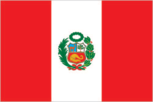
three equal, vertical bands of red (hoist side), white, and red with the coat of arms centered in the white band; the coat of arms features a shield bearing a vicuna (representing fauna), a cinchona tree (the source of quinine, signifying flora), and a yellow cornucopia spilling out coins (denoting mineral wealth); red recalls blood shed for independence, white symbolizes peace
Government type
presidential republic
Independence
28 July 1821 (from Spain)
International law organization participation
accepts compulsory ICJ jurisdiction with reservations; accepts ICCt jurisdiction
International organization participation
APEC, BIS, CAN, CD, CELAC, EITI (compliant country), FAO, G-24, G-77, IADB, IAEA, IBRD, ICAO, ICC (NGOs), ICCt, ICRM, IDA, IFAD, IFC, IFRCS, IHO, ILO, IMF, IMO, IMSO, Interpol, IOC, IOM, IPU, ISO, ITSO, ITU, ITUC (NGOs), LAES, LAIA, Mercosur (associate), MIGA, MINUSTAH, MONUSCO, NAM, OAS, OPANAL, OPCW, Pacific Alliance, PCA, PROSUR, SICA (observer), UN, UNAMID, UNASUR, UNCTAD, UNESCO, UNHCR, UNIDO, Union Latina, UNISFA, UNMISS, UNOCI, UNOOSA, UN Security Council (temporary), UNWTO, UPU, WCO, WFTU (NGOs), WHO, WIPO, WMO, WTO
Judicial branch
- highest court(s)
- Supreme Court (consists of 16 judges and divided into civil, criminal, and constitutional-social sectors)
- judge selection and term of office
- justices proposed by the National Board of Justice (a 7-member independent body), nominated by the president, and confirmed by the Congress; justices can serve until mandatory retirement at age 70
- subordinate courts
- Court of Constitutional Guarantees; Superior Courts or Cortes Superiores; specialized civil, criminal, and mixed courts; 2 types of peace courts in which professional judges and selected members of the local communities preside
Legal system
civil law system
Legislative branch
- description
- unicameral Congress of the Republic of Peru or Congreso de la Republica del Peru (130 seats; members directly elected in multi-seat constituencies by closed party-list proportional representation vote to serve single 5-year terms)
- election results
- percent of vote by party/coalition - NA; seats by party/coalition - Free Peru 32, Popular Force 24, AP 15, APP 15, Avanza Pais 10, Popular Renewal 9, Democratic Peru 7, We Are Peru 5, We Can Peru 5, JP 5, Purple Party 3; composition - men 78, women 52, percent of women 40%
- elections
- last held on 11 April 2021 (next to be held in April 2026)
National anthem
- lyrics/music
- Jose DE LA TORRE Ugarte/Jose Bernardo ALZEDO
- name
- "Himno Nacional del Peru" (National Anthem of Peru)
- note
- note: adopted 1822; the song won a national anthem contest
National heritage
- selected World Heritage Site locales
- Cuzco (c); Machu Picchu (m); Chavin (c); Historic Lima (c); Huascarán National Park (n); Chan Chan (c); Manú National Park (n); Lines and Geoglyphs of Nazca (c); Rio Abiseo National Park (m); Historic Arequipa (c); Sacred City of Caral-Supe (c); Qhapaq Ñan/Andean Road System (c)
- total World Heritage Sites
- 13 (9 cultural, 2 natural, 2 mixed)
National holiday
Independence Day, 28-29 July (1821)
National symbol(s)
vicuna (a camelid related to the llama); national colors: red, white
Political parties and leaders
Advance the Nation (Avanza Pais) [Aldo BORRERO Zeta]Alliance for Progress (Alianza para el Progreso) or APP [Cesar ACUNA Peralta] Broad Front (Frente Amplio) or FA [Marco ARANA]Free Peru (Peru Libre) or PL [Vladimir CERRON Rojas]Front for Hope (Frente Esperanza) [Fernando OLIVERA Vega]National Victory (Victoria Nacional) or VN [George FORSYTH Sommer]Popular Action (Accion Popular) or AP [Mesias GUEVARA Amasifuen]Popular Force (Fuerza Popular) or FP [Keiko FUJIMORI Higuchi]Popular Renewal (Renovacion Popular) or RP [Rafael LOPEZ ALIAGA]Purple Party (Partido Morado) [Luis DURAN Rojo]Social Integration Party (Avanza Pais - Partido de Integracion Social) [Aldo BORRERO]Together For Peru (Juntos por el Peru) or JP [Robert SANCHEZ Palomino]We Are Peru (Somos Peru) of SP [Patricia LI]We Can Peru (Podemos Peru) or PP [Jose Leon LUNA Galvez]
Suffrage
18 years of age; universal and compulsory until the age of 70
Economy
Agricultural products
sugar cane, potatoes, rice, plantains, milk, poultry, maize, cassava, oil palm fruit, grapes
Average household expenditures
- on alcohol and tobacco
- 2.4% of household expenditures (2018 est.)
- on food
- 26.3% of household expenditures (2018 est.)
Budget
- expenditures
- $49.134 billion (2019 est.)
- revenues
- $45.983 billion (2019 est.)
Budget surplus (+) or deficit (-)
-3.1% (of GDP) (2017 est.)
Credit ratings
- Fitch rating
- BBB+ (2013)
- Moody's rating
- A3 (2014)
- note
- note: The year refers to the year in which the current credit rating was first obtained.
- Standard & Poors rating
- BBB+ (2013)
Current account balance
- Current account balance 2019
- -$1.68 billion (2019 est.)
- Current account balance 2020
- $2.398 billion (2020 est.)
- Current account balance 2021
- -$5.273 billion (2021 est.)
Debt - external
- Debt - external 2018
- $75.467 billion (2018 est.)
- Debt - external 2019
- $81.333 billion (2019 est.)
Economic overview
upper middle-income South American economy; hit hard by political instability and COVID-19 but rebounding quickly; second-largest cocaine producer; current account balance improving; persistent income inequality; diversified exporter
Exchange rates
- Currency
- nuevo sol (PEN) per US dollar -
- Exchange rates 2017
- 3.26 (2017 est.)
- Exchange rates 2018
- 3.287 (2018 est.)
- Exchange rates 2019
- 3.337 (2019 est.)
- Exchange rates 2020
- 3.495 (2020 est.)
- Exchange rates 2021
- 3.881 (2021 est.)
Exports
- Exports 2019
- $54.676 billion (2019 est.)
- Exports 2020
- $45.624 billion (2020 est.) note: data are in current year dollars
- Exports 2021
- $66.098 billion (2021 est.) note: data are in current year dollars
Exports - commodities
copper, gold, refined petroleum, zinc, fishmeal, tropical fruits, lead, iron, molybdenum (2019)
Exports - partners
China 29%, United States 12%, Canada 5%, South Korea 5%, Switzerland 5% (2019)
Fiscal year
calendar year
GDP - composition, by end use
- exports of goods and services
- 24% (2017 est.)
- government consumption
- 11.7% (2017 est.)
- household consumption
- 64.9% (2017 est.)
- imports of goods and services
- -22% (2017 est.)
- investment in fixed capital
- 21.7% (2017 est.)
- investment in inventories
- -0.2% (2017 est.)
GDP - composition, by sector of origin
- agriculture
- 7.6% (2017 est.)
- industry
- 32.7% (2017 est.)
- services
- 59.9% (2017 est.)
GDP (official exchange rate)
$230.707 billion (2019 est.)
Gini Index coefficient - distribution of family income
- Gini Index coefficient - distribution of family income 2020
- 43.8 (2020 est.)
Household income or consumption by percentage share
- highest 10%
- 36.1% (2010 est.)
- lowest 10%
- 1.4%
Imports
- Imports 2019
- $51.778 billion (2019 est.)
- Imports 2020
- $42.093 billion (2020 est.) note: data are in current year dollars
- Imports 2021
- $58.611 billion (2021 est.) note: data are in current year dollars
Imports - commodities
refined petroleum, crude petroleum, cars, broadcasting equipment, delivery trucks (2019)
Imports - partners
China 24%, United States 22%, Brazil 6% (2019)
Industrial production growth rate
16.44% (2021 est.)
Industries
mining and refining of minerals; steel, metal fabrication; petroleum extraction and refining, natural gas and natural gas liquefaction; fishing and fish processing, cement, glass, textiles, clothing, food processing, beer, soft drinks, rubber, machinery, electrical machinery, chemicals, furniture
Inflation rate (consumer prices)
- Inflation rate (consumer prices) 2019
- 2.25% (2019 est.)
- Inflation rate (consumer prices) 2020
- 2% (2020 est.)
- Inflation rate (consumer prices) 2021
- 4.27% (2021 est.)
- note
- note: data are for metropolitan Lima, annual average
Labor force
- 18.352 million (2021 est.)
- note
- note: individuals older than 14 years of age
Population below poverty line
20.2% (2019 est.)
Public debt
- note
- note: data cover general government debt, and includes debt instruments issued by government entities other than the treasury; the data exclude treasury debt held by foreign entities; the data include debt issued by subnational entities
- Public debt 2018
- 25.7% of GDP (2018 est.)
- Public debt 2019
- 26.54% of GDP (2019 est.)
- Public debt 2020
- 34.67% of GDP (2020 est.)
Real GDP (purchasing power parity)
- note
- note: data are in 2017 dollars
- Real GDP (purchasing power parity) 2019
- $418.03 billion (2019 est.)
- Real GDP (purchasing power parity) 2020
- $372.245 billion (2020 est.)
- Real GDP (purchasing power parity) 2021
- $421.937 billion (2021 est.)
Real GDP growth rate
- Real GDP growth rate 2019
- 2.24% (2019 est.)
- Real GDP growth rate 2020
- -10.95% (2020 est.)
- Real GDP growth rate 2021
- 13.35% (2021 est.)
Real GDP per capita
- note
- note: data are in 2017 dollars
- Real GDP per capita 2019
- $12,700 (2019 est.)
- Real GDP per capita 2020
- $11,200 (2020 est.)
- Real GDP per capita 2021
- $12,500 (2021 est.)
Reserves of foreign exchange and gold
- Reserves of foreign exchange and gold 31 December 2018
- $60.333 billion (31 December 2018 est.)
- Reserves of foreign exchange and gold 31 December 2019
- $67.711 billion (31 December 2019 est.)
- Reserves of foreign exchange and gold 31 December 2020
- $74.779 billion (31 December 2020 est.)
Taxes and other revenues
13.2% (of GDP) (2020 est.)
Unemployment rate
- note
- note: data are for metropolitan Lima; widespread underemployment
- Unemployment rate 2019
- 3.38% (2019 est.)
- Unemployment rate 2020
- 7.18% (2020 est.)
- Unemployment rate 2021
- 4.83% (2021 est.)
Youth unemployment rate (ages 15-24)
- female
- 13.2%
- male
- 9.2%
- total
- 11.2% (2021 est.)
Energy
Carbon dioxide emissions
- from coal and metallurgical coke
- 1.171 million metric tonnes of CO2 (2019 est.)
- from consumed natural gas
- 18.706 million metric tonnes of CO2 (2019 est.)
- from petroleum and other liquids
- 35.119 million metric tonnes of CO2 (2019 est.)
- total emissions
- 54.996 million metric tonnes of CO2 (2019 est.)
Coal
- consumption
- 396,000 metric tons (2020 est.)
- exports
- 252,000 metric tons (2020 est.)
- imports
- 262,000 metric tons (2020 est.)
- production
- 696,000 metric tons (2020 est.)
- proven reserves
- 102 million metric tons (2019 est.)
Electricity
- consumption
- 49,121,370,000 kWh (2019 est.)
- exports
- 0 kWh (2019 est.)
- imports
- 60 million kWh (2019 est.)
- installed generating capacity
- 15.34 million kW (2020 est.)
- transmission/distribution losses
- 6.408 billion kWh (2019 est.)
Electricity access
- electrification - rural areas
- 83.5% (2021)
- electrification - total population
- 95.6% (2021)
- electrification - urban areas
- 98.9% (2021)
- population without electricity
- (2020) less than 1 million
Electricity generation sources
- biomass and waste
- 1.1% of total installed capacity (2020 est.)
- fossil fuels
- 38.5% of total installed capacity (2020 est.)
- geothermal
- 0% of total installed capacity (2020 est.)
- hydroelectricity
- 55.4% of total installed capacity (2020 est.)
- nuclear
- 0% of total installed capacity (2020 est.)
- solar
- 1.5% of total installed capacity (2020 est.)
- tide and wave
- 0% of total installed capacity (2020 est.)
- wind
- 3.5% of total installed capacity (2020 est.)
Energy consumption per capita
- Total energy consumption per capita 2019
- 36.465 million Btu/person (2019 est.)
Natural gas
- consumption
- 8,278,048,000 cubic meters (2019 est.)
- exports
- 5.446 billion cubic meters (2019 est.)
- imports
- 0 cubic meters (2021 est.)
- production
- 12,079,211,000 cubic meters (2020 est.)
- proven reserves
- 300.158 billion cubic meters (2021 est.)
Petroleum
- crude oil and lease condensate exports
- 6,500 bbl/day (2018 est.)
- crude oil and lease condensate imports
- 112,900 bbl/day (2018 est.)
- crude oil estimated reserves
- 858.9 million barrels (2021 est.)
- refined petroleum consumption
- 265,500 bbl/day (2019 est.)
- total petroleum production
- 122,500 bbl/day (2021 est.)
Refined petroleum products - exports
62,640 bbl/day (2015 est.)
Refined petroleum products - imports
65,400 bbl/day (2015 est.)
Refined petroleum products - production
166,600 bbl/day (2015 est.)
Communications
Broadband - fixed subscriptions
- subscriptions per 100 inhabitants
- 9 (2020 est.)
- total
- 3.044 million (2020 est.)
Broadcast media
10 major TV networks of which only one, Television Nacional de Peru, is state owned; multi-channel cable TV services are available; in excess of 5,000 radio stations including a substantial number of indigenous language stations (2021)
Internet country code
.pe
Internet users
- percent of population
- 71% (2021 est.)
- total
- 24.14 million (2021 est.)
Telecommunication systems
- domestic
- fixed-line teledensity is 7 per 100 persons; mobile-cellular teledensity is 128 telephones per 100 persons (2021)
- general assessment
- after suffering a sharp retraction in the number of subscriptions and revenue during 2020 due to the pandemic, Peru’s telecom sector managed to stage a small recovery in the first half of 2021; it will likely be two to three years before penetration rates return to the peak levels last seen in 2018; this is especially true given the overwhelming influence of mobile on Peru’s telecommunications market, which now commands almost 95% of all connections; Peru’s fixed-line teledensity continued its slow dropping below 7% at the end of 2021; investment in network infrastructure is mainly focused on rolling out fiber cable for fixed broadband services in (mainly) urban areas; fixed broadband services inched higher to reach 8.4% at the end of 2020, a positive result that reflected the shift to working from home during enforced lock downs at the start of the year; yet Peru has a relatively low level of computer use, and prices for fixed broadband services are among the highest in Latin America; the overwhelmingly preferred internet access platform will remain the smartphone, with a further 8.6% growth in the number of mobile broadband subscriptions expected in 2021 (2021)
- international
- country code - 51; landing points for the SAM-1, IGW, American Movil-Telxius, SAC and PAN-AM submarine cable systems that provide links to parts of Central and South America, the Caribbean, and US; satellite earth stations - 2 Intelsat (Atlantic Ocean) (2019)
Telephones - fixed lines
- subscriptions per 100 inhabitants
- 7 (2021 est.)
- total subscriptions
- 2,266,025 (2021 est.)
Telephones - mobile cellular
- subscriptions per 100 inhabitants
- 128 (2021 est.)
- total subscriptions
- 43,129,394 (2021 est.)
Transportation
Airports
191 (2021)
Airports - with paved runways
- 59
- note
- note: paved runways have a concrete or asphalt surface but not all have facilities for refueling, maintenance, or air traffic control; the length of a runway required for aircraft to safely operate depends on a number of factors including the type of aircraft, the takeoff weight (including passengers, cargo, and fuel), engine types, flap settings, landing speed, elevation of the airport, and average maximum daily air temperature; paved runways can reach a length of 5,000 m (16,000 ft.), but the “typical” length of a commercial airline runway is between 2,500-4,000 m (8,000-13,000 ft.)
Airports - with unpaved runways
- 132
- note
- note: unpaved runways have a surface composition such as grass or packed earth and are most suited to the operation of light aircraft; unpaved runways are usually short, often less than 1,000 m (3,280 ft.) in length; airports with unpaved runways often lack facilities for refueling, maintenance, or air traffic control
Civil aircraft registration country code prefix
OB
Heliports
5 (2021)
Merchant marine
- by type
- general cargo 1, oil tanker 8, other 92
- total
- 101 (2022)
National air transport system
- annual freight traffic on registered air carriers
- 313.26 million (2018) mt-km
- annual passenger traffic on registered air carriers
- 17,758,527 (2018)
- inventory of registered aircraft operated by air carriers
- 62
- number of registered air carriers
- 6 (2020)
Pipelines
786 km extra heavy crude, 1,526 km gas, 679 km liquid petroleum gas, 1,106 km oil, 15 km refined products (2022)
Ports and terminals
- container port(s) (TEUs)
- Balboa (3,563,432); Callao (2,486,425) (2021)
- major seaport(s)
- Callao, Matarani, Paita
- oil terminal(s)
- Conchan oil terminal, La Pampilla oil terminal
- river port(s)
- Iquitos, Pucallpa, Yurimaguas (Amazon)
Railways
- narrow gauge
- 124 km (2014) 0.914-m gauge
- standard gauge
- 1,730.4 km (2014) 1.435-m gauge (34 km electrified)
- total
- 1,854.4 km (2017)
Roadways
- note
- note: includes 27,109 km of national roads (21,434 km paved), 247,505 km of departmental roads (3,623 km paved), and 113,857 km of local roads (1,858 km paved)
- paved
- 18,699 km
- total
- 18,699 km (2018)
Waterways
8,808 km (2011) (8,600 km of navigable tributaries on the Amazon River system and 208 km on Lago Titicaca)
Military and Security
Military - note
the Peruvian Armed Forces (FAP) are responsible for external security in addition to some domestic security responsibilities in designated emergency areas and in exceptional circumstances; key areas of focus include counterinsurgency, counternarcotics, disaster relief, and maritime security operations; the FAP trains regularly and participates in both bilateral and multinational exercises; it has contributed to UN missions since 1958 and has ties to regional militaries, particularly Colombia, as well as those of numerous other countries such as China, Russia, Spain, and the US; the FAP’s last external conflict was a brief border war with Ecuador in 1995; the FAP supported the police during anti-government protests in early 2023 and was accused of human rights violations the Joint Command of the Armed Forces of Peru (Comando Conjunto de las Fuerzas Armadas del Perú or CCFFAA) has responsibility for the planning, preparation, coordination, and direction of the military’s operations; the CCFFAA has oversight over commands for air, air defense, cyber, maritime, and special operations, as well as five regional commands (Amazonas, central, north, south, and Ucayali) and a Special Command of the Valley of the Apurimac, Ene, and Mantaro rivers (CE-VRAEM); CE-VRAEM is responsible for combating the remnants of the Shining Path terrorist group (aka Sendero Luminoso; see Appendix T) and includes several thousand air, ground, naval, police, and special forces personnel; the FAP also provides aircraft, vehicles, and logistical support to the command the Army was officially established in 1821 with the formation of the Peruvian Guard Legion; it has five regionally based divisions comprised of about 20 combat brigades, which include a mix of armored, artillery, jungle infantry, light infantry, mechanized cavalry, and special forces; the Army also has an aviation brigade and a multi-purpose support brigade designed in large part to provide assistance during natural disasters; the Navy, also established in 1821, includes the Coast Guard; it has undertaken efforts to modernize since the 2000s; the Navy’s warships include seven frigates, 15 corvettes and patrol ships, and six attack submarines; it also has a flotilla of river gunboats, plus naval aviation and a marine force comprised of amphibious infantry, light infantry, jungle infantry, and commandos; the Air Force, established in the 1920s, has several squadrons of French-, Russian-, and US-made fighters, multirole fighters, and fixed-wing ground attack aircraft, as well as attack helicopters (2023)
Military and security forces
Armed Forces of Peru (Fuerzas Armadas del Perú or FAP): Peruvian Army (Ejercito del Peru), Peruvian Navy (Marina de Guerra del Peru, MGP, includes naval infantry and Coast Guard), Air Force of Peru (Fuerza Aerea del Peru, FAP)Ministry of the Interior (Ministerio del Interior): Peruvian National Police (Policía Nacional del Perú, PNP) (2023)
Military and security service personnel strengths
information varies; approximately 95,000 active-duty personnel (60,000 Army; 25,000 Navy, including about 4,000 naval infantry and 1,000 Coast Guard; 10,000 Air Force) (2023)
Military deployments
225 Central African Republic (MINUSCA) (2023)
Military equipment inventories and acquisitions
the military's inventory is a mix of mostly older equipment from a wide variety of suppliers, including Brazil, Europe, Russia/the former Soviet Union, and the US; in recent years, it has received some more modern weapons systems from more than a dozen countries with South Korea as the leading supplier (2023)
Military expenditures
- Military Expenditures 2018
- 1.2% of GDP (2018 est.)
- Military Expenditures 2019
- 1.2% of GDP (2019 est.)
- Military Expenditures 2020
- 1.2% of GDP (2020 est.)
- Military Expenditures 2021
- 1.1% of GDP (2021 est.)
- Military Expenditures 2022
- 1.1% of GDP (2022 est.)
Military service age and obligation
- 18-30 years of age for voluntary military service (12 months); no conscription (abolished in 1999) (2023)
- note
- note: as of 2019, women made up about 10% of the active duty military
Transnational Issues
Disputes - international
Peru-Bolivia: Peru rejects Bolivia's claim to restore maritime access through a sovereign corridor through Chile along the Peruvian border Peru-Brazil: none identified Peru-Chile: Bolivia continues to press for a sovereign corridor to the Pacific Ocean; any concession Chile makes to Bolivia to grant them a sovereign corridor requires approval by Peru under the terms of their treaty; in January 2018, the International Court of Justice ruled that Chile is not legally obligated to negotiate a sovereign corridor to the Pacific Ocean with Bolivia Peru-Chile-Ecuador: Chile and Ecuador rejected Peru's November 2005 unilateral legislation to shift the axis of their joint treaty-defined maritime boundaries along the parallels of latitude to equidistance lines out to 200 nautical miles, which would give Peru 37,900 square kilometers of water Peru-Colombia: organized illegal narcotics operations in Colombia have penetrated Peru's shared border; problems also include cross border illegal migration, human trafficking, and contraband smuggling Peru-Ecuador: in 1999, Tiwinza memorial park was created on lands that remains sovereign Peruvian territory, but Ecuador has the right to maintain and administer it in perpetuity
Illicit drugs
world’s second-largest producer of cocaine and coca (after Colombia), with approximately 84,400 hectares (ha) under cultivation in 2021; Peruvian cocaine is trafficked throughout South America for shipment to Europe, East Asia, Mexico, and the United States; major importer of precursor chemicals for cocaine production; growing domestic drug consumption problem; a major source of precursor or essential chemicals used in the production of illicit narcotics
Refugees and internally displaced persons
- IDPs
- 73,000 (civil war from 1980-2000; most IDPs are indigenous peasants in Andean and Amazonian regions; as of 2011, no new information on the situation of these IDPs) (2022)
- refugees (country of origin)
- 1,518,102 (Venezuela) (economic and political crisis; includes Venezuelans who have claimed asylum, are recognized as refugees, or have received alternative legal stay) (2023)
Space
Space agency/agencies
National Aerospace Research and Development Commission (Comisión Nacional de Investigación y Desarrollo Aeroespacia, CONIDA; established 1974); National Satellite Imagery Operations Center (Centro Nacional de Operaciones de Imágenes Satelitales, CONIS; established 2006) (2023)
Space launch site(s)
Punta Lobos Rocket Range (Chilca, Huancayo; used by foreign partners for scientific sounding rocket launches (1970s-1990s; the US used the site for scientific launches in 1975 and 1983) (2023)
Space program overview
- has a small space program focused on acquiring satellites, applying space applications such as data satellite imagery, and building small rockets; has built a small science/technology satellite; operates satellites and processes satellite imagery data; builds and launches sounding rockets with goal of developing a satellite/space launch vehicle (SLV); researching, developing, and acquiring technologies for manufacturing satellites and satellite payloads with a focus on remote sensing (RS) capabilities; member of Latin American and Caribbean Space Agency (ALCE); cooperates with a variety of foreign space agencies and industries, including those of Brazil, China, the European Space Agency and individual member states (particularly France and Germany), India, Russia, South Korea, Thailand, and the US, as well as signatories of the Latin American and Caribbean Space Agency (ALCE) (2023)
- note
- note: further details about the key activities, programs, and milestones of the country’s space program, as well as government spending estimates on the space sector, appear in Appendix S
Terrorism
Terrorist group(s)
- Shining Path (Sendero Luminoso)
- note
- note: details about the history, aims, leadership, organization, areas of operation, tactics, targets, weapons, size, and sources of support of the group(s) appear(s) in Appendix-T
Environment
Air pollutants
- carbon dioxide emissions
- 57.41 megatons (2016 est.)
- methane emissions
- 30.17 megatons (2020 est.)
- particulate matter emissions
- 29.07 micrograms per cubic meter (2019 est.)
Climate
varies from tropical in east to dry desert in west; temperate to frigid in Andes
Environment - current issues
deforestation (some the result of illegal logging); overgrazing leading to soil erosion; desertification; air pollution in Lima; pollution of rivers and coastal waters from municipal and mining wastes; overfishing
Environment - international agreements
- party to
- Antarctic-Environmental Protection, Antarctic-Marine Living Resources, Antarctic Treaty, Biodiversity, Climate Change, Climate Change-Kyoto Protocol, Climate Change-Paris Agreement, Desertification, Endangered Species, Hazardous Wastes, Marine Dumping-London Convention, Marine Dumping-London Protocol, Nuclear Test Ban, Ozone Layer Protection, Ship Pollution, Tropical Timber 2006, Wetlands, Whaling
- signed, but not ratified
- none of the selected agreements
Land use
- agricultural land
- 18.8% (2018 est.)
- agricultural land: arable land
- arable land: 3.1% (2018 est.)
- agricultural land: permanent crops
- permanent crops: 1.1% (2018 est.)
- agricultural land: permanent pasture
- permanent pasture: 14.6% (2018 est.)
- forest
- 53% (2018 est.)
- other
- 28.2% (2018 est.)
Major aquifers
Amazon Basin
Major lakes (area sq km)
- fresh water lake(s)
- Lago Titicaca (shared with Bolivia) - 8,030 sq km
Major rivers (by length in km)
Amazon river source (shared with Brazil [m]) - 6,400 kmnote – [s] after country name indicates river source; [m] after country name indicates river mouth
Major watersheds (area sq km)
Atlantic Ocean drainage: Amazon (6,145,186 sq km)
Revenue from coal
0% of GDP (2018 est.)
Revenue from forest resources
0.12% of GDP (2018 est.)
Total renewable water resources
1.88 trillion cubic meters (2020 est.)
Total water withdrawal
- agricultural
- 32.8 billion cubic meters (2020 est.)
- industrial
- 3.51 billion cubic meters (2020 est.)
- municipal
- 2.24 billion cubic meters (2020 est.)
Urbanization
- rate of urbanization
- 1.33% annual rate of change (2020-25 est.)
- urban population
- 78.9% of total population (2023)
Waste and recycling
- municipal solid waste generated annually
- 8,356,711 tons (2014 est.)
- municipal solid waste recycled annually
- 334,268 tons (2012 est.)
- percent of municipal solid waste recycled
- 4% (2012 est.)