1984 Edition
CIA World Factbook 1984 (Internet Archive)
Geography
Agriculture
- main crops — oilseeds, cotton, wheat, manioc, sweet potatoes, tobacco, corn, rice, sugarcane; self-sufficient in most foods
- main crops — wheat, potatoes, beans, rice, barley, coffee, cotton, sugarcane; imports — wheat, meat, lard and oils, rice, corn
Aid
economic bilateral commitments, US (FY70-82) $148 million, other Western countries, ODA and OOF (1970-81) $360 million; military commitments (FY70-82), US $18 million
Airfields
- 933 total, 785 usable; 5 with permanent-surface runways; 1 with runway 2,440-3,659 m, 29 with runways 1,2202,439 m
- 240 total, 231 usable; 29 with permanent-surface runways; 2 with runways over 3,659 m, 24 with runways 2,4403,659 m, 41 with runways 1,220-2,439 m
Area
Member o/:FAO,G-77, 1 ADB, IAEA, IBRD, ICAO, ICO, IDA, IDE— Inter-American Development Bank, IFAD, IFC, ILO, IMF, INTELSAT, INTERPOL, IPU, IRC, ITU, LAIA, OAS, SELA, UN, UNESCO, UPU, WHO, WMO, WSG Economy
Branches
- Paraguayan Army, Paraguayan Navy, Paraguayan Air Force
- executive, judicial, bicameral legislative (Senate, Chamber of Deputies)
- War Army of Peru, Air Force of Peru, War Navy of Peru, Civil Guard, Republican Guard
Budget
- (1980 est.) $405 million in revenues, $432 million in expenditures
- 1982— $3.6 billion in revenues, $4.3 billion in expenditures
Capital
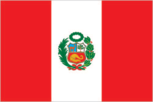
Lima
Civil air
- 6 major transport aircraft
- 22 major transport aircraft
Coastline
2,414 km People
Communists
Communist Party of Peru (PCP), pro-Soviet, 2,000; pro-Chinese (2 factions) 1,200
Elections
elections for a civilian government were held on 18 May 1980, with the new government installed on 28 July 1980 Political parties and leaders: Popular Action Party (AP), Fernando Belaunde Terry; American Popular Revolutionary Alliance (APRA), Alan Garcia; Popular Christian Party (PPC), Luis Bedoya Reyes; United Left (IU), Alfonso Barrantes
Electric power
- 590,000 kW capacity (1983); 1.4 billion kWh produced (1983), 400 kWh per capita
- 3,500,000 kW capacity (1983); 12.3 billion kWh produced (1983), 640 kWh per capita
Ethnic divisions
45% Indian; 37% mestizo (white-Indian); 15% white; 3% black, Japanese, Chinese, and other
Exports
- $396 million (f.o.b., 1982); cotton, oilseeds, meat products, tobacco, timber, coffee, essential oils, tung oil
- $3.3 billion (f.o.b., 1982); copper, fish and fish products, copper, silver, iron, cotton, sugar, lead, zinc, petroleum, coffee
Fiscal year
- calendar year Communications
- calendar year Communications
Fishing
catch 3.452 million metric tons (1982); exports — oil, other products, $331 million (1979); meal, $202 million (1982)
GDP
$5.8 billion (1982, at current prices), $1,411 per capita; 1% public consumption; 78% private consumption (1982), 30% gross domestic investment, — 18% net foreign balance (1980); real growth rate 1982, -2%
GNP
$19.2 billion (1982 est.), $1,018 per capita; 72% private consumption, 15% public consumption, 21% gross investment; —4% net foreign balance (1982); real growth rate (1982), -1%
Government leader
Fernando BELAUNDE Terry, President; Sando MARIATEGUI, Prime Minister
Highways
- 12,700km total; 1,530 km paved, 600 km gravel, and 10,540 km earth
- 56,645 km total; 6,030 km paved, 11,865 km gravel, 14,610 km improved earth, 24,140 km unimproved earth
Imports
- $711 million (f.o.b., 1982); fuels and lubricants, machinery and motors, motor vehicles, beverages and tobacco, foodstuffs
- $3.8 billion (f.o.b., 1982); foodstuffs, machinery, transport equipment, iron and steel semimanufactures, chemicals, pharmaceuticals
Inland waterways
- 3,100 km
- 8,600 km of navigable tributaries of Amazon River system and 208 km Lake Titicaca
Labor force
5.6 million (1980); 41% government and other services, 40% agriculture, 19% industry and mining
Land boundaries
6,131 km Water
Language
Spanish and Quechua (official), Aymara
Legal system
based on civil law system; 1979 constitution reestablished civilian government with a popularly elected president and bicameral legislature; legal education at the National Universities in Lima, Trujillo, Arequipa, and Cuzco; has not accepted compulsory ICJ jurisdiction
Limits of territorial waters (claimed)
200 nm
Literacy
est. 72%
Major industries
- meat packing, oilseed crushing, milling, brewing, textiles, light consumer goods, cement
- mining of metals, petroleum, fishing, textiles and clothing, food processing, cement, auto assembly, steel, shipbuilding, metal fabrication
Major trade partners
- exports — 23% Argentina, 18% Brazil, 14% Netherlands, 11% FRG, 8% Japan, 5% US, 5% Switzerland; imports—26% Brazil, 20% Argentina, 10% US, 8% FRG, 8% Japan, 5% UK (1981)
- exports — 38% US, 18% Japan, 16% EC (1981); imports— 39% US, 25% EC, 9% Japan (1982)
Member of
Andean Pact, AIOEC, ASSIMER, CIPEC, FAO, G-77, GATT, IADB, IAEA, IATP, IBRD, ICAO, ICO, IDA, IDE — Inter-American Development Bank, IFAD, IFC, ILO, INTERPOL, IMF, IMO, INTELSAT, International Lead and Zinc Study Group, ISO, ITU, IWC— International Wheat Council, LAIA, NAM, OAS, PAHO, SELA, UN, UNESCO, UPU, WFTU, WHO, WMO, WSG, WTO Economy
Military budget
- for fiscal year ending 31 December 1983, $128.4 million; 17.2% of central government budget Pacific Ocean V"™ Land 1,284,640 km2 (other estimates range as low as 1,248,380 km2); 55% forest; 29% urban, waste, or other; 14% meadow and pasture; 2% crop
- for fiscal year ending 31 December 1983, $1,229.0 million; 6.2% of central government budget
Military manpower
- males 15-49, 858,000; 682,000 fit for military service; 42,000 reach military age (17) annually
- males 15-49, 4,578,000; 3,102,000 fit for military service; 178,000 reach military age (20) annually
Monetary conversion rate
- 126 guaranies= US$1 (October 1983)
- 2394.27 soles= US$1 (February (1984)
National holiday
Independence Day, 28 July
Nationality
noun — Peruvian(s); adjective — Peruvian
Official name
Republic of Peru
Organized labor
25% of labor force (1978) Government
Pipelines
crude oil, 800 km; natural gas and natural gas liquids, 64 km
Political subdivisions
23 departments with limited autonomy plus constitutional Province of Callao
Population
19,157,000 (July 1984), average annual growth rate 2.6%
Ports
- 1 major (Asuncion), 9 minor (all river)
- 7 major, 20 minor
Railroads
- 970 km total; 440 km 1.435-meter standard gauge, 60 km 1.000-meter gauge, 470 km various narrow gauge (privately owned)
- 1,876 km total; 1,576 km 1.435meter standard gauge, 300 km 0.914-meter gauge
Religion
predominantly Roman Catholic
Suffrage
universal over age 18
Telecommunications
- principal center in Asuncion, fair intercity microwave net; 58,700 telephones (1.8 per 100 popl.); 35 AM, 21 FM, and 5 TV stations; 1 Atlantic Ocean satellite station Defense Forces
- fairly adequate for most requirements; nationwide radio-relay system; 1 Atlantic Ocean satellite station, 12 domestic antennas; 487,100 telephones (2.8 per 100 popl.); 212 AM, 20 FM, and 73 TV stations Defense Forces
Type
republic
Voting strength
(1980 presidential election) 45% AP, 27% APRA, 10% PPC