1981 Edition
CIA World Factbook 1981 (Internet Archive)
Countries
133
Data Records
7,952
Categories
6
Source
CIA World Factbook 1981 (Internet Archive)
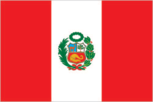
Geography
Area
- 1,284,640 km2 (other estimates range as low as 1,248,380 km2); 2% cropland, 14% meadows and pastures, 55% forested, 29% urban, waste, other
- 300,440 km2; 53% forested, 30% arable land, 5% permanent pasture, 12% other
Coastline
- 2,414 km
- about 22,540 km
Fiscal year
calendar year
Land boundaries
6,131 km
Limits of territorial waters (claimed)
- 200 nm
- 0-300 nm (under an archipelago theory, waters within straight lines joining appropriate points of outermost islands are considered internal waters; waters between these baselines and the limits described in the Treaty of Paris, 10 December 1898, the US-Spain Treaty of 7 November 1900, and the US-UK Treaty of 2 January 1930 are considered to be the territorial sea); fishing 200 nm; exclusive economic zone 200 nm
Monetary conversion rate
88.65 soles=US$l (1980); floats against US dollar
People and Society
Ethnic divisions
- 46% Indian; 38% mestizo (whiteIndian); 15% white; 1% Negro, Japanese, Chinese
- 91.5% Christian Malay, 4% Muslim Malay, 1.5% Chinese, 3% other
Labor force
- 5.3 million (1978); 42% agriculture, 20% services, 13% industry, 14% trade, 4% construction, 4% transportation, 1% mining, 2% other
- 18.5 million (1981); 47.3% agriculture, 12.2% manufacturing, 12.2% commerce, 17.6% services, 3.5% transportation, 4.6% construction
Language
- Spanish, Quechua, Aymara
- Tagalog (renamed Filipino) is the national language of the Philippine Republic; English is the language of school instruction and government business
Literacy
- 45% to 50%
- about 83%
Nationality
- noun — Peruvian(s); adjective — Peruvian
- noun — Filipino(s); adjective — Philippine
Organized labor
25% of labor force (1978)
Population
- 18,631,000 (July 1982), average annual growth rate 2.8%
- 51,574,000 (July 1982), average annual growth rate 2.5%
Religion
- predominantly Roman Catholic
- 83% Roman Catholic, 10% Protestant, 4% Muslim, 3% Buddhist and other
Government
Branches
- executive, judicial, legislative
- new constitution provides for unicameral National Assembly, and a strong executive branch under President and Prime Minister; judicial branch headed by Supreme Court with descending authority in a three-tiered system of local, regional trial, and intermediate appellate courts
Capital
- Lima
- Manila
Communists
- pro-Soviet (PCP/S) 2,000; pro-Chinese (2 factions) 1,200
- about 5,000 armed insurgents; not recognized as legal party
Elections
- elections for a civilian government were held on 18 May 1980, with the new government installed on 28 July 1980 Political parties and leaders: Popular Action Party (AP), Fernando Belaunde Terry; American Popular Revolutionary Alliance (APRA), Fernando Leon de Vivero; Popular Christian Party (PPC), Luis Bedoya Reyes; United Left (IU), Alfonso Barrantes Voting strength (1980 presidential election): 45% AP, 27% APRA, 10% PPC
- Interim National Assembly serves as interim government pending regular elections scheduled for 1984 Political parties and leaders: national parties are Marcos's New Society Party (KBL), the Liberals, Nationalistas, and Laban; prominent regional parties include the Mindanao Alliance and the Pusyon Bisaya
Government leader
- President Fernando BELAUNDE Terry
- President Ferdinand MARCOS
Legal system
- based on civil law system; 1979 constitution reestablished civilian government with a popularly elected president and bicameral legislature; legal education at the National Universities in Lima, Trujillo, Arequipa, and Cuzco; has not accepted compulsory ICJ jurisdiction
- based on Spanish, Islamic, and AngloAmerican law; parliamentary constitution passed 1973; PHILIPPINES (Continued) constitution amended in 1981 to provide for French-style mixed presidential-parliamentary system; judicial review of legislative acts in the Supreme Court; legal education at University of the Philippines, Ateneo de Manila University, and 71 other law schools; accepts compulsory ICJ jurisdiction, with reservations; martial law lifted in January 1981
Member of
- AIOEC, ASSIMER, CIPEC, FAO, G-77, GATT, IADB, IAEA, IATP, IBRD, ICAO, ICO, IDA, IDE, IFAD, IFC, ILO, International Lead and Zinc Study Group, IMCO, IMF, ISO, ITU, IWC— International Wheat Council, LAFTA and Andean Pact, NAM, OAS, UN, UNESCO, UPU, WHO, WMO, WSG, WTO
- ADB, ASEAN, ASPAC, Colombo Plan, ESCAP, FAO, G-77, GATT, IAEA, IBRD, ICAO, IDA, IFAD, IFC, IHO, ILO, IMCO, IMF, IPU, ISO, ITU, UN, UNESCO, UPU, WHO, WIPO, WMO, WTO
National holiday
- Independence Day, 28 July
- Independence Day, 12 June
Official name
- Republic of Peru
- Republic of the Philippines
Political subdivisions
- 23 departments with limited autonomy plus constitutional Province of Callao
- 72 provinces
Suffrage
- obligatory for literate citizens (defined as adult men and women and married persons over age 18) until age
- universal over age 18
Type
- republic; under civilian government since July 1980
- republic
Economy
Agriculture
- main crops — wheat, potatoes, beans, rice, barley, coffee, cotton, sugarcane; imports — wheat, meat, lard and oils, rice, corn; caloric intake, 2,274 calories per day per capita (1977)
- main crops — rice, corn, coconut, sugarcane, bananas, abaca, tobacco
Budget
- 1979— $2.8 billion in revenues, $3.0 billion in expenditures
- (1980) revenues $5.06 billion, expenditures $6.17 billion (capital expenditures $2.21 billion), deficit $1.11 billion
Electric power
- 3,000,000 kW capacity (1981); 13.2 billion kWh produced (1981), 725 kWh per capita
- 4,980,000 kW capacity (1980); 18.924 billion kWh produced (1980), 382 kWh per capita
Exports
- $3.3 million (f.o.b., 1981 est.); copper, fish and fish products, copper, silver, iron, cotton, sugar, lead, zinc, petroleum, coffee
- $5.8 billion (f.o.b., 1980); coconut products, sugar, logs and lumber, copper concentrates, bananas, garments, nickel, electrical components, gold
Fiscal year
calendar year
Fishing
- catch 3.431 million metric tons (1979 prelim.); exports (meal, oil, other products) $331 million (1979)
- catch 1.6 million metric tons (1978)
GNP
- $16.8 billion (1980 est), $944 per capita; 66% private consumption, 10% public consumption, 14% gross investment; 10% net foreign balance (1979); real growth rate (1981), 3%
- $35.1 billion (1980), $720 per capita; 5.4% real growth, 1980
Imports
- $3.8 million (f.o.b., 1981 est.); foodstuffs, machinery, transport equipment, iron and steel semimanufactures, chemicals, Pharmaceuticals
- $7.7 billion (f.o.b., 1980); petroleum, industrial equipment, wheat
Major industries
- mining of metals, petroleum, fishing, textiles and clothing, food processing, cement, auto assembly, steel, shipbuilding, metal fabrication
- mining, agricultural processing, textiles, steel processing,chemical products
Major trade partners
- exports — 32% US, 8% Latin America, 15% EC, 13% Japan (1979); imports— 37% US, 34% EC, 11% Latin America, 7% Japan (1979)
- (1980) exports— 33% US, 33% Japan; imports— 22% Japan, 26% US
Monetary conversion rate
8.2 pesos=US$l (September 1981)
Communications
Airfields
- 301 total, 291 usable; 27 with permanentsurface runways; 2 with runways over 3,659 m, 21 with runways 2,440-3,659 m, 47 with runways 1,220-2,439 m
- 346 total, 316 usable; 62 with permanentsurface runways; 8 with runways 2,440-3,659 m, 42 with runways 1,220-2,439 m
Civil air
- 26 major transport aircraft
- approximately 80 major transport aircraft
Highways
- 56,645 km total; 6,030 km paved, 11,865 km gravel, 14,610 km improved earth, 24,140 km unimproved earth
- 152,800 km total (1980); 20,000 km paved; 80,700 km gravel, crushed stone, or stabilized soil surface; 52,000 km unimproved earth
Inland waterways
- 8,600 km of navigable tributaries of Amazon River system and 208 km Lake Titicaca
- 3,219 km; limited to shallow-draft (less than 1.5 m) vessels
Military manpower
- males 15-49, 4,363,000; 2,955,000 fit for military service; 173,000 reach military age (20) annually CSee reference map IX)
- males 15-49, 12,619,000; 8,948,000 fit for military service; about 555,000 reach military age (20) annually
Pipelines
- crude oil, 800 km; natural gas and natural gas liquids, 64 km
- refined products, 357 km
Ports
- 7 major, 20 minor
- 18 major, numerous minor
Railroads
- 2,192 km total; 1,775 km standard gauge (1.435 m), 46 km 0.60-meter gauge, 371 km 0.914-meter gauge
- 3,510 km total (1980); 2 common-carrier systems 1.067-meter gauge totaling about 1,177 km (360 km inoperable); 19 industrial systems with 4 different gauges totaling 2,333 km; 34% government owned
Supply
limited small arms and small arms ammunition, small patrol craft production; licensed assembly of transport aircraft; most other materiel obtained from US; naval ships and equipment from Australia, Japan, Italy, Singapore, US, and Italy; aircraft and helicopters from West Germany and US
Telecommunications
- fairly adequate for most requirements; new nationwide radio-relay system; 1 Atlantic Ocean satellite station, 7 domestic antennas; 457,000 telephones (2.7 per 100 popl.); 200 AM, 7 FM, and 63 TV stations DEFENSE FORCES
- good international radio and submarine cable services; domestic and interisland service adequate; 519,642 telephones (1.2 per 100 pop!.); 273 AM stations, including 6 US; and 6 FM stations; 24 TV stations, including 4 US; submarine cables extended to Hong Kong, Guam, Singapore, and Japan; tropospheric-scatter link to Taiwan; 1 ground satellite station; domestic satellite network under construction DEFENSE FORCES