1985 Edition
CIA World Factbook 1985 (Internet Archive)
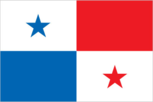
Geography
Agriculture
main crops — bananas, rice, sugarcane, coffee, corn; self-sufficient in basic foods
Aid
economic — US, authorized, including Ex-Im (FY70-83), $382 million; Western (non-US) countries, ODA and OOF (197082), $414 million; Communist countries (1970-83), $5 million; military— US (FY7083), $23 million
Area
manufacturing and mining; 5% construction; 5% transportation and communications; 4% Canal Zone; 1.2% utilities; 2% other; unemployed estimated at 20% (January 1984); shortage of skilled labor but an oversupply of unskilled labor
Branches
under April 1983 reforms, a President, two Vice Presidents, and a 67-member Legislative Assembly are elected by popular vote for 5-year terms; Supreme Court of Justice is appointed by the Cabinet, subject to legislative approval, for a 10year period
Budget
(1983) revenues, $906 million; expenditures, $1.13 billion
Capital
Panama
Communists
People's Party (PdP), progovernment mainline Communist party, met requirements for certification as a legal party in 1981; PdP has approximately 35,000 adherents; 1,500 members and sympathizers of rival Fraccion movement, which split from PdP in 1974
Elections
seven electoral slates made up of 14 registered political parties were on the May 1984 ballot with the president and other winners decided by simple pluralities; mayoral and municipal elections were held in June 1984 Political parties and leaders: (registered for 1984 presidential and legislative elections) National Democratic Union (UNADE; government coalition) — Democratic Revolutionary Party (PRD, official government party); Republican Party (PR); Liberal Party (PL); Labor Party (PALA); Panamenista Party (PP); Popular Broad Front Party (FRAMPO); Democratic Opposition Alliance (ADO; opposition) — Christian Democratic Party (PDC); Authentic Panamenista Party (PP A); other opposition parties — Popular Nationalist Party (PNP); Popular Action Party (PAPO); People's Party (PdP, Soviet-oriented Communist); Socialist Workers Party (PST); Revolutionary Workers Party (PRT)
Electric power
1,100,000 kW capacity (1984); 2.9 billion kWh produced (1984), l,450kWh per capita
Exports
$347 million (f.o.b., 1983); petroleum products, bananas, shrimp, sugar
Fiscal year
calendar year Communications
Fishing
catch 437,000 metric tons (1982); exports $60.2 million (1981)
GNP
$4.286 billion (1983), $2,177 per capita; real growth (1983), 0%
Government leaders
Nicolas ARDITO BARLETTA, President (since October 1984); Eric Arturo DELVALLE, First Vice President (since October 1984); Roderick ESQUIVEL, Second Vice President (since October 1984)
Highways
8,530 km total; 2,745 km paved, 3,270 km gravel or crushed stone, 2,515 km improved and unimproved earth
Imports
$1.35 billion (f.o.b., 1983); petroleum products, manufactured goods, machinery and transportation equipment, chemicals, foodstuffs
Inland waterways
800 km navigable by shallow draft vessels; 82 km Panama Canal
Legal system
based on civil law system; constitution adopted in 1972, but major reforms adopted in April 1983; judicial review of legislative acts in the Supreme Court; legal education at University of Panama; accepts compulsory ICJ jurisdiction, with reservations
Major industries
food processing, beverages, petroleum products, construction materials, clothing, paper products
Major trade partners
exports — 39% US, 10% Mexico, 7% Switzerland, 5% FRG; imports—31% Japan, 20% US, 5% Venezuela, 5% Mexico (1983)
Monetary conversion rate
1 balboa=US$l (January 1985)
National holiday
Independence Day, 3 November
Official name
Republic of Panama
Organized labor
approximately 15% of labor force (1982) Government
Other political or pressure groups
National Council of Organized Workers (CONATO); National Council of Private Enterprise (CONEP); Panamanian Association of Business Executives (APEDE) Member of :¥\O, G-77, IADB, IAEA, IBRD, ICAO, ICO, IDA, IFAD, IDB— Inter-American Development Bank, IFC, ILO, IMF, IMO, INTELSAT, INTERPOL, IRC, ITU, IWC — International Whaling Commission, IWC— International Wheat Council, NAM, OAS, PAHO, SELA, UN, UNESCO, UPEB, UPU, WFTU, WHO, WMO, WTO Economy
Political subdivisions
9 provinces, 1 intendancy
Railroads
278 km total; 78 km 1.524-meter gauge, 200 km 0.914-meter gauge
Suffrage
universal and compulsory over age 18
Type
centralized republic
Voting strength
in the May 1984 elections the government coalition received 300,748 votes, narrowly defeating the opposition alliance, which received 299,035 votes; UNADE won 45 seats in the 67-member Legislative Assembly, and ADO won the remaining 22 seats