2023 Edition
CIA World Factbook 2023 (factbook.json @ 0d4fa4984ecb)
Introduction
Background
The inhabitants of the area of Oman have long prospered from Indian Ocean trade. In the late 18th century, the nascent sultanate in Muscat signed the first in a series of friendship treaties with Britain. Over time, Oman's dependence on British political and military advisors increased, although the sultanate never became a British colony. In 1970, QABOOS bin Said Al Said overthrew his father, and ruled as sultan for the next five decades. His extensive modernization program opened the country to the outside world. He prioritized strategic ties with the UK and US, and his moderate, independent foreign policy allowed Oman to maintain good relations with its neighbors and to avoid external entanglements.Inspired by the popular uprisings that swept the Middle East and North Africa beginning in January 2011, some Omanis staged demonstrations, calling for more jobs and economic benefits and an end to corruption. In response to those protester demands, QABOOS in 2011 pledged to implement economic and political reforms, such as granting Oman’s bicameral legislative body more power and authorizing direct elections for its lower house, which took place in November 2011. Additionally, the sultan increased unemployment benefits, and, in August 2012, issued a royal directive mandating the speedy implementation of a national job creation plan for thousands of public and private sector Omani jobs. As part of the government's efforts to decentralize authority and allow greater citizen participation in local governance, Oman successfully conducted its first municipal council elections in December 2012. Announced by the sultan in 2011, the municipal councils have the power to advise the Royal Court on the needs of local districts across Oman's 11 governorates. Sultan QABOOS, Oman's longest reigning monarch, died on 11 January 2020. His cousin, HAYTHAM bin Tariq Al Said, former Minister of Heritage and Culture, was sworn in as Oman's new sultan the same day.
Geography
Area
- land
- 309,500 sq km
- total
- 309,500 sq km
- water
- 0 sq km
Area - comparative
twice the size of Georgia
Climate
dry desert; hot, humid along coast; hot, dry interior; strong southwest summer monsoon (May to September) in far south
Coastline
2,092 km
Elevation
- highest point
- Jabal Shams 3,004 m
- lowest point
- Arabian Sea 0 m
- mean elevation
- 310 m
Geographic coordinates
21 00 N, 57 00 E
Geography - note
consists of Oman proper and two northern exclaves, Musandam and Al Madhah; the former is a peninsula that occupies a strategic location adjacent to the Strait of Hormuz, a vital transit point for world crude oil
Irrigated land
1,079 sq km (2020)
Land boundaries
- border countries
- Saudi Arabia 658 km; UAE 609 km; Yemen 294 km
- total
- 1,561 km
Land use
- agricultural land
- 4.7% (2018 est.)
- agricultural land: arable land
- arable land: 0.1% (2018 est.)
- agricultural land: permanent crops
- permanent crops: 0.1% (2018 est.)
- agricultural land: permanent pasture
- permanent pasture: 4.5% (2018 est.)
- forest
- 0% (2018 est.)
- other
- 95.3% (2018 est.)
Location
Middle East, bordering the Arabian Sea, Gulf of Oman, and Persian Gulf, between Yemen and the UAE
Major aquifers
Arabian Aquifer System
Map references
Middle East
Maritime claims
- contiguous zone
- 24 nm
- exclusive economic zone
- 200 nm
- territorial sea
- 12 nm
Natural hazards
summer winds often raise large sandstorms and dust storms in interior; periodic droughts
Natural resources
petroleum, copper, asbestos, some marble, limestone, chromium, gypsum, natural gas
Population distribution
the vast majority of the population is located in and around the Al Hagar Mountains in the north of the country; another smaller cluster is found around the city of Salalah in the far south; most of the country remains sparsely poplulated
Terrain
central desert plain, rugged mountains in north and south
People and Society
Age structure
- 0-14 years
- 29.88% (male 586,608/female 558,770)
- 15-64 years
- 66.17% (male 1,404,289/female 1,132,250)
- 65 years and over
- 3.95% (2023 est.) (male 70,976/female 80,572)
Alcohol consumption per capita
- beer
- 0.17 liters of pure alcohol (2019 est.)
- other alcohols
- 0 liters of pure alcohol (2019 est.)
- spirits
- 0.29 liters of pure alcohol (2019 est.)
- total
- 0.47 liters of pure alcohol (2019 est.)
- wine
- 0.02 liters of pure alcohol (2019 est.)
Birth rate
21.6 births/1,000 population (2023 est.)
Children under the age of 5 years underweight
11.2% (2016/17)
Contraceptive prevalence rate
29.7% (2014)
Current health expenditure
5.3% of GDP (2020)
Currently married women (ages 15-49)
56.4% (2023 est.)
Death rate
3.2 deaths/1,000 population (2023 est.)
Dependency ratios
- elderly dependency ratio
- 4
- potential support ratio
- 25.2 (2021 est.)
- total dependency ratio
- 42
- youth dependency ratio
- 38
Drinking water source
- improved: rural
- rural: 97.9% of population
- improved: total
- total: 99.7% of population
- improved: urban
- urban: 100% of population
- unimproved: rural
- rural: 2.1% of population
- unimproved: total
- total: 0.3% of population (2020 est.)
- unimproved: urban
- urban: 0% of population
Education expenditures
5.4% of GDP (2019 est.)
Ethnic groups
Arab, Baluchi, South Asian (Indian, Pakistani, Sri Lankan, Bangladeshi), African
Gross reproduction rate
1.3 (2023 est.)
Hospital bed density
1.5 beds/1,000 population (2017)
Infant mortality rate
- female
- 12.9 deaths/1,000 live births
- male
- 15.4 deaths/1,000 live births
- total
- 14.2 deaths/1,000 live births (2023 est.)
Languages
- Languages
- Arabic (official), English, Baluchi, Swahili, Urdu, Indian dialects
- major-language sample(s)
- كتاب حقائق العالم، المصدر الذي لا يمكن الاستغناء عنه للمعلومات الأساسية (Arabic)The World Factbook, the indispensable source for basic information.
Life expectancy at birth
- female
- 79.2 years
- male
- 75.2 years
- total population
- 77.2 years (2023 est.)
Literacy
- definition
- age 15 and over can read and write
- female
- 92.7% (2018)
- male
- 97%
- total population
- 95.7%
Major urban areas - population
1.650 million MUSCAT (capital) (2023)
Maternal mortality ratio
17 deaths/100,000 live births (2020 est.)
Median age
- female
- 26 years
- male
- 27.9 years
- total
- 27.1 years (2023 est.)
Nationality
- adjective
- Omani
- noun
- Omani(s)
Net migration rate
-0.5 migrant(s)/1,000 population (2023 est.)
Obesity - adult prevalence rate
27% (2016)
Physicians density
1.77 physicians/1,000 population (2020)
Population
- 3,833,465 (2023 est.)
- note
- note: immigrants make up approximately 46% of the total population (2019)
Population distribution
the vast majority of the population is located in and around the Al Hagar Mountains in the north of the country; another smaller cluster is found around the city of Salalah in the far south; most of the country remains sparsely poplulated
Population growth rate
1.8% (2023 est.)
Religions
- Muslim 85.9%, Christian 6.4%, Hindu 5.7%, other and unaffiliated 2% (2020 est.)
- note
- note: Omani citizens represent approximately 56.4% of the population and are overwhelming Muslim (Ibadhi and Sunni sects each constitute about 45% and Shia about 5%); Christians, Hindus, and Buddhists account for roughly 5% of Omani citizens
Sanitation facility access
- improved: rural
- rural: 100% of population
- improved: total
- total: 100% of population
- improved: urban
- urban: 100% of population
- unimproved: rural
- rural: 0% of population
- unimproved: total
- total: 0% of population (2020 est.)
- unimproved: urban
- urban: 0% of population
School life expectancy (primary to tertiary education)
- female
- 15 years (2021)
- male
- 15 years
- total
- 15 years
Sex ratio
- 0-14 years
- 1.05 male(s)/female
- 15-64 years
- 1.24 male(s)/female
- 65 years and over
- 0.88 male(s)/female
- at birth
- 1.05 male(s)/female
- total population
- 1.16 male(s)/female (2023 est.)
Tobacco use
- female
- 0.4% (2020 est.)
- male
- 15.5% (2020 est.)
- total
- 8% (2020 est.)
Total fertility rate
2.67 children born/woman (2023 est.)
Urbanization
- rate of urbanization
- 2.32% annual rate of change (2020-25 est.)
- urban population
- 88.4% of total population (2023)
Youth unemployment rate (ages 15-24)
- female
- 29.6%
- male
- 11.6%
- total
- 14.6% (2021 est.)
Government
Administrative divisions
11 governorates (muhafazat, singular - muhafaza); Ad Dakhiliyah, Al Buraymi, Al Wusta, Az Zahirah, Janub al Batinah (Al Batinah South), Janub ash Sharqiyah (Ash Sharqiyah South), Masqat (Muscat), Musandam, Shamal al Batinah (Al Batinah North), Shamal ash Sharqiyah (Ash Sharqiyah North), Zufar (Dhofar)
Capital
- etymology
- the name, whose meaning is uncertain, traces back almost two millennia; two 2nd century A.D. scholars, the geographer PTOLEMY and the historian ARRIAN, both mention an Arabian Sea coastal town of Moscha, which most likely referred to Muscat
- geographic coordinates
- 23 37 N, 58 35 E
- name
- Muscat
- time difference
- UTC+4 (9 hours ahead of Washington, DC, during Standard Time)
Citizenship
- citizenship by birth
- no
- citizenship by descent only
- the father must be a citizen of Oman
- dual citizenship recognized
- no
- residency requirement for naturalization
- unknown
Constitution
- amendments
- promulgated by the sultan or proposed by the Council of Oman and drafted by a technical committee as stipulated by royal decree and then promulgated through royal decree; amended by royal decree 2011, 2021
- history
- promulgated by royal decree 6 November 1996 (the Basic Law of the Sultanate of Oman serves as the constitution); amended by royal decree in 2011
Country name
- conventional long form
- Sultanate of Oman
- conventional short form
- Oman
- etymology
- the origin of the name is uncertain, but it apparently dates back at least 2,000 years since an "Omana" is mentioned by Pliny the Elder (1st century A.D.) and an "Omanon" by Ptolemy (2nd century A.D.)
- former
- Sultanate of Muscat and Oman
- local long form
- Saltanat Uman
- local short form
- Uman
Diplomatic representation from the US
- chief of mission
- Ambassador (vacant); Charge D'Affaires Leslie ORDEMAN (since August 2023)
- email address and website
- ConsularMuscat@state.govhttps://om.usembassy.gov/
- embassy
- P.C. 115, Madinat Al Sultan Qaboos, Muscat
- FAX
- [968] 2464-3740
- mailing address
- 6220 Muscat Place, Washington DC 20521
- telephone
- [968] 2464-3400
Diplomatic representation in the US
- chancery
- 2535 Belmont Road, NW, Washington, DC 20008
- chief of mission
- Ambassador Moosa Hamdan Moosa AL TAI (since 17 February 2021)
- email address and website
- washington@fm.gov.omhttps://www.culturaloffice.info/aboutomaniembassy
- FAX
- [1] (202) 745-4933
- telephone
- [1] (202) 387-1980
Executive branch
- cabinet
- Cabinet appointed by the monarch
- chief of state
- Sultan and Prime Minister HAYTHAM bin Tariq Al Said (since 11 January 2020); note - the monarch is both chief of state and head of government
- head of government
- Sultan and Prime Minister HAYTHAM bin Tariq Al Said (since 11 January 2020)
Flag description
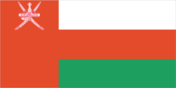
three horizontal bands of white (top), red, and green of equal width with a broad, vertical, red band on the hoist side; the national emblem (a khanjar dagger in its sheath superimposed on two crossed swords in scabbards) in white is centered near the top of the vertical band; white represents peace and prosperity, red recalls battles against foreign invaders, and green symbolizes the Jebel al Akhdar (Green Mountains) and fertility
Government type
absolute monarchy
Independence
1650 (expulsion of the Portuguese)
International law organization participation
has not submitted an ICJ jurisdiction declaration; non-party state to the ICCt
International organization participation
ABEDA, AFESD, AMF, CAEU, FAO, G-77, GCC, IAEA, IBRD, ICAO, ICC (NGOs), IDA, IDB, IFAD, IFC, IHO, ILO, IMF, IMO, IMSO, Interpol, IOC, IPU, ISO, ITSO, ITU, LAS, MIGA, NAM, OIC, OPCW, UN, UNCTAD, UNESCO, UNIDO, UNOOSA, UNWTO, UPU, WCO, WFTU (NGOs), WHO, WIPO, WMO, WTO
Judicial branch
- highest court(s)
- Supreme Court (consists of 5 judges)
- judge selection and term of office
- judges nominated by the 9-member Supreme Judicial Council (chaired by the monarch) and appointed by the monarch; judges appointed for life
- subordinate courts
- Courts of Appeal; Administrative Court; Courts of First Instance; sharia courts; magistrates' courts; military courts
Legal system
mixed legal system of Anglo-Saxon law and Islamic law
Legislative branch
- description
- bicameral Council of Oman or Majlis Oman consists of:Council of State or Majlis al-Dawla (87 seats including the chairman; members appointed by the sultan from among former government officials and prominent educators, businessmen, and citizens; members serve 4-year term)Consultative Assembly or Majlis al-Shura (90 seats; members directly elected in single- and 2-seat constituencies by simple majority popular vote to serve renewable 4-year terms)
- election results
- Council of State - 87 nonpartisan members were appointed by the sultan; composition - men 59, women 18, percent of women 20.7%Consultative Assembly percent of vote by party - NA; seats by party - NA; 90 nonpartisan members were elected (organized political parties in Oman are legally banned); composition - 90 men, 0 women; note - total Council of Oman percent of women 20.7%
- elections
- Council of State - last appointments on 8 November 2023 (next appointments in November 2027)Consultative Assembly - last held on 29 October 2023 (next to be held in October 2027)
National anthem
- lyrics/music
- Rashid bin Uzayyiz al KHUSAIDI/James Frederick MILLS, arranged by Bernard EBBINGHAUS
- name
- "Nashid as-Salaam as-Sultani" (The Sultan's Anthem)
- note
- note: adopted 1932; new lyrics written after QABOOS bin Said al Said gained power in 1970; first performed by the band of a British ship as a salute to the Sultan during a 1932 visit to Muscat; the bandmaster of the HMS Hawkins was asked to write a salutation to the Sultan on the occasion of his ship visit
National heritage
- selected World Heritage Site locales
- Bahla Fort; Archaeological Sites of Bat; Land of Frankincense; Aflaj Irrigation Systems of Oman; Ancient Qalhat
- total World Heritage Sites
- 5 (all cultural)
National holiday
National Day, 18 November; note - celebrates Oman's independence from Portugal in 1650 and the birthday of Sultan QABOOS bin Said al Said, who reigned from 1970 to 2020
National symbol(s)
khanjar dagger superimposed on two crossed swords; national colors: red, white, green
Political parties and leaders
none; note - organized political parties are legally banned in Oman, and loyalties tend to form around tribal affiliations
Suffrage
21 years of age; universal; note - members of the military and security forces by law cannot vote
Economy
Agricultural products
dates, tomatoes, vegetables, goat milk, milk, cucumbers, green chillies/peppers, watermelons, sorghum, melons
Average household expenditures
- on alcohol and tobacco
- 0.1% of household expenditures (2018 est.)
- on food
- 22.7% of household expenditures (2018 est.)
Budget
- expenditures
- $35.984 billion (2018 est.)
- revenues
- $29.334 billion (2018 est.)
Budget surplus (+) or deficit (-)
-13.8% (of GDP) (2017 est.)
Credit ratings
- Fitch rating
- BB- (2020)
- Moody's rating
- Ba3 (2020)
- note
- note: The year refers to the year in which the current credit rating was first obtained.
- Standard & Poors rating
- B+ (2020)
Current account balance
- Current account balance 2019
- -$4.02 billion (2019 est.)
- Current account balance 2020
- -$12.307 billion (2020 est.)
- Current account balance 2021
- -$4.288 billion (2021 est.)
Debt - external
- Debt - external 31 December 2016
- $27.05 billion (31 December 2016 est.)
- Debt - external 31 December 2017
- $46.27 billion (31 December 2017 est.)
Economic overview
high-income, oil-based economy; large welfare system; growing government debt; citizenship-based labor force growth policy; US free trade agreement; diversifying portfolio; high female labor force participation
Exchange rates
- Currency
- Omani rials (OMR) per US dollar -
- Exchange rates 2017
- 0.385 (2017 est.)
- Exchange rates 2018
- 0.385 (2018 est.)
- Exchange rates 2019
- 0.385 (2019 est.)
- Exchange rates 2020
- 0.385 (2020 est.)
- Exchange rates 2021
- 0.385 (2021 est.)
Exports
- Exports 2019
- $43.584 billion (2019 est.)
- Exports 2020
- $35.72 billion (2020 est.) note: data are in current year dollars
- Exports 2021
- $46.324 billion (2021 est.) note: data are in current year dollars
Exports - commodities
crude petroleum, natural gas, refined petroleum, fertilizers, iron (2021)
Exports - partners
China 46%, India 8%, Japan 6%, South Korea 6%, United Arab Emirates 6%, Saudi Arabia 5% (2019)
Fiscal year
calendar year
GDP - composition, by end use
- exports of goods and services
- 51.5% (2017 est.)
- government consumption
- 26.2% (2017 est.)
- household consumption
- 36.8% (2017 est.)
- imports of goods and services
- -46.6% (2017 est.)
- investment in fixed capital
- 27.8% (2017 est.)
- investment in inventories
- 3% (2017 est.)
GDP - composition, by sector of origin
- agriculture
- 1.8% (2017 est.)
- industry
- 46.4% (2017 est.)
- services
- 51.8% (2017 est.)
GDP (official exchange rate)
$76.883 billion (2019 est.)
Household income or consumption by percentage share
- highest 10%
- NA
- lowest 10%
- NA
Imports
- Imports 2019
- $32.569 billion (2019 est.)
- Imports 2020
- $34.022 billion (2020 est.) note: data are in current year dollars
- Imports 2021
- $36.502 billion (2021 est.) note: data are in current year dollars
Imports - commodities
cars, refined petroleum, broadcasting equipment, gold, iron (2019)
Imports - partners
United Arab Emirates 36%, China 10%, Japan 7%, India 7%, United States 5% (2019)
Industrial production growth rate
1.05% (2021 est.)
Industries
crude oil production and refining, natural and liquefied natural gas production; construction, cement, copper, steel, chemicals, optic fiber
Inflation rate (consumer prices)
- Inflation rate (consumer prices) 2019
- 0.13% (2019 est.)
- Inflation rate (consumer prices) 2020
- -0.9% (2020 est.)
- Inflation rate (consumer prices) 2021
- 1.55% (2021 est.)
Labor force
- 2.259 million (2021 est.)
- note
- note: about 60% of the labor force is non-national
Labor force - by occupation
- agriculture
- 4.7% NA
- industry
- 49.6% NA
- services
- 45% (2016 est.) NA
Population below poverty line
NA
Public debt
- note
- note: excludes indebtedness of state-owned enterprises
- Public debt 2016
- 32.5% of GDP (2016 est.)
- Public debt 2017
- 46.9% of GDP (2017 est.)
Real GDP (purchasing power parity)
- note
- note: data are in 2017 dollars
- Real GDP (purchasing power parity) 2019
- $155.639 billion (2019 est.)
- Real GDP (purchasing power parity) 2020
- $150.378 billion (2020 est.)
- Real GDP (purchasing power parity) 2021
- $155.028 billion (2021 est.)
Real GDP growth rate
- Real GDP growth rate 2019
- -1.13% (2019 est.)
- Real GDP growth rate 2020
- -3.38% (2020 est.)
- Real GDP growth rate 2021
- 3.09% (2021 est.)
Real GDP per capita
- Real GDP per capita 2019
- $33,800 (2019 est.)
- Real GDP per capita 2020
- $33,100 (2020 est.) note: data are in 2017 dollars
- Real GDP per capita 2021
- $34,300 (2021 est.) note: data are in 2017 dollars
Reserves of foreign exchange and gold
- Reserves of foreign exchange and gold 31 December 2019
- $16.662 billion (31 December 2019 est.)
- Reserves of foreign exchange and gold 31 December 2020
- $15.007 billion (31 December 2020 est.)
- Reserves of foreign exchange and gold 31 December 2021
- $19.731 billion (31 December 2021 est.)
Taxes and other revenues
31.3% (of GDP) (2017 est.)
Unemployment rate
- note
- NA
- Unemployment rate 2019
- 1.85% (2019 est.)
- Unemployment rate 2020
- 2.94% (2020 est.)
- Unemployment rate 2021
- 3.12% (2021 est.)
Youth unemployment rate (ages 15-24)
- female
- 29.6%
- male
- 11.6%
- total
- 14.6% (2021 est.)
Energy
Carbon dioxide emissions
- from coal and metallurgical coke
- 191,000 metric tonnes of CO2 (2019 est.)
- from consumed natural gas
- 46.447 million metric tonnes of CO2 (2019 est.)
- from petroleum and other liquids
- 29.682 million metric tonnes of CO2 (2019 est.)
- total emissions
- 76.321 million metric tonnes of CO2 (2019 est.)
Coal
- consumption
- 115,000 metric tons (2020 est.)
- exports
- 0 metric tons (2020 est.)
- imports
- 115,000 metric tons (2020 est.)
- production
- 0 metric tons (2020 est.)
- proven reserves
- 0 metric tons (2019 est.)
Electricity
- consumption
- 32,320,020,000 kWh (2019 est.)
- exports
- 0 kWh (2019 est.)
- imports
- 0 kWh (2019 est.)
- installed generating capacity
- 8.601 million kW (2020 est.)
- transmission/distribution losses
- 3.717 billion kWh (2019 est.)
Electricity access
- electrification - total population
- 100% (2021)
Electricity generation sources
- biomass and waste
- 0% of total installed capacity (2020 est.)
- fossil fuels
- 100% of total installed capacity (2020 est.)
- geothermal
- 0% of total installed capacity (2020 est.)
- hydroelectricity
- 0% of total installed capacity (2020 est.)
- nuclear
- 0% of total installed capacity (2020 est.)
- solar
- 0% of total installed capacity (2020 est.)
- tide and wave
- 0% of total installed capacity (2020 est.)
- wind
- 0% of total installed capacity (2020 est.)
Energy consumption per capita
- Total energy consumption per capita 2019
- 292.022 million Btu/person (2019 est.)
Natural gas
- consumption
- 24,279,419,000 cubic meters (2019 est.)
- exports
- 13,798,040,000 cubic meters (2019 est.)
- imports
- 1,605,959,000 cubic meters (2019 est.)
- production
- 36,596,746,000 cubic meters (2019 est.)
- proven reserves
- 651.286 billion cubic meters (2021 est.)
Petroleum
- crude oil and lease condensate exports
- 779,000 bbl/day (2018 est.)
- crude oil and lease condensate imports
- 0 bbl/day (2018 est.)
- crude oil estimated reserves
- 5.373 billion barrels (2021 est.)
- refined petroleum consumption
- 234,200 bbl/day (2019 est.)
- total petroleum production
- 978,800 bbl/day (2021 est.)
Refined petroleum products - exports
33,700 bbl/day (2015 est.)
Refined petroleum products - imports
6,041 bbl/day (2015 est.)
Refined petroleum products - production
229,600 bbl/day (2015 est.)
Communications
Broadband - fixed subscriptions
- subscriptions per 100 inhabitants
- 11 (2020 est.)
- total
- 508,949 (2020 est.)
Broadcast media
1 state-run TV broadcaster; TV stations transmitting from Saudi Arabia, the UAE, Iran, and Yemen available via satellite TV; state-run radio operates multiple stations; first private radio station began operating in 2007 and several additional stations now operating (2019)
Internet country code
.om
Internet users
- percent of population
- 96% (2021 est.)
- total
- 4.32 million (2021 est.)
Telecommunication systems
- domestic
- fixed-line is 13 per 100 and mobile-cellular is 135 per 100 (2021)
- general assessment
- Oman has a modern mobile sector which comprises substantial coverage of both 3G and LTE networks; in February 2021 commercial 5G services were launched; the Covid-19 pandemic has caused a spike in mobile data traffic; while Oman’s fixed broadband infrastructure penetration is considered low, it is being improved with the building of fiber-based networks as part of Oman’s Vision 2040 program; Oman has also established itself as an important communications hub in the Middle East, with access to numerous submarine cables including the 2Africa submarine cable, which should become available during 2023-2024; the 9,800km Oman Australia Cable running from Muscat to Perth, with the potential for a branch line to Djibouti, is making progress and is expected to be completed in December 2021; this additional infrastructure will provide considerable additional bandwidth (2021)
- international
- country code - 968; landing points for GSA, AAE-1, SeaMeWe-5, Tata TGN-Gulf, FALCON, GBICS/MENA, MENA/Guld Bridge International, TW1, BBG, EIG, OMRAN/EPEG, and POI submarine cables providing connectivity to Asia, Africa, the Middle East, Southeast Asia and Europe; satellite earth stations - 2 Intelsat (Indian Ocean) (2019)
Telephones - fixed lines
- subscriptions per 100 inhabitants
- 13 (2021 est.)
- total subscriptions
- 572,166 (2021 est.)
Telephones - mobile cellular
- subscriptions per 100 inhabitants
- 135 (2021 est.)
- total subscriptions
- 6,115,537 (2021 est.)
Transportation
Airports
132 (2021)
Airports - with paved runways
- 13
- note
- note: paved runways have a concrete or asphalt surface but not all have facilities for refueling, maintenance, or air traffic control; the length of a runway required for aircraft to safely operate depends on a number of factors including the type of aircraft, the takeoff weight (including passengers, cargo, and fuel), engine types, flap settings, landing speed, elevation of the airport, and average maximum daily air temperature; paved runways can reach a length of 5,000 m (16,000 ft.), but the “typical” length of a commercial airline runway is between 2,500-4,000 m (8,000-13,000 ft.)
Airports - with unpaved runways
- 119
- note
- note: unpaved runways have a surface composition such as grass or packed earth and are most suited to the operation of light aircraft; unpaved runways are usually short, often less than 1,000 m (3,280 ft.) in length; airports with unpaved runways often lack facilities for refueling, maintenance, or air traffic control
Civil aircraft registration country code prefix
A4O
Heliports
3 (2021)
Merchant marine
- by type
- general cargo 11, other 46
- total
- 57 (2022)
National air transport system
- annual freight traffic on registered air carriers
- 510.43 million (2018) mt-km
- annual passenger traffic on registered air carriers
- 10,438,241 (2018)
- inventory of registered aircraft operated by air carriers
- 57
- number of registered air carriers
- 2 (2020)
Pipelines
106 km condensate, 4,224 km gas, 3,558 km oil, 33 km oil/gas/water, 264 km refined products (2013)
Ports and terminals
- container port(s) (TEUs)
- Salalah (4,510,000) (2021)
- LNG terminal(s) (export)
- Qalhat
- major seaport(s)
- Mina' Qabus, Salalah, Suhar
Roadways
- paved
- 29,685 km (2012) (includes 1,943 km of expressways)
- total
- 60,230 km (2012)
- unpaved
- 30,545 km (2012)
Military and Security
Military - note
the SAF’s primary responsibility is external security; it is a small, but professional and well-equipped military that trains regularly, including with foreign partners such as the UK, US, and Gulf Cooperation Council countries; the SAF has a longstanding security relationship with the British military going back to the 18th century; the relationship was notable during the Dhofar Rebellion (1963-1976), when the British military provided considerable assistance to the SAF in their eventually successful counterinsurgency campaign; today, the SAF and the British maintain a joint training base in Oman and exercise together regularly; in 2017, Oman and the UK signed an agreement allowing the British military the use of facilities at Al Duqm Port; in 2019, the US obtained access to the port, expanding on previous military cooperation agreements in 2014, 2010, and 1980; Oman also allows other nations to use some of its maritime facilities, including Chinathe Omani Navy conducts maritime security operations along the country’s long coastline, including patrolling, ensuring freedom of navigation in the key naval chokepoint of the Strait of Hormuz, and countering piracy and smuggling; while Oman is not a member of the US-led, 34-member nation Combined Maritime Forces (CMF), which operates task forces to counter piracy and smuggling, the Omani Navy has at times participated in CMF-led joint exercises; the Navy is a small but relatively modern force; its principal warships include nine corvettes and offshore patrol vessels, which are supported by a number of small patrol and fast attack craftthe Royal Army was formed as the Muscat Garrison in 1907; today, it has an armored brigade equipped with American and British tanks, 2 brigades of infantry, and a border guard brigade, as well as an airborne regiment; the Royal Guard is comprised of an infantry brigade and 2 special forces regiments; the Air Force has about three dozen modern European- and US-made multipurpose fighter aircraft (2023)
Military and security forces
- Sultan's Armed Forces (SAF): Royal Army of Oman (RAO), Royal Navy of Oman (RNO), Royal Air Force of Oman (RAFO), Royal Guard of Oman (RGO), Sultan's Special ForcesRoyal Oman Police (ROP): Civil Defense, Immigration, Customs, Royal Oman Police Coast Guard, Special Task Force (2023)
- note
- note 1: the Sultan’s Special Forces and the ROP Special Task Force are Oman’s primary tactical counterterrorism response forcesnote 2: in addition to its policing duties, the ROP conducts many administrative functions similar to the responsibilities of a Ministry of Interior in other countries
Military and security service personnel strengths
approximately 40,000 active-duty troops (25,000 Army, 5,000 Navy; 5,000 Air Force; 5,000 Royal Guard) (2023)
Military equipment inventories and acquisitions
the SAF's inventory includes a mix of older and some more modern weapons systems from a variety of suppliers, particularly Europe and the US; in recent years, the UK has been the leading supplier of arms to Oman (2023)
Military expenditures
- Military Expenditures 2018
- 11.2% of GDP (2018 est.)
- Military Expenditures 2019
- 11.8% of GDP (2019 est.)
- Military Expenditures 2020
- 11% of GDP (2020 est.)
- Military Expenditures 2021
- 8% of GDP (2021 est.)
- Military Expenditures 2022
- 5.5% of GDP (2022 est.)
Military service age and obligation
18 for voluntary military service for men and women (women have been allowed to serve since 2011); no conscription (2022)
Transnational Issues
Disputes - international
Oman-Saudi Arabia: none identified Oman-UAE: boundary agreement reportedly signed and ratified with UAE in 2003 for entire border, including Oman's Musandam Peninsula and Al Madhah exclave, but details of the alignment have not been made public; Oman and UAE signed the final demarcation of their land border in 2008 Oman-Yemen: Oman and Yemen signed a border agreement in 1992; demarcation of their border was completed in 1995
Refugees and internally displaced persons
- refugees (country of origin)
- 5,000 (Yemen) (2017)
Space
Space agency/agencies
no government agency; the Government of Oman has established a limited liability company with the mission of spearheading a national satellite program initiative and building a national satellite communications infrastructure (2023)
Space program overview
- has a nascent space program focused on the acquisition of satellites and satellite ground support infrastructure; contracts with foreign commercial companies for development of space capabilities, such as satellites and telecommunications infrastructure (2023)
- note
- note: further details about the key activities, programs, and milestones of the country’s space program, as well as government spending estimates on the space sector, appear in Appendix S
Environment
Air pollutants
- carbon dioxide emissions
- 63.46 megatons (2016 est.)
- methane emissions
- 5.6 megatons (2020 est.)
- particulate matter emissions
- 34.88 micrograms per cubic meter (2019 est.)
Climate
dry desert; hot, humid along coast; hot, dry interior; strong southwest summer monsoon (May to September) in far south
Environment - current issues
limited natural freshwater resources; high levels of soil and water salinity in the coastal plains; beach pollution from oil spills; industrial effluents seeping into the water tables and aquifers; desertificaiton due to high winds driving desert sand into arable lands
Environment - international agreements
- party to
- Biodiversity, Climate Change, Climate Change-Kyoto Protocol, Climate Change-Paris Agreement, Comprehensive Nuclear Test Ban, Desertification, Endangered Species, Hazardous Wastes, Law of the Sea, Marine Dumping-London Convention, Ozone Layer Protection, Ship Pollution, Wetlands, Whaling
- signed, but not ratified
- none of the selected agreements
Land use
- agricultural land
- 4.7% (2018 est.)
- agricultural land: arable land
- arable land: 0.1% (2018 est.)
- agricultural land: permanent crops
- permanent crops: 0.1% (2018 est.)
- agricultural land: permanent pasture
- permanent pasture: 4.5% (2018 est.)
- forest
- 0% (2018 est.)
- other
- 95.3% (2018 est.)
Major aquifers
Arabian Aquifer System
Revenue from coal
0% of GDP (2018 est.)
Revenue from forest resources
0% of GDP (2018 est.)
Total renewable water resources
1.4 billion cubic meters (2020 est.)
Total water withdrawal
- agricultural
- 1.55 billion cubic meters (2020 est.)
- industrial
- 240 million cubic meters (2020 est.)
- municipal
- 130 million cubic meters (2020 est.)
Urbanization
- rate of urbanization
- 2.32% annual rate of change (2020-25 est.)
- urban population
- 88.4% of total population (2023)
Waste and recycling
- municipal solid waste generated annually
- 1,734,885 tons (2014 est.)