2017 Edition
CIA World Factbook 2017 Archive (HTML)
Introduction
Background
The inhabitants of the area of Oman have long prospered from Indian Ocean trade. In the late 18th century, the nascent sultanate in Muscat signed the first in a series of friendship treaties with Britain. Over time, Oman's dependence on British political and military advisors increased, although the Sultanate never became a British colony. In 1970, QABOOS bin Said Al-Said overthrew his father, and has since ruled as sultan, but he has not designated a successor. His extensive modernization program has opened the country to the outside world, while preserving the longstanding close ties with the UK and US. Oman's moderate, independent foreign policy has sought to maintain good relations with its neighbors and to avoid external entanglements. Inspired by the popular uprisings that swept the Middle East and North Africa beginning in January 2011, some Omanis staged demonstrations, calling for more jobs and economic benefits and an end to corruption. In response to those protester demands, QABOOS in 2011 pledged to implement economic and political reforms, such as granting legislative and regulatory powers to the Majlis al-Shura and increasing unemployment benefits. Additionally, in August 2012, the Sultan announced a royal directive mandating the speedy implementation of a national job creation plan for thousands of public and private sector Omani jobs. As part of the government's efforts to decentralize authority and allow greater citizen participation in local governance, Oman successfully conducted its first municipal council elections in December 2012. Announced by the Sultan in 2011, the municipal councils have the power to advise the Royal Court on the needs of local districts across Oman's 11 governorates. The Sultan returned to Oman in March 2015 after eight months in Germany, where he received medical treatment. He has since appeared publicly on a few occasions.
Geography
Area
- 309,500 sq km 309,500 sq km 0 sq km
- land
- 309,500 sq km
- total
- 309,500 sq km
- water
- 0 sq km
Area - comparative
twice the size of Georgia; slightly smaller than Kansas
Climate
dry desert; hot, humid along coast; hot, dry interior; strong southwest summer monsoon (May to September) in far south
Coastline
2,092 km
Elevation
- 310 m lowest point: Arabian Sea 0 m highest point: Jabal Shams 3,004 m
- elevation extremes
- lowest point: Arabian Sea 0 m
- highest point
- Jabal Shams 3,004 m
- mean elevation
- 310 m
Environment - current issues
rising soil salinity; beach pollution from oil spills; limited natural freshwater resources
Environment - international agreements
- Biodiversity, Climate Change, Climate Change-Kyoto Protocol, Desertification, Hazardous Wastes, Law of the Sea, Marine Dumping, Ozone Layer Protection, Ship Pollution, Whaling none of the selected agreements
- party to
- Biodiversity, Climate Change, Climate Change-Kyoto Protocol, Desertification, Hazardous Wastes, Law of the Sea, Marine Dumping, Ozone Layer Protection, Ship Pollution, Whaling
- signed, but not ratified
- none of the selected agreements
Geographic coordinates
21 00 N, 57 00 E
Geography - note
consists of Oman proper and two northern exclaves, Musandam and Al Madhah; the former is a peninsula that occupies a strategic location adjacent to the Strait of Hormuz, a vital transit point for world crude oil
Irrigated land
590 sq km (2012)
Land boundaries
- 1,561 km Saudi Arabia 658 km, UAE 609 km, Yemen 294 km
- border countries (3)
- Saudi Arabia 658 km, UAE 609 km, Yemen 294 km
- total
- 1,561 km
Land use
- 4.7% arable land 0.1%; permanent crops 0.1%; permanent pasture 4.5% 0% 95.3% (2011 est.)
- agricultural land
- 4.7%
- forest
- 0%
- other
- 95.3% (2011 est.)
Location
Middle East, bordering the Arabian Sea, Gulf of Oman, and Persian Gulf, between Yemen and the UAE
Map references
Middle East
Maritime claims
- 12 nm 24 nm 200 nm
- contiguous zone
- 24 nm
- exclusive economic zone
- 200 nm
- territorial sea
- 12 nm
Natural hazards
summer winds often raise large sandstorms and dust storms in interior; periodic droughts
Natural resources
petroleum, copper, asbestos, some marble, limestone, chromium, gypsum, natural gas
Population - distribution
the vast majority of the population is located in and around the Al Hagar Mountains in the north of the country; another smaller cluster is found around the city of Salalah in the far south; most of the country remains sparsely populated
Terrain
central desert plain, rugged mountains in north and south
People and Society
Age structure
- 30.1% (male 528,554/female 502,272) 18.69% (male 335,764/female 304,207) 43.8% (male 864,858/female 635,006) 3.92% (male 71,477/female 62,793) 3.49% (male 58,561/female 60,894) (2017 est.)
- 0-14 years
- 30.1% (male 528,554/female 502,272)
- 15-24 years
- 18.69% (male 335,764/female 304,207)
- 25-54 years
- 43.8% (male 864,858/female 635,006)
- 55-64 years
- 3.92% (male 71,477/female 62,793)
- 65 years and over
- 3.49% (male 58,561/female 60,894) (2017 est.)
Birth rate
24 births/1,000 population (2017 est.)
Children under the age of 5 years underweight
9.7% (2014)
Contraceptive prevalence rate
29.7% (2014)
Death rate
3.3 deaths/1,000 population (2017 est.)
Dependency ratios
- 32.4 29.4 3.1 32.6 (2015 est.)
- elderly dependency ratio
- 3.1
- potential support ratio
- 32.6 (2015 est.)
- total dependency ratio
- 32.4
- youth dependency ratio
- 29.4
Drinking water source
- urban: 95.5% of population rural: 86.1% of population total: 93.4% of population urban: 4.5% of population rural: 13.9% of population total: 6.6% of population (2015 est.)
- rural
- 13.9% of population
- total
- 6.6% of population (2015 est.)
- urban
- 4.5% of population
Education expenditures
5% of GDP (2013)
Ethnic groups
Arab, Baluchi, South Asian (Indian, Pakistani, Sri Lankan, Bangladeshi), African
Health expenditures
3.6% of GDP (2014)
HIV/AIDS - adult prevalence rate
NA
HIV/AIDS - deaths
NA
HIV/AIDS - people living with HIV/AIDS
NA
Hospital bed density
1.7 beds/1,000 population (2012)
Infant mortality rate
- 12.8 deaths/1,000 live births 13.1 deaths/1,000 live births 12.5 deaths/1,000 live births (2017 est.)
- female
- 12.5 deaths/1,000 live births (2017 est.)
- male
- 13.1 deaths/1,000 live births
- total
- 12.8 deaths/1,000 live births
Languages
Arabic (official), English, Baluchi, Urdu, Indian dialects
Life expectancy at birth
- 75.7 years 73.7 years 77.7 years (2017 est.)
- female
- 77.7 years (2017 est.)
- male
- 73.7 years
- total population
- 75.7 years
Literacy
- age 15 and over can read and write 93% 96.6% 86% (2015 est.)
- definition
- age 15 and over can read and write
- female
- 86% (2015 est.)
- male
- 96.6%
- total population
- 93%
Major urban areas - population
MUSCAT (capital) 838,000 (2015)
Maternal mortality ratio
17 deaths/100,000 live births (2015 est.)
Median age
- 25.6 years 26.6 years 24.2 years (2017 est.)
- female
- 24.2 years (2017 est.)
- male
- 26.6 years
- total
- 25.6 years
Nationality
- Omani(s) Omani
- adjective
- Omani
- noun
- Omani(s)
Net migration rate
-0.4 migrant(s)/1,000 population (2017 est.)
Obesity - adult prevalence rate
27% (2016)
Physicians density
1.54 physicians/1,000 population (2014)
Population
- 3,424,386 (July 2017 est.) immigrants make up almost 45% of the total population, according to UN data (2017)
- note
- immigrants make up almost 45% of the total population, according to UN data (2017)
Population distribution
the vast majority of the population is located in and around the Al Hagar Mountains in the north of the country; another smaller cluster is found around the city of Salalah in the far south; most of the country remains sparsely poplulated
Population growth rate
2.03% (2017 est.)
Religions
- Muslim 85.9%, Christian 6.5%, Hindu 5.5%, Buddhist 0.8%, Jewish Omani citizens represent approximately 60% of the population and are overwhelming Muslim (Ibadhi and Sunni sects each constitute about 45% and Shia about 5%); Christians, Hindus, and Buddhists accounting for roughly 5% of Omani citizens
- note
- Omani citizens represent approximately 60% of the population and are overwhelming Muslim (Ibadhi and Sunni sects each constitute about 45% and Shia about 5%); Christians, Hindus, and Buddhists accounting for roughly 5% of Omani citizens
Sanitation facility access
- urban: 97.3% of population rural: 94.7% of population total: 96.7% of population urban: 2.7% of population rural: 5.3% of population total: 3.3% of population (2015 est.)
- rural
- 5.3% of population
- total
- 3.3% of population (2015 est.)
- urban
- 2.7% of population
School life expectancy (primary to tertiary education)
- 14 years 13 years 15 years (2015)
- female
- 15 years (2015)
- male
- 13 years
- total
- 14 years
Sex ratio
- 1.05 male(s)/female 1.05 male(s)/female 1.1 male(s)/female 1.38 male(s)/female 1.14 male(s)/female 0.99 male(s)/female 1.19 male(s)/female (2016 est.)
- 0-14 years
- 1.05 male(s)/female
- 15-24 years
- 1.1 male(s)/female
- 25-54 years
- 1.38 male(s)/female
- 55-64 years
- 1.14 male(s)/female
- 65 years and over
- 0.99 male(s)/female
- at birth
- 1.05 male(s)/female
- total population
- 1.19 male(s)/female (2016 est.)
Total fertility rate
2.82 children born/woman (2017 est.)
Urbanization
- 78.5% of total population (2017) 2.17% annual rate of change (2015-20 est.)
- rate of urbanization
- 2.17% annual rate of change (2015-20 est.)
- urban population
- 78.5% of total population (2017)
Government
Administrative divisions
11 governorates (muhafazat, singular - muhafaza); Ad Dakhiliyah, Al Buraymi, Al Wusta, Az Zahirah, Janub al Batinah (Al Batinah South), Janub ash Sharqiyah (Ash Sharqiyah South), Masqat (Muscat), Musandam, Shamal al Batinah (Al Batinah North), Shamal ash Sharqiyah (Ash Sharqiyah North), Zufar (Dhofar)
Capital
- Muscat 23 37 N, 58 35 E UTC+4 (9 hours ahead of Washington, DC, during Standard Time)
- geographic coordinates
- 23 37 N, 58 35 E
- name
- Muscat
- time difference
- UTC+4 (9 hours ahead of Washington, DC, during Standard Time)
Citizenship
- no the father must be a citizen of Oman no unknown
- citizenship by birth
- no
- citizenship by descent only
- the father must be a citizen of Oman
- dual citizenship recognized
- no
- residency requirement for naturalization
- unknown
Constitution
- promulgated by royal decree 6 November 1996 (the Basic Law of the Sultanate of Oman serves as the constitution); amended by royal decree in 2011 promulgated by the sultan or proposed by the Council of Oman and drafted by a technical committee as stipulated by royal decree and then promulgated through royal decree; amended 2011 (2016)
- amendments
- promulgated by the sultan or proposed by the Council of Oman and drafted by a technical committee as stipulated by royal decree and then promulgated through royal decree; amended 2011 (2016)
- history
- promulgated by royal decree 6 November 1996 (the Basic Law of the Sultanate of Oman serves as the constitution); amended by royal decree in 2011
Country name
- Sultanate of Oman Oman Saltanat Uman Uman Sultanate of Muscat and Oman the origin of the name is uncertain, but it apparently dates back at least 2,000 years since an "Omana" is mentioned by Pliny the Elder (1st century A.D.) and an "Omanon" by Ptolemy (2nd century A.D.)
- conventional long form
- Sultanate of Oman
- conventional short form
- Oman
- etymology
- the origin of the name is uncertain, but it apparently dates back at least 2,000 years since an "Omana" is mentioned by Pliny the Elder (1st century A.D.) and an "Omanon" by Ptolemy (2nd century A.D.)
- former
- Sultanate of Muscat and Oman
- local long form
- Saltanat Uman
- local short form
- Uman
Diplomatic representation from the US
- Ambassador Marc J. SIEVERS (since 15 December 2016) Jamait Ad Duwal Al Arabiyya Street, Al Khuwair area, Muscat P.O. Box 202, P.C. 115, Madinat Al Sultan Qaboos, Muscat [968] 24-643-400 [968] 24-643-740
- chief of mission
- Ambassador Marc J. SIEVERS (since 15 December 2016)
- embassy
- Jamait Ad Duwal Al Arabiyya Street, Al Khuwair area, Muscat
- FAX
- [968] 24-643-740
- mailing address
- P.O. Box 202, P.C. 115, Madinat Al Sultan Qaboos, Muscat
- telephone
- [968] 24-643-400
Diplomatic representation in the US
- Ambassador Hunaina bint Sultan bin Ahmad al-MUGHAIRI (since 2 December 2005) 2535 Belmont Road, NW, Washington, DC 20008 [1] (202) 387-1980 [1] (202) 745-4933
- chancery
- 2535 Belmont Road, NW, Washington, DC 20008
- chief of mission
- Ambassador Hunaina bint Sultan bin Ahmad al-MUGHAIRI (since 2 December 2005)
- FAX
- [1] (202) 745-4933
- telephone
- [1] (202) 387-1980
Executive branch
- Sultan and Prime Minister QABOOS bin Said Al-Said (sultan since 23 July 1970 and prime minister since 23 July 1972); note - the monarch is both chief of state and head of government Sultan and Prime Minister QABOOS bin Said Al-Said (sultan since 23 July 1970 and prime minister since 23 July 1972) Cabinet appointed by the monarch members of the Ruling Family Council determine a successor from the sultan's extended family; if the Council cannot form a consensus within 3 days of the sultan's death or incapacitation, the Defense Council will relay a predetermined heir as chosen by the sultan
- cabinet
- Cabinet appointed by the monarch
- chief of state
- Sultan and Prime Minister QABOOS bin Said Al-Said (sultan since 23 July 1970 and prime minister since 23 July 1972); note - the monarch is both chief of state and head of government
- elections/appointments
- members of the Ruling Family Council determine a successor from the sultan's extended family; if the Council cannot form a consensus within 3 days of the sultan's death or incapacitation, the Defense Council will relay a predetermined heir as chosen by the sultan
- head of government
- Sultan and Prime Minister QABOOS bin Said Al-Said (sultan since 23 July 1970 and prime minister since 23 July 1972)
Flag description
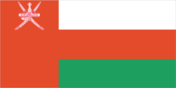
three horizontal bands of white, red, and green of equal width with a broad, vertical, red band on the hoist side; the national emblem (a khanjar dagger in its sheath superimposed on two crossed swords in scabbards) in white is centered near the top of the vertical band; white represents peace and prosperity, red recalls battles against foreign invaders, and green symbolizes the Jebel al Akhdar (Green Mountains) and fertility
Government type
absolute monarchy
Independence
1650 (expulsion of the Portuguese)
International law organization participation
has not submitted an ICJ jurisdiction declaration; non-party state to the ICCt
International organization participation
ABEDA, AFESD, AMF, CAEU, FAO, G-77, GCC, IAEA, IBRD, ICAO, ICC (NGOs), IDA, IDB, IFAD, IFC, IHO, ILO, IMF, IMO, IMSO, Interpol, IOC, IPU, ISO, ITSO, ITU, LAS, MIGA, NAM, OIC, OPCW, UN, UNCTAD, UNESCO, UNIDO, UNWTO, UPU, WCO, WFTU (NGOs), WHO, WIPO, WMO, WTO
Judicial branch
- Supreme Court (consists of 5 judges) judges nominated by the 9-member Supreme Judicial Council (chaired by the monarch) and appointed by the monarch; judges appointed for life Courts of Appeal; Administrative Court; Courts of First Instance; sharia courts; magistrates' courts; military courts
- highest court(s)
- Supreme Court (consists of 5 judges)
- judge selection and term of office
- judges nominated by the 9-member Supreme Judicial Council (chaired by the monarch) and appointed by the monarch; judges appointed for life
- subordinate courts
- Courts of Appeal; Administrative Court; Courts of First Instance; sharia courts; magistrates' courts; military courts
Legal system
mixed legal system of Anglo-Saxon law and Islamic law
Legislative branch
- bicameral Council of Oman or Majlis Oman consists of the Council of State or Majlis al-Dawla (85 seats including the chairman; members appointed by the sultan from among former government officials and prominent educators, businessmen, and citizens) and the Consultative Council or Majlis al-Shura (85 seats; members directly elected in single- and 2-seat constituencies by simple majority popular vote to serve renewable 4-year terms); note - since political reforms in 2011, legislation from the Consultative Council is submitted to the Council of State for review by the Royal Court Consultative Assembly - last held on 25 October 2015 (next to be held in October 2019) percent of vote by party - NA; seats by party - NA; note - organized political parties in Oman are legally banned
- description
- bicameral Council of Oman or Majlis Oman consists of the Council of State or Majlis al-Dawla (85 seats including the chairman; members appointed by the sultan from among former government officials and prominent educators, businessmen, and citizens) and the Consultative Council or Majlis al-Shura (85 seats; members directly elected in single- and 2-seat constituencies by simple majority popular vote to serve renewable 4-year terms); note - since political reforms in 2011, legislation from the Consultative Council is submitted to the Council of State for review by the Royal Court
- election results
- percent of vote by party - NA; seats by party - NA; note - organized political parties in Oman are legally banned
- elections
- Consultative Assembly - last held on 25 October 2015 (next to be held in October 2019)
National anthem
- "Nashid as-Salaam as-Sultani" (The Sultan's Anthem) Rashid bin Uzayyiz al KHUSAIDI/James Frederick MILLS, arranged by Bernard EBBINGHAUS adopted 1932; new lyrics written after QABOOS bin Said al Said gained power in 1970; first performed by the band of a British ship as a salute to the Sultan during a 1932 visit to Muscat; the bandmaster of the HMS Hawkins was asked to write a salutation to the Sultan on the occasion of his ship visit
- lyrics/music
- Rashid bin Uzayyiz al KHUSAIDI/James Frederick MILLS, arranged by Bernard EBBINGHAUS
- name
- "Nashid as-Salaam as-Sultani" (The Sultan's Anthem)
- note
- adopted 1932; new lyrics written after QABOOS bin Said al Said gained power in 1970; first performed by the band of a British ship as a salute to the Sultan during a 1932 visit to Muscat; the bandmaster of the HMS Hawkins was asked to write a salutation to the Sultan on the occasion of his ship visit
National holiday
National Day, 18 November; note - coincides with the birthday of Sultan QABOOS, 18 November (1940)
National symbol(s)
- khanjar dagger superimposed on two crossed swords; national colors: red, white, green
- khanjar dagger superimposed on two crossed swords; national colors
- red, white, green
Political parties and leaders
none; note - organized political parties are legally banned in Oman, and loyalties tend to form around tribal affiliations
Political pressure groups and leaders
none
Suffrage
21 years of age; universal; note - members of the military and security forces by law cannot vote
Economy
Agriculture - products
dates, limes, bananas, alfalfa, vegetables; camels, cattle; fish
Budget
- $22.68 billion $32.07 billion (2017 est.)
- expenditures
- $32.07 billion (2017 est.)
- revenues
- $22.68 billion
Budget surplus (+) or deficit (-)
-13% of GDP (2017 est.)
Central bank discount rate
2% (31 December 2010) 0.05% (31 December 2009)
Commercial bank prime lending rate
5.4% (31 December 2017 est.) 5.08% (31 December 2016 est.)
Current account balance
-$10.3 billion (2017 est.) -$12.32 billion (2016 est.)
Debt - external
$39.17 billion (31 December 2017 est.) $27.05 billion (31 December 2016 est.)
Economy - overview
Oman is heavily dependent on its dwindling oil resources, which generate 84% of government revenue. In 2016, low global oil prices drove Oman’s budget deficit to $11.5 billion, or approximately 19% of GDP, but the budget deficit was reduced to 13% of GDP in 2017 as Oman reduced government subsidies. Oman has limited foreign assets and is issuing debt to cover its deficit. Oman is using enhanced oil recovery techniques to boost production, but has simultaneously pursued a development plan that focuses on diversification, industrialization, and privatization, with the objective of reducing the oil sector's contribution to GDP from 46% at present to 9% by 2020 in accordance with Oman’s ninth five-year development plan. Tourism and gas-based industries are key components of the government's diversification strategy. Muscat also has notably focused on creating more Omani jobs to employ the rising number of nationals entering the workforce. However, high social welfare benefits — that had increased in the wake of the 2011 Arab Spring — have challenged the government's ability to effectively balance its budget in light of low export oil prices. In response, Omani officials imposed austerity measures to its gasoline and diesel subsidies in 2016, with further subsidy cuts planned for electricity and liquid petroleum gas. The spending cuts have faced some public opposition, which could hinder their implementation.
Exchange rates
Omani rials (OMR) per US dollar - 0.3845 (2017 est.) 0.3845 (2016 est.) 0.3845 (2015 est.) 0.3845 (2014 est.) 0.3845 (2013 est.)
Exports
$31.9 billion (2017 est.) $27.54 billion (2016 est.)
Exports - commodities
petroleum, reexports, fish, metals, textiles
Exports - partners
China 47.8%, UAE 8.3%, India 4.1% (2016)
Fiscal year
calendar year
GDP - composition, by end use
- 34.5% 24.6% 35.3% 2.1% 51% -47.4% (2017 est.)
- exports of goods and services
- 51%
- government consumption
- 24.6%
- household consumption
- 34.5%
- imports of goods and services
- -47.4% (2017 est.)
- investment in fixed capital
- 35.3%
- investment in inventories
- 2.1%
GDP - composition, by sector of origin
- 1.7% 45.2% 53% (2017 est.)
- agriculture
- 1.7%
- industry
- 45.2%
- services
- 53% (2017 est.)
GDP - per capita (PPP)
- $45,500 (2017 est.) $46,900 (2016 est.) $48,300 (2015 est.) data are in 2017 dollars
- note
- data are in 2017 dollars
GDP - real growth rate
0% (2017 est.) 3% (2016 est.) 4.2% (2015 est.)
GDP (official exchange rate)
$71.93 billion (2016 est.)
GDP (purchasing power parity)
- $187.9 billion (2017 est.) $187.9 billion (2016 est.) $182.4 billion (2015 est.) data are in 2017 dollars
- note
- data are in 2017 dollars
Gross national saving
19.7% of GDP (2017 est.) 19.4% of GDP (2016 est.) 18.3% of GDP (2015 est.)
Household income or consumption by percentage share
- NA% NA%
- highest 10%
- NA%
- lowest 10%
- NA%
Imports
$22.71 billion (2017 est.) $21.29 billion (2016 est.)
Imports - commodities
machinery and transport equipment, manufactured goods, food, livestock, lubricants
Imports - partners
UAE 44.9%, China 4.8%, India 4.8% (2016)
Industrial production growth rate
0.3% (2017 est.)
Industries
crude oil production and refining, natural and liquefied natural gas production; construction, cement, copper, steel, chemicals, optic fiber
Inflation rate (consumer prices)
3.2% (2017 est.) 1.1% (2016 est.)
Labor force
- 968,800 about 60% of the labor force is non-national (2007 est.)
- note
- about 60% of the labor force is non-national (2007 est.)
Labor force - by occupation
- NA% NA% NA%
- agriculture
- NA%
- industry
- NA%
- services
- NA%
Market value of publicly traded shares
$41.12 billion (31 December 2015 est.) $37.83 billion (31 December 2014 est.) $36.77 billion (31 December 2013 est.)
Population below poverty line
NA%
Public debt
41.3% of GDP (2017 est.) 31.4% of GDP (2016 est.)
Reserves of foreign exchange and gold
$19.96 billion (31 December 2017 est.) $20.26 billion (31 December 2016 est.)
Stock of broad money
$41.44 billion (31 December 2017 est.) $40.11 billion (31 December 2016 est.)
Stock of direct foreign investment - abroad
$NA
Stock of direct foreign investment - at home
$NA
Stock of domestic credit
$48.24 billion (31 December 2017 est.) $46.47 billion (31 December 2016 est.)
Stock of narrow money
$12.7 billion (31 December 2017 est.) $12.95 billion (31 December 2016 est.)
Taxes and other revenues
31.5% of GDP (2017 est.)
Unemployment rate
15% (2004 est.)
Energy
Carbon dioxide emissions from consumption of energy
69 million Mt (2013 est.)
Crude oil - exports
745,800 bbl/day (2014 est.)
Crude oil - imports
6,970 bbl/day (2014 est.)
Crude oil - production
1.007 million bbl/day (2016 est.)
Crude oil - proved reserves
5.373 billion bbl (1 January 2017 es)
Electricity - consumption
27.62 billion kWh (2015 est.)
Electricity - exports
0 kWh (2016 est.)
Electricity - from fossil fuels
100% of total installed capacity (2015 est.)
Electricity - from hydroelectric plants
0% of total installed capacity (2015 est.)
Electricity - from nuclear fuels
0% of total installed capacity (2015 est.)
Electricity - from other renewable sources
0% of total installed capacity (2015 est.)
Electricity - imports
0 kWh (2016 est.)
Electricity - installed generating capacity
7.869 million kW (2015 est.)
Electricity - production
30.79 billion kWh (2015 est.)
Electricity access
- 100,000 98% 99% 93% (2013)
- electrification - rural areas
- 93% (2013)
- electrification - total population
- 98%
- electrification - urban areas
- 99%
- population without electricity
- 100,000
Natural gas - consumption
38.03 billion cu m (2015 est.)
Natural gas - exports
1.99 billion cu m (2015 est.)
Natural gas - imports
10 billion cu m (2015 est.)
Natural gas - production
29.93 billion cu m (2015 est.)
Natural gas - proved reserves
651.3 billion cu m (1 January 2017 es)
Refined petroleum products - consumption
176,000 bbl/day (2015 est.)
Refined petroleum products - exports
33,240 bbl/day (2014 est.)
Refined petroleum products - imports
713.9 bbl/day (2014 est.)
Refined petroleum products - production
224,000 bbl/day (2014 est.)
Communications
Broadcast media
1 state-run TV broadcaster; TV stations transmitting from Saudi Arabia, the UAE, and Yemen available via satellite TV; state-run radio operates multiple stations; first private radio station began operating in 2007 and 2 additional stations now operating (2007)
Internet country code
.om
Internet users
- 2,342,483 69.8% (July 2016 est.)
- percent of population
- 69.8% (July 2016 est.)
- total
- 2,342,483
Telephone system
- modern system consisting of open-wire, microwave, and radiotelephone communication stations; limited coaxial cable; domestic satellite system with 8 earth stations fixed-line and mobile-cellular subscribership both increasing with fixed-line phone service gradually being introduced to remote villages using wireless local loop systems country code - 968; the Fiber-Optic Link Around the Globe (FLAG) and the SEA-ME-WE-3 submarine cable provide connectivity to Asia, the Middle East, and Europe; satellite earth stations - 2 Intelsat (Indian Ocean), 1 Arabsat (2016)
- domestic
- fixed-line and mobile-cellular subscribership both increasing with fixed-line phone service gradually being introduced to remote villages using wireless local loop systems
- general assessment
- modern system consisting of open-wire, microwave, and radiotelephone communication stations; limited coaxial cable; domestic satellite system with 8 earth stations
- international
- country code - 968; the Fiber-Optic Link Around the Globe (FLAG) and the SEA-ME-WE-3 submarine cable provide connectivity to Asia, the Middle East, and Europe; satellite earth stations - 2 Intelsat (Indian Ocean), 1 Arabsat (2016)
Telephones - fixed lines
- 422,518 13 (July 2016 est.)
- subscriptions per 100 inhabitants
- 13 (July 2016 est.)
- total subscriptions
- 422,518
Telephones - mobile cellular
- 6,866,260 205 (July 2016 est.)
- subscriptions per 100 inhabitants
- 205 (July 2016 est.)
- total
- 6,866,260
Transportation
Airports
132 (2013)
Airports - with paved runways
- 1 (2017)
- 2,438 to 3,047 m
- 5
- 914 to 1,523 m
- 1 (2017)
- over 3,047 m
- 7
- total
- 13
Airports - with unpaved runways
- 26 (2013)
- 1,524 to 2,437 m
- 51
- 2,438 to 3,047 m
- 7
- 914 to 1,523 m
- 33
- over 3,047 m
- 2
- total
- 119
- under 914 m
- 26 (2013)
Civil aircraft registration country code prefix
A4O (2016)
Heliports
3 (2013)
Merchant marine
- general cargo 9, other 42 (2017)
- by type
- general cargo 9, other 42 (2017)
- total
- 51
National air transport system
- 6,365,784 412,234,008 mt-km (2015)
- annual freight traffic on registered air carriers
- 412,234,008 mt-km (2015)
- annual passenger traffic on registered air carriers
- 6,365,784
- inventory of registered aircraft operated by air carriers
- 45
- number of registered air carriers
- 1
Pipelines
condensate 106 km; gas 4,224 km; oil 3,558 km; oil/gas/water 33 km; refined products 264 km (2013)
Ports and terminals
- Mina' Qabus, Salalah, Suhar Salalah (3,200,000) Qalhat
- container port(s) (TEUs)
- Salalah (3,200,000)
- LNG terminal(s) (export)
- Qalhat
- major seaport(s)
- Mina' Qabus, Salalah, Suhar
Roadways
- 60,230 km 29,685 km (includes 1,943 km of expressways) 30,545 km (2012)
- paved
- 29,685 km (includes 1,943 km of expressways)
- total
- 60,230 km
- unpaved
- 30,545 km (2012)
Military and Security
Military branches
- Sultan's Armed Forces (SAF): Royal Army of Oman, Royal Navy of Oman, Royal Air Force of Oman (al-Quwwat al-Jawwiya al-Sultanat Oman) (2013)
- Sultan's Armed Forces (SAF)
- Royal Army of Oman, Royal Navy of Oman, Royal Air Force of Oman (al-Quwwat al-Jawwiya al-Sultanat Oman) (2013)
Military expenditures
13.73% of GDP (2016) 14.38% of GDP (2015) 13.51% of GDP (2014) 14.81% of GDP (2013) 16.08% of GDP (2012)
Military service age and obligation
18-30 years of age for voluntary military service; no conscription (2012)
Transnational Issues
Disputes - international
boundary agreement reportedly signed and ratified with UAE in 2003 for entire border, including Oman's Musandam Peninsula and Al Madhah exclave, but details of the alignment have not been made public
Refugees and internally displaced persons
- 5,000 (Yemen) (2017)
- refugees (country of origin)
- 5,000 (Yemen) (2017)