1983 Edition
CIA World Factbook 1983 (Internet Archive)
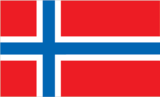
Geography
Agriculture
- main crops — peanuts, cotton, cocoa, rubber, yams, cassava, sorghum, palm kernels, millet, corn, rice; livestock
- animal husbandry predominates; main crops — feed grains, potatoes, fruits, vegetables; 40% selfsufficient; food shortages— food grains, sugar
- based on subsistence farming (fruits, dates, cereals, cattle, camels), fishing
Aid
donor — bilateral economic commitments (ODA and OOF), $1.8 billion (1970-81)
Airfields
- 80 total, 75 usable; 27 with permanent-surface runways; 1 with runways over 3,659 m, 12 with runways 2,4403,659 m, 19 with runways 1,220-2,439 m
- 98 total, 97 usable; 53 with permanent-surface runways; 12 with runways 2,440-3,659 m, 15 with runways 1, 220-2,439 m Oman
- 140 total, 126 usable; 6 with permanent-surface runways; 1 with runways over 3,659 m, 5 with runways 2,440-3,659 m, 59 with runways 1,220-2,439 m
Branches
- Army, Navy, Air Force
- legislative authority rests jointly with Crown and parliament (Storting — Lagting, upper house; Odelsting, lower house); executive power vested in Crown but exercised by Cabinet responsible to parliament; Supreme Court, 5 superior courts, 104 lower courts
- Royal Norwegian Army, Royal Norwegian Navy, Royal Norwegian Air Force
- executive — Sultan, who appoints 45-member State Consultative Assembly to advise him; legislative — none; judicial — traditional Islamic judges and a nascent civil court system
- Army, Navy, Air Force, Royal Oman Police
Budget
- (1981) revenues $14 billion, current expenditures $4.6 billion, development expenditures $9.4 billion
- (1982) revenues $24.1 billion, expenditures $21.8 billion
- (1982) revenues $3.4 billion, expenditures $3.95 billion
Capital
- Oslo
- Muscat
Civil air
- 9 major transport aircraft
- 54 major transport aircraft
- 22 major transport aircraft, including multinationally owned Gulf Air Fleet
Coastline
- mainland 3,419 km; islands 2,413 km (excludes long fjords and numerous small islands and minor indentations, which total as much as 16,093 km overall) People
- 2,092 km People
Communists
- the pro-Communist underground comprises a fraction of the small Nigerian left; leftist leaders are prominent in the country's central labor organization but have little influence on government
- 15,500 est.; 5,500 Norwegian Communist Party (NKP); 10,000 Workers Communist Party-Marxist-Leninist (AKPML, pro-Chinese)
Crude petroleum
20.7 million metric tons produced (1982), exports $4.9 billion (1982)
Crude steel
921,000 metric tons produced (1979), 230 kg per capita
Elections
held every four years (next in 1985) Political parties and leaders: Labor, Gro Harlem Brundtland; Conservative, Jo Benkow; Center, Johan J. Jakobsen; Christian People's, Kjell Magne Bondevik; Liberal, Odd Einar Durum; Socialist Left, Theo Koritzinsky; Norwegian Communist, Hans I. Kleven; Progressive, Carl I. Hagen
Electric power
- 3,050,000 kW capacity (1983); 7.0 billion kWh produced (1983), 80 kWh per capita
- 22,860,400 kW capacity (1983); 92.821 billion kWh produced (1983), 22,470 kWh per capita
- 984,000 kW capacity (1983); 1.724 million kWh produced (1983), 1,762 kWh per capita Oman (continued) Pakistan
Ethnic divisions
- Germanic (Nordic, Alpine, Baltic) and racial-cultural minority of 20,000 Lapps
- almost entirely Arab, with small Baluchi, Zanzibar!, and Indian groups
Exports
- $11.3 billion (f.o.b., 1983); oil (98%), cocoa, palm products, rubber, timber, tin
- $17.5 billion (f.o.b., 1982); principal items — oil, natural gas, metals, pulp and paper, fish products, ships, chemicals, oil
- $4.4 billion (f.o.b., 1982), mostly petroleum; nonoil consist mostly of re-exports and some agricultural goods
Fiscal year
- calendar year Communications
- calendar year Communications
- calendar year Communications
Fishing
- catch 722.185 metric tons (1981); imports nonprocessed and processed fish
- catch 2.5 million metric tons (1981); exports $1 billion (1981)
GDP
$74 billion (1983 current prices), $827 per capita; - 10.0% growth rate (1983 est.)
GNP
- $56.2 billion in 1982, $13,600 per capita; 48.6% private consumption; 19.4% government; 24.6% private investment; net exports of goods and services 5.6%; 1982 growth rate —0.6%, in 1975 prices
- $6.3 billion (1981), $6,828 per capita est.
Government leader
Q ABOOS bin Sa'id Al Bu Sa'id, Sultan
Government leaders
OLAV V, King; Kare WILLOCH, Prime Minister
Highways
- 107,990 km total 30,019 km paved (mostly bituminous surface treatment); 25,411 km laterite, gravel, crushed stone, improved earth; 52,560 km unimproved
- 78,116 km total; 17,699 km concrete and bitumen; 19,277 km bituminous treated; 41,140 km gravel, crushed stone, and earth
- 16,900km total; 2,200 km bituminous surface, 14,700 km motorable track
Imports
- $9.0 billion (f.o.b., 1983); machinery and transport equipment, manufactured goods, chemicals
- $15.5 million (c.i.f., 1982); principal items — foodstuffs, ships, fuels, motor vehicles, iron and steel, chemical compounds, textiles
- $3.2 billion (c.i.f., 1982), machinery, transportation equipment, manufactured goods, food, livestock, mineral fuels, lubricants
Inland waterways
- 8,575 km consisting of Niger and Benue rivers and smaller rivers and creeks
- 1,577 km; 1.5-2.4 m draft vessels maximum
Labor force
- 1.971 million; 32.0% services; 19.8% mining and manufacturing, 15% commerce; 9.1% construction; 8.4% agriculture, forestry, fishing; 8.4% construction; 5.2% banking and financial services; 3.7% unemployed (November 1984)
- 300,000; 50% are non-Omani; est. 66% agriculture Government
Land boundaries
- 2,579 km Water
- 1,384 km Water
Language
- Norwegian (official); small Lappand Finnish-speaking minorities
- Arabic (official); English, Baluchi, Urdu, Indian dialects
Legal system
- mixture of customary law, civil law system, and common law traditions; constitution adopted 1814, modified 1884; Supreme Court renders advisory opinions to legislature when asked; legal education at University of Oslo; accepts compulsory ICJ jurisdiction, with reservations
- based on English common law and Islamic law; no constitution; ultimate appeal to the Sultan; has not accepted compulsory ICJ jurisdiction
Limits of territorial waters (claimed)
- 4 nm (fishing 200 nm; 200 nm exclusive economic zone)
- 12 nm (fishing 200 nm; exclusive economic zone 200 nm)
Literacy
- 100%
- 20%
Major industries
- mining — crude oil, natural gas, coal, tin, columbite; processing industries— oil palm, peanut, cotton, rubber, petroleum, wood, hides, skins; manufacturing industries — textiles, cement, building materials, food products, footwear, chemical, printing, ceramics
- oil and gas, food processing, shipbuilding, wood pulp, paper products, metals, chemicals
- petroleum discovery in 1964; production began in 1967; production 1982, 320,000 b/d; pipeline capacity, 400,000 b/d; copper mine and smelter recently opened
Major trade partners
- UK, EC, US
- 72% EC (36% UK, 20% FRG, 9% Sweden); 2.8% US (1982)
- exports — 52% Japan, 30% Europe, 8% US; imports— 21% Japan, 14% UAE, 14% UK, 8% US (1982)
Member of
- Af DB, APC, Commonwealth, ECA, ECOWAS, FAO, G-77, GATT, IAEA, IBRD, ICAO, ICO, IDA, IFAD, IFC, ILO, IMO, IMF, INTELSAT, INTERPOL, IRC, ISO, ITC, ITU, IWC— International Wheat Council, Lake Chad Basin Commission, Niger River Commission, NAM, OAU, OPEC, UN, UNESCO, UPU, WHO, WMO, WTO Economy
- ADB, Council of Europe, DAC, EC (Free Trade Agreement), EFTA, ESRO (observer), FAO, GATT, IAEA, IBRD, ICAC, ICAO, ICES, ICO, IDA, IEA (associate member), IFAD, IFC, IHO, ILO, IMF, IMO, INTELSAT, INTERPOL, International Lead and Zinc Study Group, IPU, ITU, IWC — International Whaling Commission, IWC — International Wheat Council, NATO, Nordic Council, OECD, UN, UNESCO, UPU, WHO, WIPO, WMO, WSG* Economy
- Arab League, FAO, G-77, GCC, IBRD, ICAO, IDA, IDB— Islamic Development Bank, IFAD, IFC, IMF, IMO, INTELSAT, INTERPOL, ITU, NAM, OIC, UN, UNESCO, UPU, WFTU, WHO, WMO Economy
Military budget
- for fiscal year ending 31 December 1983, $1.7 billion; about 10.9% of central government budget Land About 212,380 km2; negligible amount forested; remainder desert, waste, or urban
- for fiscal year ending 31 December 1984, $1.9 billion; 38.4% of central government budget k K §. l~> SOVIET UNION
Military manpower
- males 15-49, 18,934,000; 10,887,000 fit for military service; 904,000 reach military age (18) annually Land Continental Norway, 323,750km2; Svalbard, 62,160 km2; Jan Mayen, 373 km2; 21% forest; 3% arable, 2% meadow and pasture; 74% other
- males 15-49, 1,031,000; 837,000 fit for military service; 33,000 reach military age (20) annually
- males 15-49, 227,000; 130,000 fit for military service
Monetary conversion rate
- .7259 naira= US$1 (February 1984)
- 7.40 kroner= US$1 (third quarter, 1983 average)
- .3456 riaI=US$l (February 1984)
National holiday
- Constitution Day, 17 May
- National Day, 18-19 November
Nationality
- noun — Norwegian(s); adjective — Norwegian
- noun — Omani(s); adjective — Omani
Official name
- Kingdom of Norway
- Sultanate of Oman
Organized labor
60% of labor force Government
Other political or pressure groups
outlawed Popular Front for the Liberation of Oman (PFLO), based in South Yemen
Pipelines
- 1,918 km crude oil; 102 km natural gas; 3,000 km refined products
- refined products, 53 km
- crude oil 960 km; natural gas 730 km
Political parties
none
Political subdivisions
- 19 counties, 2 territories, 404 communes, 47 towns
- 1 province (Dhofar), 2 governorates (Musandam and Muscat), and numerous districts (wilayats)
Population
- 4,145,000 (July 1984), average annual growth rate 0.4%
- 1,009,000 (July 1984), average annual growth rate 3.1%
Ports
- 6 major (Lagos, Port Harcourt, Calabar, Warri, Onne, Sapele), 9 minor
- 9 major, 69 minor •
- 1 major (Qaboos), 3 minor
Railroads
- 3,505 km 1.067-meter gauge
- 4,257 km 1.435-meter standard gauge; Norwegian State Railways (NSB) operates 4,241 km (2,440 km electrified and 91 km double track); 16km privately owned and electrified
Religion
- 94% Evangelical Lutheran (state church), 4% other Protestant and Roman Catholic, 2% other
- 75% Ibadhi Muslim; remainder Sunni Muslim, Shi'a Muslim, some Hindu
Shortages
most raw materials except of timber, petroleum, iron, copper, and ilmenite ore; dairy products and fish
Suffrage
universal at age 18 but not compulsory
Telecommunications
- above-average system with major expansion in progress; radio-relay and cable routes; 154,200 telephones (0.2 per 100 popl.); 37 AM, 9 FM, and 34 TV stations; satellite station with Atlantic and Indian Ocean antennas, domestic satellite system with 19 stations; 1 coaxial submarine cable Defense Forces
- high-quality domestic and international telephone, telegraph, and telex services; 1.85 million telephones (45.3 per 100 popl.); 8 AM, 806 FM, and 1,623 TV stations; 6 coaxial submarine cables; 6 domestic satellite stations Defense Forces
- fair system of openwire, radio-relay, and radiocommunications stations; 13,000 telephones (0.9 per 100 popl.); 3 AM, 2 FM, 1 1 TV stations; 2 Indian Ocean satellite stations, 7 domestic antennas Defense Forces
Type
- constitutional monarchy
- absolute monarchy; independent, with strong residual UK influence
Voting strength
(1981 election) Labor, 37.3%; Conservative, 31.6%; Christian People's, 9.3%; Center, 6.7%; Socialist Left (Socialist Electoral Alliance), 4.9%; Progressive, 4.5%; Liberal, 3.9%; Red Electoral Alliance, 0.7%; Liberal People's Party (antitax), 0.6%; Norwegian Communist, 0.3%