1992 Edition
CIA World Factbook 1992 (Project Gutenberg)
Geography
Climate
hot, dry summers and autumns and relatively cold winters with heavy snowfall
Coastline
none - landlocked
Comparative area
slightly larger than Vermont
Disputes
Greece claims republic's name implies territorial claims against Aegean Macedonia
Environment
Macedonia suffers from high seismic hazard; air pollution from metallurgical plants
Land area
24,856 km2
Land boundaries
748 km; Albania 151 km, Bulgaria 148 km, Greece 228 km, Serbia and Montenegro 221 km
Land use
arable land 5%; permanent crops 5%; meadows and pastures 20%; forest and woodland 30%; other 40%; includes irrigated NA%
Natural resources
chromium, lead, zinc, manganese, tungsten, nickel, low-grade iron ore, asbestos, sulphur, timber
Note
major transportation corridor from Western and Central Europe to Aegean Sea
Terrain
territory covered with deep basins and valleys; there are three large lakes, each divided by a frontier line
Total area
25,333 km2
People and Society
Birth rate
NA births/1,000 population (1992)
Death rate
NA deaths/1,000 population (1992)
Ethnic divisions
Macedonian 67%, Albanian 20%, Turkish 4%, Serb 2%, other 7%
Infant mortality rate
NA deaths/1,000 live births (1992)
Labor force
507,324; agriculture 8%, manufacturing and mining 40% (1990)
Languages
Macedonian 70%, Albanian 21%, Turkish 3%, Serbo-Croatian 3%, other 3%
Life expectancy at birth
71 years male, 75 years female (1992)
Literacy
89.1% (male 94.2%, female 83.8%) age 10 and over can read and write (1992 est.)
Net migration rate
NA migrants/1,000 population (1992)
Organized labor
NA
Population
2,174,000 (July 1992), growth rate NA% (1992)
Religions
Eastern Orthodox 59%, Muslim 26%, Catholic 4%, Protestant 1%, unknown 10%
Total fertility rate
NA children born/woman (1992)
Government
Administrative divisions
NA
Assembly
last held 11 November 1990 (next to be held NA);results - percent of vote by party NA; seats - (120 total) IMRO-DPMNU 37, SDA 31, PDP 25, MARF 17, Party of Yugoslavs 1, Socialists 5, others 4
Capital
Skopje
Chief of State
President Kiro GLIGOROV (since 27 January 1991)
Communists
NA
Constitution
adopted 17 November 1991, effective 20 November 1991
Diplomatic representation
has not been formerly recognized by the US
Executive branch
presidency, Council of Ministers, prime minister
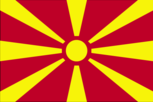
Flag
NA
Head of Government
Prime Minister Nikola KLJUSEV (since March 1991), Deputy Prime Ministers Jovan ANDONOV (since March 1991), Blaze RISTOVSKI (since March 1991), and Bezir ZUTA (since March 1991)
Independence
20 November 1991 from Yugoslavia
Judicial branch
Constitutional Court, Judicial Court of the Republic
Legal system
based on civil law system; judicial review of legislative acts
Legislative branch
unicameral Assembly
Long-form name
Republic of Macedonia
Member of
none
National holiday
NA
Other political or pressure groups
Movement for All Macedonian Action (MAAK), IMRU-Democratic Party, League for Democracy, Albanian Democratic Union-Liberal Party
Political parties and leaders
Social Democratic Alliance (SDA; former Communist Party), Branko CRVENKOVSKI, chairman; Party of Democratic Prosperity, (PDP), Nevzat HALILI, chairman; National Democratic Party, Iliaz HALIMI, chairman; Alliance of Reform Forces of Macedonia (MARF), Sojan ANDOV, chairman; Socialist Party, chairman NA; Internal Macedonian Revolutionary Organization - Democratic Party for Macedonian National Unity (IMRO-DPMNU), Ljupco GEORGIEVSKI, chairman
President
last held 27 January 1991 (next to be held NA); results - Kiro GLIGOREV won
Suffrage
universal at age 18
Type
emerging democracy
Economy
Agriculture
provides 12% of Macedonia's GDP and meets the basic need for food; principal crops are rice, tobacco, wheat, corn, and millet; also grown are cotton, sesame, mulberry leaves, citrus fruit, and vegetables; Macedonia is one of the seven legal cultivators of the opium poppy for the world pharmaceutical industry, including some exports to the US; agricultural production is highly labor intensive
Currency
denar (plural - denars); 1 denar (NA) = 100 NA
Economic aid
$NA
Electricity
1,600,000 kw capacity; 6,300 million kWh produced, 3,103 kWh per capita (1991)
Exchange rates
denar (NA) per US$1 - 240 (January 1991)
Exports
$578 million (1990) commodities: manufactured goods 40%, machinery and transport equipment 14%, miscellaneous manufactured articles 23%, raw materials 7.6%, food (rice) and live animals 5.7%, beverages and tobacco 4.5%, chemicals 4.7% partners: principally Serbia and the other former Yugoslav republics, Germany, Greece, Albania
External debt
$NA
Fiscal year
calendar year
GDP
$7.1 billion, per capita $3,110; real growth rate -18% (1991 est.)
Illicit drugs
NA
Imports
$1,112 million (1990) commodities: fuels and lubricants 19%, manufactured goods 18%, machinery and transport equipment 15%, food and live animals 14%, chemicals 11.4%, raw materials 10%, miscellaneous manufactured articles 8.0%, beverages and tobacco 3.5% partners: other former Yugoslav republics, Greece, Albania, Germany, Bulgaria
Industrial production
growth rate -18% (1991 est.)
Industries
low levels of technology predominate, such as, oil refining by distillation only; produces basic fuels; mining and manufacturing processes result in the extraction and production of coal as well as metallic chromium, lead, zinc, and ferronickel; light industry produces basic textiles, wood products, and tobacco
Overview
Macedonia, although the poorest among the six republics of a disintegrated Yugoslav federation, can meet basic food and energy needs through its own agricultural and coal resources. As a breakaway republic, however, it will move down toward a bare subsistence level of life unless economic ties are reforged or enlarged with its neighbors Serbia, Albania, Greece, and Bulgaria. The economy depends on outside sources for all of its oil and gas and its modern machinery and parts. Continued political turmoil, both internally and in the region as a whole, prevents any swift readjustments of trade patterns and economic rules of the game. Inflation in early 1992 was out of control, the result of fracturing trade links, the decline in economic activity, and general uncertainties about the future status of the country; prices rose 38% in March 1992 alone. Macedonia's geographical isolation, technological backwardness, and political instability place it far down the list of countries of interest to Western investors. Recognition of Macedonia by the EC and an internal commitment to economic reform would help to encourage foreign investment over the long run.
Unemployment rate
20% (1991 est.)
Communications
Airports
2 main
Highways
10,591 km total (1991); 5,091 km paved, 1,404 km gravel, 4,096 km earth
Inland waterways
NA km
Pipelines
none
Ports
none - landlocked
Railroads
NA
Telecommunications
125,000 telephones; broadcast stations - 6 AM, 2 FM, 5 (2 relays) TV; 370,000 radios, 325,000 TV; satellite communications ground stations - none
Military and Security
Branches
Army, Air and Air Defense Force
Defense expenditures
exchange rate conversion - 7.0 billion dinars (est.), NA% of GDP (1992); note - conversion of the military budget into US dollars using the current exchange rate could produce misleading results
Manpower availability
males 15-49, 590,613; NA fit for military service; 22,913 reach military age (18) annually