1981 Edition
CIA World Factbook 1981 (Internet Archive)
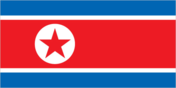
Geography
Area
- Government and party leaders: KIM Il-s6ng, President DPRK and General Secretary of the Korean Workers Party; YI Chong-6k, Premier
- 98,913 km8; 23% arable (22% cultivated), 10% urban and other, 67% forested
Coastline
2,413 km
Elections
election to SPA every four years, but this constitutional provision not necessarily followed — last election February 1982
Land boundaries
241 km
Limits of territorial waters
12 rim (fishing 200 nm)
Member of
FAO, IAEA, ICAO, IPU, IRCS, ITU, UN (observer status only), UNCTAD, UNESCO, UPU, WHO, WIPO, WMO
Political party
Korean Workers (Communist) Party; claims membership of about 2 million, or about 11% of population
Suffrage
universal at age 17
People and Society
Ethnic divisions
homogeneous; small Chinese minority (approx. 20,000)
Labor force
14.2 million (1979); 36% agriculture, fishing, forestry; 24% mining and manufacturing; 40% services and other; average unemployment 3.8% (1979)
Language
Korean
Literacy
about 90%
Nationality
noun — Korean(s); adjective — Korean
Organized labor
about 13% of nonagricultural labor force
Population
41,092,000 (July 1982), average annual growth rate 1.6%
Religion
strong Confucian tradition; pervasive folk religion (Shamanism); vigorous Christian minority (16.6% Christian population); Buddhism (including estimated 20,000 members of Soka Gakkai); Chondokyo (religion of the heavenly way), eclectic religion with nationalist overtones founded in 19th century, claims about 1.5 million adherents
Government
Branches
executive, legislative (unicameral), judiciary
Capital
Seoul
Communists
Communist activity banned by government; an estimated 37,000-50,000 former members and supporters
Elections
under new constitution of October 1980, President elected every seven years indirectly by a 5,000-man electoral college; last election February 1981; four-year National Assembly, elected in March 1981, consists of 276 representatives, 184 directly elected and 92 chosen through proportional representation Political parties and leaders: major party is the government's Democratic Justice Party (DJP), Chun Doo Hwan (president) and Yi Chae-hyong (chairman); opposition parties are Democratic Korea Party (DKP), Yu Chi-Song (president); Korean National Party (KNP), Kim Chong-Chol (president); Democratic Socialist Party (DSP), Ko Chong-hun (president); and several smaller parties
Government leaders
President CHUN Doo Hwan; Prime Minister YOO Chang Soon
Legal system
combines elements of continental European civil law systems, Anglo-American law, and Chinese classical SOUTH KOREA (Continued) thought; constitution approved 1980; has not accepted compulsory ICJ jurisdiction
Member of
AALCC (Afro-Asian League Consultative Committee), ADB, Asian Parliamentary Union, APACL — Asian People's Anti-Communist League, ASPAC, Colombo Plan, ESCAP, FAO, G-77, GATT, Geneva Conventions of 1949 for the protection of war victims, IAEA, IBRD, ICAC, ICAO, IDA, IFAD, IFC, IHO, IMCO, IMF, INTELSAT, INTERPOL, IPU, ITU, IWC— International Whaling Commission, IWC— International Wheat Council, UNCTAD, UNDP, UNESCO, UNICEF, UNIDO, UN Special Fund, UPU, WACL— World Anti-Communist League, WHO, WIPO, WMO, WTO; official observer at UN; does not hold UN membership
National holiday
15 August
Official name
Republic of Korea
Other political or pressure groups
Federation of Korean Trade Unions; Korean Veterans' Association; Korean National Christian Council; large, potentially volatile, student population concentrated in Seoul
Political subdivisions
9 provinces, 2 special cities; heads centrally appointed
Suffrage
universal over age 20
Type
republic; power centralized in a strong executive
Economy
Agriculture
- main crops — corn, rice, vegetables; food shortages — meat, cooking oils; production of foodstuffs adequate for domestic needs at low levels of consumption
- 29% of the population live on the land, but agriculture, forestry, and fishery constitute 16% of GNP; main crops — rice, barley; food shortages — wheat, dairy products, corn
Aid
- economic and military aid from the USSR and China
- economic— US (FY46-80), $6.0 billion committed; Japan (1965-75), $1.8 billion extended; military— US (FY4680) $7.6 billion committed
Budget
$11.8 billion (1981)
Crude steel
3.5 million metric tons produced (1979), 187 kg per capita
Electric power
- 5,428,000 kW capacity (1980); 35.915 billion kWh produced (1980), 1,829 kWh per capita
- 9,000,000 kW capacity (1980); 37.611 billion kWh produced (1979), 886 kWh per capita
Exports
- $1,320 million (1979); minerals, chemical and metallurgical products
- $17.2 billion (f.o.b., 1980); textiles and clothing, electrical machinery, footwear, steel, ships, fish
Fiscal year
- calendar year
- calendar year
Fishing
catch 2,410,346 metric tons (1980)
GNP
- $14.1 billion (1979), $750 per capita
- $56.6 billion (1980, in 1980 prices), $1,481 per capita; real growth -6.2% (1980); real growth 7.2% (1976-80 average)
Imports
- $1,300 million (1979); machinery and equipment, petroleum, foodstuffs, coking coal
- $22.3 billion (c.i.f., 1980); machinery, oil, steel, transport equipment, textiles, organic chemicals, grains
Major industries
- machine building, electric power, chemicals, mining, metallurgy, textiles, food processing
- textiles and clothing, food processing, chemicals, steel, electronics, shipbuilding
Major trade partners
- total trade turnover $2.6 billion (1979); 43% with non-Communist countries, 57% with Communist countries
- exports — 26% US, 17% Japan; imports— 26% Japan, 22% US (1979)
Monetary conversion rate
- 1.79 won=US$l
- controlled float, 700.5 won=US$l (31 December 1981)
Shortages
- complex machinery and equipment, coking coal, petroleum
- base metals, petroleum, lumber, and certain food grains
Communications
Airfields
127 total, 118 usable; 63 with permanentsurface runways; 21 with runways 2,440-3,659 m, 12 with runways 1,220-2,439 m
Civil air
41 major transport aircraft
Freight carried
rail (1980) 49 million metric tons; highway 145 million metric tons; air (1979) 14 billion metric tons (domestic)
Highways
- about 20,280 km (1980); 98.5% gravel, crushed stone, or earth surface; 1.5% concrete or bituminous
- 46,800 km total (1980); 9,290 km national highway, 37,510 km provincial and local roads
Inland waterways
2,253 km; mostly navigable by small craft only
Military budget
proposed for fiscal year ending 31 December 1982, $4.6 billion; about 34% of central government budget
Military manpower
- males 15-49, 4,658,000; 2,852,000 fit for military service; 231,000 reach military age (18) annually
- males 15-49, 11,201,000; 7,560,000 fit for military service; 455,000 reach military age (18) annually
Pipelines
515 km refined products
Ports
- 6 major, 26 minor DEFENSE FORCES
- 10 major, 18 minor
Railroads
4,535 km total operating in 1980; 3,870 km standard gauge (1.435 m), 665 km narrow gauge (0.762 m); 159 km double tracked; about 2,940 km electrified; government owned
Telecommunications
adequate domestic and international services; 2.0 million telephones (5.2 per 100 popl.); 95 AM, 19 FM, and 25 TV stations; 1 ground satellite station DEFENSE FORCES