1988 Edition
CIA World Factbook 1988 (Internet Archive)
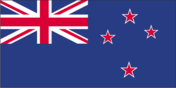
Geography
Boundary disputes
none; territorial claim in Antarctica (Ross Dependency)
Climate
temperate with sharp regional contrasts
Coastline
15,134 km
Comparative area
about the size of Colorado
Continental shelf
edge of continental margin or 200 nm
Environment
earthquakes are common, though usually not severe
Extended economic zone
200 nm
Labor force
50,469 (1980 est); Javanese and Tonkinese laborers were imported for plantations and mines in preWorld War II period; immigrant labor now coming from Wallis and Futuna, Vanuatu, and French Polynesia; est. 8% unemployment
Land use
2% arable land; 0% permanent crops; 53% meadows and pastures; 38% forest and woodland; 7% other; includes 1% irrigated
Language
French; Melanesian-Polynesian dialects
Religion
over 60% Roman Catholic, 30% Protestant, 10% other
Special notes
none
Terrain
predominately mountainous with some large coastal plains.
Territorial sea
12 nm
Total area
268,680 km2; land area: 268,670 km2
People and Society
Ethnic divisions
88% European, 8.9% Maori, 2.9% Pacific Islander, 0.2% other
Infant mortality rate
12.5/1,000 (1983)
Labor force
1,416,900 (August 1986); 66.6% services, 21.0% manufacturing, 11.8% primary production; 5.0% unemployment rate (1986)
Language
English (official), Maori
Life expectancy
men 70.5, women 77.0
Literacy
98%
Nationality
noun— New Zealander(s); adjective — New Zealand
Organized labor
660,000 members; 41% of labor force (December 1985)
Population
3,307,239 (July 1987), average annual growth rate 0.88%
Religion
81% Christian, 18% none or unspecified, 1% Hindu, Confucian, and other
Government
Administrative divisions
- 4 islands or island group dependencies (lie des Pins, lies Loyaute, lie Huon, Island of New Caledonia) and 32 municipalities
- 241 territorial units (128 boroughs, 90 counties, 10 town and district councils); 579 special-purpose bodies
Branches
- administered by High Commissioner, responsible to French Ministry for Overseas France and Council of Government; 46-seat Territorial Assembly
- unicameral legislature (97member House of Representatives, commonly called Parliament); Cabinet responsible to Parliament; three-level court system (magistrates and courts, Supreme Court, and Court of Appeal)
Capital
- Noumea
- Wellington
Communists
- number unknown; Palita extreme left party; some politically active Communists deported during 1950s; small number of North Vietnamese
- SUP about 140, other sects, about 200
Dependent areas
Cook Islands, Niue, Tokelau
Elections
- Assembly elections every five years, last in November 1984; referendum on New Caledonian independence scheduled for 1987
- held at three-year intervals or sooner if Parliament is dissolved by Prime Minister; last election July 1984 Political parties and leaders: New Zealand Labor Party (NZLP; government), David Lange; National Party (NP; opposition), Jim Bolger; Democratic Party, Neil Morrison; New Zealand Party, Steven Greenfield; Socialist Unity Party (SUP; pro-Soviet), Ken Douglas
Government leader
David LANGE, Prime Minister (since July 1984)
Government leaders
Fernand WIBAUX, French High Commissioner and President of the Council of Government (since 1985); Kanak Provisional Government — JeanMarie TJIBAOU, President (since December 1984)
Legal system
- French law
- based on English law, with special land legislation and land courts for Maoris; constitution consists of various documents, including certain acts of the UK and New Zealand Parliaments; accepts compulsory ICJ jurisdiction, with reservations
Member of
- EIB (associate), WFTU, WMO
- ADB, ANZUS, ASPAC, Colombo Plan, Commonwealth of Nations, DAC, ESCAP, FAO, GATT, IAEA, IBRD, ICAO, ICO, IDA, IEA, IFAD, IFC, IHO, ILO, IMF, IMO, INTELSAT, INTERPOL, IPU, ISO, ITU, OECD, SPF, UN, UNESCO, UPU, WHO, WMO, WSG
National holiday
Waitangi Day, 6 February
Official name
- Territory of New Caledonia and Dependencies
- New Zealand
Political parties
white-dominated Rassemblement pour la Caledonie dans la Republique (RPCR) — Conservative; Melanesian proindependence Kanak Socialist National Liberation Front (FLNKS); Melanesian moderate Kanak Socialist Liberation (LKS)
Suffrage
- universal
- universal age 18 and over
Type
- French overseas territory; represented in French parliament by two deputies and one senator
- independent state within Commonwealth, recognizing Elizabeth II as head of state
Voting strength
- (1984 election) Territorial Assembly— RPCR, 34 seats; LKS, 6 seats; splinter groups, 2 seats; FLNKS boycotted the election
- (1984 election and one byelection in 1985) Parliament — National Party, 38 seats; Labor Party, 55 seats; Democratic Party, 2 seats
Economy
Agriculture
- large areas devoted to cattle grazing; coffee, maize, wheat, vegetables; 60% self-sufficient in beef
- fodder and silage crops, wool, meat, dairy products; food surplus country
Aid
ODA and OOF commitments (1970-84), $380 million
Budget
- revenues, $187.1 million; expenditures, $168.3 million (1981)
- expenditures, $7.3 billion; receipts, $6.0 billion; deficit, $1.3 billion (1984/85)
Electric power
- 400,000 kW capacity; 2,200 million kWh produced, 14,800 kWh per capita (1986)
- 7,593,000 kW capacity; 27,000 million kWh produced, 8,180 kWh per capita (1986)
Exports
- $217.8 million (1983); 95% nickel metal (95%), nickel ore
- $5.75 billion (f.o.b., FY ending June 1986); beef, wool, dairy products
Fiscal year
1 April-31 March
Fishing
catch 138,000 metric tons (1983); exports — 130,000 metric tons valued at $300 million (1984)
GDP
$24.1 billion (FY ending March 1985), $7,420 per capita; real growth rate 1.1% (1975-85); 17.5% average inflation rate (FY ending March 1987 est.)
GNP
$1.21 billion, $8,050 per capita (1983)
Imports
- $350 million (1983); fuels and minerals, machines and electrical equipment
- $6.2 billion (c.i.f., FY ending June 1986); petroleum, cars, trucks, machinery and electrical equipment, iron and steel, petroleum products
Industry
nickel mining
Major industries
food processing, wood and paper products, textile production, machinery, transport equipment, banking and insurance, tourism
Major trade partners
- exports — 54.9% France; imports— 32.5% France (1980)
- exports — 16% Australia, 15% Japan, 15% US, 9% UK (trade year 1982/83); imports— 20.5% Japan, 17.2% Australia, 16.5% US, 9.2% UK (1985)
Monetary conversion rate
- 127.05 francs CFP=US$1 (December 1982)
- NZ$1.88=US$1 (14 January 1987)
Natural resources
- nickel, chrome, iron, cobalt, manganese, silver, gold, lead, copper
- natural gas, iron, sand, coal, timber
Communications
Airfields
- 29 total, 28 usable; 4 with permanent-surface runways; 1 with runways 2,440-3,659 m, 1 with runways 1,220-2,439 m
- 205 total, 197 usable; 27 with permanent-surface runways; 2 with runways 2,440-3,659 m; 51 with runways 1,220-2,439 m
Branches
Royal New Zealand Navy, New Zealand Army, Royal New Zealand Air Force
Civil air
- no major transport aircraft
- about 40 major transport aircraft
Highways
- 5,448 km total; 558 km paved, 2,251 km improved earth, 2,639 km unimproved earth
- 92,648 km total maintained (March 1984); 49,547 km paved, 43,101 km gravel or crushed stone
Inland waterways
- none
- 1,609 km; of little importance to transportation
Military budget
for fiscal year ending 31 March 1986, $500 million; about 5.1% of central government budget
Military manpower
males 15-49, 881,000; 753,000 fit for military service; 31,000 reach military age (20) annually
Pipelines
1,000 km natural gas; 160 km refined products; 150 km condensate
Ports
- 1 major (Noumea), 21 minor
- 3 major
Railroads
- none
- 4,716 km total (1980); all 1.067meter gauge; 274 km double track; 113 km electrified; over 99% government owned
Telecommunications
- 32,000 telephones (21 per 100 popl.); 5 AM, 3 FM, 7 TV stations; 1 satellite ground station Defense Forces Defense is the responsibility of France Kermedec Itlindi '• South Pacific Ocean Chflhmm Ttsmtn 5" ^i, North Island Auckland N«w Plymouth/ fGJ.bom. ^ELLINGTON ^BE?'.74B X Grey mouth 'Chrittchurch South Island Dun*din Se« rctlonal map \
- excellent international and domestic systems; 2.01 million telephones (60.8 per 100 popl.); 64 AM, 2 FM, 14 TV stations, and about 400 repeaters; submarine cables extend to Australia and Fiji; 1 satellite ground station Defense Forces