1985 Edition
CIA World Factbook 1985 (Internet Archive)
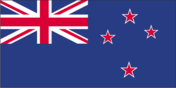
Geography
Agriculture
fodder and silage crops, about one-half of area planted in field crops; main products — wool, meat, dairy products; food surplus country
Aid
bilateral economic aid commitments (ODA and OOF), $338 million (1970-82)
Area
550 km Tasman Sea South Pacific Ocean North Is/and LLINGTON j South Island /Dunedin "™ Chatham • Islands Set regional map X Land 268,676 km2; the size of Colorado; 50% pasture; 16% forest; 10% park and reserve; 3% cultivated; 1% urban; 20% waste, water, or other; 4 principal islands, 2 minor inhabited islands, several minor uninhabited islands Water
Branches
- unicameral legislature (92-member House of Representatives, commonly called Parliament); Cabinet responsible to Parliament; three-level court system (magistrates, courts, Supreme Court, and Court of Appeal)
- Sandinista Popular Army, Sandinista War Navy, Sandinista Air Force/ Air Defense, Sandinista Popular Militia
- executive authority exercised by President Seyni Kountche in the name of the Supreme Military Council (SMC), which is composed of army officers; office of prime minister created January 1 983; since November 1983, civilians have held all cabinet portfolios except Defense and Interior, which are held by President Kountche
Budget
(1984/85) expenditures, $7.3 billion; receipts, $6.0 billion; deficit, $1.3 billion
Capital
- Wellington
- Niamey
Coastline
about 15,134 km People
Communists
- CPNZ about 300, SUP about
- no Communist party; some sympathizers in outlawed Sawaba party
Elections
- held at three-year intervals or sooner if Parliament is dissolved by Prime Minister; last election July 1984 Political parties and leaders: New Zealand Labor Party (NZLP; government), David Lange; National Party (NP; opposition), Jim McLay; Social Credit Political League (Socred), Bruce Beetham; New Zealand Party, Bob Jones; Socialist Unity Party (SUP; pro-Soviet), G. H. "Bill" Andersen
- popular elections currently allowed only for choosing representatives for village Development Councils, which advise on local economic development Political parties and leaders: political parties banned
Electric power
7,300,000 kW capacity (1984); 27.08 billion kWh produced (1984), 8,330 kWh per capita
Ethnic divisions
- 87% European, 9% Maori, 2% Pacific Islander, 2% other
- 56% Hausa; 22% Djerma; 8.5% Fula; 8% Tuareg; 4.3% Beri Beri (Kanouri); 1.2% Arab, Toubou, and Gourmantche; about 4,000 French expatriates
Exports
$5.3 billion (f.o.b., 1983); principal products — beef, wool, dairy
Fiscal year
1 April-31 March Nicaragua (continued) Niger
Fishing
catch 1 16,000 metric tons (1982); exports—80,000 metric tons valued at $1 10 million (1982)
GNP
$ 1 6. 2 billion (year ending March 1 984), $5,063 per capita; real average annual growth (1974-84), 1.1%
Government leader
- David LANGE, Prime Minister (since July 1984)
- Brig. Gen. Seyni KOUNTCHE, President of Supreme Military Council, Chief of State (since 1974); Hamid ALGABID, Prime Minister (since November 1983)
Imports
$5.3 billion (c.i.f., 1983); principal products — petroleum, cars, trucks, iron and steel, petroleum products
Labor force
- 1,325,000(1981); 29.9% manufacturing, mining, and construction; 24.2% commerce and finance; 21.2% services; 10.7% agriculture; 8.3% transportation and communications; 2% other; unemployment 3.7% (February 1981)
- 2.5 million (1982) wage earners; 90% agriculture, 6% industry and commerce, 4% government
Land boundaries
5,745 km People
Language
- English (official), Maori
- French (official); Hausa, Djerma
Legal system
- based on English law, with special land legislation and land courts for Maoris; constitution consists of various documents, including certain acts of the UK and New Zealand Parliaments; legal education at Victoria, Auckland, Canterbury, and Otago Universities; accepts compulsory ICJ jurisdiction, with reservations
- based on French civil law system and customary law; constitution adopted 1960, suspended 1974; committee appointed January 1984 to "reflect" on a new national charter; has not accepted compulsory ICJ jurisdiction
Limits of territorial waters (claimed)
12 nm (economic, including fishing, 200 nm)
Literacy
- 98%
- 5%
Major industries
food processing, textile production, machinery, transport equipment, wood and paper products
Major trade partners
(trade year 1982/83) exports— 15% Japan, 15% Australia, 14% US, 11% UK; imports— 21% Japan, 20% Australia, 15% US, 4% FRG
Member of
- ADB, ANZUS, ASPAC, Colombo Plan, Commonwealth of Nations, DAC, ESCAP, FAO, GATT, IAEA, IBRD, ICAO, ICO, IDA, IEA, IFAD, IFC, IHO, ILO, IMF, IMO, INTELSAT, INTERPOL, IPU, ISO, ITU, OECD, UN, UNESCO, UPU, WHO, WMO, WSG Economy
- Af DB, APC, CEAO, EAMA, EGA, ECOWAS, Entente, FAO, G-77, GATT, IAEA, IBRD, ICAO, IDA, IDB— Islamic Development Bank, IFAD, IFC, ILO, IMF, INTELSAT, INTERPOL, IPU, ITU, Lake Chad Basin Commission, Niger River Commission, NAM, OAU, OCAM, OIC, UN, UNESCO, UPU, WHO, WIPO, WMO
Military manpower
males 15-49, 676,000; 418,000 fit for military service; 33,000 reach military age (18) annually See regional mtp VII Land 1,267,000 km2; almost three times the size of California; 7.6% permanent meadow and pasture, 2.6% arable, 2.3% forest and woodland, .02% inland water, 87% other, remainder desert
Monetary conversion rate
NZ$2.13=US$1 (8 January 1985)
National holiday
Waitangi Day, 6 February
National holidays
Independence Day, 3 August; Republic Day, 18 December
Nationality
- noun — New Zealander(s); adjective— New Zealand
- noun — Nigerien(s) adjective — Nigerien
Official name
- New Zealand
- Republic of Niger
Organized labor
- 46% of labor force Government
- negligible Government
Political subdivisions
- 239 territorial units (boroughs, counties, town and district councils); 657 special-purpose bodies
- 1 departments, 32 arrondissements
Population
- 3,295,000 (July 1985), average annual growth rate 1.4%
- 6,495,000 (July 1985), average annual growth rate 3.3%
Religion
- 81% Christian, 18% none or unspecified, 1% Hindu, Confucian, and other
- 80% Muslim, remainder indigenous beliefs and Christians
Suffrage
- universal age 18 and over
- universal adult
Telecommunications
low-capacity radiorelay and wire system; connection into Central American microwave net; Atlantic Ocean station; 60,000 telephones (2.2 per 100 popl.); 52 AM, 11 FM, 5 TV stations; Intersputnik communications satellite facility Defense Forces
Type
- independent state within Commonwealth, recognizing Elizabeth II as head of state
- republic; military regime in power since April 1974
Voting strength
(1981 election) Parliament— National Party, 47 seats; Labor Party, 43 seats; Social Credit, 2 seats