1984 Edition
CIA World Factbook 1984 (Internet Archive)
Geography
Agriculture
fodder and silage crops, about one-half of area planted in field crops; main products — wool, meat, dairy products; food surplus country
Aid
bilateral economic aid commitments (ODA and OOF), $507 million (1970-81)
Area
- 7,692,300 km2; 58% pasture; 6% arable; 2% forest; 34% other Water Limits of territorial waters (claimed):^ nm (fishing 200 nm; prawn and crayfish on continental shelf)
- 269,063 km2; 50% pasture; 16% forest; 10% park and reserve; 3% cultivated; 1% urban; 20% waste, water, or other; 4 principal islands, 2 minor inhabited islands, several minor uninhabited islands. Water
Branches
- bicameral legislature (Federal Parliament — Senate and House of Representatives); Prime Minister and Cabinet responsible to House; independent judiciary
- unicameral legislature (92-member House of Representatives, commonly called Parliament); Cabinet responsible to Parliament; three-level court system (magistrates, courts, Supreme Court, and Court of Appeal)
Budget
(1981/82) expenditures, NZ$10.9 million; receipts, NZ$8.8 million; deficit NZ$2.1
Capital
- Canberra
- Wellington
Coastline
- about 25,760 km People
- about 15,134 km People
Communists
CPNZ about 300, SUP about
Elections
- held at three-year intervals or sooner if Parliament is dissolved by Prime Minister; last election 5 March 1983 Political parties and leaders: government — Australian Labor Party (Robert Hawke); opposition— Liberal Party (Andrew Peacock), National Party (Ian Sinclair), and Australian Democratic Party (Donald L. Chipp)
- held at three-year intervals or sooner if Parliament is dissolved by Prime Minister; last election November 1981 Political parties and leaders: National Party (NP; government), Robert D. Muldoon; New Zealand Labor Party (NZLP; opposition), David Lange; Social Credit Political League (Socred), Bruce Beetham; New Zealand Party, Bob Jones; Communist Party of New Zealand (CPNZ; Marxist-Leninist; proAlbania), Richard C. Wolfe; Socialist Unity Party (SUP; pro-Soviet), G. H. "Bill" Andersen
Electric power
6,953,000 kW capacity (1982); 30.6 billion kWh produced (1982), 9,800 kWh per capita
Ethnic divisions
- 99% Caucasian, 1% Asian and aborigine
- 87% European, 9% Maori, 2% Pacific Islander, 2% other
Exports
$5.5 billion (f.o.b., 1981); principal products meat, dairy, fish, wool
Fishing
exports 80,000 metric tons valued at $110 million (1982)
GNP
NZ$24.0 billion (year ending March 1981), NZ$7,585 per capita; real average annual growth (1971-81), 2.2%
Government leader
Robert D. MULDOON, Prime Minister
Government leaders
Sir Ninian STEPHEN, Governor General; Robert HAWKE, Prime Minister
Imports
$5.3 billion (c.i.f., 1981); principal products — petroleum, cars, trucks, iron and steel, petroleum products
Labor force
- 7.0 million (April 1983); 10.3% unemployment (April 1983)
- 1,325,000(1981); 29.9% manufacturing, mining, and construction; 24.2% commerce and finance; 21.2% services; 10.7% agriculture; 8.3% transportation and communications; 2% other; unemployment 3.7% (February 1981)
Language
English, native languages
Languages
English (official), Maori
Legal system
- based on English common law; constitution adopted 1900; High Court has jurisdiction over cases involving interpretation of the constitution; accepts compulsory ICJ jurisdiction, with reservations
- based on English law, with special land legislation and land courts for Maoris; constitution consists of various documents, including certain acts of the UK and New Zealand Parliaments; legal education at Victoria, Auckland, Canterbury, and Otago Universities; accepts compulsory ICJ jurisdiction, with reservations
Limits of territorial waters (claimed)
12 nm (economic including fishing 200 nm)
Literacy
- 98.5%
- 98%
Major industries
food processing, textile production, machinery, transport equipment; wood and paper products
Major trade partners
(trade year 1981/82) exports— 15.4% Australia, 14.3% UK, 13.0% Japan, 12.7% US; imports— -20.2% Australia, 17.4% Japan, 15.8% US, 9.2% UK
Member of
ADB, ANZUS, ASPAC, Colombo Plan, Commonwealth of Nations, DAC, ESCAP, FAO, GATT, IAEA, IBRD, ICAO, ICO, IDA, IEA, IFAD, IFC, IHO, ILO, IMF, IMO, INTELSAT, INTERPOL, IPU, ISO, ITU, OECD, UN, UNESCO, UPU, WHO, WMO, WSG Economy
National holiday
- Australia Day, 26 January
- Waitangi Day, 6 February"
Nationality
- noun — Australian(s); adjective — Australian
- noun — New Zealander(s); adjective — New Zealand
Official name
- Commonwealth of Australia
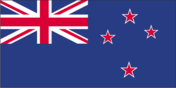
- New Zealand
Organized labor
- 57% of total employees (December 1982) Government
- 46% of labor force Government
Other political or pressure groups
Australian Democratic Labor Party (antiCommunist Labor Party splinter group)
Political subdivisions
- 6 states and 2 territories— Australian Capital Territory (Canberra) and Northern Territory
- 239 territorial units (boroughs, counties, town and district councils); 657 special-purpose bodies
Population
- 15,462,000 (July 1984), average annual growth rate 1.3%
- 3,238,000 (July 1984), average annual growth rate 1.1%
Religion
- 27.7% Anglican, 25.7% Roman Catholic, 25.2% other Protestant
- 81% Christian, 18% none or unspecified, 1% Hindu, Confucian, and other
Suffrage
- universal and compulsory over age
- universal age 18 and over
Type
- federal parliamentary state recognizing Elizabeth II as sovereign or head of state
- independent state within Commonwealth, recognizing Elizabeth II as head of state
Voting strength
- (1983 parliamentary election) House of Representatives — Labor Party 75 seats, Liberal-National coalition 50 seats; Senate — Labor Party 30 seats, LiberalCountry coalition 27 seats, Australian Democratic Party 5 seats, independents 2 seats Communist*: 5,000 members (est.)
- (1981 election) Parliament— National Party 47 seats; Labor Party, 43 seats; Social Credit, 2 seats