2011 Edition
CIA World Factbook 2011 Archive (HTML)
Introduction
Background
Settled by both Britain and France during the first half of the 19th century, the island was made a French possession in 1853. It served as a penal colony for four decades after 1864. Agitation for independence during the 1980s and early 1990s ended in the 1998 Noumea Accord, which over a period of 15 to 20 years will transfer an increasing amount of governing responsibility from France to New Caledonia. The agreement also commits France to conduct a referendum between 2014 and 2019 to decide whether New Caledonia should assume full sovereignty and independence.
Geography
Area
- 18,575 sq km 18,275 sq km 300 sq km
- total
- 18,575 sq km
- water
- 300 sq km
Area - comparative
slightly smaller than New Jersey
Climate
tropical; modified by southeast trade winds; hot, humid
Coastline
2,254 km
Elevation extremes
- Pacific Ocean 0 m Mont Panie 1,628 m
- highest point
- Mont Panie 1,628 m
- lowest point
- Pacific Ocean 0 m
Environment - current issues
erosion caused by mining exploitation and forest fires
Geographic coordinates
21 30 S, 165 30 E
Geography - note
consists of the main island of New Caledonia (one of the largest in the Pacific Ocean), the archipelago of Iles Loyaute, and numerous small, sparsely populated islands and atolls
Irrigated land
100 sq km (2008)
Land boundaries
0 km
Land use
- 0.32% 0.22% 99.46% (2005)
- arable land
- 0.32%
- other
- 99.46% (2005)
- permanent crops
- 0.22%
Location
Oceania, islands in the South Pacific Ocean, east of Australia
Map references
Oceania
Maritime claims
- 12 nm 200 nm
- exclusive economic zone
- 200 nm
- territorial sea
- 12 nm
Natural hazards
- cyclones, most frequent from November to March Matthew and Hunter Islands are historically active
- volcanism
- Matthew and Hunter Islands are historically active
Natural resources
nickel, chrome, iron, cobalt, manganese, silver, gold, lead, copper
Terrain
coastal plains with interior mountains
People and Society
Age structure
- 24.9% (male 32,653/female 31,236) 67.3% (male 86,865/female 85,578) 7.8% (male 8,954/female 10,989) (2011 est.)
- 0-14 years
- 24.9% (male 32,653/female 31,236)
- 15-64 years
- 67.3% (male 86,865/female 85,578)
- 65 years and over
- 7.8% (male 8,954/female 10,989) (2011 est.)
Birth rate
16.28 births/1,000 population (2011 est.)
Death rate
5.28 deaths/1,000 population (July 2011 est.)
Education expenditures
NA
Ethnic groups
Melanesian 44.1%, European 34.1%, Wallisian & Futunian 9%, Tahitian 2.6%, Indonesian 2.5%, Vietnamese 1.4%, Ni-Vanuatu 1.1%, other 5.2% (1996 census)
HIV/AIDS - adult prevalence rate
NA
HIV/AIDS - deaths
NA
HIV/AIDS - people living with HIV/AIDS
NA
Infant mortality rate
- 5.71 deaths/1,000 live births 6.75 deaths/1,000 live births 4.62 deaths/1,000 live births (2011 est.)
- female
- 4.62 deaths/1,000 live births (2011 est.)
- total
- 5.71 deaths/1,000 live births
Languages
French (official), 33 Melanesian-Polynesian dialects
Life expectancy at birth
- 76.75 years 72.67 years 81.03 years (2011 est.)
- female
- 81.03 years (2011 est.)
- total population
- 76.75 years
Literacy
- age 15 and over can read and write 96.2% 96.8% 95.5% (1996 census)
- definition
- age 15 and over can read and write
- female
- 95.5% (1996 census)
- male
- 96.8%
- total population
- 96.2%
Major cities - population
NOUMEA (capital) 144,000 (2009)
Median age
- 30.1 years 29.6 years 30.7 years (2011 est.)
- female
- 30.7 years (2011 est.)
- male
- 29.6 years
- total
- 30.1 years
Nationality
- New Caledonian(s) New Caledonian
- adjective
- New Caledonian
- noun
- New Caledonian(s)
Net migration rate
4.25 migrant(s)/1,000 population there has been steady emigration from Wallis and Futuna to New Caledonia (2011 est.)
Population
256,275 (July 2011 est.)
Population growth rate
1.524% (2011 est.)
Religions
Roman Catholic 60%, Protestant 30%, other 10%
School life expectancy (primary to tertiary education)
NA
Sex ratio
- 1.05 male(s)/female 1.04 male(s)/female 1.01 male(s)/female 0.86 male(s)/female 1 male(s)/female (2011 est.)
- 15-64 years
- 1.01 male(s)/female
- 65 years and over
- 0.86 male(s)/female
- at birth
- 1.05 male(s)/female
- total population
- 1 male(s)/female (2011 est.)
- under 15 years
- 1.04 male(s)/female
Total fertility rate
2.07 children born/woman (2011 est.)
Urbanization
- 57% of total population (2010) 1.4% annual rate of change (2010-15 est.)
- rate of urbanization
- 1.4% annual rate of change (2010-15 est.)
- urban population
- 57% of total population (2010)
Government
Administrative divisions
none (overseas territory of France); there are no first-order administrative divisions as defined by the US Government, but there are 3 provinces named Province des Iles, Province Nord, and Province Sud
Capital
- Noumea 22 16 S, 166 27 E UTC+11 (16 hours ahead of Washington, DC during Standard Time)
- geographic coordinates
- 22 16 S, 166 27 E
- name
- Noumea
- time difference
- UTC+11 (16 hours ahead of Washington, DC during Standard Time)
Constitution
4 October 1958 (French Constitution)
Country name
- Territory of New Caledonia and Dependencies New Caledonia Territoire des Nouvelle-Caledonie et Dependances Nouvelle-Caledonie
- conventional long form
- Territory of New Caledonia and Dependencies
- conventional short form
- New Caledonia
- local long form
- Territoire des Nouvelle-Caledonie et Dependances
- local short form
- Nouvelle-Caledonie
Dependency status
territorial collectivity (or a sui generis collectivity) of France since 1998
Diplomatic representation from the US
none (overseas territory of France)
Diplomatic representation in the US
none (overseas territory of France)
Executive branch
- President Nicolas SARKOZY (since 16 May 2007); represented by High Commissioner Albert DUPUY (since 6 October 2010) President of the Government Harold MARTIN (since 3 March 2011); note - since 3 March 2011, three different governments of Harold MARTIN have collapsed over the choice of a flag that will be used while it is being decolonized; President MARTIN is head of a caretaker government Cabinet consisting of 11 members elected from and by the Territorial Congress French president elected by popular vote for a five-year term; high commissioner appointed by the French president on the advice of the French Ministry of Interior; president of the government elected by the members of the Territorial Congress for a five-year term (no term limits); note - last election held on 10 June 2011 (next to be held June 2016)
- cabinet
- Cabinet consisting of 11 members elected from and by the Territorial Congress
- chief of state
- President Nicolas SARKOZY (since 16 May 2007); represented by High Commissioner Albert DUPUY (since 6 October 2010)
- elections
- French president elected by popular vote for a five-year term; high commissioner appointed by the French president on the advice of the French Ministry of Interior; president of the government elected by the members of the Territorial Congress for a five-year term (no term limits); note - last election held on 10 June 2011 (next to be held June 2016)
- head of government
- President of the Government Harold MARTIN (since 3 March 2011); note - since 3 March 2011, three different governments of Harold MARTIN have collapsed over the choice of a flag that will be used while it is being decolonized; President MARTIN is head of a caretaker government
Flag description
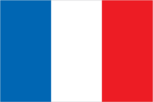
the flag of France is used
Government type
NA
Independence
none (overseas territory of France); note - a referendum on independence was held in 1998 but did not pass; a new referendum is scheduled to take place between 2014 and 2019
International organization participation
PIF (associate member), SPC, UPU, WFTU
Judicial branch
Court of Appeal or Cour d'Appel; County Courts; Joint Commerce Tribunal Court; Children's Court
Legal system
civil law system based on French law; the 1988 Matignon Accords grant substantial autonomy to the islands
Legislative branch
- unicameral Territorial Congress or Congres du territoire (54 seats; members belong to the three Provincial Assemblies or Assemblees Provinciales elected by popular vote to serve five-year terms) last held on 9 May 2009 (next to be held on 10 May 2014) percent of vote by party - NA; seats by party - UMP 13, Caledonia Together 10, UC 8, UNI 8, AE 6, FLNKS 3, Labor Party 3, other 3 New Caledonia holds two seats in the French Senate; elections last held on 21 September 2008 (next to be held not later than September 2014); results - percent of vote by party - NA; seats by party - UMP 2; New Caledonia also elects two seats to the French National Assembly; elections last held on 10 and 17 June 2007 (next to be held in June 2012); results - percent of vote by party - NA; seats by party - UMP 2
- election results
- percent of vote by party - NA; seats by party - UMP 13, Caledonia Together 10, UC 8, UNI 8, AE 6, FLNKS 3, Labor Party 3, other 3
- elections
- unicameral Territorial Congress or Congres du territoire (54 seats; members belong to the three Provincial Assemblies or Assemblees Provinciales elected by popular vote to serve five-year terms) last held on 9 May 2009 (next to be held on 10 May 2014)
National anthem
- "Soyons unis, devenons freres" (Let Us Be United, Let Us Become Brothers) Chorale Melodia (a local choir) adopted 2008; the anthem contains a mixture of lyrics in both French and Nengone (an indigenous language); as a self-governing territory of France, in addition to the local anthem, "La Marseillaise" is official (see France)
- lyrics/music
- Chorale Melodia (a local choir)
- name
- "Soyons unis, devenons freres" (Let Us Be United, Let Us Become Brothers)
National holiday
Bastille Day, 14 July (1789); note - the local holiday is New Caledonia Day, 24 September (1853)
National symbol(s)
kagu bird
Political parties and leaders
Caledonia My Country; Caledonia Together [Philippe GOMES]; Caledonian Union or UC [Nicholas ABOUT]; Communist Republican and Left Party or CRC-SPG [Nichole BORVO COHEN-SEAT]; Democratic and European Social Rally or R.D.S.E. [Yvon COLLIN]; Front National or FN [Jean-Marie LE PEN]; Kanak Socialist Front for National Liberation or FLNKS (includes PALIKA, UNI, UC, and UPM); Labor Party [Louis Kotra UREGEI]; National Union for Independence or UNI; Parti de Liberation Kanak or PALIKA [Paul NEAOUTYINE]; Renewed Caledonian Union; Socialist Group [Jean Pierre BEL]; Socialist Kanak Liberation or LKS [Nidoish NAISSELINE]; The Future Together or AE [Didier LEROUX]; The Rally or UMP [Gerard LONGUET]; Union Nationale pour l'Independance or UNI; Union of Pro-Independence Co-operation Committees [Francois BURCK]
Political pressure groups and leaders
NA
Suffrage
18 years of age; universal
Economy
Agriculture - products
vegetables; beef, deer, other livestock products; fish
Budget
- $996 million $1.072 billion (2001 est.)
- expenditures
- $1.072 billion (2001 est.)
- revenues
- $996 million
Budget surplus (+) or deficit (-)
-2.3% of GDP (2001 est.)
Debt - external
$79 million (1998 est.)
Economy - overview
New Caledonia has about 25% of the world's known nickel resources. Only a small amount of the land is suitable for cultivation, and food accounts for about 20% of imports. In addition to nickel, substantial financial support from France - equal to more than 15% of GDP - and tourism are keys to the health of the economy. Substantial new investment in the nickel industry, combined with the recovery of global nickel prices, brightens the economic outlook for the next several years.
Electricity - consumption
1.674 billion kWh (2008 est.)
Electricity - exports
0 kWh (2009 est.)
Electricity - imports
0 kWh (2009 est.)
Electricity - production
1.8 billion kWh (2008 est.)
Exchange rates
Comptoirs Francais du Pacifique francs (XPF) per US dollar - 87.59 (2007) 94.97 (2006) 95.89 (2005) 96.04 (2004) 105.66 (2003)
Exports
$969.4 million (2009 est.) $969.4 million (2006)
Exports - commodities
ferronickels, nickel ore, fish
Exports - partners
Japan 19.8%, France 16.7%, South Korea 10.5%, Australia 8.1%, Spain 6.7%, US 4.9% (2010)
GDP - composition by sector
- 2% 26.5% 71.4% (2010 est.)
- agriculture
- 2%
- industry
- 26.5%
- services
- 71.4% (2010 est.)
GDP - per capita (PPP)
$15,000 (2003 est.)
GDP - real growth rate
NA%
GDP (official exchange rate)
$3.3 billion (2003 est.)
GDP (purchasing power parity)
$3.158 billion (2003 est.)
Household income or consumption by percentage share
- NA% NA%
- highest 10%
- NA%
- lowest 10%
- NA%
Imports
$2.58 billion (2009 est.) $2.58 billion (2006)
Imports - commodities
machinery and equipment, fuels, chemicals, foodstuffs
Imports - partners
France 31.8%, China 14.1%, Singapore 13.8%, Australia 11.4%, NZ 4.3% (2010)
Industries
nickel mining and smelting
Inflation rate (consumer prices)
2.7% (2010 est.) 0.9% (2009 est.)
Investment (gross fixed)
27.6% of GDP (2010 est.)
Labor force
102,600 (2007)
Labor force - by occupation
- 20% 20% 60% (2002)
- agriculture
- 20%
- industry
- 20%
- services
- 60% (2002)
Market value of publicly traded shares
$NA
Natural gas - consumption
0 cu m (2009 est.)
Natural gas - exports
0 cu m (2009 est.)
Natural gas - imports
0 cu m (2009 est.)
Natural gas - production
0 cu m (2009 est.)
Natural gas - proved reserves
0 cu m (1 January 2011 est.)
Oil - consumption
14,000 bbl/day (2010 est.)
Oil - exports
648 bbl/day (2009 est.)
Oil - imports
14,330 bbl/day (2009 est.)
Oil - production
0 bbl/day (2010 est.)
Oil - proved reserves
0 bbl (1 January 2011 est.)
Population below poverty line
NA%
Taxes and other revenues
30.2% of GDP (2001 est.)
Unemployment rate
17.1% (2004)
Communications
Broadcast media
the publicly-owned French Overseas Network (RFO), which operates in France's overseas departments and territories, broadcasts over the RFO Nouvelle Caledonie television and radio stations; a small number of privately-owned radio stations also broadcast (2008)
Internet country code
.nc
Internet hosts
22,456 (2010)
Internet users
85,000 (2009)
Telephone system
- a submarine cable network connection between New Caledonia and Australia, completed in 2007, is expected to significantly increase network capacity and improve high-speed connectivity and access to international networks combined fixed-line and mobile-cellular telephone subscribership exceeds 100 per 100 persons country code - 687; satellite earth station - 1 Intelsat (Pacific Ocean) (2008)
- domestic
- combined fixed-line and mobile-cellular telephone subscribership exceeds 100 per 100 persons
- general assessment
- a submarine cable network connection between New Caledonia and Australia, completed in 2007, is expected to significantly increase network capacity and improve high-speed connectivity and access to international networks
- international
- country code - 687; satellite earth station - 1 Intelsat (Pacific Ocean) (2008)
Telephones - main lines in use
72,200 (2010)
Telephones - mobile cellular
220,800 (2010)
Transportation
Airports
25 (2010)
Airports - with paved runways
- 1 (2010)
- 914 to 1,523 m
- 10
- over 3,047 m
- 1
- total
- 12
- under 914 m
- 1 (2010)
Airports - with unpaved runways
- 8 (2010)
- 914 to 1,523 m
- 5
- total
- 13
- under 914 m
- 8 (2010)
Heliports
8 (2010)
Merchant marine
- 3 (France 3) (2010)
- registered in other countries
- 3 (France 3) (2010)
Ports and terminals
Noumea
Roadways
- 5,622 km (2006)
- total
- 5,622 km (2006)
Military and Security
Manpower available for military service
- 68,219 (2010 est.)
- males age 16-49
- 68,219 (2010 est.)
Manpower fit for military service
- 56,233 55,983 (2010 est.)
- females age 16-49
- 55,983 (2010 est.)
- males age 16-49
- 56,233
Manpower reaching militarily significant age annually
- 2,272 2,167 (2010 est.)
- female
- 2,167 (2010 est.)
- male
- 2,272
Military - note
defense is the responsibility of France
Military branches
no regular military forces; French military, police, and gendarmerie (2009)
Military expenditures
NA
Transnational Issues
Disputes - international
Matthew and Hunter Islands east of New Caledonia claimed by France and Vanuatu